
How Neuroaesthetics is Turning Interior Design Into a Science of Well-Being
Researchers are using brain-scanning technology to prove that interior design is a biological intervention, capable of lowering stress hormones and improving cognitive function.
By Factlen Editorial Team
- Architects & Designers
- Focuses on translating scientific findings into practical design choices like curved lines, lighting, and biophilia.
- Neuroscience Researchers
- Focuses on the measurable biological data, brain imaging, and the chemical changes triggered by spatial environments.
- Public Health Advocates
- Focuses on the ethical imperative to democratize access to healing environments in public spaces and underserved communities.
What's not represented
- · Neurodivergent individuals experiencing sensory overload
- · Low-income housing developers balancing cost with design
Why this matters
Understanding how our environments physically alter our nervous systems empowers us to design homes, offices, and public spaces that actively reduce anxiety and foster healing, rather than just looking stylish.
Key points
- Neuroaesthetics uses brain-scanning technology to prove that interior design directly impacts human biology.
- Aesthetically pleasing spaces stimulate the orbitofrontal cortex, increasing serotonin and lowering cortisol.
- Biophilic design, which incorporates natural elements, is proven to decrease heart rates and lower blood pressure.
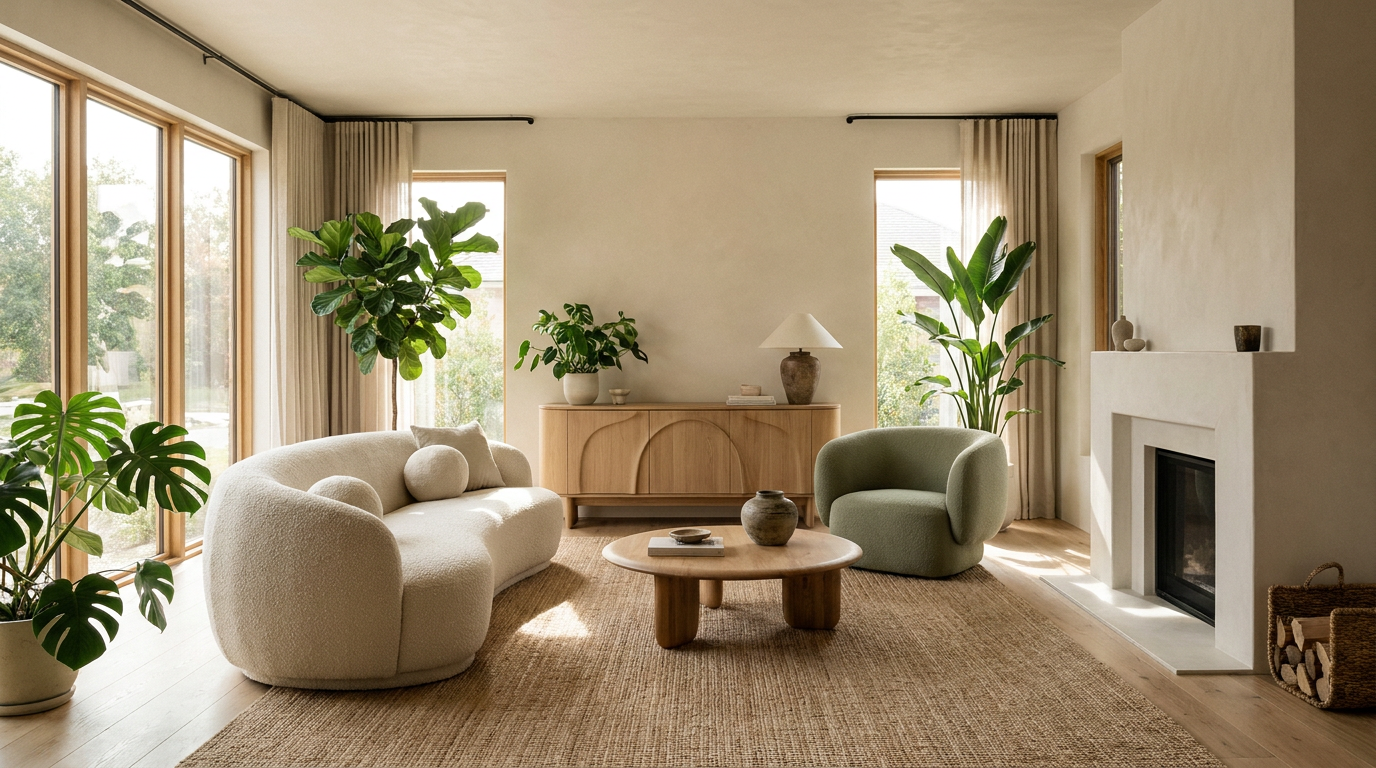
- Curvilinear spaces and rounded furniture activate brain areas associated with pleasure and safety.
- The Neuro-Architecture Triad guides designers to prioritize coherence, fascination, and hominess.
- Advocates are pushing to make neuroinclusive design accessible in public schools and affordable housing.
For decades, the success of an interior space was judged primarily by a single metric: how it looked. Designers relied on intuition, trend forecasting, and aesthetic judgment to arrange furniture, select color palettes, and dictate lighting. But a quiet revolution is reshaping the architecture and design industries, moving the discipline away from subjective taste and toward measurable biology. [1][2][1][2]
This shift is driven by neuroaesthetics, an emerging scientific field that studies how the human brain and nervous system respond to beauty, art, and spatial environments. [3][6] By utilizing advanced brain-scanning technology, researchers can now observe the physiological changes that occur when a person enters a room. [6] The findings are profound: design is not merely a visual backdrop, but an active biological intervention that alters our heart rate, blood pressure, and hormone levels. [4][8][3][4][6][8]
“Spaces aren't passive backdrops. They are active agents in human health and well-being,” notes a 2026 report from global design firm HOK. [4] The decisions made regarding a room's layout shape how occupants feel and function long before conscious thought catches up. [4] This realization is transforming interior design from a decorative art into a form of preventive mental healthcare. [7][4][7]
To understand how a room changes the body, one must look at the brain's processing pathways. When a person steps into a space, their sensory organs immediately gather data—not just through the traditional five senses, but through a complex network of up to 53 distinct sensory inputs. [2] These include proprioception, which tracks the body's position in space, and thermoception, which monitors ambient temperature. [2][2]

This flood of sensory data is routed to the limbic system, the brain's emotional and memory center, which makes split-second assessments about safety, comfort, and harmony. [1] Simultaneously, aesthetically pleasing environments stimulate the orbitofrontal cortex, a region linked to emotional regulation and reward processing. [7] When a space is perceived as beautiful or harmonious, this neural activation triggers the release of serotonin and dopamine while suppressing the production of cortisol, the body's primary stress hormone. [6][7][1][6][7]
The physiological outcomes of these neural processes are highly measurable. Clinical research consistently demonstrates that thoughtfully designed spaces can yield a 15 to 20 percent reduction in stress hormones. [6] Furthermore, environments that successfully integrate natural elements have been shown to decrease heart rates and lower blood pressure, shifting the nervous system from a state of sympathetic arousal (fight or flight) to parasympathetic rest and recovery. [6][6]
One of the most potent tools in the neuroaesthetic arsenal is biophilic design, which leverages the human brain's evolutionary preference for the natural world. [3][7] Cognitive biophilia suggests that exposure to natural materials, fractal patterns, and dynamic daylighting satisfies a hardwired biological need. [1][7] The brain does not necessarily require a literal forest; it responds positively to the representation of nature, such as wood grains, woven textures, and botanical motifs. [7][1][3][7]
One of the most potent tools in the neuroaesthetic arsenal is biophilic design, which leverages the human brain's evolutionary preference for the natural world.
Studies utilizing functional magnetic resonance imaging (fMRI) and electroencephalography (EEG) have revealed that the geometry of a room also plays a critical role in neurological comfort. [5][7] Curvilinear spaces and rounded furniture activate brain areas associated with pleasure and safety, making occupants feel calmer. [7] Conversely, sharp angles and unpredictable spatial layouts can elevate cortisol levels and maintain heightened stress states. [6][5][6][7]

The application of these principles is already yielding tangible results across various sectors. In corporate environments, the integration of biophilic elements and dynamic lighting has been linked to a 15 percent increase in employee productivity and a significant reduction in reported fatigue. [7] Companies are increasingly viewing neuroinclusive design not as a luxury perk, but as a fundamental driver of cognitive performance and employee retention. [4][7][4][7]
Healthcare architecture has also embraced neuroaesthetics to accelerate patient recovery. [3][6] A landmark example is Maggie's Cancer Care Centre in London, designed by Richard Rogers. [3] By prioritizing abundant natural light, views of therapeutic gardens, and materials that evoke nature, the facility actively reduces the psychological burden on patients and their families. [3] Studies indicate that patients in such environments require less pain medication and heal faster than those in sterile, windowless wards. [3][7][3][6][7]
To operationalize these concepts, researchers have developed frameworks like the Neuro-Architecture Triad, which distills complex neuroscience into actionable design tools. [4] The triad focuses on three core pillars: coherence (the logical flow and legibility of a space), fascination (elements that gently capture attention without overwhelming the senses), and hominess (the provision of comfort, security, and personal connection). [4][4]

Lighting and acoustics serve as critical modifiers within this triad. Unpredictable noise and harsh, artificial lighting are known to elevate stress markers and disrupt concentration. [6] In contrast, environments that utilize soft furnishings to absorb sound, alongside circadian-aligned lighting that mimics the natural progression of the sun, help regulate the body's internal clock and foster emotional stability. [6][7][6][7]
Despite the robust data supporting neuroaesthetics, the field still grapples with inherent uncertainties. Beauty is not entirely universal; it is heavily mediated by cultural background, personal history, and individual neurodivergence. [2][4] What one person finds soothingly minimalist, another might experience as cold and institutional. [2] Designers must therefore balance universal biological principles with localized, human-centered empathy. [1][3][1][2][3][4]
There is also a growing ethical imperative to democratize access to neuroaesthetic design. [8] Historically, the benefits of optimized environments have been concentrated in luxury real estate and elite corporate headquarters. [1][8] Public health advocates argue that if design is a biological intervention, then equitable access to healing environments—particularly in underserved communities, public schools, and affordable housing—must become a priority. [8][1][8]

As the discipline matures, the integration of artificial intelligence and advanced data modeling will likely refine our understanding of how specific design parameters influence clinical health outcomes. [5][8] Yet, the core revelation of neuroaesthetics remains profoundly human: our environments are an extension of our nervous systems. [2] By designing spaces that actively care for our biology, we can transform the built world into a powerful engine for collective well-being. [2][8][2][5][8]
Viewpoints in depth
Neuroscience Researchers
Focuses on the measurable biological data, brain imaging, and the chemical changes triggered by spatial environments.
For the scientific community, the value of neuroaesthetics lies in its empirical rigor. Researchers utilize functional magnetic resonance imaging (fMRI), electroencephalography (EEG), and biometric sensors to track exactly how the body responds to spatial stimuli. They emphasize that the brain's reaction to beauty is not a cultural construct, but an evolutionary adaptation. By measuring the precise drop in cortisol or the stabilization of heart rates when a subject views fractal patterns or experiences dynamic daylighting, researchers are building a robust dataset that proves design is a medical intervention. Their goal is to map the exact neural pathways—from the sensory organs to the limbic system and orbitofrontal cortex—that dictate human comfort and cognitive performance.
Architects & Designers
Focuses on translating scientific findings into practical design choices like curved lines, lighting, and biophilia.
Design professionals view neuroaesthetics as a transformative toolkit that validates their intuitive practices while providing a new, evidence-based language to communicate value to clients. Rather than arguing for a specific aesthetic based on trends, architects can now justify the cost of circadian lighting systems or curved interior walls by pointing to guaranteed improvements in employee productivity or patient recovery times. This camp is actively developing frameworks, such as the Neuro-Architecture Triad, to operationalize the science. They are focused on the practical challenges of balancing coherence, fascination, and hominess within the constraints of building codes, budgets, and client demands, ultimately aiming to create spaces that actively support the nervous systems of their occupants.
Public Health Advocates
Focuses on the ethical imperative to democratize access to healing environments in public spaces and underserved communities.
Public health experts and urban planners approach neuroaesthetics through the lens of equity and social justice. If the science conclusively proves that poorly designed, harsh environments elevate stress hormones and degrade cognitive function, then forcing marginalized communities to live and learn in such spaces becomes a public health crisis. This camp argues that the benefits of neuroinclusive design—such as access to natural light, acoustic dampening, and biophilic elements—cannot remain exclusive perks for luxury real estate and elite corporate offices. They advocate for updating public building codes and redirecting funding to ensure that affordable housing, public schools, and community centers are designed to foster psychological resilience and collective well-being.
What we don't know
- How deeply cultural backgrounds and personal histories alter universal biological responses to specific aesthetic elements.
- The long-term, multi-generational health impacts of living entirely in neuro-optimized environments.
- How to perfectly standardize neuroaesthetic guidelines for neurodivergent individuals, whose sensory processing can vary dramatically.
Key terms
- Neuroaesthetics
- A scientific field that studies how the human brain and nervous system respond to beauty, art, and spatial environments.
- Cognitive Biophilia
- The concept that human cognitive faculties are hardwired to respond positively to natural systems, materials, and patterns.
- Proprioception
- The body's subconscious ability to sense its position, movement, and spatial orientation within an environment.
- Orbitofrontal Cortex
- A region of the brain involved in emotional regulation and decision-making that is highly responsive to aesthetically pleasing environments.
- Neuro-Architecture Triad
- A design framework consisting of coherence, fascination, and hominess, used to create spaces that support psychological well-being.
Frequently asked
What is the difference between neuroaesthetics and regular interior design?
Traditional interior design often relies on subjective aesthetic taste and visual trends. Neuroaesthetics uses scientific data and brain imaging to understand exactly how specific design choices physically alter our nervous system, hormones, and cognitive function.
Can interior design really lower stress hormones?
Yes. Clinical research shows that spaces designed with neuroaesthetic principles—such as natural light, biophilic elements, and curved geometry—can reduce cortisol (the primary stress hormone) by 15 to 20 percent.
Do I need a professional to apply neuroaesthetics in my home?
While professionals use advanced frameworks, anyone can apply basic principles. Maximizing natural light, incorporating indoor plants, choosing furniture with rounded edges, and reducing harsh noises are all proven ways to make a space more neurologically soothing.
How does lighting affect the brain in interior spaces?
Harsh, unpredictable, or purely artificial lighting can elevate stress markers. Conversely, circadian-aligned lighting that mimics the natural progression of the sun helps regulate the body's internal clock, improving sleep and emotional stability.
Sources
Source coverage
8 outlets
3 viewpoints surfaced








[1]Factlen Editorial TeamPublic Health Advocates
Synthesis by Factlen editorial team
Read on Factlen Editorial Team →[2]LivingetcArchitects & Designers
Neuroaesthetics: how interior design affects the brain
Read on Livingetc →[3]ArchDailyArchitects & Designers
Neuroesthetics: The Influence of Design on Human Experience
Read on ArchDaily →[4]HOKArchitects & Designers
HOK Forward 2026: Wired for Beauty
Read on HOK →[5]MDPINeuroscience Researchers
The Neuroaesthetics-Informed Approach to the Urban Environment
Read on MDPI →[6]Science in DesignNeuroscience Researchers
Neuroaesthetics: The Future of Interior Design
Read on Science in Design →[7]Pearl AcademyNeuroscience Researchers
The Brain, Beauty, and Built Environments
Read on Pearl Academy →[8]ArchiExpo e-MagazinePublic Health Advocates
Global Wellness Summit: Neuroaesthetics is Now Evidence-Based
Read on ArchiExpo e-Magazine →
Every angle. Every day.
Get home stories with full source coverage and perspective breakdowns delivered to your inbox.