
How Neuroaesthetics is Rewiring Interior Design for Brain Health
The emerging science of neuroaesthetics proves that interior design is a biological imperative, using biophilic elements and sensory balance to actively lower stress and heal the nervous system.
By Factlen Editorial Team
- Interior Designers
- Practitioners applying scientific insights to create functional, beautiful, and healing spaces.
- Neuroscience Researchers
- Scientists studying the biological impact of aesthetic experiences on the human brain.
- Neurodiversity Advocates
- Voices championing spaces that accommodate varying sensory processing needs.
What's not represented
- · Real estate developers balancing wellness features with construction costs
- · Low-income households lacking access to customizable or nature-adjacent housing
Why this matters
For decades, interior design was treated as a superficial matter of taste and trends. The emergence of neuroaesthetics proves that our environments directly alter our biology—meaning the way you design your home or office can actively lower your stress hormones, improve your focus, and protect your mental health.
Key points
- Neuroaesthetics is the scientific study of how interior environments impact the human brain and nervous system.
- Aesthetically pleasing, nature-inspired spaces can measurably lower heart rates, reduce cortisol, and decrease stress.
- Biophilic design elements, such as fractal patterns and raw materials, prevent the visual cortex from becoming overworked.
- Neuroinclusive design uses these scientific principles to create adaptable, soothing spaces for individuals with sensory processing differences.
- The interior design industry is shifting its focus from visual trends to measurable health and wellness outcomes.
Have you ever walked through your front door after a long day and, instead of feeling relief, felt a low, buzzing tension? Perhaps it is the harsh overhead lighting, the visual clutter, or the stark contrast of concrete and glass outside your window. For decades, the interior design industry dismissed this visceral reaction as a simple matter of personal taste—a superficial choice between velvet or linen, blue or gray. If a room felt overwhelming, the solution was often thought to be a new coat of paint or a different rug. However, a quiet revolution is currently reshaping how we understand the spaces we inhabit. The conversation is moving away from what looks good in a photograph to what actively heals the human nervous system, bridging the gap between biology and architecture.[2]
This profound shift is being driven by neuroaesthetics, a rapidly growing scientific field that explores how the human brain perceives and responds to beauty, art, and spatial design. Neuroaesthetics argues that our response to our environment is not merely a subjective preference, but a deeply ingrained biological imperative. When we encounter aesthetically pleasing and balanced environments, our brains undergo measurable physiological changes. Heart rates slow down, blood pressure drops, and the production of stress hormones decreases. Conversely, spaces that are poorly designed or overly synthetic can trigger a low-grade fight-or-flight response, keeping our bodies in a state of perpetual alertness.[2][3]
Researchers at leading institutions, including the Penn Center for Neuroaesthetics and Johns Hopkins University, have spent years documenting these mechanisms through advanced neuroimaging and physiological tracking. They have discovered that aesthetically rich environments actively engage the brain's reward structures while simultaneously shifting cognitive processing away from high-load executive regions. This means that a well-designed room does not just look nice; it fundamentally alters how the brain operates in that moment, reducing the neurological burden of simply existing in a space. By measuring biomarkers in real-time, scientists have proven that design decisions trigger documented health outcomes, transforming interior design from an art form into a measurable science.[3]

This neurological shift engages what scientists call the 'default mode network,' a specific brain state associated with reduced mental effort, improved neural efficiency, and the kind of diffuse thinking that is inextricably linked to creativity and insight. According to researchers studying the impact of indoor environments, spending as little as 45 minutes in an aesthetically significant and balanced space can measurably reduce cortisol levels in the bloodstream. Over time, environments that cater to the nervous system reduce the drain on executive function, allowing people to sustain focus longer, stave off mental fatigue, and recover from daily stressors far more effectively.[3][4]
A core pillar of neuroaesthetic interior design is biophilia—the innate human desire to connect with the natural world. Our nervous systems evolved outdoors, attuned to the rhythms of nature, not in the gray, enclosed boxes that define much of modern architecture. Contemporary building facades and interiors often feature high-contrast geometric patterns, stark white walls, and reflective glazing. Neurologically, these features can cause 'cortical hyperexcitability,' a condition where the visual cortex is forced to work significantly harder than it evolved to, leading to subconscious visual stress and mental exhaustion.[4][5]
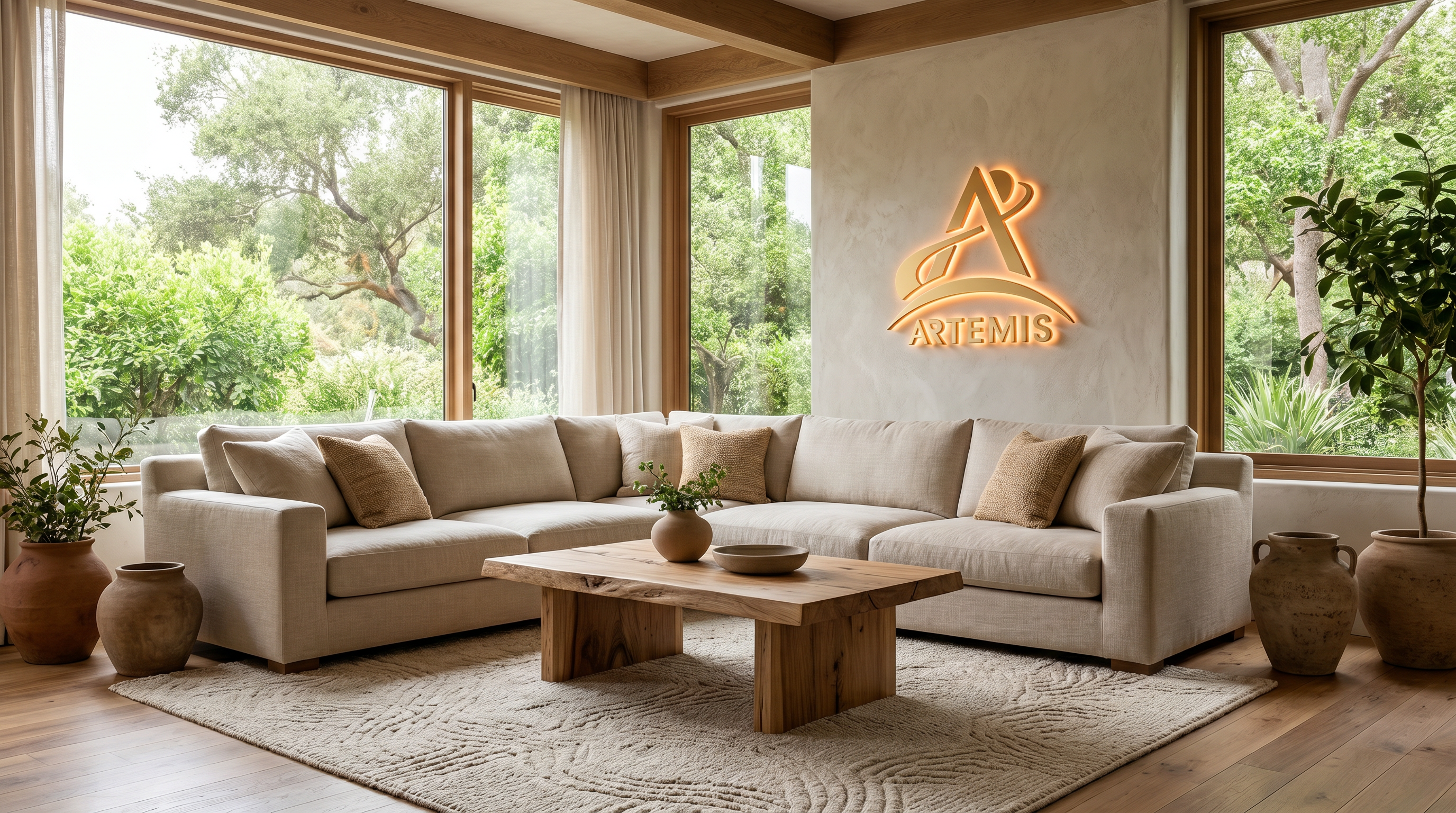
To counteract this modern architectural fatigue, designers are increasingly bringing the outdoors inside through the use of raw organic materials, abundant natural light, and integrated greenery. Incorporating biophilic fractal patterns—the repeating, self-similar shapes found in leaves, ocean waves, and wood grain—gives the brain a much-needed visual break. These natural elements tell the brain, quietly but clearly, that the environment is safe, allowing the amygdala to power down so the body can finally rest. Whether through preserved moss walls that require no maintenance or the strategic placement of potted plants, these biophilic interventions lower heart rates and induce a mild meditative state that supports sustained attention.[4][8]

Incorporating biophilic fractal patterns—the repeating, self-similar shapes found in leaves, ocean waves, and wood grain—gives the brain a much-needed visual break.
The human brain finds organic textures and tactile surfaces inherently soothing, which is why material selection is central to neuroaesthetic design. This is driving a massive industry shift away from synthetic, mass-produced finishes toward materials that invite touch and create a layered sensory experience. Bespoke timber furniture, natural stone floors, and textiles made from linen, jute, or wool-mixes are increasingly prioritized. Even sustainable innovations, such as carpet underlays manufactured from recycled foam, are gaining traction as homeowners seek out grounding, earthy elements that add character and depth without overwhelming the senses.[6][7]
Beyond visual and tactile elements, neuroaesthetics places a heavy emphasis on overall sensory balance, particularly regarding acoustics and spatial harmony. The acoustic environment plays a massive role in determining our cognitive load. Unpredictable, harsh noises elevate cortisol and maintain heightened stress states, making relaxation impossible. Conversely, pleasant ambient sounds, or the strategic use of acoustic dampening materials like soft rugs and heavy drapery, actively reduce stress markers. Symmetrical layouts and balanced furniture placement further reduce the brain's processing burden, creating a sense of visual predictability that makes people feel instantly at ease.[3][6]
Lighting is another critical component that directly manipulates our biology. Neuroaesthetic research reinforces the absolute necessity of natural light in supporting healthy circadian rhythms. The quality, color, and angle of light send continuous signals to the brain that regulate our sleep-wake cycles and mood. Warm, dim light in the evening prompts the body to produce melatonin and wind down, while brighter, cooler light during the day increases alertness and keeps people on task. Smart lighting systems that mimic the natural progression of the sun are now being integrated into homes to keep our internal clocks synchronized.[6][9]

This rigorous, science-based approach is also revolutionizing how we design for neurodiversity. Neuroinclusive design acknowledges that individuals perceive sensory input differently, and what feels pleasantly stimulating to one person might be entirely overwhelming to another. For individuals with ADHD, autism, or sensory processing differences, the right interior design can alleviate daily friction, encourage focus, and cultivate a deep sense of comfort. Instead of trying to make a space look trendy, neuroinclusive design leverages scientific insights to craft environments that elicit positive emotional responses and support cognitive function for all brain types.[9]
In practice, creating an ADHD-friendly or neuroinclusive home involves careful manipulation of color, texture, and layout. Cool colors such as soft blues and pale greens can relax an agitated mind, while aggressive reds or bright yellows are generally avoided to prevent overstimulation. Designers also incorporate 'sensory anchors'—such as a designated cozy reading nook, a weighted blanket, or a specific calming scent—which help individuals reset when they feel overwhelmed. By limiting visual clutter and selecting just one or two dominant textures per room, the environment becomes a sanctuary rather than a source of stress.[9]
Flexible furnishings also play a vital role in neuroinclusive spaces, ensuring that the home can adapt to fluctuating energy levels and needs. Furniture that serves multiple purposes, such as storage ottomans that hide clutter or seating that allows for gentle rocking and movement, accommodates different physical and cognitive requirements. These intentional design choices do not just benefit neurodivergent individuals; they create a more forgiving, comfortable, and adaptable living environment for everyone in the household, proving that inclusive design is universally beneficial design.[9]

The commercial sector is already aggressively adopting these principles, recognizing the clear return on investment that comes from optimizing human performance and well-being. In the hospitality industry, hotels and resorts are using neuroaesthetic principles to foster positive emotional responses, knowing that guests who feel subconsciously relaxed are more likely to return. In the modern workplace, environments designed to reduce the drain on executive function are helping employees sustain focus longer, collaborate more effectively, and stave off the burnout that plagues so many corporate cultures.[1]
Ultimately, the rise of neuroaesthetics invites us to decorate from the inside out, starting with what feels good to our nervous system rather than what looks impressive to guests. It provides both the scientific awareness of how physicality and psychology interact and the practical tools to turn ordinary rooms into spaces that actively nurture our well-being. As the modern world becomes increasingly loud, fast-paced, and overstimulating, designing for the brain is no longer just a luxury aesthetic trend—it is a fundamental component of preventative healthcare and human flourishing.[1][2]
How we got here
1990s
Advancements in brain scanning technology allow researchers to measure physiological responses to beauty in real-time.
2014
Foundational research begins to map how aesthetically pleasing environments positively impact the brain's orbitofrontal cortex.
2023
The publication of 'Your Brain on Art' by Susan Magsamen brings the applied health outcomes of neuroaesthetics into mainstream awareness.
2025–2026
Neuroaesthetic and neuroinclusive design principles become a dominant trend in residential and commercial interior design.
Viewpoints in depth
Neuroscience Researchers
Scientists studying the biological impact of aesthetic experiences on the human brain.
For researchers at institutions like the Penn Center for Neuroaesthetics, the focus is on empirical data. They argue that aesthetic experiences are not passive impressions but active neurological events. By using functional MRI scans and measuring biomarkers like cortisol and heart rate variability, they demonstrate that our environments directly alter our brain's reward structures and executive function. Their goal is to establish standardized, evidence-based metrics that prove design is a critical component of public health.
Interior Designers
Practitioners applying scientific insights to create functional, beautiful, and healing spaces.
Designers view neuroaesthetics as a paradigm shift that validates their intuitive understanding of space. Instead of merely chasing visual trends, they are increasingly acting as wellness facilitators. This camp emphasizes the practical application of science—sourcing sustainable, tactile materials, optimizing floor plans for natural light, and integrating acoustic dampening. For them, the challenge lies in balancing these health-focused mandates with a client's personal style and budget constraints.
Neurodiversity Advocates
Voices championing spaces that accommodate varying sensory processing needs.
This perspective highlights that a 'calming' environment is not one-size-fits-all. Advocates for neuroinclusive design stress that individuals with ADHD, autism, or sensory processing disorders experience spatial stimuli differently. They push for environments that offer flexibility, such as adjustable lighting, sensory anchors, and spaces that allow for physical movement. Their core argument is that designing for the most sensitive nervous systems ultimately creates more comfortable and adaptable spaces for everyone.
What we don't know
- How quickly neuroaesthetic design principles will be adopted in affordable and public housing projects.
- The long-term, multi-year neurological impacts of living in fully optimized biophilic environments.
- How virtual and augmented reality environments will interact with the brain's neuroaesthetic reward structures.
Key terms
- Neuroaesthetics
- A scientific field that explores how the human brain perceives and responds to beauty, art, and design.
- Biophilic Design
- An architectural and interior design approach that seeks to connect building occupants more closely to nature.
- Default Mode Network
- A network of interacting brain regions that is active when a person is not focused on the outside world, associated with creativity and relaxation.
- Cortical Hyperexcitability
- An overwhelming neurological response triggered by visually stressful patterns, causing the brain to work harder than necessary.
- Neuroinclusive Design
- The practice of creating spaces that accommodate and support the diverse sensory and cognitive needs of all individuals, including those with neurodivergent conditions.
Frequently asked
What is neuroaesthetics in interior design?
It is the scientific study of how our brains and bodies respond to the environments we inhabit. It uses principles from neuroscience to design spaces that lower stress, improve focus, and support mental well-being.
How does biophilic design affect the brain?
Incorporating natural elements like plants, wood, and natural light activates the brain's reward structures and reduces cortisol levels. It signals to the nervous system that the environment is safe, promoting relaxation.
What is cortical hyperexcitability?
It is a state where the brain's visual cortex is overworked by processing harsh, unnatural stimuli, such as high-contrast geometric patterns or repetitive modern facades, leading to visual stress and fatigue.
How can I make my home more neuroinclusive?
You can incorporate flexible furniture, use cool and muted color palettes, add soft acoustic-dampening textures, and create designated 'sensory anchors' or quiet zones to help regulate the nervous system.
Sources
Source coverage
9 outlets
3 viewpoints surfaced









[1]Factlen Editorial Team
Synthesis by Factlen editorial team
Read on Factlen Editorial Team →[2]LivingetcInterior Designers
Neuroaesthetics Explains How Your Home Makes You Feel
Read on Livingetc →[3]Science in DesignNeuroscience Researchers
NEUROAESTHETICS FOR INTERIOR DESIGNERS
Read on Science in Design →[4]PlanterraNeuroscience Researchers
Your Brain on Plants: The Science Behind Biophilic Design
Read on Planterra →[5]ModulyssInterior Designers
The Science of Neuroaesthetics: Design for Well-Being
Read on Modulyss →[6]KHAIAInterior Designers
Neuroaesthetics: The science behind Interior Design
Read on KHAIA →[7]Brands UntappedInterior Designers
'Neuroaesthetic design': Tapi Carpets & Floor's Jo Constantinou looks at how interior design is evolving
Read on Brands Untapped →[8]Omega CabinetryInterior Designers
Biophilic Kitchen Design & Neuroaesthetics
Read on Omega Cabinetry →[9]Neural DiversityNeurodiversity Advocates
ADHD-Friendly Home Design
Read on Neural Diversity →

Every angle. Every day.
Get lifestyle stories with full source coverage and perspective breakdowns delivered to your inbox.