
How mRNA Cancer Vaccines Are Reprogramming the Immune System
Personalized mRNA vaccines are moving from clinical trials to mainstream oncology, using custom genetic blueprints to teach the body's T-cells how to hunt and destroy unique tumor cells.
By Factlen Editorial Team
- Immunologists & Researchers
- Focus on the cellular mechanisms, specifically how mRNA engages dendritic cells to mount a robust T-cell response.
- Clinical Oncologists
- Focus on survival data and patient outcomes, emphasizing the critical synergy between vaccines and checkpoint inhibitors.
- Biotech Innovators
- Focus on manufacturing hurdles, highlighting how AI and machine learning compress the timeline for neoantigen selection.
- Patient Advocates & Analysts
- Focus on the shift toward personalized medicine and the potential for durable remission with fewer systemic side effects.
What's not represented
- · Health Insurance Providers
Why this matters
Cancer treatment is shifting away from broad-spectrum toxins toward highly precise, individualized immunotherapies. Understanding how mRNA vaccines work demystifies a breakthrough that is dramatically reducing recurrence rates for aggressive cancers and reshaping the future of post-surgical care.
Key points
- mRNA cancer vaccines teach the patient's immune system to recognize and destroy unique tumor mutations called neoantigens.
- Unlike traditional treatments, personalized vaccines are custom-manufactured for each patient using AI-driven genetic sequencing.
- The mRNA is delivered via lipid nanoparticles to dendritic cells, which then educate T-cells to hunt the cancer.
- Clinical trials show combining mRNA vaccines with checkpoint inhibitors significantly reduces the risk of cancer recurrence.
- Manufacturing turnaround times have dropped from months to under four weeks, enabling rapid post-surgical treatment.
For decades, the holy grail of oncology has been a treatment that targets cancer with the precision of a sniper rifle rather than the collateral damage of a shotgun. In 2020, messenger RNA (mRNA) technology became globally famous for halting a viral pandemic, but the scientific foundation for those vaccines was originally built for a different enemy: cancer.[7]
Today, the landscape of oncology is undergoing a fundamental shift. Rather than relying solely on external chemicals or radiation to poison tumors, researchers are using mRNA to reprogram the patient's own immune system into a highly specific cancer-hunting force.[1]
The core challenge in fighting cancer is that tumors are masters of disguise. Because cancer cells arise from the body's own tissue, the immune system often ignores them, treating them as normal biological citizens rather than lethal invaders.[5]
However, as cancer cells mutate and divide, they produce abnormal proteins on their surfaces. These unique molecular fingerprints, known as neoantigens, are the key to breaking the tumor's disguise and alerting the immune system to the threat.[6]

The process of creating a personalized mRNA cancer vaccine begins in the operating room. After a surgeon removes a patient's tumor, the tissue is sent to a laboratory where its genetic code is sequenced alongside a sample of the patient's healthy blood.[3]
By comparing the two sequences, scientists can identify the exact mutations driving the cancer. In 2026, advanced artificial intelligence and machine learning algorithms sift through thousands of mutations to predict which specific neoantigens are most likely to trigger a massive immune response.[5]
Once the optimal targets are selected—up to 34 distinct neoantigens in some leading clinical programs—a custom mRNA blueprint is synthesized. This genetic code acts as a temporary instruction manual, telling the body's cells how to manufacture those exact tumor proteins.[3][4]
Once the optimal targets are selected—up to 34 distinct neoantigens in some leading clinical programs—a custom mRNA blueprint is synthesized.
Because bare mRNA is incredibly fragile and would be destroyed instantly in the bloodstream, it is encapsulated inside lipid nanoparticles. These microscopic fat bubbles protect the genetic instructions and fuse seamlessly with the membranes of immune cells after the vaccine is injected into the patient's arm.[1]

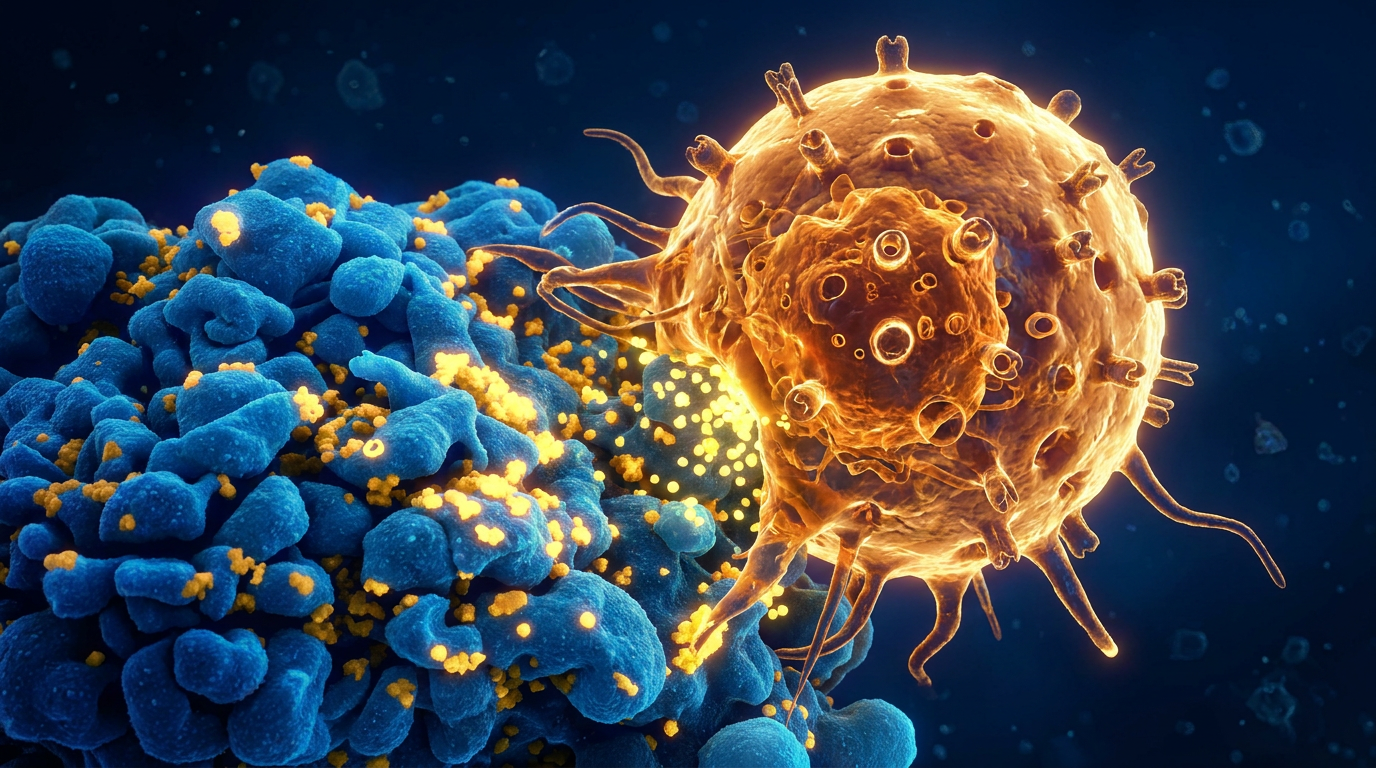
The primary recipients of this mRNA delivery are dendritic cells, the master sentinels of the immune system. Recent research has revealed that mRNA vaccines engage multiple subsets of these sentinels, specifically cDC1 and cDC2 cells, creating a more robust and multi-layered immune activation than previously understood.[2]
Once inside the dendritic cells, the mRNA instructions are translated into the neoantigen proteins. The dendritic cells then display these foreign proteins on their outer surfaces and migrate to the lymph nodes, where they act as instructors for the immune system's heavy infantry: the T-cells.[1][2]
The dendritic cells "educate" the T-cells, showing them exactly what the cancer looks like. Billions of these newly trained T-cells then flood into the bloodstream, actively hunting down any cell in the body that bears the specific neoantigen markers.[6]
But finding the tumor is only half the battle. Cancers often defend themselves by deploying chemical signals that put T-cells to sleep. To counter this, mRNA vaccines are frequently paired with immune checkpoint inhibitors—drugs that effectively cut the brakes on the immune system, allowing the T-cells to finish the job.[5][6]

This combination therapy has yielded unprecedented clinical results. In pivotal trials for high-risk melanoma, patients receiving a personalized mRNA vaccine alongside a checkpoint inhibitor saw a nearly 50 percent reduction in the risk of recurrence or death compared to those receiving the inhibitor alone.[3]
These breakthrough results have propelled personalized mRNA vaccines into massive Phase 3 global trials across multiple tumor types, including non-small cell lung cancer. Companies are also developing "off-the-shelf" mRNA vaccines that target shared antigens common to specific cancers, offering a faster, scalable option for patients with advanced disease.[3][4]

The speed of manufacturing has also transformed. What once took months of painstaking laboratory work has been compressed by computational biology and automated synthesis. Today, the turnaround time from surgical resection to a custom-manufactured vaccine injection has dropped to under four weeks.[4][5]
As clinical data matures in 2026, the paradigm of cancer treatment is moving earlier in the disease course. By deploying mRNA vaccines in the adjuvant setting—immediately after surgery, when the cancer burden is lowest—oncologists are aiming not just to delay disease progression, but to train the immune system to ensure the cancer never returns.[3][7]
How we got here
1990s
Researchers demonstrate the first successful use of in vitro transcribed mRNA in animals, though instability limits its medical application.
2005
Scientists discover that modifying nucleosides prevents the immune system from destroying mRNA prematurely, unlocking its therapeutic potential.
2020
The COVID-19 pandemic accelerates lipid nanoparticle and mRNA manufacturing, validating the platform's safety and efficacy on a global scale.
2023
Phase 2b trials reveal that a personalized mRNA vaccine combined with immunotherapy halves the risk of melanoma recurrence.
2026
Multiple Phase 3 trials for personalized and off-the-shelf mRNA cancer vaccines enroll thousands of patients globally.
Viewpoints in depth
Immunologists & Researchers
Focus on the intricate cellular pathways that translate mRNA into a robust immune response.
For immunologists, the breakthrough of mRNA vaccines lies in their ability to engage the immune system's master sentinels: dendritic cells. Recent studies have mapped exactly how these vaccines utilize specific subsets of dendritic cells (cDC1 and cDC2) to process and present tumor neoantigens. By understanding this unconventional immune pathway, researchers are actively tweaking lipid nanoparticle formulations to target these cells more efficiently, aiming to generate a larger and more durable army of cancer-hunting T-cells.
Clinical Oncologists
Emphasize the clinical outcomes and the necessity of combination therapies.
Oncologists view mRNA vaccines not as a standalone silver bullet, but as a highly potent addition to existing immunotherapies. Clinical data consistently shows that while vaccines excel at training T-cells to find the tumor, the cancer often deploys chemical defenses to suppress those T-cells upon arrival. By combining the vaccine with immune checkpoint inhibitors—which strip away the tumor's chemical defenses—oncologists are seeing unprecedented reductions in recurrence rates, particularly when administered in the adjuvant setting immediately following surgery.
Biotech Innovators
Highlight the computational and manufacturing leaps required to scale personalized medicine.
For the biotech industry, the challenge of mRNA cancer vaccines is fundamentally a logistical and computational one. Creating a bespoke drug for every single patient requires an entirely new manufacturing paradigm. Innovators emphasize the role of artificial intelligence in rapidly sequencing tumors and predicting the most immunogenic neoantigens. By automating the synthesis process, companies have successfully compressed the manufacturing timeline from several months down to just a few weeks, making personalized intervention clinically viable.
Patient Advocates
Value the shift toward treatments that offer durable remission with fewer systemic side effects.
Patient advocacy groups celebrate mRNA vaccines as a departure from the grueling side effects of traditional chemotherapy and radiation. Because the vaccines train the immune system to attack only cells bearing specific tumor markers, healthy tissue is largely spared. Advocates are pushing for broader clinical trial access and are beginning to engage with health systems to ensure that these highly personalized, and potentially expensive, therapies will be equitably covered by insurance once approved.
What we don't know
- Whether mRNA vaccines will be equally effective against "cold" tumors, like pancreatic cancer, that typically evade immune detection.
- How long the T-cell memory induced by the vaccines will last, and if patients will require booster doses years later.
- The exact pricing and reimbursement models health systems will adopt for highly individualized, continuously manufactured therapies.
Key terms
- Neoantigen
- A novel protein formed by genetic mutations in cancer cells, serving as a unique target for the immune system.
- Dendritic Cell
- A specialized immune cell that acts as a sentinel, capturing foreign proteins and presenting them to T-cells to initiate an immune response.
- Lipid Nanoparticle (LNP)
- A microscopic fat bubble used to protect fragile mRNA molecules and deliver them safely into the body's cells.
- Adjuvant Therapy
- Treatment given after primary interventions, such as surgery, to lower the risk that the cancer will return.
- Immune Checkpoint Inhibitor
- A drug that blocks proteins that stop the immune system from attacking cancer cells, effectively taking the "brakes" off the body's T-cells.
Frequently asked
Are mRNA cancer vaccines preventative like the flu shot?
No. They are therapeutic vaccines, meaning they are administered after a patient has already been diagnosed with cancer to treat the active disease or prevent it from returning after surgery.
Do these vaccines alter a patient's DNA?
No. Messenger RNA (mRNA) never enters the nucleus of the cell where DNA is stored. It simply provides temporary instructions to the cell and breaks down naturally within a few days.
What types of cancer are being targeted?
Melanoma and non-small cell lung cancer are currently leading in Phase 3 clinical trials, but research is rapidly expanding to include pancreatic, colorectal, and bladder cancers.
How long does it take to manufacture a personalized vaccine?
Thanks to advances in AI and automated synthesis, the turnaround time from surgical tumor removal to the first vaccine injection has dropped from several months to under four weeks.
Sources
Source coverage
7 outlets
4 viewpoints surfaced







[1]National Cancer InstituteClinical Oncologists
How mRNA Vaccines Work in Cancer Treatment
Read on National Cancer Institute →[2]Washington University School of MedicineImmunologists & Researchers
mRNA vaccines follow unconventional immune path to destroy tumors
Read on Washington University School of Medicine →[3]ModernaBiotech Innovators
Advancing Individualized Neoantigen Therapy
Read on Moderna →[4]BioNTechBiotech Innovators
Individualized Neoantigen Specific Immunotherapy (iNeST)
Read on BioNTech →[5]National Institutes of HealthImmunologists & Researchers
The Landscape of mRNA Cancer Vaccines in 2026
Read on National Institutes of Health →[6]Cancer Research InstituteClinical Oncologists
Advancing Personalized Cancer Vaccines
Read on Cancer Research Institute →[7]Factlen Editorial TeamPatient Advocates & Analysts
Synthesis by Factlen editorial team
Read on Factlen Editorial Team →

Every angle. Every day.
Get guides stories with full source coverage and perspective breakdowns delivered to your inbox.