
How Iranian Hacks on Industrial Controllers Are Forcing a Security Overhaul for Physical AI
Recent cyberattacks on U.S. critical infrastructure have exposed vulnerabilities in legacy programmable logic controllers, prompting a rapid modernization of industrial security as AI moves onto the factory floor.
By Factlen Editorial Team
- Federal Cybersecurity Agencies
- Focuses on immediate mitigation, urging operators to remove devices from the internet to block nation-state actors.
- Physical AI Developers
- Emphasizes the need for edge-first autonomy and secure hardware to ensure AI models can safely interact with the physical world.
- Industrial Operators
- Balances the need for remote operational visibility with the strict security demands of air-gapping legacy hardware.
- Threat Intelligence Analysts
- Tracks the evolution of state-sponsored groups from hacktivism to sophisticated operational technology manipulation.
What's not represented
- · Local municipal utility managers facing budget constraints for cybersecurity upgrades.
- · Manufacturers of legacy PLCs addressing the challenge of securing older hardware.
Why this matters
As artificial intelligence moves from software into physical robots and infrastructure, the underlying hardware controlling these systems must be secure. Fixing these legacy vulnerabilities ensures that the next generation of automated factories, power grids, and water systems can operate safely.
Key points
- U.S. federal agencies warn that Iranian-affiliated hackers are actively exploiting internet-exposed industrial controllers.
- The campaign targets programmable logic controllers (PLCs) from major vendors like Rockwell Automation, Siemens, and Schneider Electric.
- Hackers are manipulating project files and sensor displays, causing real-world operational disruptions.
- These legacy vulnerabilities pose a severe threat to the emerging field of Physical AI, which relies on PLCs to execute physical actions.
- The crisis is accelerating a shift toward 'edge-first autonomy' and secure, hardware-based execution environments.
Seven U.S. federal agencies, including the Cybersecurity and Infrastructure Security Agency (CISA) and the FBI, have issued an urgent update warning that Iranian-affiliated actors are actively exploiting industrial controllers across American critical infrastructure. The campaign, which has been ongoing since at least March 2026, targets essential sectors including water and wastewater systems, energy grids, and government facilities.[1][3]
The threat actors, linked by intelligence analysts to groups such as CyberAv3ngers and the Islamic Revolutionary Guard Corps (IRGC), have already caused real-world operational disruptions and financial losses. But beyond the immediate localized outages, the attacks have exposed a deeper structural vulnerability just as the technology industry races toward a new frontier: Physical AI.
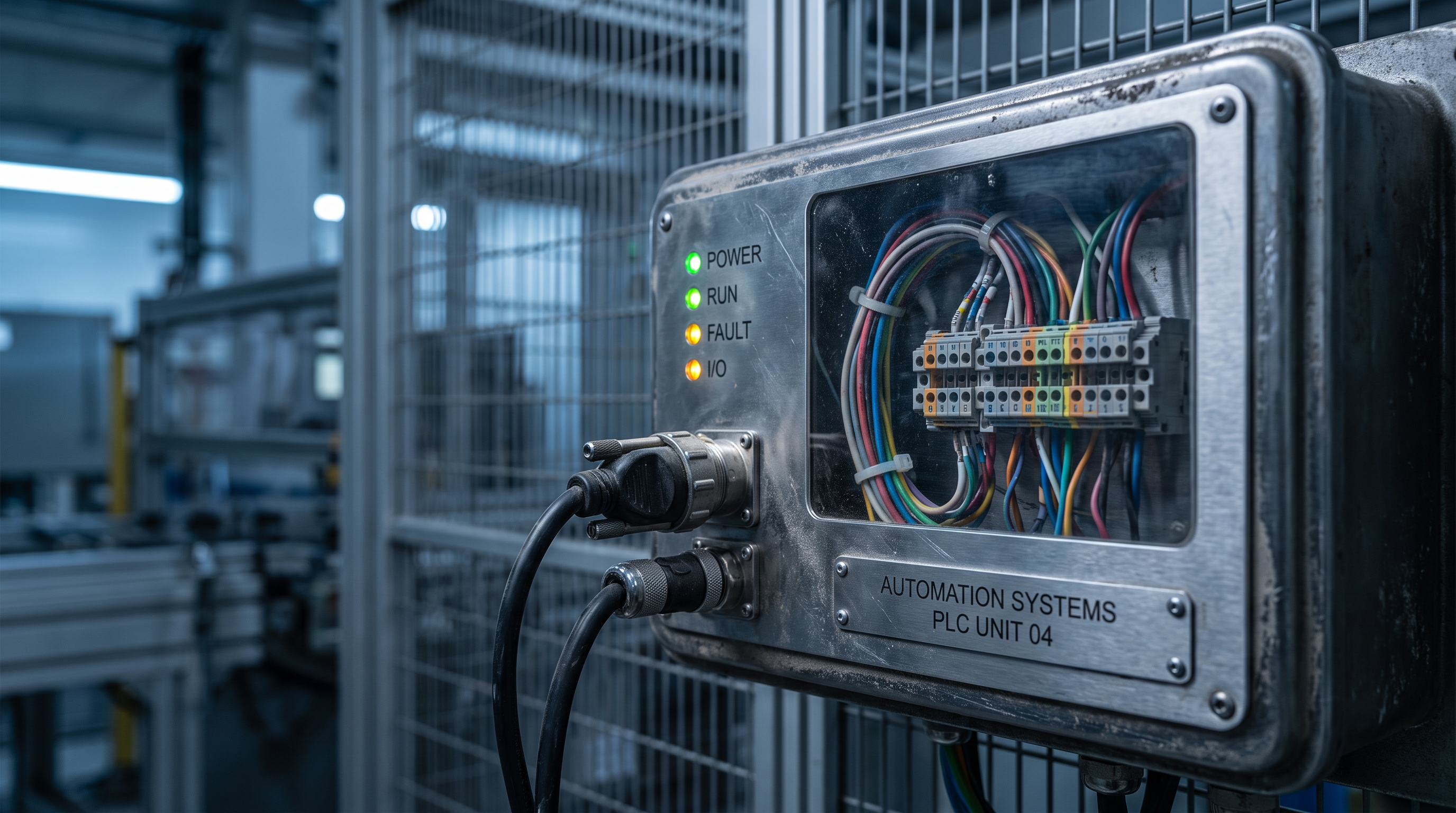
To understand the escalating threat, one must first understand the hardware at the center of the storm. Programmable Logic Controllers, or PLCs, are the ruggedized industrial computers that serve as the "muscle" of the modern physical economy. They are the devices that physically open valves in water treatment plants, regulate voltage in power substations, and control robotic arms on factory assembly lines.
Historically, these critical devices were air-gapped, meaning they were physically isolated from external networks to prevent unauthorized access. However, the modern push for remote monitoring, predictive maintenance, and operational efficiency led many facilities to connect their PLCs directly to the internet, often relying on legacy security protocols.

The recent Iranian-linked campaign exploits this exact exposure. Attackers are not necessarily relying on highly sophisticated, novel zero-day exploits; instead, they are scanning for and compromising internet-facing PLCs from major global vendors, including Rockwell Automation, Siemens, and Schneider Electric.[2][3]
In the United States, the exposure is particularly acute. According to internet monitoring firm Censys, nearly 75% of globally exposed Rockwell PLCs are located within the U.S., reflecting the vendor's dominant market position in North American industrial automation.
For Rockwell Automation devices specifically, attackers have leveraged CVE-2021-22681, a critical authentication bypass vulnerability carrying a maximum severity score of 9.8. This flaw allows remote attackers to connect to affected CompactLogix and ControlLogix controllers without requiring valid credentials.
Once inside the network, the hackers manipulate the PLC's core project files. They alter the data displayed on Human-Machine Interfaces (HMIs) and Supervisory Control and Data Acquisition (SCADA) screens, effectively blinding human operators by feeding them falsified sensor readings while suppressing critical safety alarms.[1]
Once inside the network, the hackers manipulate the PLC's core project files.
This direct manipulation of physical reality is alarming enough on its own, but cybersecurity experts warn it becomes an existential threat when paired with the rapid rise of Physical AI.

Physical AI refers to artificial intelligence that leaves the digital chat window and enters the real world. It enables autonomous machines to perceive their environment, make split-second decisions, and act directly using physical sensors and actuators.
By mid-2026, the technology sector is heavily investing in this transition, moving away from cloud-dependent generative models toward edge-deployed robotics that can adapt to dynamic factory floors, logistics networks, and infrastructure sites. Industry forecasts suggest that by 2029, the majority of edge computing deployments will rely on these advanced, composite AI systems.
However, these advanced AI "brains" must ultimately send their commands to the underlying "muscle"—the PLCs. If a PLC is compromised, the entire autonomous system is compromised.
Security analysts point out that building trillion-dollar Physical AI infrastructure on top of legacy, internet-exposed controllers is a recipe for disaster. An attacker who controls the PLC could theoretically feed false environmental data to an AI model, tricking the autonomous system into making dangerous physical movements or ignoring safety protocols.
Furthermore, Physical AI operates under strict physical constraints where latency is unacceptable. While a two-second delay in a cloud-based chatbot is merely annoying, a 200-millisecond delay in a physical robotics environment can cause catastrophic collisions or operational failures.

The CISA advisory is serving as a necessary wake-up call, forcing a long-overdue security overhaul across the industrial sector before Physical AI is deployed at scale.[3]
Federal agencies are urging infrastructure operators to immediately remove all PLCs from direct internet exposure, placing them behind secure gateways and robust firewalls. They are also advising facilities to implement continuous logic monitoring to detect unauthorized changes to reusable code modules within the controllers.[1][3]
Simultaneously, the technology industry is shifting toward "edge-first autonomy." In this model, AI systems run locally on secure, hardware-based trusted execution environments, ensuring that the "onsite brains" cannot be physically or digitally tampered with from afar.

This architectural shift ensures that even if external enterprise networks are breached, the core physical operations remain isolated, maintaining the strict latency and security requirements needed for safe automation.
Ultimately, while the Iranian-linked attacks highlight a severe current vulnerability, they are accelerating the modernization of industrial security. By exposing the fragile link between legacy controllers and next-generation AI, the crisis is prompting a necessary fortification of the systems that keep the physical world running.
How we got here
Late 2023
Iranian state-sponsored hackers compromise Unitronics PLCs at U.S. municipal water facilities.
April 2026
CISA and federal partners issue an initial advisory regarding Iranian exploitation of Rockwell Automation PLCs.
July 22, 2026
CISA updates the advisory, expanding the scope to include Siemens and Schneider Electric controllers.
Mid-2026
The tech industry accelerates the deployment of Physical AI systems, raising new concerns over legacy PLC vulnerabilities.
Viewpoints in depth
Federal Cybersecurity Agencies
Focuses on immediate mitigation and tracking nation-state actors.
Agencies like CISA and the FBI view the exploitation of industrial controllers as a direct national security threat. Their primary objective is immediate mitigation—urging critical infrastructure operators to disconnect PLCs from the public internet and place them behind secure gateways. They emphasize that while the threat actors are sophisticated, the initial access vectors often rely on basic security failures, such as exposed ports and unpatched vulnerabilities. Their guidance focuses on hardening the perimeter and monitoring for specific indicators of compromise.
Physical AI Developers
Emphasizes the need for edge-first autonomy and secure hardware.
For the technologists building the next generation of autonomous robotics and smart factories, the vulnerability of legacy PLCs is an architectural bottleneck. They argue that Physical AI cannot safely scale if it relies on insecure, internet-connected 'muscle.' This camp advocates for a paradigm shift toward 'edge-first autonomy,' where AI models run locally on hardware-based trusted execution environments. By processing data and making decisions at the edge, they aim to eliminate the latency and security risks associated with cloud-dependent industrial control.
Industrial Operators
Balances remote operational visibility with strict security demands.
Facility managers and industrial operators face the practical challenge of implementing these security overhauls without disrupting daily operations. Over the past decade, many facilities connected their PLCs to the internet to enable remote monitoring, predictive maintenance, and operational efficiency. Reversing this trend by air-gapping systems or implementing complex network segmentation requires significant time and investment. This group emphasizes the need for practical, scalable security solutions that protect legacy hardware without blinding remote engineering teams.
What we don't know
- The full extent of the financial losses incurred by U.S. critical infrastructure operators due to these disruptions.
- Whether the threat actors have successfully compromised any advanced Physical AI systems currently in deployment.
- How quickly local municipalities can secure funding to overhaul their legacy industrial control networks.
Key terms
- Programmable Logic Controller (PLC)
- An industrial computer designed to reliably control manufacturing processes, robotic devices, and critical infrastructure machinery.
- Physical AI
- Artificial intelligence that operates in the physical world, enabling machines to perceive their environment and take physical actions autonomously.
- Operational Technology (OT)
- Hardware and software that detects or causes a change through the direct monitoring and control of physical devices, processes, and events.
- Human-Machine Interface (HMI)
- A user interface or dashboard that connects a person to a machine, system, or device, commonly used in industrial settings.
- Air-gapping
- A security measure that involves isolating a computer or network from unsecured networks, such as the public internet.
- Edge Computing
- A distributed computing paradigm that brings computation and data storage closer to the location where it is needed, reducing latency.
Frequently asked
What is a Programmable Logic Controller (PLC)?
A PLC is a ruggedized industrial computer used to control machinery, such as robotic arms, water valves, and power grid switches.
How are hackers accessing these industrial systems?
Attackers are scanning for PLCs that have been connected directly to the public internet, often exploiting known vulnerabilities or weak credentials to bypass authentication.
What is Physical AI?
Physical AI refers to artificial intelligence systems deployed in the real world—such as autonomous robots and smart factory equipment—that use sensors and actuators to interact with their environment.
Why does a vulnerable PLC threaten Physical AI?
Physical AI relies on PLCs to execute its physical commands. If a hacker controls the PLC, they can feed the AI false data or override its safety protocols, compromising the entire system.
How can organizations protect their infrastructure?
Federal agencies recommend removing PLCs from direct internet exposure, placing them behind secure firewalls, and implementing continuous monitoring for unauthorized code changes.
Sources
Source coverage
3 outlets
4 viewpoints surfaced



[1]CISAFederal Cybersecurity Agencies
Iranian-Affiliated Cyber Actors Exploit Programmable Logic Controllers Across US Critical Infrastructure
Read on CISA →[2]SecurityWeekFederal Cybersecurity Agencies
US Warns of Iranian Hackers Targeting Siemens, Schneider, and Rockwell ICS Devices
Read on SecurityWeek →[3]Industrial CyberFederal Cybersecurity Agencies
U.S. agencies update joint cybersecurity advisory warning of ongoing Iranian-affiliated cyber activity targeting OT devices
Read on Industrial Cyber →


Every angle. Every day.
Get technology stories with full source coverage and perspective breakdowns delivered to your inbox.