
How Hydrogen Trains Work and the Race to Decarbonize Global Rail
Hydrogen fuel cells offer a zero-emission alternative to diesel locomotives, but the technology faces an ongoing economic debate against rapidly advancing battery-electric trains.
By Factlen Editorial Team
- Battery-Electric Proponents
- Emphasize the superior energy efficiency of direct electrification and batteries, viewing hydrogen as an expensive, energy-intensive distraction.
- Hydrogen Advocates
- Argue that hydrogen's long range and fast refueling make it the only viable zero-emission replacement for diesel on remote routes.
- Rail Infrastructure Pragmatists
- Focus on the logistical realities of deployment, advocating for a mixed fleet where technology is chosen based on specific route economics.
What's not represented
- · Passengers living near rail lines
- · Green hydrogen producers
Why this matters
As the world races to decarbonize transportation, replacing dirty diesel trains is a critical hurdle. Understanding whether hydrogen or batteries will power the future of rail reveals how billions of dollars in infrastructure will be spent to clean up the air we breathe.
Key points
- Hydrogen trains use fuel cells to generate electricity, emitting only water and heat.
- Hydrail offers a 1,000 km range and fast refueling, matching diesel operational parity.
- Battery-electric trains are significantly more energy-efficient than hydrogen alternatives.
- High infrastructure costs for hydrogen refueling remain a major barrier to adoption.
- Experts predict a hybrid future: batteries for short routes, hydrogen for long distances.
The global rail network is facing a monumental decarbonization challenge. While trains are inherently more fuel-efficient than cars or commercial aircraft, a massive portion of the world's tracks remains unelectrified, forcing operators to rely on heavily polluting diesel locomotives to keep supply chains and passenger routes moving.[6]
Electrifying these remaining routes using traditional overhead wires—known as catenary systems—is often prohibitively expensive. In rural or low-density areas, the capital cost of installing electrical infrastructure simply cannot be justified by the passenger volume or freight revenue.[5]
Enter "hydrail," a portmanteau for hydrogen-powered rail. For years, engineers have sought a zero-emission alternative that can match the range and operational flexibility of diesel without requiring billions of dollars in trackside electrical upgrades.[5]
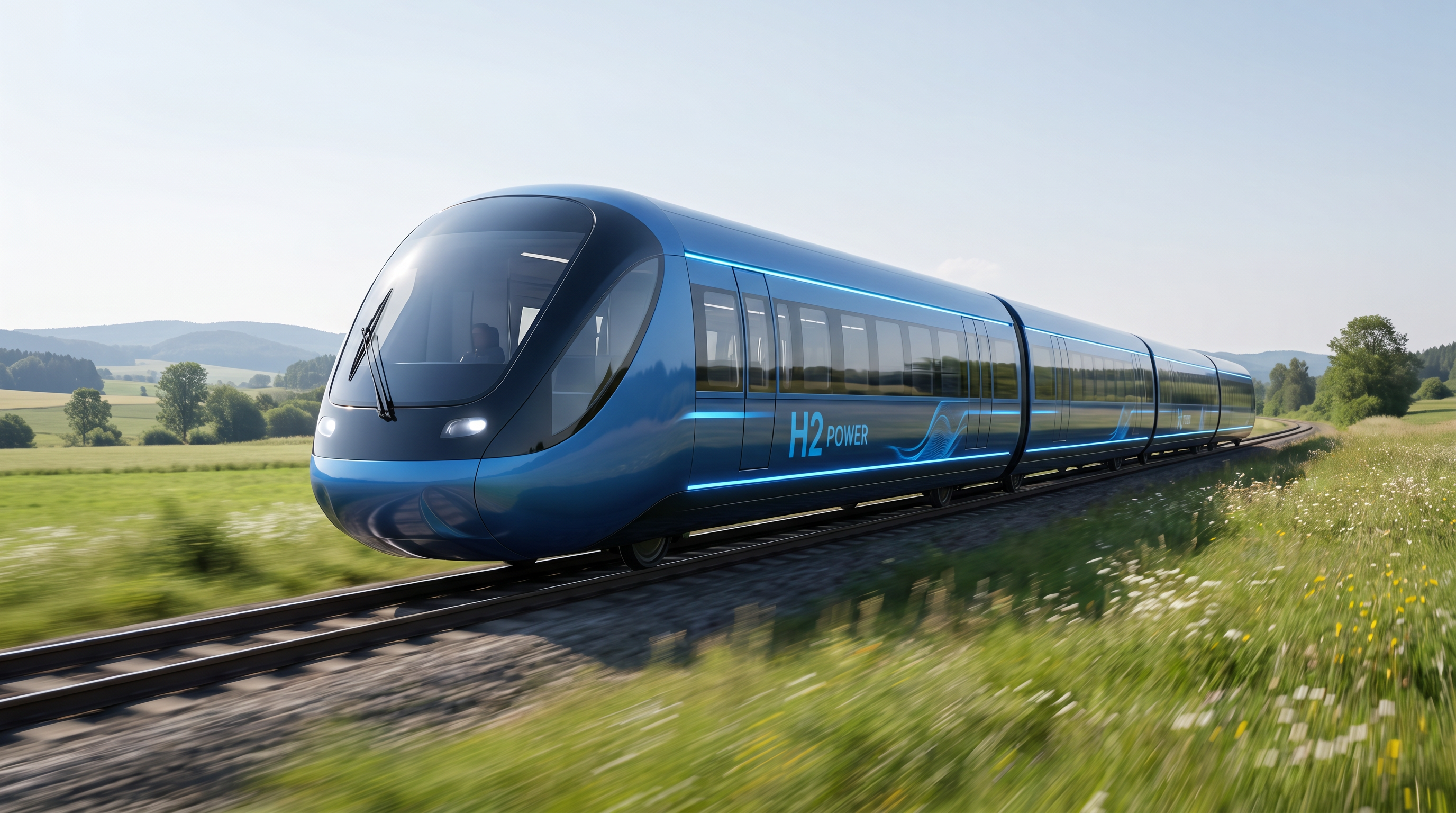
The core technology behind hydrail is the hydrogen fuel cell. Unlike traditional internal combustion engines, these trains do not burn fuel to create forward momentum. Instead, they act as rolling power plants, generating their own electricity on the fly.[1]
The chemistry is elegantly simple. Hydrogen gas, stored in high-pressure tanks typically located on the train's roof, is fed into a fuel cell where it meets oxygen taken from the ambient air.[1]

Inside the fuel cell, an electrochemical reaction splits the hydrogen molecules into electrons and protons. The electrons are forced through a circuit, creating the electrical current that drives the train's traction motors, while the protons combine with the oxygen.[1]
The only byproduct of this entire process is pure water—often emitted as a gentle plume of steam—and heat. The trains operate in near-total silence, eliminating both the greenhouse gas emissions and the localized noise pollution associated with diesel engines.[1]
The pioneer of this technology is the French manufacturer Alstom, which launched the Coradia iLint, the world's first commercial hydrogen passenger train. First deployed in Germany in 2018, the iLint proved that hydrail was not just a theoretical concept, but a viable, daily transit solution.[3][5]
The pioneer of this technology is the French manufacturer Alstom, which launched the Coradia iLint, the world's first commercial hydrogen passenger train.
The primary advantage of hydrogen over other zero-emission technologies is its impressive range. A modern hydrogen train can travel up to 1,000 kilometers on a single tank, matching the operational endurance of its diesel predecessors.[1][4]
Furthermore, refueling a hydrogen train takes roughly 15 to 20 minutes. This fast turnaround time is crucial for rail operators who rely on tight, demanding timetables and cannot afford to leave trains idle for hours to recharge.[1][4]
However, the rise of hydrail has sparked a fierce debate within the transportation sector, pitting hydrogen fuel cells against rapidly advancing battery-electric technology.[2][4]
The core argument against hydrogen lies in its thermodynamic efficiency. The process of using electricity to create green hydrogen via electrolysis, compressing it, transporting it, and then converting it back into electricity inside a fuel cell results in significant energy losses.[2]
Studies indicate that the round-trip energy efficiency of a hydrogen train hovers between 30 and 40 percent. In stark contrast, battery-electric trains, which draw power directly from the grid and store it chemically, boast an efficiency of 85 to 95 percent.[2]

Infrastructure costs also present a formidable hurdle. Building a network of high-pressure hydrogen refueling stations requires massive upfront investment, and the current cost of producing truly "green" hydrogen remains high compared to direct electricity.[2][5]
These economic realities have recently forced some operators to recalibrate their expectations. By late 2025, Alstom paused some of its dedicated hydrogen development programs in Central Europe, citing supply chain bottlenecks and a lack of unified infrastructure investment from regional transport authorities.[3]

Ultimately, the future of decarbonized rail is unlikely to be a winner-take-all battle between hydrogen and batteries. Instead, industry experts predict a hybrid, corridor-specific approach.[2][4]
Battery-electric trains will likely dominate shorter, regional routes where they can partially recharge under existing overhead wires. Meanwhile, hydrogen will serve as the heavy-duty workhorse for long-distance, remote lines where electrification is impossible and batteries are too heavy to carry the necessary charge.[2][4]
By deploying the right technology on the right tracks, the rail industry is steadily engineering a future where the rhythmic clatter of the tracks is no longer accompanied by a cloud of diesel exhaust.[6]
How we got here
2005
The first International Hydrail Conference is held in North Carolina, formalizing the push for hydrogen rail.
2018
Alstom's Coradia iLint, the world's first commercial hydrogen train, enters passenger service in Germany.
2022
A Coradia iLint train sets a world record by traveling 1,175 kilometers without refueling.
2025
Supply chain bottlenecks and rising battery capabilities prompt some European operators to reassess the scale of their hydrogen deployments.
Viewpoints in depth
Hydrogen Advocates
Focusing on operational parity with diesel.
Proponents of hydrail emphasize that rail networks cannot be easily redesigned around the limitations of batteries. Because hydrogen trains can travel up to 1,000 kilometers and refuel in under 20 minutes, they offer a one-to-one operational replacement for diesel locomotives. This allows rail operators to maintain their current timetables and turnaround times without investing billions in trackside catenary wires.
Battery-Electric Proponents
Prioritizing thermodynamic efficiency and grid integration.
Critics of hydrogen point to the inescapable physics of energy conversion. Creating green hydrogen requires massive amounts of renewable electricity, much of which is lost during electrolysis, compression, and the final fuel-cell conversion. Battery advocates argue that it is far more efficient to store that electricity directly in batteries, achieving up to 95% efficiency compared to hydrogen's 40%, making batteries the more economical choice in the long run.
Rail Infrastructure Pragmatists
Advocating for a corridor-specific, mixed-technology approach.
Operators and infrastructure managers tend to view the debate not as a binary choice, but as a toolkit. They argue that batteries are ideal for short commuter lines or routes with intermittent overhead wires, while hydrogen is the necessary solution for deep rural routes, heavy freight, and long-distance corridors where battery weight and charging times become prohibitive.
What we don't know
- How quickly the cost of producing green hydrogen will fall to make hydrail economically competitive with diesel.
- Whether solid-state battery breakthroughs will eventually render hydrogen's range advantage obsolete.
Key terms
- Hydrail
- A generic term for all railway vehicles that use hydrogen fuel cells as their primary source of traction power.
- Fuel Cell
- A device that converts the chemical energy of hydrogen and oxygen into electricity without combustion.
- Green Hydrogen
- Hydrogen produced by splitting water using electricity generated entirely from renewable sources, like wind or solar.
- Electrolysis
- The energy-intensive process of using an electrical current to separate water into hydrogen and oxygen.
- Catenary System
- The system of overhead wires used to deliver electricity to traditional electric trains.
Frequently asked
Are hydrogen trains safe to operate?
Yes. While hydrogen is highly combustible, it is much lighter than air. In the event of a leak, the gas dissipates rapidly upward into the atmosphere, unlike diesel fuel which pools on the ground and creates a lingering fire hazard.
Do hydrogen trains use combustion engines?
No. Most modern hydrogen trains use fuel cells, which generate electricity through a quiet electrochemical reaction between hydrogen and oxygen, rather than burning the fuel.
Why not just use battery-powered trains everywhere?
Batteries are highly efficient but heavy, and they require frequent recharging. Hydrogen is preferred for long-distance, remote routes where installing charging infrastructure is too expensive or logistically impossible.
What is the exhaust from a hydrogen train?
The only byproducts of a hydrogen fuel cell are pure water and heat. This is often emitted as a harmless plume of steam, resulting in zero greenhouse gas emissions at the tailpipe.
Sources
Source coverage
6 outlets
3 viewpoints surfaced






[1]TWI GlobalHydrogen Advocates
What is a Hydrogen Train and How Do They Work?
Read on TWI Global →[2]Tim Harper AnalysisBattery-Electric Proponents
Hydrogen vs Battery Electric: Cost Analysis and Market Opportunities 2030
Read on Tim Harper Analysis →[3]Railway PRORail Infrastructure Pragmatists
Alstom pauses hydrogen train development
Read on Railway PRO →[4]EcoMENABattery-Electric Proponents
What Will Power the Future of Trains - Hydrogen or Batteries
Read on EcoMENA →[5]Railway TechnologyHydrogen Advocates
Hydrail – The Green Transport Solution We've All Been Waiting For?
Read on Railway Technology →[6]Factlen Editorial TeamRail Infrastructure Pragmatists
Synthesis by Factlen editorial team
Read on Factlen Editorial Team →
Every angle. Every day.
Get transportation stories with full source coverage and perspective breakdowns delivered to your inbox.