
How Heat Pumps Actually Work: The Science Behind the Home Heating Revolution
Modern cold-climate heat pumps are outselling gas furnaces by extracting thermal energy from freezing air. Here is the mechanism behind the technology, the real-world economics, and why the 'mild climate only' myth is officially dead.
By Factlen Editorial Team
- Electrification Advocates
- Argue for a rapid, complete transition away from fossil fuel appliances to fully electric homes to maximize carbon reduction.
- HVAC Traditionalists
- Emphasize reliability and upfront costs, often recommending dual-fuel systems for homes in extreme northern climates.
- Energy Economists
- Focus on the financial math of adoption, tracking how utility rates and policy incentives drive consumer behavior.
What's not represented
- · Natural Gas Industry Representatives
- · Low-Income Housing Advocates
Why this matters
Heating and cooling account for roughly half of a typical home's energy use. Understanding how modern heat pumps operate allows homeowners to significantly reduce their utility bills, lower their carbon footprint, and make informed infrastructure investments that last for decades.
Key points
- Heat pumps have consistently outsold gas furnaces in the U.S. since 2021.
- Instead of burning fuel, heat pumps use refrigerants to move existing thermal energy from outside to inside.
- Modern cold-climate models maintain full heating capacity down to 5°F without relying on backup heat.
- Because they transfer heat, they can deliver three to four times more energy than they consume in electricity.
- Dual-fuel systems offer a compromise by pairing a high-efficiency heat pump with a gas furnace for extreme cold snaps.
For decades, the American basement was ruled by the gas furnace. But over the last few years, a quiet revolution has taken place in home heating. Since 2021, electric heat pumps have consistently outsold traditional gas furnaces in the United States, marking a fundamental shift in how we control the climate inside our homes.[5][6]
The surge in adoption is not just an American phenomenon. In Europe, an estimated 28 million residential heat pumps are now installed, driven by a desire for energy independence and stable operating costs. But for many homeowners, the technology remains shrouded in mystery. How exactly does a machine pull heat out of freezing winter air?[5]
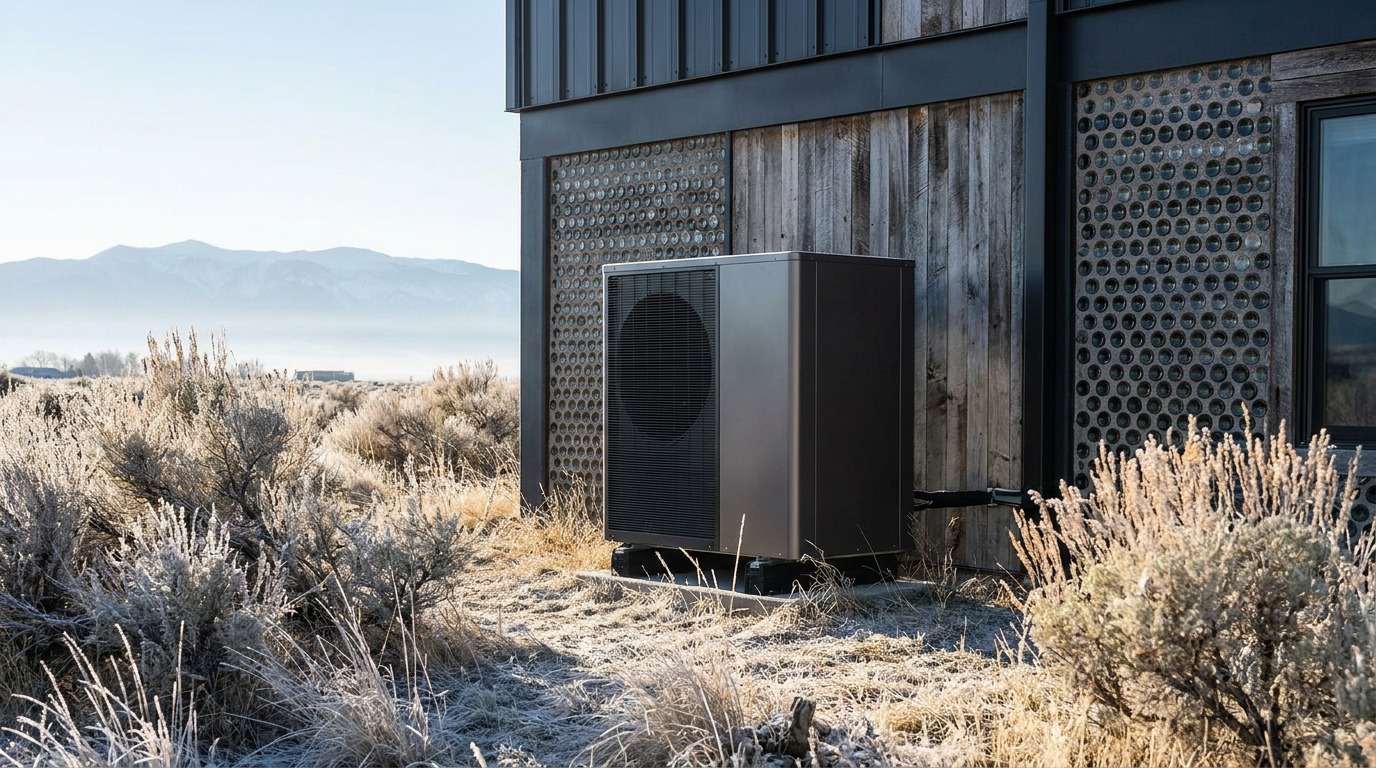
The answer lies in the physics of phase changes and refrigerants. Unlike a furnace, which burns fossil fuels to generate heat, a heat pump simply moves existing heat from one place to another. It is, fundamentally, an air conditioner equipped with a reversing valve.[1][2]
To understand the mechanism, it helps to think of a heat pump as a refrigerator running in reverse. Even when the air outside feels freezing to human skin, it still contains thermal energy. Absolute zero—the point where all heat energy vanishes—is roughly -460°F. At a brisk 10°F, there is still plenty of ambient heat available to extract.[2]

The process relies on a closed loop of chemical refrigerant and four key components: an evaporator, a compressor, a condenser, and an expansion valve. In heating mode, the outdoor unit's fan pulls ambient air across the evaporator coils. Inside these coils, the liquid refrigerant is kept at an extremely low temperature and pressure.[2]
Because the refrigerant is colder than the outdoor air, heat naturally flows from the air into the liquid. This absorbed thermal energy causes the refrigerant to boil and evaporate into a low-pressure gas.[2]
This gas then travels to the compressor—the heart of the system. The compressor squeezes the gas, drastically increasing its pressure. As anyone who has ever used a manual bicycle pump knows, compressing a gas generates significant heat. By the time the refrigerant leaves the compressor, it is a high-pressure, high-temperature gas.[2]
This hot gas is pumped indoors to the condenser coil inside the home's air handler. The indoor fan blows cooler house air across these hot coils, warming the air before distributing it through the ductwork. As the refrigerant transfers its heat to the home, it cools down and condenses back into a liquid.[2]
This hot gas is pumped indoors to the condenser coil inside the home's air handler.
Finally, the high-pressure liquid passes through the expansion valve, which rapidly drops its pressure. This sudden decompression cools the liquid back down to its starting temperature, and it flows back outside to the evaporator coil to begin the cycle again.[2]
Because they move heat rather than create it, heat pumps achieve remarkable efficiency. A high-efficiency gas furnace might convert 96% of its fuel into usable heat. A heat pump, however, can deliver three to four units of heat for every one unit of electricity it consumes—a Coefficient of Performance (COP) of 3.0 or higher.[1][4]

Historically, the fatal flaw of heat pumps was their performance in extreme cold. Older models lost 40% to 60% of their heating capacity when temperatures dropped below freezing, forcing reliance on expensive, inefficient electric resistance backup strips. This spawned a persistent myth that heat pumps are only suitable for mild climates like the American South.[3]
But the technology has evolved dramatically. The most significant advancement in the 2026 market is the maturity of the Cold Climate Air Source Heat Pump (ccASHP). These modern systems utilize variable-speed, inverter-driven compressors that can overspeed to extract more heat when temperatures plummet.[3]
Top-tier cold climate models now maintain 100% of their rated heating capacity down to 5°F, and continue operating efficiently at temperatures as low as -15°F to -22°F. Organizations like the Northeast Energy Efficiency Partnerships (NEEP) now rigorously certify these units, ensuring they perform in harsh northern winters without relying on backup heat.[3][4]
The economics of switching depend heavily on local utility rates. On average, a well-insulated home in a cold climate switching from a gas furnace to a heat pump saves roughly $650 per year in operating costs. However, upfront installation costs typically range from $15,000 to $20,000 for a full central system, making it a significant capital investment.[4]

The financial calculus shifted slightly in early 2026 when the U.S. federal government repealed portions of the Inflation Reduction Act, eliminating the broad 25C federal tax credit for heat pumps. Despite this, adoption has continued to climb. Local municipalities, state programs, and innovative "heating-as-a-service" financing models have stepped in to bridge the gap, proving the technology's standalone economic viability.[6]
For homeowners in the most extreme climates—or those with unusually high electricity rates—the industry has embraced the "dual-fuel" or hybrid system. This setup pairs a high-efficiency electric heat pump with a traditional gas furnace.[3][4]
In a dual-fuel configuration, the heat pump handles the heating load for 80% to 90% of the winter, operating during the milder temperatures where it is vastly more efficient. When a severe polar vortex hits and temperatures drop below a designated economic balance point, the system automatically switches over to the gas furnace.[4]

This hybrid approach offers the best of both worlds: the massive carbon reduction and cost savings of a heat pump, backed by the brute-force reliability of combustion heating during record-breaking cold snaps.[4]
As the global energy mix continues to tilt toward electrification, the heat pump has transitioned from a niche eco-upgrade to the gold standard of residential HVAC. By turning the simple physics of refrigeration inside out, it offers a practical, cash-flow-positive path to decarbonizing the modern home.[5][6][7]
How we got here
1970s
Early heat pumps gain traction during the global oil crisis but struggle with performance in freezing temperatures.
2010s
The widespread introduction of inverter-driven compressors allows heat pumps to operate efficiently in sub-freezing climates.
2021
Annual sales of electric heat pumps surpass traditional gas furnaces in the United States for the first time.
2023
The Northeast Energy Efficiency Partnerships (NEEP) implements strict Version 4.0 standards for cold-climate certification.
Early 2026
Despite the repeal of federal tax credits, heat pump adoption continues to grow, supported by local rebates and new financing models.
Viewpoints in depth
Electrification Advocates
Focus on the urgent need to decarbonize residential infrastructure.
Environmental organizations and energy policymakers view the heat pump as the linchpin of residential decarbonization. Because heat pumps run on electricity, their carbon footprint shrinks every year as the broader power grid transitions to renewable sources like wind and solar. This camp argues that with the advent of modern cold-climate technology, relying on fossil fuels for home heating is no longer technologically necessary, and they advocate for phasing out new gas hookups entirely.
HVAC Traditionalists
Prioritize extreme-weather reliability and upfront cost management.
Many seasoned HVAC contractors and building engineers take a more pragmatic approach. While they acknowledge the efficiency of heat pumps, they point out that in regions with brutal winters and high electricity rates, relying solely on a heat pump can strain both the electrical grid and the homeowner's wallet. This camp strongly favors dual-fuel systems, arguing that keeping a gas furnace as a backup for the coldest 10% of the year is the most responsible engineering choice.
Energy Economists
Analyze the financial math driving consumer adoption.
Market analysts note that the surge in heat pump sales is driven less by environmental goodwill and more by long-term operating savings. By delivering three units of heat for every unit of electricity, heat pumps insulate homeowners from volatile fossil fuel markets. However, economists warn that the high upfront capital cost—often exceeding $15,000—remains a significant barrier, making local rebates and innovative financing models critical to sustaining market growth in 2026.
What we don't know
- How the repeal of federal tax credits in early 2026 will impact long-term adoption rates among middle-income homeowners.
- Whether local electrical grids in colder climates will require significant upgrades to handle the winter peak loads created by mass heat pump adoption.
Key terms
- Coefficient of Performance (COP)
- A measurement of efficiency that compares the amount of heat delivered to the amount of electricity consumed. A COP of 3.0 means the unit delivers three units of heat for every one unit of electricity.
- Cold Climate Air Source Heat Pump (ccASHP)
- A specific class of heat pump engineered with advanced compressors to maintain high heating capacity even in sub-freezing temperatures.
- Inverter-Driven Compressor
- A variable-speed motor that allows a heat pump to precisely adjust its output to match the home's heating needs, rather than just blasting on and off.
- Refrigerant
- A chemical compound used in a heat pump's closed loop that easily boils from a liquid to a gas and condenses back, absorbing and releasing heat in the process.
- Dual-Fuel System
- An HVAC setup that combines an electric heat pump for primary heating with a gas furnace for backup heating during extreme cold.
Frequently asked
Do heat pumps actually work in freezing weather?
Yes. Modern cold-climate heat pumps use variable-speed compressors to maintain 100% of their heating capacity down to 5°F, and can operate efficiently in temperatures as low as -22°F.
Are heat pumps cheaper to run than gas furnaces?
In most climates, yes. Because they transfer heat rather than burn fuel, they are up to three times more efficient, saving the average cold-climate homeowner roughly $650 annually compared to a gas furnace.
Do I still need an air conditioner if I buy a heat pump?
No. A heat pump is essentially an air conditioner that can run in reverse. It provides both high-efficiency heating in the winter and cooling in the summer.
What is a dual-fuel heat pump system?
A dual-fuel system pairs an electric heat pump with a traditional gas furnace. The heat pump handles the heating for most of the winter, and the gas furnace automatically takes over only during extreme cold snaps.
Sources
Source coverage
7 outlets
3 viewpoints surfaced







[1]New York State Energy Research and Development AuthorityElectrification Advocates
How Do Heat Pumps Work?
Read on New York State Energy Research and Development Authority →[2]Bosch Home Comfort
How heat pumps work: sustainable heating
Read on Bosch Home Comfort →[3]Heat Pump NetworkHVAC Traditionalists
The 2026 Guide to Cold Climate Heat Pumps
Read on Heat Pump Network →[4]EnergySageEnergy Economists
Heat pump vs. furnace: Which is right for you?
Read on EnergySage →[5]International Energy AgencyElectrification Advocates
Global Heat Pump Market 2025-2026
Read on International Energy Agency →[6]Euromonitor InternationalEnergy Economists
US Heat Pump Adoption Amid Policy Shifts
Read on Euromonitor International →[7]Factlen Editorial Team
Synthesis by Factlen editorial team
Read on Factlen Editorial Team →
Every angle. Every day.
Get home stories with full source coverage and perspective breakdowns delivered to your inbox.