
How Haute Couture is Shifting from Extraction to Cultivation
Luxury fashion houses are replacing petroleum-based synthetics and exotic skins with lab-grown mycelium, brewed proteins, and materials sourced from regenerative agriculture.
By Factlen Editorial Team
- Heritage Luxury Houses
- Legacy brands balancing sustainability targets with traditional craftsmanship.
- Biotech Innovators
- Startups and material scientists driving the shift from extraction to cultivation.
- Environmental Advocates
- Sustainability watchdogs pushing for systemic, industry-wide change.
What's not represented
- · Traditional leather tanners and livestock farmers facing disruption
- · Fast-fashion executives observing the scalability of these luxury innovations
Why this matters
The fashion industry is one of the world's largest polluters, heavily reliant on fossil fuels and resource-intensive agriculture. The commercial scaling of bio-fabricated materials proves that high-end consumer goods can be decoupled from environmental degradation without sacrificing quality.
Key points
- Luxury brands are shifting from extracting raw materials to cultivating them via bio-fabrication and regenerative farming.
- Mycelium, the root structure of fungi, is being scaled commercially as a biodegradable alternative to calfskin leather.
- Startups are using microbial fermentation to 'brew' proteins that mimic silk and cashmere without animal agriculture.
- Kering has enrolled 1.1 million hectares of land into regenerative agriculture, exceeding its 2025 sustainability targets.
- Scaling these technologies to meet global demand remains capital-intensive and scientifically complex.
The traditional definition of luxury—exotic animal skins, resource-heavy silks, and rare cashmeres—is undergoing a quiet but radical transformation. For centuries, high fashion has been defined by rarity and extraction, pulling the finest materials from the earth to create exclusive garments. Today, the industry is pivoting toward a fundamentally different model, one that relies on biology and ecosystem restoration to define the next era of haute couture.
This shift moves the industry from a paradigm of extracting to one of cultivating. Instead of shearing animals or drilling for petroleum-based synthetics, the next generation of luxury materials is being brewed in vats, grown in laboratories, and harvested from carefully restored landscapes. Innovators are treating biology not as a finite resource to be mined, but as an active design collaborator.[1]
The context for this urgency is stark. The global fashion industry is under immense pressure to reform its supply chains, with synthetic fibers like polyester still accounting for over 60% of global clothing production. These petroleum-derived materials shed microplastics with every wash and languish in landfills for centuries. In response, luxury conglomerates are racing to decouple their financial growth from environmental degradation.[3]

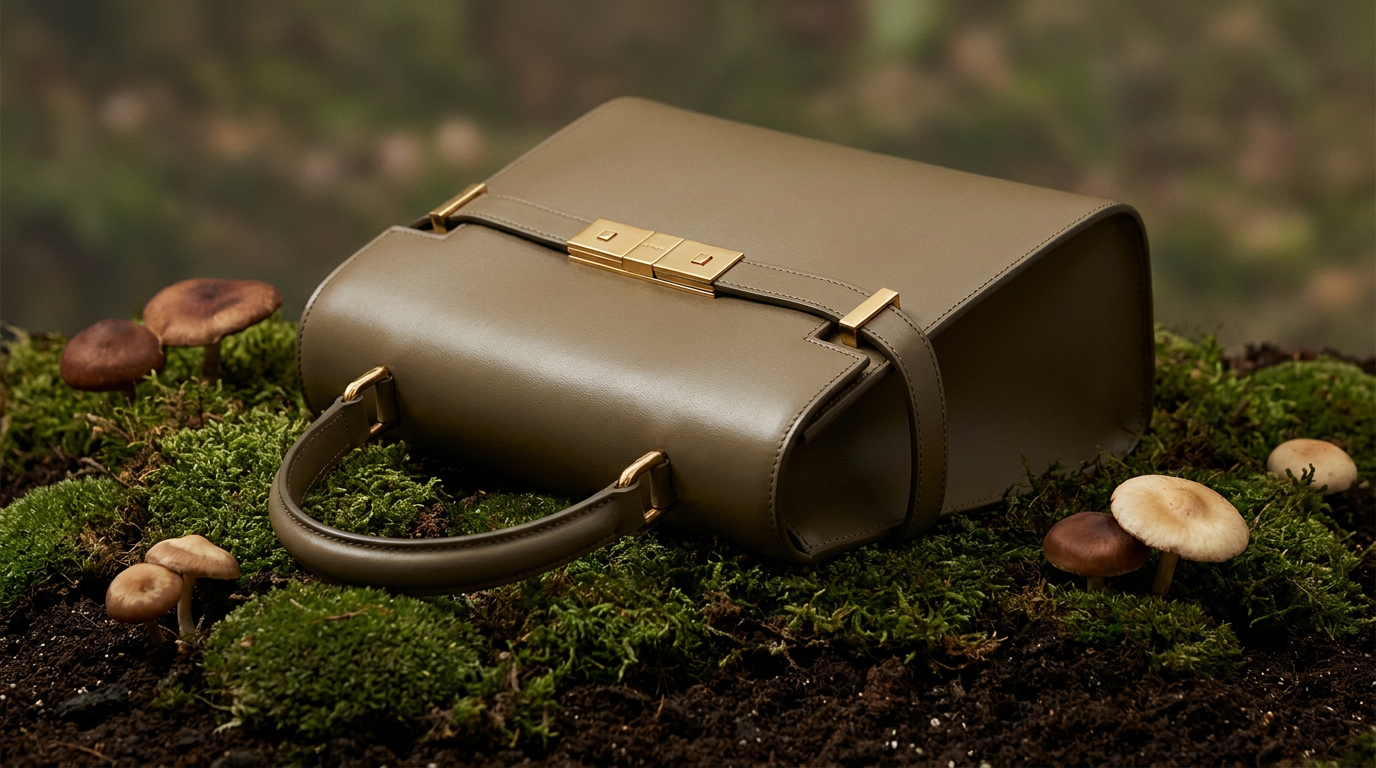
The vanguard of this bio-fabrication movement is mycelium—the dense, root-like network of fungi. Unlike traditional "vegan leather," which is frequently just polyurethane plastic marketed under a green halo, mycelium is a naturally grown, intrinsically biodegradable composite. It offers the tactile luxury of animal hide without the associated methane emissions, heavy water usage, or toxic tanning chemicals.[4]
The mechanism behind mycelium leather is an elegant closed-loop system. The fungal threads, known as hyphae, are cultivated in controlled indoor environments where they feed on agricultural waste, such as sawdust or oat hulls. As the mycelium grows, it forms a dense, durable sheet that closely mimics the grain, warmth, and hand-feel of premium calfskin.[4]
This technology has officially moved out of the experimental phase and into industrial production. Biotech firm MycoWorks recently opened a 136,000-square-foot commercial-scale facility in South Carolina to produce its engineered mycelium material, branded as Reishi. The plant represents a major milestone, proving that bio-fabricated textiles can be scaled to meet the volume demands of global brands.[3][7]

Heritage luxury houses are already integrating these materials into their most iconic product lines. Hermès, the French house famous for its highly exclusive Birkin bags, caused a stir when it reissued its classic Victoria travel bag using a mycelium-based material called Sylvania. Developed in partnership with MycoWorks, the material is tanned and finished in Hermès's own French facilities, signaling that lab-grown textiles can meet the exacting standards of legacy craftsmanship.[7]
Beyond leather alternatives, biotech innovators are brewing entirely new proteins. Japanese company Spiber has developed Brewed Protein, a lab-made fiber that replicates the softness and drape of silk and cashmere. By feeding sugar and nutrients to microbes in a fermentation process similar to brewing beer, the company produces a protein that is spun into high-performance thread, completely bypassing animal agriculture.[1]
Beyond leather alternatives, biotech innovators are brewing entirely new proteins.
Similarly, London-based startup Modern Synthesis is pioneering the use of bacterial nanocellulose. Through microbial fermentation, the company grows a strong, flexible textile that offers a renewable alternative to both animal hides and petroleum synthetics. These materials are designed to be both luxurious and low-impact, proving that sustainability does not require a compromise on aesthetics.[1]
Even the highly toxic dyeing process is being biologically re-engineered. Innovators like Sparxell are creating structural color from plant-based cellulose, replicating the optical effects found in butterfly wings and peacock feathers. This technology creates vibrant, biodegradable pigments and glitters without the use of heavy metals, synthetic chemicals, or microplastics, addressing one of fashion's most persistent pollution problems.[1]
However, lab-grown materials are only half of the luxury sector's new strategy. For the raw materials that must still be farmed—such as cotton, wool, and cashmere—major conglomerates are pivoting heavily toward regenerative agriculture. These farming practices go beyond simply doing less harm; they actively restore soil health, increase local biodiversity, and sequester carbon back into the earth.[6][8]
Kering, the parent company of Gucci, Saint Laurent, and Balenciaga, has been a major driver of this shift. By the end of 2024, the group had enrolled 1.1 million hectares of land into its Regenerative Fund for Nature, exceeding its original 2025 target. The initiative spans 13 projects across eight countries, directly linking the luxury supply chain to active ecosystem restoration.[6]

One of Kering's flagship initiatives is a 342,000-hectare regenerative cashmere project in Mongolia's Gobi Desert. By working with local herders to implement regenerative grazing practices, the project directly addresses the climate adaptation risks of desertification while securing a sustainable source of high-quality cashmere for the group's fashion houses.[6]
Water stewardship is also being radically localized. In late 2025, Kering launched its first Water Resilience Lab in Tuscany's Arno Basin—a critical industrial region for luxury leather production. The lab coordinates ecosystem restoration among local stakeholders, shifting the corporate focus from mere water consumption management to active, geography-specific regeneration.[2][8]
Rival conglomerate LVMH is executing a parallel strategy through its LIFE 360 program. The group has set an aggressive target to ensure that 100% of its strategic raw materials are certified to strict environmental and water-protection standards by the end of 2026. This industry-wide consensus suggests that regenerative sourcing is becoming a baseline requirement rather than an optional marketing initiative.[2]
Despite the rapid momentum, scaling bio-fabricated materials to meet global demand remains a formidable hurdle. Producing consistent, luxury-grade quality in massive volumes is scientifically complex, and many startups are still operating at small-batch or prototype capacity. The transition from lab bench to global supply chain is fraught with engineering challenges.[4]

Furthermore, the infrastructure required to build commercial-scale bioreactors is highly capital-intensive. As a result, these next-generation materials currently carry a premium price tag, restricting their use to the highest echelons of fashion. For bio-couture to truly displace petroleum synthetics globally, production costs must eventually fall to compete with conventional textiles.[4]
The ultimate test will be consumer psychology. Luxury has long been anchored in the heritage prestige of exotic skins and rare animal fibers. Brands must now convince buyers that a handbag grown from fungi or a dress brewed from bacteria possesses the same intrinsic value—and justifies the same premium price point—as traditional materials.[5]
If successful, this dual approach of bio-fabrication and regenerative agriculture will do more than just clean up haute couture's supply chain. It will redefine the very concept of luxury for the 21st century, proving that exclusivity, craftsmanship, and desirability do not have to come at the earth's expense.[5]
How we got here
2021
Hermès announces the integration of MycoWorks' mycelium material into its classic Victoria travel bag.
Late 2023
MycoWorks opens the world's first commercial-scale Fine Mycelium production facility in South Carolina.
2024
Kering surpasses its initial goal, enrolling 1.1 million hectares into its Regenerative Fund for Nature.
Autumn 2025
Kering launches a Water Resilience Lab in Tuscany's Arno Basin to coordinate ecosystem restoration.
2026
LVMH targets 100% certification for all strategic raw materials under its LIFE 360 sustainability program.
Viewpoints in depth
Biotech Innovators
Startups and material scientists driving the shift from extraction to cultivation.
Companies like MycoWorks, Spiber, and Modern Synthesis argue that biology is the ultimate manufacturing platform. They emphasize that lab-grown materials offer superior traceability, lower carbon emissions, and the ability to decouple luxury from both animal agriculture and fossil fuels. For these innovators, the goal is not just to create a 'less bad' alternative, but to engineer materials that actually outperform traditional textiles in durability, customization, and environmental impact.
Heritage Luxury Houses
Legacy brands balancing sustainability targets with traditional craftsmanship.
Conglomerates like Kering and LVMH view bio-fabrication and regenerative agriculture as essential tools for future-proofing their supply chains against climate volatility. However, they are cautious about alienating their core consumer base. Their strategy involves a hybrid approach: selectively integrating bio-materials into classic designs (like Hermès's Victoria bag) while heavily investing in regenerative farming to ensure that the animal and plant fibers they continue to use actively restore the ecosystems they come from.
Environmental Advocates
Sustainability watchdogs pushing for systemic, industry-wide change.
While celebrating the technological breakthroughs of bio-couture, environmental advocates caution that luxury fashion's embrace of these materials must scale beyond limited-edition capsule collections. They argue that as long as synthetic polyester makes up 60% of the broader clothing market, high-end mycelium bags remain a niche solution. They push for the luxury sector to use its massive capital to subsidize the scaling of these technologies so they can eventually replace plastics in everyday apparel.
What we don't know
- Whether bio-fabricated materials can achieve the price parity needed to replace synthetic plastics in the broader, non-luxury fashion market.
- How traditional luxury consumers will respond long-term to paying premium prices for lab-grown materials rather than heritage animal skins.
- If the physical infrastructure for commercial-scale bioreactors can be built fast enough to meet the industry's 2030 climate targets.
Key terms
- Mycelium
- The vegetative, root-like network of fungi, which can be cultivated into dense sheets to replace animal leather.
- Bio-fabrication
- The process of using living organisms, such as bacteria, yeast, or fungi, to grow materials and textiles.
- Bacterial Nanocellulose
- A strong, flexible material grown through microbial fermentation, used as a sustainable alternative to synthetic fabrics.
- Regenerative Agriculture
- Farming and grazing practices that reverse climate change by rebuilding soil organic matter and restoring degraded biodiversity.
- Structural Color
- Color created by microscopic structures that interfere with light, rather than chemical pigments or toxic dyes.
Frequently asked
What is mycelium leather?
It is a leather alternative grown from the root structure of fungi. It feeds on agricultural waste to create a durable, naturally biodegradable material.
Is bio-fabricated leather the same as vegan leather?
No. Most traditional vegan leather is made from polyurethane, a petroleum-based plastic. Bio-fabricated leather is grown from living organisms and does not rely on fossil fuels.
Are major brands actually using these materials?
Yes. Hermès has incorporated mycelium into its Victoria bag, and brands under conglomerates like Kering and LVMH are actively investing in bio-textiles.
What is regenerative agriculture in fashion?
It involves farming practices for materials like cotton, wool, and cashmere that actively restore soil health, increase biodiversity, and draw carbon down into the earth.
Sources
Source coverage
8 outlets
3 viewpoints surfaced








[1]No Kill MagBiotech Innovators
Biofabricate: Where Science Meets Skin
Read on No Kill Mag →[2]LuxuoHeritage Luxury Houses
Kering Unveils Its First Dedicated Water Strategy for a Net Positive Impact by 2050
Read on Luxuo →[3]Smart Fashion NewsBiotech Innovators
A Global Update on Biomaterials in Fashion
Read on Smart Fashion News →[4]Bangladesh Textile JournalBiotech Innovators
Mycelium BioFabric: The Future of Sustainable Fashion
Read on Bangladesh Textile Journal →[5]Green Is The New BlackEnvironmental Advocates
Enter Bio-Couture: The Textile Revolution
Read on Green Is The New Black →[6]One Stop ESGHeritage Luxury Houses
Kering's 2025 and 2026 ESG Disclosures
Read on One Stop ESG →[7]MycoWorksBiotech Innovators
Sustainable Materials are a Vision of Fashion's Future
Read on MycoWorks →[8]KeringHeritage Luxury Houses
Kering Impact Report 2026
Read on Kering →
Every angle. Every day.
Get lifestyle stories with full source coverage and perspective breakdowns delivered to your inbox.