
How Fungi Became Fashion's Most Promising Leather Alternative
Biotech startups are growing mycelium into a biodegradable material that mimics the feel and durability of animal hide. As luxury brands like Hermès and Stella McCartney adopt the technology, the challenge shifts from the lab to commercial scalability.
By Factlen Editorial Team
- Biotech Innovators
- Startups focused on engineering the material properties and scaling production.
- Luxury Fashion Houses
- Heritage brands seeking sustainable exclusivity.
- Environmental Advocates
- Proponents of circular, biodegradable supply chains.
What's not represented
- · Traditional leather artisans and tanneries
- · Cattle farmers
Why this matters
The fashion and automotive industries rely heavily on resource-intensive animal leather and polluting plastic synthetics. Bio-fabricated textiles offer a biodegradable, low-carbon alternative that could drastically reduce the environmental footprint of everyday consumer goods.
Key points
- Mycelium leather is grown from the root-like network of fungi using agricultural waste.
- The material can be cultivated, harvested, and compressed into a durable textile in just a few weeks.
- Luxury brands including Hermès and Stella McCartney have debuted products using the bio-material.
- Unlike synthetic vegan leathers, mycelium does not rely on petroleum-based plastics.
- Scaling production remains a challenge, though major biotech firms are opening commercial factories.
Leather has long been the gold standard for luxury, serving as the foundational material for everything from high-end handbags and bespoke footwear to premium automotive interiors. But its massive environmental toll, coupled with the microplastic pollution generated by synthetic polyurethane 'pleather' alternatives, has left the global fashion industry searching for a sustainable third option. Consumers are increasingly demanding materials that do not rely on resource-intensive animal agriculture or fossil fuels, forcing heritage brands to look toward cutting-edge biotechnology for a solution.[6]
Enter mycelium: the root-like, underground vegetative network of fungi. Over the past few years, a wave of biotechnology startups has figured out how to harness this natural, infinitely renewable web to grow a biological material that mimics the buttery softness, durability, and flexibility of premium animal hide. By taking the biological mechanisms that occur naturally beneath the forest floor and optimizing them inside controlled laboratory environments, scientists have unlocked a new category of bio-fabricated textiles that could fundamentally reshape how consumer goods are manufactured.[1][3]
Unlike traditional bovine leather, which requires years of land- and water-intensive animal agriculture to raise a cow to maturity, mycelium leather is grown in a matter of weeks. It also bypasses the severe ecological drawbacks of synthetic vegan leathers, which are predominantly made from petroleum-derived plastics that take centuries to break down in landfills. Because the fungal network naturally feeds on organic waste and sequesters carbon as it grows, the resulting textile boasts a fraction of the carbon footprint associated with both animal and plastic leathers.[1]
The production process begins in a highly controlled, sterile laboratory environment. Bio-engineers and technicians introduce specific strains of fungal spores to an organic substrate, which serves as the nutritional food source for the growing organism. This substrate is typically composed of abundant agricultural waste products, such as sawdust, straw, hemp, or corn husks, ensuring that the process utilizes materials that would otherwise be discarded or burned. This symbiotic use of waste highlights the circular, zero-waste potential of bio-fabrication from the very first step.[1][2]
Once inoculated, the substrate is placed in dark, warm, and highly humid incubation chambers that meticulously mimic the damp conditions of a forest floor. As the fungi begin to feed, the mycelium digests the complex sugars and proteins present in the agricultural waste. In response, it rapidly branches out, forming a dense, interwoven network of microscopic, thread-like filaments. These filaments act as a natural binding agent, growing through and around the substrate to create a unified, highly resilient structural matrix that serves as the foundation for the leather.[1][2]

Within a remarkably short window of one to three weeks, these microscopic threads fuse together into a solid, foam-like mat that floats atop the substrate. The growth phase is highly tunable; by carefully adjusting environmental parameters such as temperature, humidity, oxygen, and carbon dioxide levels, bio-engineers can dictate the exact thickness, density, and tensile strength of this living textile. For sheet-like leather formation, the growth is often directed into large, flat molds or trays to achieve uniform, continuous layers suitable for commercial cutting.[2]
Once the fungal mat reaches the desired dimensions—typically between one and five millimeters in thickness—the incubation process is halted, and the material is harvested. The raw mycelium is carefully removed from its molds and thoroughly washed to extract any remaining substrate debris or un-digested organic matter. At this stage, the material is a spongy, pale mass that bears little resemblance to the sleek luxury goods it will eventually become, requiring a series of mechanical and chemical treatments to achieve the necessary durability.[2]
To transform the raw foam into a usable textile, the harvested mat is subjected to a rigorous compression process. Heavy industrial rollers or hydraulic presses flatten the spongy mycelium into a dense, thin, and highly flexible sheet. From there, the material is treated with natural, plant-based resins and eco-friendly tanning agents. Crucially, this process deliberately avoids the toxic heavy metals, such as chromium, that are heavily utilized in traditional leather tanning and are notorious for polluting waterways in manufacturing hubs.[1][6]
To transform the raw foam into a usable textile, the harvested mat is subjected to a rigorous compression process.
The resulting bio-textile can be dyed using certified, non-toxic pigments, and mechanically embossed to replicate the exact surface grain of premium calfskin, exotic ostrich, or soft suede. The final product is not only water-resistant and highly flexible, but it also meets stringent industry benchmarks for abrasion resistance, tensile strength, and colorfastness. Furthermore, because it is composed of natural polysaccharides and chitin rather than synthetic polymers, the material remains entirely biodegradable under the right composting conditions at the end of its lifecycle, leaving no microplastics behind.[3][6]
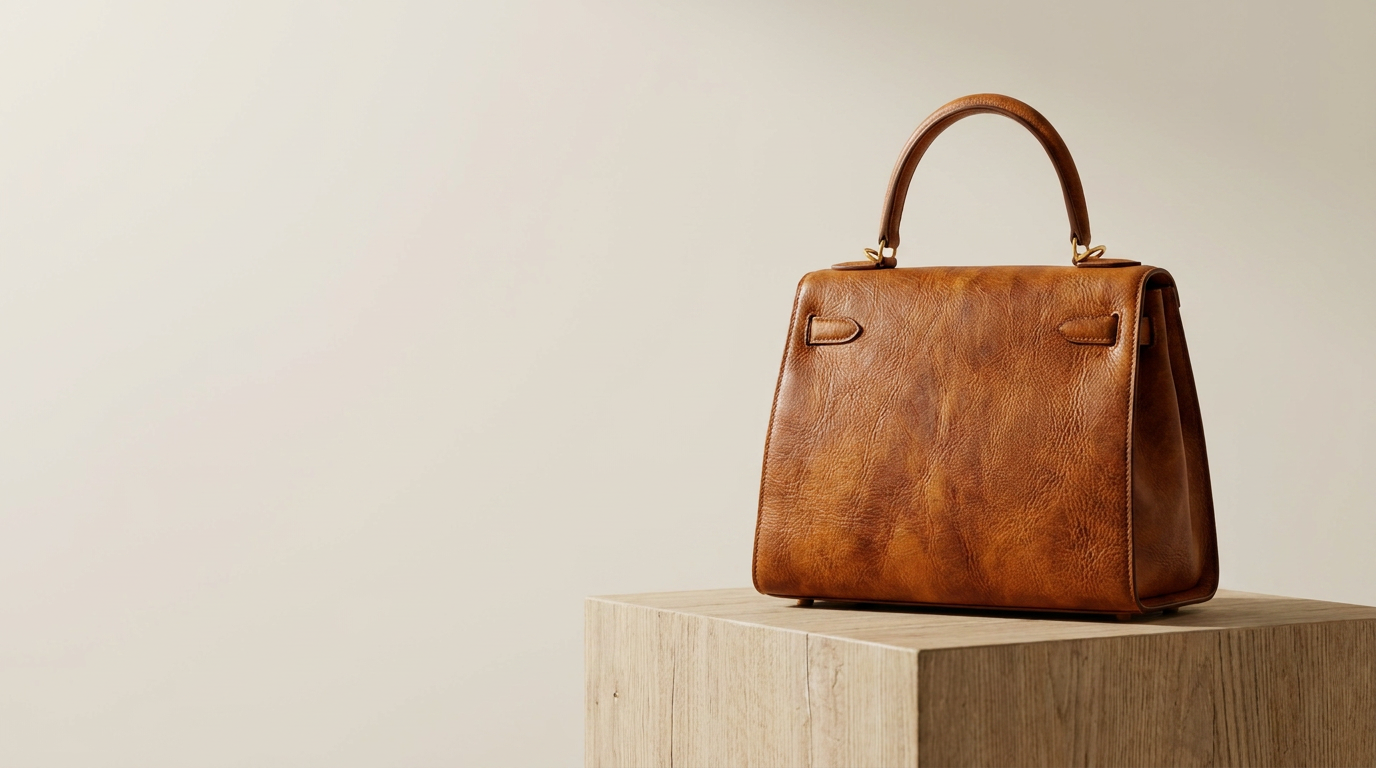
Luxury fashion houses, historically reliant on the scarcity and prestige of exotic animal skins, have taken serious notice of this biological breakthrough. French heritage brand Hermès, globally renowned for its uncompromising leather craftsmanship, partnered with California-based biotech firm MycoWorks to reimagine its classic Victoria travel bag. The collaboration resulted in the creation of 'Sylvania,' a custom, amber-hued mycelium leather that seamlessly integrates the biotech startup's patented Fine Mycelium technology with the fashion house's traditional tanning and finishing expertise, proving the material's viability at the highest echelons of luxury.[4][5]

British designer Stella McCartney, a long-time pioneer of vegan and sustainable fashion, has also heavily invested in the bio-fabrication space. McCartney debuted a striking black bustier and utilitarian trousers made from 'Mylo'—a proprietary mycelium fabric developed by the materials company Bolt Threads. She later introduced a limited, individually numbered run of her iconic Falabella bag crafted entirely from the fungal leather, demonstrating to the broader industry that ethical, animal-free materials do not require a compromise on high-end desirability, structural integrity, or aesthetic appeal.[5]
The appeal of mushroom leather extends far beyond the confines of runway fashion and luxury accessories. MycoWorks' flagship material, Reishi, has been successfully utilized by high-end French furniture maker Ligne Roset for premium upholstery, proving its durability under the strain of daily household use. Additionally, the automotive sector is actively exploring the material; General Motors has integrated the bio-material into the inner door panels of its concept electric vehicles, signaling a broader industrial shift away from petroleum-based synthetic interiors.[3][4]
Despite these high-profile aesthetic and environmental triumphs, the bio-textile industry faces a daunting, existential hurdle: commercial scalability. Transitioning a delicate biological process from a controlled, small-scale lab experiment to massive, continuous commercial manufacturing requires immense capital, highly specialized infrastructure, and precise engineering. Maintaining sterile growth conditions across millions of square feet of fungal mats, while ensuring consistent thickness, tensile strength, and quality across every single batch, remains a significant logistical challenge that has temporarily bottlenecked widespread mainstream adoption.[3][4]
The volatility of scaling biotech innovations became starkly apparent when Bolt Threads, despite raising over $300 million and securing high-profile consortium partnerships with Adidas, Kering, and Lululemon, was forced to pause production of its Mylo material. The company cited a difficult macroeconomic environment and dried-up venture capital funding, illustrating the precarious nature of hardware-heavy biotech startups. The pause served as a sobering reminder that creating a revolutionary material in a lab is only half the battle; financing its global rollout is equally perilous.[4]
Yet, competitors in the space are aggressively pushing forward to fill the void and prove the technology's commercial viability. MycoWorks recently achieved a major milestone by opening a commercial-scale production plant in South Carolina. The sprawling factory is specifically designed to produce millions of square feet of mycelium annually, moving the material out of the realm of limited-edition prototypes and into reliable, high-volume supply chains capable of meeting the rigorous, ongoing production demands of its global luxury brand partners.[4]
Similarly, New York-based Ecovative recently secured an additional $30 million in a funding round to expand its own mycelium textile and packaging operations. This influx of capital signals continued, robust investor confidence in the sector's long-term economic viability, even amid broader market headwinds. By diversifying their product offerings to include biodegradable packaging and alternative proteins alongside high-end fashion textiles, companies like Ecovative are building more resilient, multi-revenue business models to successfully weather the capital-intensive scaling phase of bio-manufacturing.[4]

Market analysts project significant, sustained growth for the bio-fabricated textile sector over the coming decade. The global mycelium leather market, which was valued at a modest $12 million in 2024, is forecast to surge to an estimated $336 million by 2033. This exponential growth trajectory is driven by mounting regulatory pressure on the fashion industry to reduce its carbon emissions, alongside a pronounced shift in consumer preferences toward genuinely sustainable, cruelty-free products that do not rely on greenwashed plastics.[3]
For now, mushroom leather remains a premium, niche product, constrained by high upfront production costs and limited global supply. Consequently, it is currently priced at a premium, accessible primarily to luxury houses and early-adopter boutique brands. However, as massive manufacturing facilities come online, production processes are streamlined, and economies of scale take effect, industry experts anticipate that the price per square foot will drop significantly, eventually making the material economically competitive with mid-tier animal leathers and premium synthetics.[3][6]
If these biotech innovators can successfully bridge the treacherous gap between the laboratory bench and the global supply chain, mycelium could fundamentally rewrite the material reality of the modern fashion industry. By transforming agricultural waste into high-performance, biodegradable textiles, mushroom leather offers a compelling blueprint for a truly circular economy. It stands as a testament to the power of bio-engineering, proving definitively that luxury, durability, and aesthetic beauty do not have to come at the expense of the earth's fragile ecosystems.[6]
How we got here
2013
Early experiments begin using mushroom spores and plant fibers to create solid, dried biomaterials.
2017
Stella McCartney begins experimenting with early iterations of lab-grown vegan leather.
March 2021
Hermès announces a partnership with MycoWorks to reimagine its Victoria travel bag using mycelium.
2023
MycoWorks opens a commercial-scale production plant in South Carolina to supply luxury partners.
2024
The global mycelium leather market reaches an estimated valuation of $12 million.
Viewpoints in depth
Biotech Innovators
Startups focused on engineering the material properties and scaling production.
Companies like MycoWorks and Ecovative view mycelium as a highly tunable platform. By adjusting the growth environment—such as humidity, temperature, and carbon dioxide levels—they can engineer the material's density, flexibility, and strength to meet specific industry benchmarks. Their primary hurdle is transitioning from successful lab prototypes to massive, continuous commercial manufacturing without compromising the material's structural integrity.
Luxury Fashion Houses
Heritage brands seeking sustainable exclusivity.
For brands like Hermès and Stella McCartney, the appeal of mycelium lies in its ability to match the premium tactile experience of animal leather while aligning with modern sustainability goals. These houses view bio-fabricated materials not as cheap substitutes, but as a new category of luxury—one where the value is derived from cutting-edge scientific innovation and environmental stewardship rather than the scarcity of exotic animal skins.
Environmental Advocates
Proponents of circular, biodegradable supply chains.
Sustainability advocates champion mushroom leather because it solves two problems simultaneously: it bypasses the massive land, water, and greenhouse gas footprint of animal agriculture, and it avoids the microplastic pollution associated with synthetic polyurethane 'pleather.' Because mycelium is grown on agricultural waste and can be tanned without toxic heavy metals, advocates see it as a crucial step toward a truly circular fashion economy.
What we don't know
- How quickly production costs will drop to make the material accessible to mid-tier and fast-fashion brands.
- Whether the material can achieve the exact multi-decade longevity of traditional heritage leather under heavy daily wear.
Key terms
- Mycelium
- The branching, thread-like underground root network of fungi, from which mushrooms grow.
- Substrate
- The organic material, such as sawdust or agricultural waste, that fungi feed on and grow through.
- Bio-fabrication
- The process of using living cells or organisms, like bacteria or fungi, to grow materials and textiles.
- Polyurethane (PU)
- A synthetic, petroleum-based plastic commonly used to make traditional 'vegan' or faux leather.
Frequently asked
Is mushroom leather actually made from mushrooms?
No, it is made from mycelium, which is the underground root-like structure of fungi. Mushrooms are just the fruiting body of this network.
Is mycelium leather biodegradable?
Yes. Because it is made from natural fungal fibers and typically treated with plant-based resins rather than plastic coatings, it can biodegrade under the right conditions.
How strong is mushroom leather?
When compressed and tanned, mycelium leather meets or exceeds industry benchmarks for flexibility, abrasion resistance, and durability, making it comparable to animal leather.
Can I buy a mushroom leather bag right now?
Currently, products are limited to exclusive, high-end luxury releases and prototypes, but commercial-scale factories are opening to increase supply and lower costs.
Sources
Source coverage
6 outlets
3 viewpoints surfaced






[1]Sentient MediaEnvironmental Advocates
What Is Mushroom Leather Made Of?
Read on Sentient Media →[2]Cambridge University PressBiotech Innovators
Cultivating mycelium-based leather substitutes
Read on Cambridge University Press →[3]TrellisLuxury Fashion Houses
Hèrmes and Stella McCartney embrace a leather alternative: fungus
Read on Trellis →[4]Business InsiderBiotech Innovators
Handbags and hats made of mushroom leather could become the next luxury items
Read on Business Insider →[5]Harper's BazaarLuxury Fashion Houses
Stella McCartney and Hermès introduce mushroom leather into collections
Read on Harper's Bazaar →[6]Factlen Editorial Team
Synthesis by Factlen editorial team
Read on Factlen Editorial Team →

Every angle. Every day.
Get lifestyle stories with full source coverage and perspective breakdowns delivered to your inbox.