
How an 'Immune Reset' Cancer Therapy is Putting Severe Lupus into Remission
CAR-T cell therapy, originally developed to fight blood cancers, is being repurposed to treat severe autoimmune diseases. Early clinical trials show the treatment can effectively reboot the immune system, offering patients long-term, drug-free remission.
By Factlen Editorial Team
- Clinical Researchers
- Focused on the biological mechanism of the immune reset and the potential for a functional cure.
- Patient Advocacy Groups
- Emphasize the life-changing nature of drug-free remission and the need for broader access.
- Biotech Innovators
- Focused on scaling the therapy through allogeneic (off-the-shelf) and mRNA platforms to reduce costs.
What's not represented
- · Health insurance providers
- · Long-term safety regulators
Why this matters
For decades, severe autoimmune diseases have been managed with lifelong immunosuppressants that blunt the immune system but never cure the underlying dysfunction. This therapy offers the first real possibility of a functional cure—a one-time treatment that reboots the immune system and allows patients to live entirely drug-free.
Key points
- CAR-T cell therapy is being successfully repurposed to treat severe, treatment-resistant lupus.
- The therapy works by destroying malfunctioning B cells, forcing the immune system to reboot.
- Early clinical trials show patients achieving deep remission without the need for lifelong immunosuppressants.
- Researchers are developing 'off-the-shelf' donor therapies to reduce the high cost and wait times.
- The 'immune reset' mechanism could theoretically be applied to multiple other autoimmune diseases.
For decades, a diagnosis of a severe autoimmune disease like systemic lupus erythematosus (SLE) has come with a grim caveat: it can be managed, but never cured. Patients are typically prescribed a lifelong regimen of broad immunosuppressants and corticosteroids. These medications blunt the immune system's mistaken attacks on healthy tissue, but they also leave the patient vulnerable to severe infections and carry a host of debilitating side effects. The goal of modern rheumatology has largely been to keep the disease at bay, minimizing organ damage while accepting that the underlying biological dysfunction remains permanently active.[7]
Now, a revolutionary breakthrough borrowed from the oncology ward is rewriting that reality. Chimeric antigen receptor (CAR) T-cell therapy, originally developed as a last-resort treatment for aggressive blood cancers, is being successfully repurposed to treat severe autoimmune diseases. Early clinical trials are demonstrating that this cellular engineering can effectively put treatment-resistant lupus into deep, drug-free remission.[1][7]
The clinical results emerging from the UK and the US are staggering. In an ongoing Phase I trial known as CARLYSLE, led by University College London Hospitals (UCLH), patients who had exhausted all other treatment options experienced rapid and profound improvements. One patient, who had suffered from severe lupus for over three decades—enduring kidney damage, sepsis, and multi-organ failure—reported that she no longer has any main symptoms of the disease and recently went skiing for the first time in ten years.[2][3]
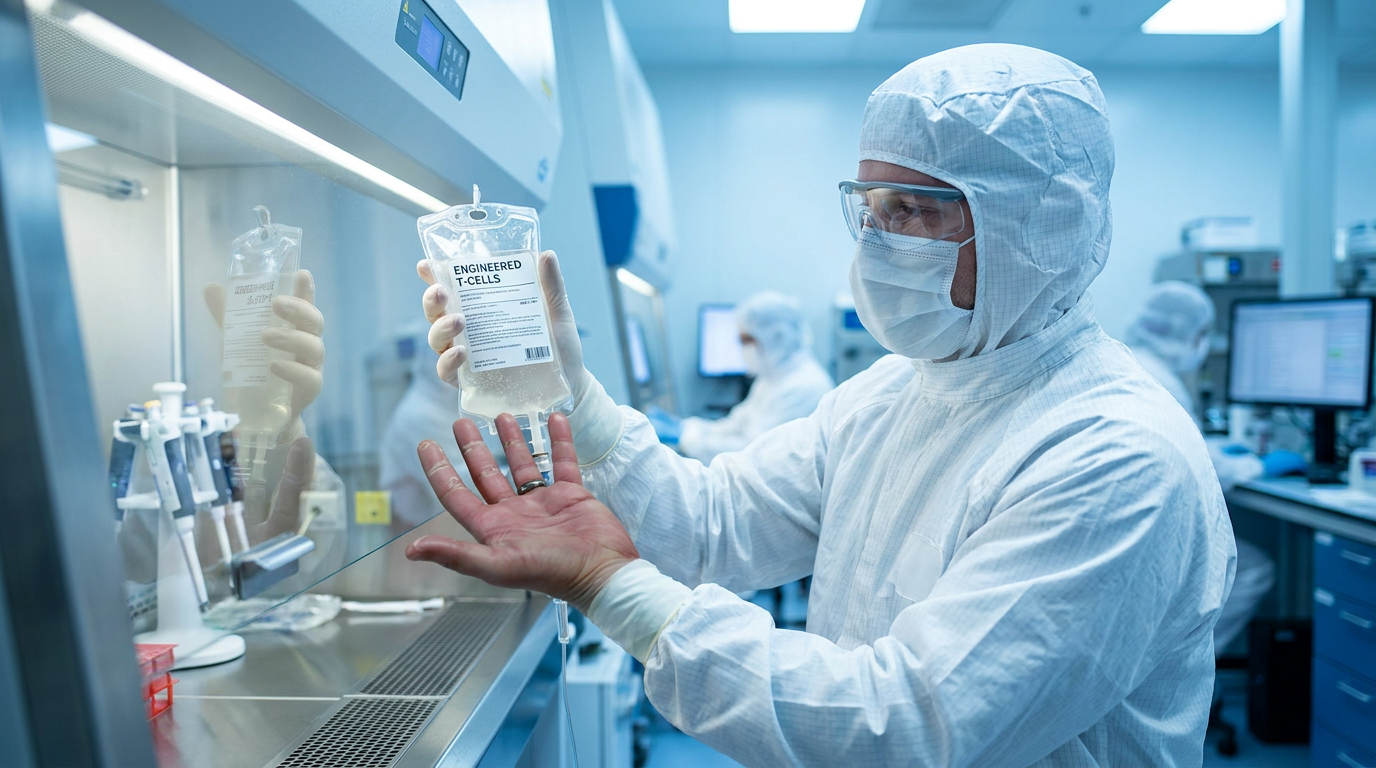
To understand why this therapy is so effective, it is necessary to look at the cellular mechanics of CAR-T. The process begins by extracting a patient's own T-cells—the specialized white blood cells that act as the immune system's hunters. In a highly specialized laboratory, scientists genetically modify these T-cells, equipping them with synthetic receptors (chimeric antigen receptors) designed to seek out and bind to a specific protein.[2][7]

In the case of lupus and many other autoimmune diseases, the target is CD19, a protein found on the surface of B cells. In a healthy immune system, B cells are the factories that produce antibodies to fight off viruses and bacteria. But in a patient with lupus, these B cells malfunction. They lose their immune tolerance and begin churning out autoantibodies—rogue proteins that mistakenly attack the body's own kidneys, joints, skin, and heart.[3][6]
Once the patient's T-cells have been engineered to recognize CD19, they are multiplied by the millions and infused back into the patient's bloodstream. These enhanced T-cells act as a targeted, microscopic strike force. They hunt down and systematically destroy every CD19-expressing B cell in the body, effectively shutting down the production of the harmful autoantibodies that drive the disease.[3][7]
This complete eradication of B cells leads to what researchers are calling an "immune reset." By wiping the slate clean, the therapy forces the immune system to rebuild itself from scratch. Over the course of several months, stem cells in the patient's bone marrow begin to generate a completely new population of B cells to replace the ones that were destroyed.[6][7]
Crucially, when these new B cells emerge, they are "naive." They do not carry the pathological memory of the autoimmune disease. The newly minted cells behave normally, providing standard immune defense without producing the autoantibodies that previously ravaged the patient's organs. The immune system has, in effect, been rebooted to its factory-default state.[3][6]
Crucially, when these new B cells emerge, they are "naive." They do not carry the pathological memory of the autoimmune disease.
The data backing this mechanism is highly encouraging. In the UCLH trial, five of the first six patients treated at a lower dose achieved standard remission criteria within months. Furthermore, patients with lupus nephritis—a severe complication that damages the kidneys—saw rapid stabilization or improvement in their renal function, alongside deep reductions in overall disease activity.[2][3]

The scientific community is now racing to understand the exact parameters of this newfound tolerance. The Lupus Research Alliance recently awarded substantial grants to researchers to study blood and bone marrow samples from CAR-T patients. The goal is to determine at a molecular level how the therapy reshapes the immune system, why some patients achieve sustained remission, and what specific conditions might trigger a relapse.[6]
Despite the immense promise, the current iteration of CAR-T therapy has significant drawbacks. Because it is an autologous treatment—meaning it relies on the patient's own cells—the manufacturing process is bespoke, complex, and slow. Patients must also undergo a grueling regimen of preparatory chemotherapy to clear out their existing immune cells before the engineered T-cells can be infused, a process that carries its own severe risks.[4][7]
To solve these logistical and safety hurdles, the biotechnology industry is rapidly advancing the next generation of treatments: allogeneic, or "off-the-shelf," CAR-T therapy. Clinical trials, such as the RESOLUTION study currently underway at the Norton Cancer Institute, are testing investigational products that use T-cells harvested from healthy donors rather than the patients themselves.[5]
Allogeneic therapy could fundamentally transform the landscape of autoimmune treatment. By genetically modifying donor cells to prevent the patient's body from rejecting them, manufacturers can produce the therapy in large batches and store it for immediate use. This eliminates the weeks-long manufacturing wait time and could drastically reduce the cost of the treatment, making it accessible to a much broader population.[5][7]

Other researchers are exploring mRNA-based CAR-T platforms. Unlike traditional CAR-T, which permanently alters the DNA of the T-cells, mRNA technology programs the cells temporarily. This approach could provide the necessary B-cell depletion while significantly reducing the risk of long-term toxicities, such as cytokine release syndrome or neurotoxicity, which have historically complicated cellular therapies.[4]
The implications of a successful immune reset extend far beyond lupus. If the underlying principle holds true—that depleting rogue B cells allows the immune system to rebuild itself without autoimmune memory—the therapy could theoretically be applied to a vast array of debilitating conditions, including multiple sclerosis, rheumatoid arthritis, polymyositis, and systemic sclerosis.[1][4]
Academic consensus suggests that autoimmune CAR-T therapy has officially moved past the proof-of-concept phase. The focus for the next decade will be on biological precision, optimizing trial designs, and managing the delicate balance of toxicity and efficacy. The near-term readout window from ongoing Phase 1 and 2 trials will be critical in determining whether this approach becomes a standard of care.[4][7]
While long-term data spanning decades is still required to confirm whether these patients are truly "cured," the paradigm has already shifted. The prospect of a one-time treatment that frees patients from the cycle of chronic illness and lifelong medication is no longer a distant theoretical hope—it is a clinical reality currently unfolding in hospitals around the world.[7]
How we got here
2017
The FDA approves the first CAR-T cell therapy for the treatment of blood cancer.
2021
German researchers publish the first case study of a lupus patient treated with CAR-T achieving remission.
2024
Larger patient cohorts demonstrate sustained drug-free remission in severe autoimmune diseases.
June 2026
The UK's UCLH trial reports groundbreaking remission rates, while US trials advance off-the-shelf allogeneic therapies.
Viewpoints in depth
Clinical Researchers
Focused on the biological mechanism of the immune reset and the potential for a functional cure.
For academic researchers and trial investigators, the excitement surrounding CAR-T in autoimmune diseases stems from the profound biological shift it induces. By completely eradicating the CD19-expressing B cells, the therapy doesn't just suppress the disease—it fundamentally alters the immune landscape. Researchers are heavily focused on analyzing bone marrow and blood samples post-infusion to understand why the newly generated B cells do not immediately revert to producing autoantibodies. The central thesis is that the immune system's tolerance can be permanently restored if the pathological memory is wiped clean.
Patient Advocacy Groups
Emphasize the life-changing nature of drug-free remission and the need for broader access.
Patient advocates view this breakthrough as a monumental paradigm shift. For decades, the standard of care for lupus has involved heavy doses of corticosteroids and immunosuppressants, which carry severe side effects including osteoporosis, organ damage, and a high risk of lethal infections. The prospect of a 'one-and-done' treatment that allows patients to live entirely drug-free is seen as the holy grail of rheumatology. However, these groups are also raising early alarms about accessibility, noting that cellular therapies currently cost hundreds of thousands of dollars and require specialized medical centers, potentially leaving marginalized patients behind.
Biotech Innovators
Focused on scaling the therapy through allogeneic (off-the-shelf) and mRNA platforms to reduce costs.
The biotechnology sector is racing to solve the logistical bottlenecks of autologous CAR-T therapy. Because current treatments require harvesting and engineering a patient's own cells, the process is slow and difficult to scale. Innovators are heavily investing in allogeneic therapies—using cells from healthy donors that are genetically modified to avoid rejection. If successful, these 'off-the-shelf' products could be manufactured in bulk and stored at hospitals for immediate use, drastically lowering the price point and transforming cellular therapy from a boutique, last-resort option into a frontline standard of care.
What we don't know
- Whether the newly generated B cells will eventually relearn their autoimmune behavior over a period of 5 to 10 years.
- How the long-term safety profile of CAR-T therapy in autoimmune patients compares to its use in terminal cancer patients.
- Whether the high cost and complex manufacturing of cellular therapies can be scaled to treat the millions of people globally with autoimmune diseases.
Key terms
- Systemic Lupus Erythematosus (SLE)
- A chronic autoimmune disease where the immune system mistakenly attacks healthy tissue, causing inflammation and organ damage.
- CAR-T Cell Therapy
- A treatment that genetically engineers a patient's own immune cells to hunt down and destroy specific target cells.
- B Cells
- White blood cells responsible for producing antibodies; in lupus, they malfunction and produce harmful autoantibodies.
- CD19
- A specific protein found on the surface of B cells, used as a target for the engineered CAR-T cells.
- Allogeneic Therapy
- A treatment using cells from a healthy donor rather than the patient's own cells, allowing for "off-the-shelf" availability.
- Autoantibodies
- Harmful proteins produced by the immune system that mistakenly target and attack the body's own healthy tissues.
Frequently asked
What is CAR-T cell therapy?
It is a treatment that extracts a patient's T-cells, genetically modifies them to attack specific disease-causing cells, and infuses them back into the body.
How does an 'immune reset' work?
By completely wiping out the body's existing B cells, the therapy forces the immune system to generate new, healthy B cells that do not carry the memory of the autoimmune disease.
Is this a permanent cure for lupus?
While early trial patients have remained in drug-free remission for over a year, researchers need long-term data spanning decades to determine if the disease will eventually return.
What are the risks of CAR-T therapy?
The treatment requires a preparatory round of chemotherapy and carries risks of severe immune reactions, though early lupus trials have shown a highly favorable safety profile compared to oncology applications.
When will this be widely available?
The therapy is currently only available through clinical trials for severe, treatment-resistant cases, and widespread regulatory approval is likely still several years away.
Sources
Source coverage
7 outlets
3 viewpoints surfaced







[1]BBCPatient Advocacy Groups
'I've never been this good' – revolutionary immune reset puts lupus in remission
Read on BBC →[2]The GuardianPatient Advocacy Groups
Five lupus patients in England are in remission after being treated with a revolutionary therapy
Read on The Guardian →[3]UCLHClinical Researchers
CAR T-cell therapy transforms life of patient with severe lupus
Read on UCLH →[4]Frontiers in ImmunologyClinical Researchers
Chimeric antigen receptor T-cell (CAR-T) therapy has expanded beyond oncology and is emerging as a promising strategy for autoimmune diseases
Read on Frontiers in Immunology →[5]Norton HealthcareBiotech Innovators
RESOLUTION clinical trial at Norton Cancer Institute explores allogeneic CAR T-cell therapy for treatment-resistant lupus
Read on Norton Healthcare →[6]Lupus Research AlliancePatient Advocacy Groups
Collaborative research explores how breakthrough engineered therapy works, why remission lasts for some patients
Read on Lupus Research Alliance →[7]Factlen Editorial TeamBiotech Innovators
Synthesis by Factlen editorial team
Read on Factlen Editorial Team →

More in health
See all 6 stories →Metabolic Health
Muscle as an Organ of Longevity: The Science of Myokines and Metabolic Health
0 sources

Clinical Evidence
The Evidence for Exercise as a First-Line Mental Health Treatment
0 sources

Diabetes Research
FDA Approves First Disease-Modifying Therapy for Newly Diagnosed Stage 3 Type 1 Diabetes in Youth
0 sources
Longevity Science
The Science of 'Exercise Snacks': How 1-Minute Bursts of Movement Can Transform Longevity
0 sources

Every angle. Every day.
Get health stories with full source coverage and perspective breakdowns delivered to your inbox.