
How an 80% Fertilizer Price Surge is Rewiring Global Agriculture and Food Security
The effective closure of the Strait of Hormuz has trapped a third of the world's fertilizer supply, forcing farmers to drastically alter planting strategies as input costs skyrocket.

Share this story
In short
- Global fertilizer prices have surged by roughly 80% since early 2026 due to geopolitical conflict in the Middle East.
- The effective closure of the Strait of Hormuz has trapped approximately 30% of the world's globally traded fertilizer.
- Farmers are facing a dual cost shock, as the price of natural gas—the primary feedstock for nitrogen fertilizers—has also spiked.
The modern food system is built on a foundation of invisible inputs, and none is more critical to global caloric output than synthetic fertilizer. In the spring of 2026, that foundation experienced a seismic shock.
Global fertilizer prices have surged by roughly 80% since the beginning of the year, driven by geopolitical conflict in the Middle East that has effectively choked off one of the world's most vital maritime trade routes. This sudden price spike has forced the agricultural sector into a defensive posture, scrambling to secure the nutrients necessary to maintain crop yields.[1]
The crisis centers on the Strait of Hormuz, a narrow waterway connecting the Persian Gulf to the Gulf of Oman. This chokepoint typically handles about a third of all globally traded fertilizers, including massive volumes of urea and ammonia exported by Gulf States. Commercial shipping traffic through the strait has plummeted by more than 90% due to the ongoing US-Iran conflict and associated maritime risks.
As millions of tons of agricultural inputs sit stranded at ports or are forced to take vastly longer and more expensive alternative routes, farmers across the Northern and Southern Hemispheres are facing a sudden and severe supply vacuum just as critical planting seasons get underway.[3]
The disruption is not limited to the physical movement of finished fertilizer products. The same geopolitical tensions have triggered a massive spike in global energy markets, creating a compounding crisis for agriculture. Natural gas is the primary feedstock used to manufacture nitrogen-based fertilizers, accounting for the vast majority of their production cost.
As natural gas and crude oil prices climb, the cost to produce new fertilizer skyrockets globally, hitting farmers with a devastating 'dual cost shock.' Producers are now forced to pay exorbitant prices for the nutrients their crops need, while simultaneously paying record prices for the diesel fuel required to run their tractors and irrigation systems.[2]
To understand the stakes of this shortage, one must look at the fundamental biology of staple crops. Nitrogen is the biological engine of leafy growth and high yields in foundational crops like corn, wheat, and rice.
Urea, the most highly concentrated and widely traded nitrogen fertilizer, has seen the sharpest price increases of all inputs, jumping by nearly 50% in just a few weeks in March before stabilizing at roughly 80% above pre-conflict levels. Without sufficient nitrogen applied at exactly the right growth stages, these plants simply cannot develop the robust root systems and heavy grain heads required to feed a growing global population.[1][2][4]
The relationship between fertilizer application and crop output is notoriously unforgiving. Agronomists warn of a biological reality known as a 'nonlinear yield response,' meaning that a modest 10% reduction in fertilizer application does not result in a mere 10% drop in harvest.
Instead, it can lead to a disproportionately large 20% or 30% collapse in total crop volume, particularly in soils that are already nutrient-depleted. For farmers operating on razor-thin margins, the agonizing decision to cut back on expensive inputs virtually guarantees a significantly smaller crop, fundamentally altering the math of global food production for the year.[4]
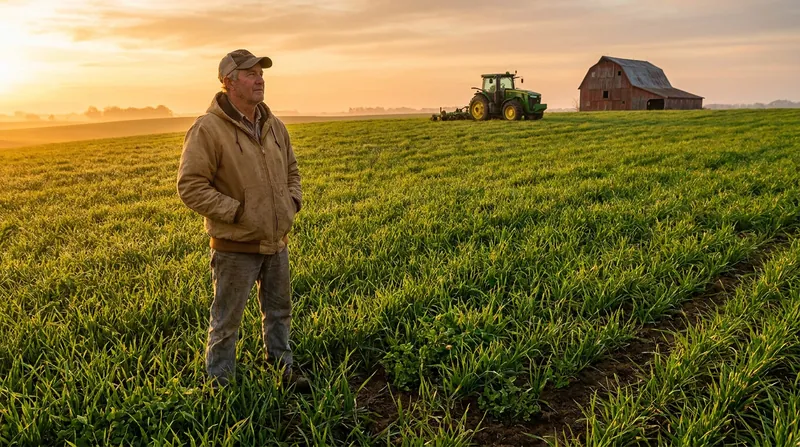
Faced with exorbitant input costs that threaten to erase their profitability, farmers are actively rewiring the agricultural landscape in real-time. Across the American Midwest, parts of South America, and Europe, producers are shifting millions of acres away from fertilizer-intensive crops like corn and wheat.
Instead, they are pivoting to soybeans, a versatile legume that naturally fixes its own nitrogen from the atmosphere and requires a fraction of the synthetic inputs. This massive, sudden crop substitution strategy will have profound long-term implications, permanently altering global grain supplies and reshaping commodity markets for years to come.[3]
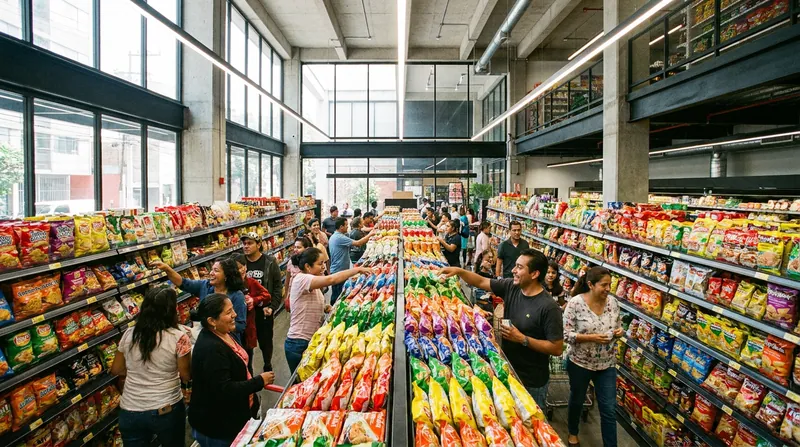
For the end consumer, recipe developers, and the broader culinary world, this agricultural pivot will eventually reshape the reality of the grocery store. A global shift away from wheat and corn toward soybeans fundamentally alters the baseline costs of everyday ingredients.
Flour, cornmeal, and grain-fed animal proteins like beef, pork, and poultry face severe upward price pressure as feed becomes scarce, while soy-based products and certain cooking oils may become comparatively abundant. The foundational ingredients that form the backbone of global recipes and restaurant menus are becoming significantly more expensive to cultivate, guaranteeing higher food inflation.[3][4]
The pain of this fertilizer squeeze is not distributed equally across the globe. In wealthy nations, farmers often have access to robust credit lines, crop insurance, and government subsidies that can help absorb the initial shock, even as their profit margins are severely compressed.
However, in developing regions—particularly across Sub-Saharan Africa and parts of South Asia—smallholder farmers lack the financial buffer to pay double for essential inputs. Many are being forced to plant their fields without any fertilizer at all, guaranteeing a meager harvest that will barely sustain their own families, let alone supply local markets.[2][3]
The human cost of this disruption is alarming international observers and humanitarian organizations. The Food and Agriculture Organization and the World Food Programme have issued stark warnings that the fertilizer shortage could push tens of millions of people into acute food insecurity by late 2026 and 2027. Countries that rely heavily on both imported grains and imported fertilizers are facing a catastrophic simultaneous hit to their fiscal reserves and their domestic food production capabilities, creating a perfect storm for regional instability and widespread hunger.
In response to the crisis, the agricultural sector is rapidly accelerating its adoption of efficiency technologies that were once considered optional upgrades. Precision agriculture—utilizing satellite imagery, soil sensors, and GPS-guided tractors to apply fertilizer only exactly where and when it is needed—has shifted overnight from a luxury investment to a survival necessity. By micro-dosing nutrients and mapping soil variations down to the square meter, farmers can stretch their limited, expensive fertilizer supplies much further, minimizing wasteful runoff and maximizing the yield return on every single granule.[4]
The unprecedented price shock is also driving a massive renaissance in alternative and biological farming practices. There is renewed commercial interest and investment in organic fertilizers, industrial-scale compost, and manure, which are largely insulated from the volatility of global natural gas markets. Additionally, biotechnology firms are seeing a surge in demand for microbial seed treatments—specialized bacteria applied directly to seeds that help plants fix nitrogen naturally from the soil, reducing the absolute need for synthetic urea and offering a glimpse into a more resilient agricultural future.[3][4]
Even if the geopolitical conflict in the Middle East were to resolve immediately and shipping lanes reopened tomorrow, agricultural economists warn that the fertilizer market will not return to normal overnight. The massive supply chain backlog, depleted global stockpiles, and the inherent lag time in manufacturing mean that elevated input costs are likely to persist well into 2027 and 2028.
Jargon, explained
- Urea
- A highly concentrated, widely traded nitrogen fertilizer essential for the leafy growth of staple crops like wheat and corn.
- Strait of Hormuz
- A critical maritime chokepoint between the Persian Gulf and the Gulf of Oman that handles a massive share of global energy and fertilizer exports.
- Nonlinear yield response
- An agricultural principle where a small reduction in fertilizer application leads to a disproportionately large drop in total crop output.
- Precision agriculture
- Farming practices that use satellite imagery and sensors to apply water and fertilizers exactly where needed, minimizing waste.
- Nitrogen fixation
- The process by which certain plants, like soybeans and other legumes, extract nitrogen directly from the atmosphere rather than relying on synthetic fertilizers.
Common questions
Why did fertilizer prices surge so quickly in 2026?
Geopolitical conflict effectively closed the Strait of Hormuz, trapping roughly 30% of the world's globally traded fertilizer and spiking the cost of natural gas used to manufacture it.
How does this affect the food I buy at the grocery store?
As farmers switch from growing wheat and corn to less fertilizer-intensive crops like soybeans, the reduced supply of staple grains will eventually drive up the cost of flour, cornmeal, and grain-fed meat.
Can farmers just use less fertilizer?
They can, but because of a concept called 'nonlinear yield response,' cutting fertilizer by just 10% can reduce the total crop harvest by 20% or more, devastating their profit margins.
Are there alternatives to synthetic fertilizers?
Yes. The crisis is accelerating the use of organic compost, manure, and biological seed treatments that help plants absorb nutrients naturally, though these cannot yet replace synthetic urea at a global scale.
Competing readings
The Macroeconomic View
Analyzing the structural rewiring of global agricultural markets.
Agricultural economists emphasize that the 2026 fertilizer shock is fundamentally altering the math of global farming. Because input costs have risen much faster than the commodity prices farmers receive for their crops, profit margins have evaporated. This camp argues that the massive shift toward soybean cultivation is a rational economic response to margin compression, even though it tightens global grain supplies. They warn that the market will take years to rebalance, as building new fertilizer production capacity outside the Middle East requires massive capital investment and long lead times.
The Food Security View
Highlighting the humanitarian stakes for import-reliant nations.
International agencies and food security advocates view the crisis through the lens of acute vulnerability. While farmers in wealthy nations can lean on credit and subsidies to absorb the shock, producers in Sub-Saharan Africa and parts of Asia cannot. This perspective stresses that an 80% price surge effectively prices developing nations out of the market entirely. Without fertilizer, subsistence and smallholder farmers face guaranteed crop failures, transforming a supply chain bottleneck into a localized hunger crisis that requires immediate international intervention.
The Agronomic View
Focusing on soil science, yield biology, and technological adaptation.
Soil scientists and agronomists are focused on the biological realities of nutrient deprivation. They point to the 'nonlinear yield response'—the fact that plants do not scale their growth perfectly with fertilizer reductions. This camp is urgently pushing for the rapid adoption of precision agriculture and biological nitrogen fixation as survival tactics. By using satellite data to micro-dose nutrients and deploying microbial seed treatments, they argue the agricultural sector can maintain yields while permanently reducing its reliance on synthetic inputs.
- Agricultural Economists
- Focuses on market dynamics, crop substitution, and the macroeconomic impact of the dual cost shock.
- Global Food Security Advocates
- Focuses on the disproportionate impact on import-reliant developing nations and the risk of acute hunger.
- Agronomists & Soil Scientists
- Focuses on the biological reality of nutrient deprivation, nonlinear yield responses, and the push for precision agriculture.
- Farmers & Producers
- Focuses on the immediate financial squeeze, margin compression, and the practical necessity of reducing application rates.
Perspectives this story doesn't cover
- Alternative fertilizer startups and biological agriculture firms capitalizing on the synthetic shortage.
- Consumer packaged goods (CPG) companies modeling the future cost of grain-based ingredients.
Sources
Source coverage
4 outlets
4 viewpoints surfaced




- [1]World BankAgricultural Economists
Global Commodity Market Outlook: Conflict and Climate Shocks
Read on World Bank → - [2]International Food Policy Research InstituteAgricultural Economists
The Iran war has disrupted critical supply chains and driven up the cost of energy and fertilizer
Read on International Food Policy Research Institute → - [3]PBS NewsHourFarmers & Producers
How a fertilizer shortage caused by the Iran war could affect food prices
Read on PBS NewsHour → - [4]Factlen Editorial TeamAgronomists & Soil Scientists
Synthesis by Factlen editorial team
Read on Factlen Editorial Team →
More in Food & Drink
See all →Food Allergies
FDA Reviews Mustard, Celery, and Buckwheat for Inclusion as Major Food Allergens
4 sources

Food Safety
How the Clover Hill Dairy Listeria Recall Works and What It Means for Soft Cheese Safety
4 sources

Regenerative Agriculture
USDA Finalizes 'Regenerative Feedstock Rule' to Unlock Biofuel Markets for Farmers Using Soil-Health Practices
4 sources
Organic Supply Chain
USDA's Landmark 'Strengthening Organic Enforcement' Rule Takes Effect to Combat Supply Chain Fraud
2 sources
Comments
Every angle. Every day.
Get Food & Drink stories with full source coverage and perspective breakdowns, free every day.