
How AI is Rewriting the Rules of Esports Coaching and Analytics
Artificial intelligence is transforming competitive gaming, turning massive datasets into real-time tactical insights and democratizing elite coaching for everyday players.

In short
- The global market for AI esports performance tracking reached $3.2 billion in 2025.
- Pro teams like Team Liquid use natural language AI to query terabytes of match data instantly.
- Consumer tools like Mobalytics and Blitz.gg have democratized elite coaching for everyday players.
The traditional esports grind—defined by grueling hours of manual VOD review, rudimentary stat tracking, and expensive human coaches—is being fundamentally rewritten by artificial intelligence. For years, breaking through a skill plateau required either innate mechanical genius or the financial means to hire a dedicated analyst. Today, the landscape of competitive gaming is undergoing a seismic shift.
Advanced machine learning algorithms and computer vision systems are turning raw gameplay into structured, actionable insights in a matter of seconds. This technological leap is not just altering how professional teams prepare for multi-million-dollar tournaments; it is democratizing elite-level coaching, placing pro-grade analytical power directly onto the desktops of everyday ranked players.[4]
The sheer scale of this transformation is reflected in the explosive growth of the supporting industry. In 2025, the global market for AI in esports performance tracking and coaching reached an estimated $3.2 billion.
Driven by the proliferation of competitive gaming titles and rapid advancements in real-time data analytics, industry analysts project this sector will surge to $14.7 billion by 2034, representing a compound annual growth rate of 18.4 percent. This influx of capital is funding a new generation of software that goes far beyond simple post-match kill-death ratios, delving into the granular biomechanics of how a player interacts with their digital environment.[1][3]
At the highest echelons of competitive play, top-tier organizations are no longer just playing the game; they are mining it for every conceivable statistical advantage. In June 2025, legacy esports powerhouse Team Liquid unveiled a landmark partnership with SAP, integrating the tech giant's Joule AI agents into their core training infrastructure.
This system represents a paradigm shift in how professional teams process information. Instead of analysts spending countless hours scrubbing through replays to identify opponent tendencies, the AI Gameplay Analytics flow empowers every role on the roster, from the head coach to the in-game leader, to interact directly with massive datasets.
The true power of this enterprise-grade system lies in its natural language processing capabilities. Team Liquid's infrastructure allows coaches to query an astonishing 1.6 terabytes of historical match data using plain English prompts. A coach can simply type, 'Which hero counters our opponent at 15 minutes into the match?' and receive a comprehensive, data-backed response in seconds.
According to team analysts, this innovation has shrunk insight latency from over an hour of manual review to near-instantaneous delivery, allowing the squad to tailor their scrim schedules using predictive win-probability graphs and micro-pattern summaries.
However, the most revolutionary aspect of the AI coaching boom is that this technology is not locked behind franchise paywalls or exclusive enterprise contracts. The gap between professional-level analytics and what an everyday ranked player can access has closed faster than most industry observers anticipated.
Consumer-facing platforms have rapidly adapted enterprise-grade machine learning models into lightweight, user-friendly applications that run seamlessly alongside popular titles. These tools are designed to surface the subtle behavioral patterns and strategic missteps that individual games tend to hide, offering a level of objective feedback that a solo replay session rarely catches.[4]
Platforms such as Mobalytics, Blitz.gg, and iTero currently dominate the consumer market, offering robust free or low-cost tiers that cater to players across multiple titles, including League of Legends, Valorant, and Teamfight Tactics. These applications function as comprehensive AI esports coaches, running deep diagnostics across dozens of matches to generate personalized improvement roadmaps. By automatically importing optimal builds and surfacing opponent intelligence before the first ability is even cast, these tools eliminate the guesswork from ranked grinding, allowing players to focus entirely on execution rather than manual research.[2]
Beyond simple statistical aggregation, these consumer engines utilize research-validated algorithms rooted in esports psychology. They establish personal performance baselines, detect early signs of player tilt, and identify correlation patterns between specific in-game decisions and match outcomes. For instance, an AI drafting coach can analyze a player's champion pool against the enemy team's selections to recommend statistically superior picks, effectively winning the strategic battle before the game even loads. This depth of macro analysis provides a structural framework for improvement that was previously unavailable to amateur competitors.
While multiplayer online battle arenas (MOBAs) benefit heavily from strategic macro analysis, first-person shooters (FPS) like Counter-Strike 2 and Valorant require a fundamentally different approach focused on biomechanics. In this arena, AI aim trainers have become indispensable. Platforms like Aim Lab, which has logged over 1.5 billion individual training sessions, utilize artificial intelligence to adapt target speed and size in real time. By constantly adjusting the difficulty to keep the player in the optimal challenge zone, these tools replace hours of unstructured deathmatch practice with highly efficient, targeted mechanical warm-ups.[1][2]
The most advanced and rapidly evolving category within this ecosystem is the 'screen-aware assistant.' Traditional analytics tools often rely on hooking directly into a game's application programming interface (API) or reading its memory—methods that can inadvertently trigger anti-cheat software or violate terms of service. Screen-aware technology circumvents this issue entirely by utilizing sophisticated computer vision models. These systems act as a virtual set of eyes, observing the gameplay exactly as it appears on the monitor without ever interacting with the game's underlying code.
The capabilities of these screen-aware systems are staggering. Driven by improvements in transformer-based model architectures and real-time inference hardware, they can track player gaze patterns, crosshair placement accuracy, and movement efficiency at frame-level precision. This allows the AI to provide granular biomechanical feedback—such as identifying a consistent micro-hesitation before pulling the trigger or suboptimal crosshair positioning when clearing a specific corner. This level of personalized, mechanical critique was previously only available through highly expensive, one-on-one sessions with professional human coaches.[1]
The underlying data pipeline that powers these insights is a marvel of modern software engineering. Raw gameplay footage is captured, processed through complex neural networks, and converted into structured performance insights in under five seconds. For players utilizing demo analysis platforms, the AI can parse massive replay files to generate comprehensive coaching reports that cover weapon recommendations, priority improvement areas, and custom skill profiles. By maintaining historical records, these systems allow players to track their micro-improvements over months of dedicated practice.
The impact of AI gameplay analytics extends far beyond individual coaching, fundamentally reshaping how fans and broadcasters consume esports. In June 2025, platforms like GRID Esports launched advanced insight engines that feed live broadcast overlays with contextual statistics and real-time win predictions. By turning raw server data into a dynamic storytelling engine, commentators can provide viewers with a deeper understanding of the micro-decisions dictating the match. Furthermore, these predictive models are increasingly integrated by bookmakers to refine real-time odds during high-stakes tournaments.
Despite the overwhelming benefits, the rapid proliferation of AI tools has sparked intense debates regarding competitive integrity. The line between a helpful post-match coaching tool and an unfair real-time advantage is becoming increasingly blurred. Real-time assistance (RTA) software, which provides live strategic advice or automated actions during a match, has already caused major scandals in online poker and is now a looming threat in competitive video gaming. Regulators and tournament organizers are scrambling to establish clear boundaries before the technology outpaces the rules.[4]
Game publishers are taking decisive action to protect the sanctity of their competitive ladders. Riot Games, for example, recently narrowed the acceptable functions for third-party overlays during official League of Legends events, strictly prohibiting tools that track hidden information or provide real-time strategic prompts. The overarching philosophy adopted by major developers is that while artificial intelligence can be safely used to analyze past performance and prepare for future matches, the actual execution and decision-making during live gameplay must remain entirely human.
Tournament organizers face an even more complex regulatory landscape. Entities like Valve and the ESL are now forced to review AI tool permissions on a strict case-by-case basis. There is a palpable fear that sophisticated analytics engines could lead to data leakage, providing teams with unfair strategic advantages by exposing confidential scrim records or opponent tendencies mid-match. Additionally, as these platforms ingest massive amounts of behavioral data, concerns regarding data privacy—especially when the matches involve minor competitors—are adding layers of legal complexity to the ecosystem.
Despite these regulatory hurdles, the trajectory of competitive gaming is irreversibly altered. Artificial intelligence is systematically replacing the unstructured, frustrating grind of endless matchmaking with targeted, data-driven practice regimens. Players are no longer guessing what went wrong after a loss; they are presented with an objective, statistical breakdown of their exact mechanical and strategic failures, accompanied by a personalized roadmap for improvement. This shift is raising the baseline skill level across the entire esports ecosystem, making the path to mastery more transparent and accessible.[3][4]
Despite these regulatory hurdles, the trajectory of competitive gaming is irreversibly altered.
As machine learning models continue to evolve, the relationship between gamer and software will only deepen. Future iterations of these tools promise even more emotionally intelligent companions that understand gameplay context and grow alongside the player through shared experiences. The defining skill in the next generation of esports may no longer be purely mechanical prowess or innate reaction time, but rather how effectively a competitor can collaborate with their AI counterpart to identify weaknesses, optimize practice time, and ultimately achieve digital perfection.[4]
Terms to know
- VOD Review
- Video on Demand review; the traditional method of manually watching past match replays to spot mistakes and analyze opponent tendencies.
- Screen-Aware Assistant
- An AI tool that uses computer vision to analyze live gameplay visually from the monitor, rather than hooking into the game's code or API.
- Macro Analysis
- Evaluating the large-scale strategic decisions in a game, such as map control, resource management, and team composition.
- Real-Time Assistance (RTA)
- Software that provides live, in-match advice or automated actions, which is strictly banned in competitive play by major publishers.
Questions readers ask
Are AI coaching tools considered cheating?
Post-match analysis and draft recommendations are generally allowed. However, tools that provide real-time strategic advice or automated aiming violate most publishers' terms of service and are considered cheating.
Do I need a high-end PC to use these tools?
Not necessarily. Most statistical and demo analysis platforms process data in the cloud, meaning they require minimal local computing power to run alongside your game.
Which games have the most advanced AI tools?
MOBAs like League of Legends and tactical shooters like Valorant and Counter-Strike 2 currently have the most robust AI coaching ecosystems due to their massive player bases and structured data outputs.
Different angles
Professional Esports Organizations
Top-tier teams view AI as a mandatory infrastructure investment to maintain a competitive edge.
For professional franchises, the margin between victory and defeat is razor-thin. Organizations are investing heavily in enterprise-grade AI to process massive historical datasets, optimize scrim schedules, and gain predictive insights into opponent tendencies. The ability to query terabytes of data using natural language has transformed the analyst role from manual data collection to high-level strategic interpretation.
Everyday Ranked Players
Amateur competitors embrace AI tools as a cost-effective way to break through skill plateaus.
The democratization of analytics has been a massive boon for the average player. Instead of paying exorbitant hourly rates for human coaching, players can utilize free or freemium tools that provide objective, data-driven feedback. These platforms identify psychological tilt, recommend optimal drafts, and provide biomechanical aim training, making the path to mastery far more transparent.
Tournament Organizers & Regulators
Regulators are focused on maintaining competitive integrity and preventing software-assisted cheating.
As AI tools become more sophisticated, the line between coaching and cheating blurs. Tournament organizers and game publishers are deeply concerned about Real-Time Assistance (RTA) software that could dictate strategy mid-match. Consequently, they are enforcing strict regulations on what third-party overlays can display, ensuring that live execution remains a purely human endeavor.
- Professional Esports Organizations
- Focused on leveraging enterprise-grade AI to process massive datasets, optimize scrim schedules, and gain a predictive edge over opponents.
- Everyday Ranked Players
- Value the democratization of elite coaching, using free or low-cost consumer tools to break through skill plateaus and optimize practice time.
- Industry Analysts & Researchers
- Monitor the explosive market growth while warning of the regulatory and integrity challenges posed by real-time assistance software.
Perspectives this story doesn't cover
- Traditional Human Esports Coaches
- Game Developers
Sources
Source coverage
4 outlets
3 viewpoints surfaced




- [1]DataInteloIndustry Analysts & Researchers
Esports Coaching AI Market Outlook 2025-2034
Read on DataIntelo → - [2]EnebaEveryday Ranked Players
Best AI gaming coach 2026: Tools that actually improve your rank
Read on Eneba → - [3]Market.usIndustry Analysts & Researchers
Global AI in Esports Performance Tracking Market Size, Share and Analysis Report
Read on Market.us → - [4]Factlen Editorial TeamIndustry Analysts & Researchers
Synthesis by Factlen editorial team
Read on Factlen Editorial Team →
More in Gaming & Esports
See all →Tournament Formats
Why Esports Grand Finals Are Killing the Bracket Reset for Map Advantages
3 sources
VCT Champions
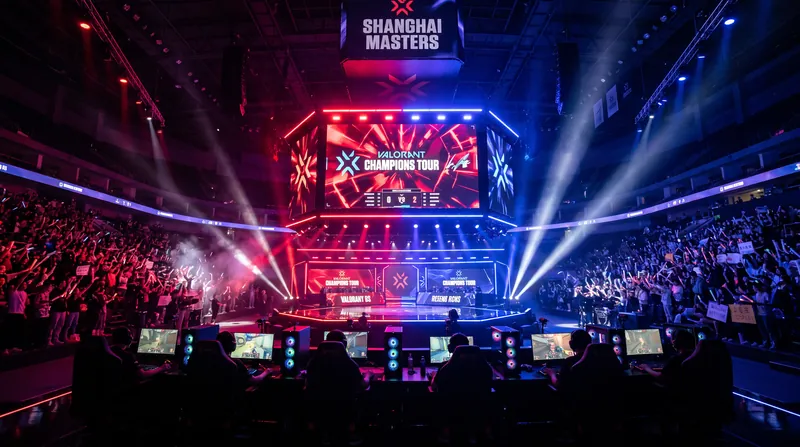
VALORANT Champions 2026 Kicks Off in Shanghai as Final Tournament of Franchised VCT Era
6 sources
Esports Business
Complexity Gaming Ceases Operations After 23 Years as Founder Jason Lake Cites Financial Strain
5 sources
Franchise Quarterbacks
Caleb Williams and Jayden Daniels Suffer Week 2 Injuries, Shaking Up NFL Landscape
3 sources
Comments
Every angle. Every day.
Get Gaming & Esports stories with full source coverage and perspective breakdowns, free every day.