
How 2026 Became the Tipping Point for Right-to-Repair Laws Globally
A wave of new legislation across the European Union and several U.S. states is fundamentally changing consumer rights, forcing manufacturers to make products easier and cheaper to fix.
By Factlen Editorial Team
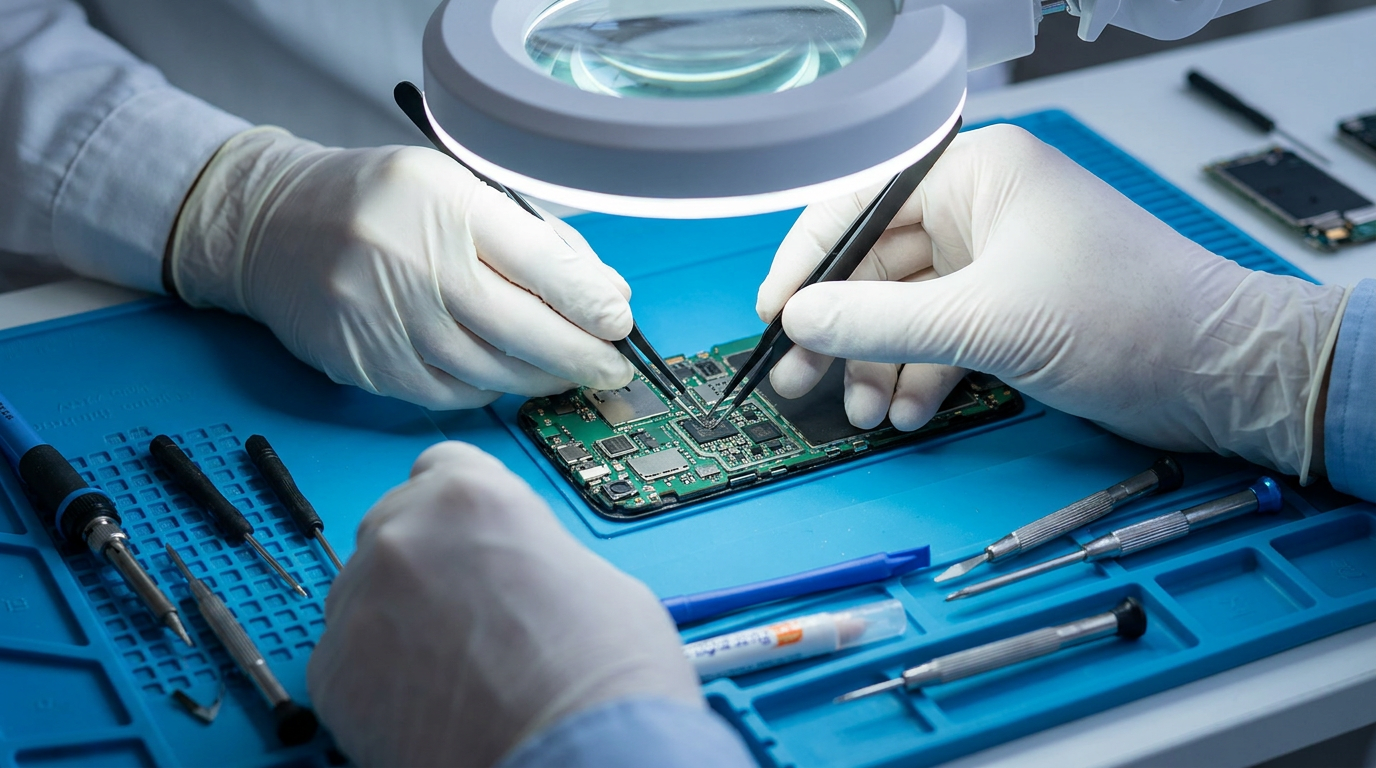
- Consumer Rights Advocates
- Argue that repair restrictions harm consumers by driving up costs, limiting competition, and contributing to environmental waste.
- Legal & Compliance Analysts
- Focus on the regulatory mechanics, compliance deadlines, and the shifting legal obligations for global manufacturers.
- Economic Skeptics
- Warn that forcing OEMs to abandon repair monopolies could lead to higher upfront device prices and unintended environmental consequences.
What's not represented
- · Small-scale electronics innovators
- · E-waste recycling facilities
Why this matters
For decades, manufacturers have used proprietary screws, software locks, and exorbitant service fees to force consumers to replace rather than repair broken electronics and appliances. The new legal frameworks taking effect in 2026 dismantle these barriers, saving consumers money and significantly reducing electronic waste.
Key points
- The EU Right to Repair Directive requires member states to implement national repair legislation by July 31, 2026.
- Consumers in the EU who choose to repair a defective item under warranty receive an automatic 12-month guarantee extension.
- Colorado's comprehensive digital electronics repair law took effect in early 2026, joining California, Minnesota, and New York.
- New legislative frameworks specifically target 'parts pairing,' a practice where manufacturers use software to block unauthorized replacement parts.
The era of the "throwaway society" is hitting a formidable legal wall. For decades, consumers facing a cracked smartphone screen, a malfunctioning washing machine, or a software error on a tractor had little choice but to rely on expensive authorized dealers or simply discard the product entirely.[6]
The year 2026 marks a watershed moment for the global "Right to Repair" movement. Across the European Union and a growing patchwork of U.S. states, legislative bodies are fundamentally shifting the balance of power from manufacturers back to consumers, mandating that products be designed and supported for longevity.[6]
The European Union is leading this regulatory charge with its Right to Repair Directive (2024/1799). The directive, which all member states must transpose into national law by July 31, 2026, establishes a comprehensive framework designed to make repairing goods easier, faster, and more affordable than replacing them.[1]
Under the EU framework, manufacturers of covered products—which currently include washing machines, refrigerators, electronic displays, and smartphones—are legally obligated to offer repairs at a reasonable price and within a reasonable timeframe. Crucially, this obligation extends even after the original commercial warranty has expired.[1]

To actively change consumer behavior, the EU directive introduces a powerful behavioral nudge: if a consumer chooses to have a defective item repaired under warranty rather than demanding a full replacement, they automatically receive a 12-month extension on their legal guarantee. This shifts the financial math heavily in favor of preservation.[1]
Meanwhile, in the United States, the absence of a unified federal law has given rise to a robust patchwork of state-level legislation. Because global manufacturers cannot easily design and distribute different versions of a smartphone for different states, these regional laws are effectively creating a new national standard for hardware design.[2][5]
Colorado's comprehensive digital electronics repair law took effect in early 2026, joining similar pioneering legislation that recently went active in California, Minnesota, and New York. Oregon's highly anticipated law is also on the books, slated for full enforcement in 2027.[2]
Oregon's highly anticipated law is also on the books, slated for full enforcement in 2027.
These U.S. state laws target the specific logistical bottlenecks manufacturers use to monopolize the repair ecosystem. They legally mandate that independent repair shops and everyday consumers must have access to the exact same diagnostic software, service manuals, and specialized spare parts as authorized corporate technicians.[2][3]

A primary target of the 2026 legislative wave is a controversial industry practice known as "parts pairing." This technique involves using proprietary software to cryptographically link a specific hardware component, such as a lithium-ion battery or a biometric sensor, directly to a device's motherboard.[3]
If a consumer or independent technician swaps in a perfectly functional, identical replacement part without the manufacturer's proprietary software handshake, the device may artificially disable features or display persistent warning messages. New laws, particularly Oregon's upcoming framework, explicitly ban this type of software-based restriction.[2][3]
The push for repairability extends beyond consumer electronics into heavy industry. The U.S. Federal Trade Commission has actively pursued antitrust complaints against major agricultural equipment manufacturers, arguing that restricting access to tractor diagnostic software harms farmers and stifles rural economic competition.[5]
However, this sweeping legislative overhaul faces significant pushback from Original Equipment Manufacturers (OEMs) and industry lobbying groups. Tech and appliance giants argue that the new mandates could compromise device integrity and lead to severe unintended consequences for the very consumers they aim to protect.[4][5]

Manufacturers frequently cite cybersecurity and physical safety risks as their primary concerns. They argue that forcing companies to release sensitive diagnostic software or allowing untrained individuals to handle volatile components could lead to data breaches, electrical fires, or dangerous mechanical malfunctions.[5]
There is also a complex economic counter-argument. A recent study from the UC Berkeley Haas School of Business modeled the market dynamics of repair laws and suggested a potential "lose-lose-lose" scenario. The researchers theorized that if manufacturers lose their lucrative post-sale repair monopolies, they may simply raise the upfront retail prices of new devices to compensate for the lost revenue.[4]
Furthermore, the Berkeley study noted an environmental paradox: drastically lowering the cost of repairs might encourage consumers to keep older, highly energy-inefficient appliances running for years longer than they otherwise would, inadvertently increasing overall carbon emissions despite reducing physical electronic waste.[4]

Despite these corporate and academic reservations, the legislative momentum is undeniably on the side of the repair movement. As the July 2026 EU transposition deadline arrives and more U.S. states activate their enforcement mechanisms, the era of the disposable, locked-down gadget is rapidly drawing to a close.[3][6]
The ultimate objective of these legal frameworks is to force a transition toward a true circular economy. By requiring products to be modular, durable, and transparently documented from the moment they leave the factory, lawmakers are fundamentally rewriting the social contract between the people who make technology and the people who buy it.[1][6]
How we got here
July 2021
The U.S. President issues an executive order directing the FTC to draft right-to-repair rules.
December 2023
New York's Digital Fair Repair Act becomes the first major U.S. state law to take effect.
July 2024
The EU formally adopts the Right to Repair Directive; California and Minnesota laws take effect.
January 2026
Colorado's comprehensive digital electronics repair law goes into active enforcement.
July 2026
Deadline for all EU member states to transpose the Right to Repair Directive into national law.
Viewpoints in depth
Consumer Rights Advocates
Advocates argue that repair restrictions are anti-competitive and environmentally destructive.
Consumer protection groups and environmentalists view the 2026 legislative wave as a necessary correction to decades of corporate overreach. They argue that when a consumer purchases a device, they should own it entirely—including the right to open it, modify it, and fix it. By forcing manufacturers to provide access to manuals, tools, and parts at fair prices, advocates believe these laws will break localized repair monopolies, lower costs for everyday people, and significantly reduce the millions of tons of electronic waste generated annually.
Original Equipment Manufacturers (OEMs)
Manufacturers argue that unrestricted repair access poses severe safety, security, and intellectual property risks.
Tech giants and heavy equipment manufacturers have strongly opposed broad right-to-repair mandates. They argue that modern electronics are highly complex and that allowing untrained individuals to access sensitive diagnostic software or handle volatile components like high-capacity lithium-ion batteries could lead to dangerous malfunctions or electrical fires. Furthermore, OEMs express concern that mandated transparency could force them to expose proprietary trade secrets and create vulnerabilities that malicious actors could exploit to bypass cybersecurity protocols.
Economic & Environmental Skeptics
Some academic researchers warn that repair laws could trigger unintended market consequences.
While the intent behind right-to-repair laws is widely supported, some economic models suggest a more complicated reality. Researchers, such as those at the UC Berkeley Haas School of Business, warn of a potential 'lose-lose-lose' scenario. If manufacturers lose the recurring revenue generated by their authorized repair networks, they may simply raise the upfront retail price of new devices to compensate. Additionally, making repairs artificially cheap could incentivize consumers to keep older, highly energy-inefficient appliances running for years longer than they should, inadvertently increasing overall carbon emissions.
What we don't know
- It remains unclear if manufacturers will raise the upfront retail prices of new devices to offset the loss of their lucrative repair monopolies.
- The exact enforcement mechanisms and penalty structures for non-compliance across all 27 EU member states are still being finalized.
Key terms
- Parts Pairing
- The use of software locks to tie specific hardware components to a device, preventing unauthorized replacements from functioning properly.
- Original Equipment Manufacturer (OEM)
- The company that originally designed and built the product, such as Apple, John Deere, or Samsung.
- Ecodesign Directive
- An EU framework that sets ecological and repairability requirements for products sold in the European market.
- Circular Economy
- An economic model focused on minimizing waste and making the most of resources by repairing, reusing, and recycling products.
- Digital Lock
- Software or firmware mechanisms designed to restrict access to a device's internal systems or diagnostic data.
Frequently asked
What products are covered under the new EU directive?
The EU directive currently covers products with existing Ecodesign repairability requirements, including washing machines, refrigerators, electronic displays, smartphones, and tablets.
Does the right to repair mean I can fix my own car?
While some laws focus strictly on consumer electronics, others specifically target vehicles and agricultural equipment. The scope varies heavily by jurisdiction, but the broader movement aims to include automotive repair data.
What is "parts pairing"?
Parts pairing is a practice where manufacturers use software to link a specific hardware component to a device. If the part is replaced without the manufacturer's software authorization, the device may disable features or display warnings.
Will these laws make electronics cheaper?
Repairing devices will likely become cheaper and more accessible. However, some economists warn that manufacturers might raise the upfront retail prices of new products to offset the loss of their repair monopolies.
Sources
Source coverage
6 outlets
3 viewpoints surfaced





[1]Lewis SilkinLegal & Compliance Analysts
The EU Right to Repair Directive: What businesses need to know
Read on Lewis Silkin →[2]JD SupraLegal & Compliance Analysts
State “Right to Repair” Patchwork Grows as Electronic Device Manufacturers Face New Compliance Deadlines
Read on JD Supra →[3]Consumer ReportsConsumer Rights Advocates
Right to Repair Model State Law
Read on Consumer Reports →[4]UC Berkeley Haas School of BusinessEconomic Skeptics
Why right-to-repair laws could have unintended consequences
Read on UC Berkeley Haas School of Business →[5]American Bar AssociationLegal & Compliance Analysts
The Right to Repair and Its Impact on Consumers and Manufacturers
Read on American Bar Association →[6]Factlen Editorial TeamConsumer Rights Advocates
Synthesis by Factlen editorial team
Read on Factlen Editorial Team →

Every angle. Every day.
Get law justice stories with full source coverage and perspective breakdowns delivered to your inbox.