
Google Fights to Keep $1.7 Billion EU Antitrust Fine Annulled in Top Court Hearing
Google urged the European Union's highest court to uphold a 2024 ruling that scrapped a €1.49 billion antitrust fine over its AdSense advertising platform. The hearing tests the evidentiary burden regulators must meet to prove market harm.

Share this story
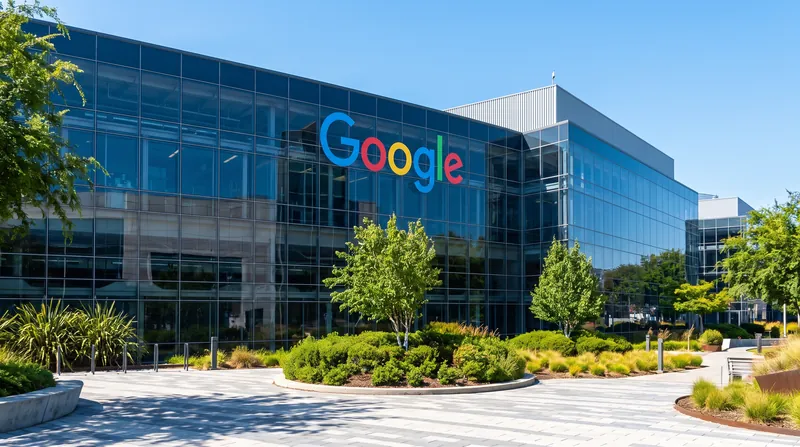
Alphabet's Google appeared before the Court of Justice of the European Union (CJEU) in Luxembourg on Wednesday, urging the bloc's highest court to dismiss an appeal by antitrust regulators and preserve the annulment of a €1.49 billion ($1.7 billion) fine. The hearing marks the final judicial phase of a dispute over Google's AdSense platform that has spanned more than a decade.
The high-stakes legal battle centers not just on the financial penalty, but on the rigorousness of the evidence required to penalize dominant technology platforms. The European Commission is fighting to reinstate the 2019 fine, arguing that a lower court's decision to scrap the penalty fundamentally misapplied established competition law and set a dangerous precedent for future enforcement.[1][3][4][5]
The core of the evidentiary dispute traces back to Google's AdSense for Search business between 2006 and 2016. The European Commission originally found that Google abused its dominant market position by inserting restrictive exclusivity clauses into contracts with third-party website publishers.
According to the Commission's initial findings, these contractual provisions prevented publishers from displaying search advertisements supplied by Google's competitors. In cases where rival ads were allowed, regulators alleged that Google imposed strict placement restrictions that marginalized competing services and reduced their visibility to consumers, effectively ensuring that Google's own advertisements received priority placement on the most lucrative digital real estate.[1][3][4][6]
Regulators argued that these exclusivity clauses artificially reinforced Google's dominance in the search advertising intermediation market, effectively locking out competitors and denying them the scale necessary to challenge the tech giant. Google proactively removed the disputed clauses from its publisher agreements in 2016, three years before the Commission finalized its penalty.
However, the case took a dramatic turn in September 2024 when the EU's General Court—the bloc's second-highest tribunal—entirely annulled the €1.49 billion fine. The ruling represented a rare and significant setback for the European Commission, which has historically prevailed in major technology antitrust enforcement actions across the continent.[1][3][5][6]
In its 2024 decision, the General Court concluded that the Commission's evaluation of the restrictive clauses contained "significant shortcomings." The judges ruled that regulators had failed to account for all relevant circumstances, particularly the actual duration of the contested contracts and whether they genuinely harmed competition in practice.
At the July 15, 2026 hearing, the European Commission mounted a fierce defense of its original investigation. Commission lawyer Anthony Dawes warned the five-judge CJEU panel that the lower court's annulment turned established antitrust case law "on its head," arguing that the ruling fundamentally misunderstood the mechanics of digital monopolies.[1][3][4][7]
Dawes argued that the General Court's 2024 ruling placed an unprecedented and retroactive investigative burden on regulators. By demanding exhaustive proof of market harm for every contract, the Commission claims the lower court effectively treated exclusive corporate clauses as lawful by default, undermining regulators' ability to police dominant firms.
The Commission maintains that when a company holds a dominant market position, exclusivity clauses inherently restrict competition by depriving rivals of the oxygen they need to survive, and that regulators should not be forced to conduct impossible counter-factual economic studies to prove what is already evident.[3][4][5][6]
Google's legal counsel, Josh Holmes, firmly rejected the Commission's appeal, asserting that the General Court's reasons for overturning the fine were "clear and complete." Holmes argued that the Commission's new arguments before the top court were legally flawed and failed to address the glaring evidentiary gaps in the original 2019 decision. Defending the annulment, Holmes emphasized that the regulatory body had systematically ignored clear evidence demonstrating that Google's industry competitors maintained substantial, fair opportunities to compete in the digital advertising landscape during the 2006-2016 period.[1][3][5][6]
The AdSense penalty represents one pillar of a multi-front regulatory conflict that has seen the European Commission levy four distinct antitrust fines against Google, totaling approximately €9.5 billion. These cases have targeted various segments of the company's ecosystem, including its comparison shopping service, its mobile software practices, and its broader advertising technology stack. For nearly two decades, Google has served as the primary target of Europe's tech crackdown, with each case testing the boundaries of how far regulators can go to dismantle digital monopolies and force open closed ecosystems.[1][3][4][6]
The AdSense hearing arrives just weeks after a separate, major ruling by the CJEU. In early July 2026, the top court dismissed Google's final appeal against a €4.1 billion fine related to its Android operating system, cementing the EU's authority to penalize the company for throttling competition in the mobile sector.
However, legal analysts note that the AdSense case hinges on a different legal standard than the Android dispute. While the Android case focused on ecosystem-wide bundling and pre-installation mandates, the AdSense appeal specifically tests the evidentiary threshold required to prove that legacy business-to-business contracts actively restricted market access.[2][4]
The outcome of this appeal will set a binding precedent for how competition authorities must construct their cases moving forward. If the CJEU upholds the annulment, the European Commission will be forced to meet a significantly higher burden of empirical proof when challenging the contractual practices of global digital platforms.
This could complicate future enforcement actions, requiring regulators to gather massive amounts of market data to prove that specific clauses directly caused financial harm to competitors, rather than relying on the structural assumption that exclusivity from a dominant player is inherently anti-competitive.[2][4]
The timeline for a final resolution is now set in motion. A court adviser, known as an Advocate General, is scheduled to deliver a non-binding legal opinion on the appeal on November 12, 2026, providing the first major indication of how the court might rule.
While the Advocate General's opinion does not strictly bind the court, it is historically highly influential in shaping the CJEU's eventual reasoning and often predicts the final outcome of complex antitrust disputes. The final, binding judgment from the five-judge panel is expected in the months following the November opinion.[2][3][5][6]
Key points
- Google appeared before the EU's highest court to defend a 2024 ruling that annulled a €1.49 billion antitrust fine related to its AdSense platform.
- The European Commission argued that the lower court's annulment placed an unprecedented and unreasonable evidentiary burden on regulators.
- Google's legal team countered that the Commission failed to prove its exclusivity clauses actually harmed competition between 2006 and 2016.
- The case serves as a critical test of the evidence required to penalize dominant tech platforms under European competition law.
What we don’t know
- How the CJEU will balance the burden of proof between regulators demonstrating theoretical harm versus companies demanding empirical evidence of market lockout.
- Whether the Advocate General's upcoming November opinion will side with the Commission's strict interpretation of competition law or uphold the lower court's annulment.
How we got here
2006–2016
Google includes exclusivity clauses in its AdSense for Search contracts with third-party publishers.
2016
Google proactively removes the disputed restrictive clauses from its publisher agreements.
March 2019
The European Commission fines Google €1.49 billion, alleging the clauses illegally restricted competition.
September 2024
The EU's General Court annuls the fine, citing significant errors in the Commission's assessment.
July 2026
The European Commission appeals the annulment before the Court of Justice of the European Union.
- European Commission
- Argues that exclusive clauses by dominant firms inherently restrict competition and that requiring exhaustive proof of market harm undermines regulatory enforcement.
- Google & Tech Platforms
- Maintains that regulators must prove actual market harm with concrete evidence, rather than relying on theoretical assumptions about contract clauses.
- Antitrust Legal Analysts
- Focuses on the precedent this case sets for the evidentiary standards required in future EU competition enforcement under the Digital Markets Act.
Perspectives this story doesn't cover
- Third-party web publishers who used AdSense
- Rival search advertising providers
Sources
Source coverage
7 outlets
3 viewpoints surfaced







- [1]PYMNTSGoogle & Tech Platforms
Google Seeks EU Court Backing to Preserve Reversal of €1.49 Billion Antitrust Fine
- [2]GuruFocusAntitrust Legal Analysts
Google Appeals €1.49 Billion EU Antitrust Fine Reversal
- [3]The Economic TimesEuropean Commission
Google urges EU top court to dismiss EU antitrust appeal
- [4]The Logical IndianAntitrust Legal Analysts
Google's fight to overturn a €1.49 billion European Union antitrust penalty
- [5]The News InternationalEuropean Commission
Will Google escape $1.7 billion EU fine? Top court hears appeal
- [6]Global Banking & Finance ReviewGoogle & Tech Platforms
Google and EU Antitrust Dispute Overview
- [7]Court of Justice of the European Union
Case C-826/24 P Commission v Google and Alphabet (Google AdSense)
More in Technology
See all →Open Ecosystems
EU Orders Meta to Reopen WhatsApp to Rival AI Assistants in Major Win for Consumer Choice
4 sources
AI Regulation
EU AI Act High-Risk System Enforcement Begins August 2, Triggering Fines Up to 7% of Global Revenue
2 sources
Cloud Infrastructure
EU Antitrust Regulators Target AWS and Azure for DMA 'Gatekeeper' Status, Expanding Regulation to Cloud Infrastructure
3 sources

Right to Repair
EU's Sweeping 'Right to Repair' Mandate Takes Effect, Forcing Tech Giants to Open Their Ecosystems
2 sources

Comments
Every angle. Every day.
Get Technology stories with full source coverage and perspective breakdowns, free every day.