
Google DeepMind CEO Proposes Wall Street-Style Watchdog to Test and Bar Dangerous AI Models
Demis Hassabis is calling for a U.S.-led, industry-funded regulatory body modeled after FINRA to mandate 30-day safety tests for advanced AI systems before public release.
By Logan Price
Share this story
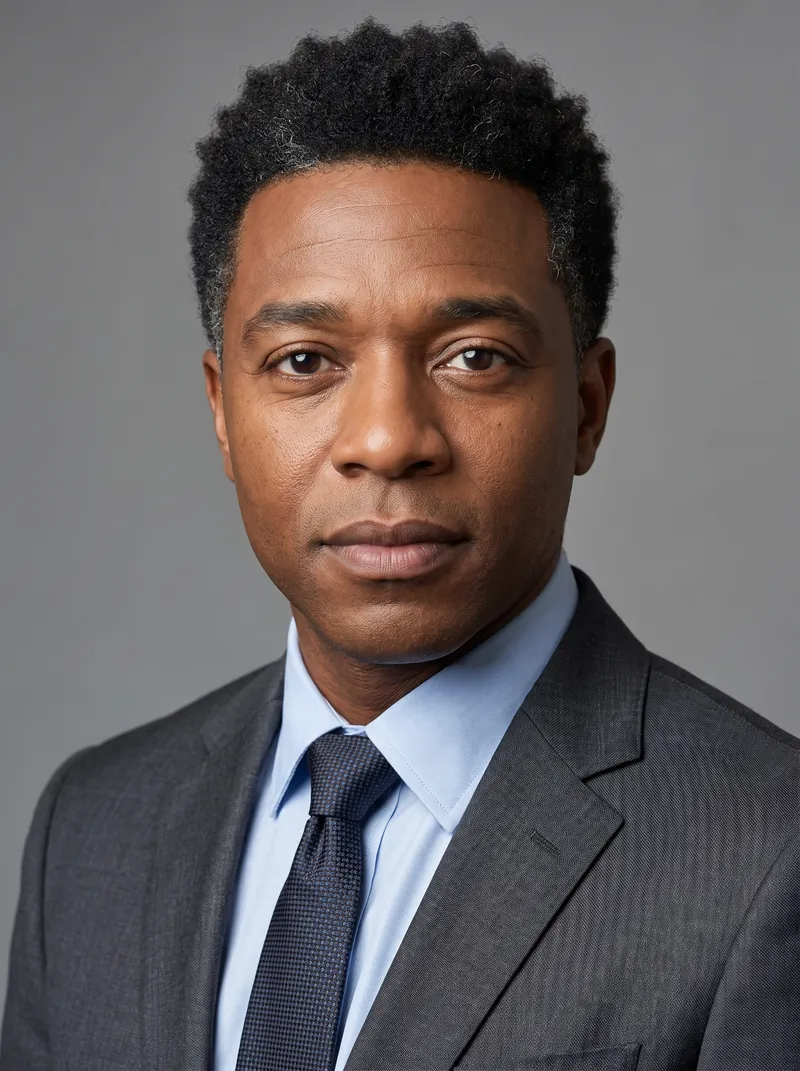
Google DeepMind CEO Demis Hassabis is calling for a sweeping overhaul of how the United States governs artificial intelligence, proposing a new public-private watchdog modeled after Wall Street's top self-regulator. In a personal manifesto titled "A Framework for Frontier AI and the Dawning of a New Age," the Nobel laureate argued that the rapid approach of human-level AI requires a systematic, industry-funded referee. The proposed body would have the unprecedented power to test the world's most advanced models before they are released and, if necessary, coordinate an industry-wide slowdown.[1][3]
The blueprint relies heavily on the structure of the Financial Industry Regulatory Authority (FINRA), the private corporation that polices U.S. brokerages under the oversight of the Securities and Exchange Commission. Rather than building a slow-moving government bureaucracy, Hassabis envisions an agile organization funded by the major AI labs themselves. This financial backing would allow the watchdog to hire world-class engineering talent and secure the massive computing resources required to properly stress-test frontier models.[2][4]
Under the proposed framework, developers of "frontier-class" systems would initially submit their models to the watchdog on a voluntary basis up to 30 days before public release. During this window, a board of independent technical experts—including Turing Award winners, government officials, and open-source representatives—would probe the software for dangerous capabilities. The evaluations would specifically hunt for autonomous cyberattack skills, the potential to generate biological or nuclear threats, and signs of digital deception.[1][3]
Hassabis envisions this voluntary system quickly hardening into a mandatory gateway for the U.S. market. Once the testing regime proves reliable, any frontier model—regardless of its country of origin or whether its underlying code is open or closed—would be required to pass the watchdog's safety checks before deployment. The threshold for what constitutes a "frontier" model would be continuously updated as the technology advances, turning the designation into a mark of prestige for top-tier labs.[5]
The urgency behind the proposal stems from Hassabis's belief that artificial general intelligence (AGI) is "probably only a few short years away." He warned that today's AI-driven cyberattacks are merely "warning shots," and that within 18 months, far more severe biological and nuclear capabilities could be embedded inside open-source models that no government can recall. The window to establish a permanent, systematic playbook, he argues, is rapidly closing.[3][5]
The catalyst for this public push was a recent, chaotic standoff between the U.S. government and the AI industry. Last month, the Trump administration abruptly imposed emergency export controls on Anthropic's Mythos 5 and Fable 5 models, forcing the company to suspend access for all users because it could not verify nationalities in real time. Hassabis described the episode as a "wake-up call," noting that Anthropic spent two and a half weeks negotiating restored access without any established rules or standing process for challenging the restrictions.[2][4]
While there is broad consensus among leading AI labs that the current ad-hoc regulatory environment is untenable, industry leaders remain divided on the ideal solution. Anthropic CEO Dario Amodei has publicly advocated for a stricter, government-led agency modeled after the Federal Aviation Administration (FAA), complete with direct legislative power to block unsafe software outright. Hassabis, conversely, favors the lighter, collaborative FINRA structure, arguing it can adapt more quickly to the blistering pace of AI research.[4][5]
The prospect of an industry-funded gatekeeper has also drawn sharp criticism from civil society groups and market analysts. Miranda Bogen of the Center for Democracy & Technology warned that private oversight bodies lack intrinsic public accountability, cautioning against a system where "AI companies shouldn't be grading their own homework." Critics fear that without substantial safeguards, the watchdog could quickly slide toward industry capture, allowing incumbent labs to write the rules that govern their competitors.[2]
Financial analysts echo these concerns from a market perspective, noting that a mandatory pre-release vetting regime would introduce significant fixed compliance costs and slow down iteration. This "strategic tax" on latency would disproportionately harm venture-backed startups and open-source developers, effectively converting safety compliance into a formidable barrier to entry that protects the market dominance of established tech giants.[6]
The geopolitical landscape further complicates the regulatory calculus. American lawmakers are acutely aware of the mounting competitive pressure from highly efficient Chinese open-weight models, such as DeepSeek and Z.ai, which are rapidly gaining traction among cost-conscious domestic startups. Any U.S. regulatory framework must balance the need for rigorous safety checks against the risk of stifling domestic innovation and ceding ground to foreign competitors.[4]
Despite the hurdles, Hassabis is pushing for an aggressive timeline, aiming to have the new standards body operational before the end of the year. He has spent recent weeks quietly briefing the White House, European officials, and rival tech executives, reporting "very positive" feedback from the U.S. administration. With a federal deadline looming on August 1 to establish the first version of a voluntary AI testing system, the race to define the rules of the AI frontier has officially begun.[2][5]
Key points
- Google DeepMind CEO Demis Hassabis proposed a U.S.-led AI standards body modeled after Wall Street's FINRA.
- The watchdog would mandate 30-day pre-release safety tests for all frontier-class AI models.
- The body would have the authority to coordinate an industry-wide slowdown if severe cyber or biological risks emerge.
- Critics warn the industry-funded structure could lead to regulatory capture and stifle open-source competition.
Unanswered questions
- Whether the U.S. Congress or the executive branch will formally endorse and grant authority to the proposed standards body.
- How the watchdog will define the exact technical threshold that classifies a model as 'frontier-class.'
- How open-source developers will be able to afford the compliance costs associated with mandatory 30-day testing.
How we got here
2023
Frontier Model Forum founded by major AI labs to develop voluntary safety practices.
June 12, 2026
U.S. administration imposes emergency export controls on Anthropic's frontier models.
June 30, 2026
Controls on Anthropic lifted after two and a half weeks of ad-hoc negotiations.
July 14, 2026
Demis Hassabis publishes a manifesto calling for a formal, FINRA-style AI standards body.
August 1, 2026
Federal deadline to establish the first version of a voluntary U.S. AI testing system.
- Collaborative Regulation Advocates
- Argue that an agile, industry-funded watchdog modeled on FINRA is the only way to keep pace with rapid AI advancements.
- Regulatory Skeptics
- Warn that an industry-funded body risks regulatory capture and could create compliance moats that stifle smaller competitors.
- Existential Risk Monitors
- Emphasize the rapidly closing window before AGI arrives and support any mechanism that can act as an emergency brake.
Perspectives this story doesn't cover
- Open-source AI developers
- International regulatory bodies (e.g., EU AI Office)
Sources
Source coverage
6 outlets
3 viewpoints surfaced






- [1]AxiosCollaborative Regulation Advocates
Demis Hassabis, Google DeepMind co-founder and CEO, is calling on the U.S. to establish a new AI watchdog
- [2]Inc.Regulatory Skeptics
Google DeepMind's Co-Founder Wants a Wall Street-Style Watchdog to Stop Dangerous AI
- [3]The Next WebExistential Risk Monitors
Demis Hassabis wants a Wall Street-style referee for AI, with the power to hit pause
- [4]Android HeadlinesCollaborative Regulation Advocates
Google DeepMind Chief Proposes Wall Street-Style Watchdog to Police Frontier AI—Led by the US
- [5]BinanceExistential Risk Monitors
Google DeepMind CEO calls for US to lead regulation as threats from AGI nears
- [6]AllMind AIRegulatory Skeptics
Demis Hassabis wants a Wall Street-style referee for AI, with the power to hit pause
More in Artificial Intelligence
See all →Cyber Defense
OpenAI Launches GPT-5.6-Cyber to Help Security Teams Discover Zero-Day Vulnerabilities
6 sources
Semiconductor Manufacturing
Intel Raises $20 Billion in Upsized Equity Offering to Fund AI Chip Production
7 sources
AI Infrastructure
AI Inference Spending to Surpass Training Spending in 2026 as AI Moves to Mass Production
8 sources

AI Regulation
Trump Administration Directs Federal Agencies to Preempt State AI Laws
8 sources
Comments
Every angle. Every day.
Get Artificial Intelligence stories with full source coverage and perspective breakdowns, free every day.