
Goldman Sachs Forecasts 15.8% Global Food Price Surge as 'Super' El Niño Threatens Harvests Into 2028
A rapidly strengthening El Niño weather pattern is expected to disrupt global agriculture, prompting economists to warn of a multi-year inflationary shock. Due to supply chain lag, the full impact on retail grocery prices may not peak until late 2028.

- Macroeconomists & Analysts
- Argue that the compounding shocks of extreme weather and geopolitical friction will drive a multi-year inflationary cycle peaking in 2028.
- Climate & Meteorological Agencies
- Focus on the physical data of the Pacific warming, warning of the high probability of a historically severe El Niño altering global rainfall.
- Global Supply Chain Observers
- Emphasize the real-time disruptions already occurring in regional harvests, such as India's monsoon deficit, and the vulnerability of specific staple crops.
Perspectives this story doesn't cover
- Smallholder Farmers
- Consumer Advocacy Groups
The global food system is bracing for a delayed but significant pricing shock, driven by a brewing climate anomaly in the Pacific Ocean. According to a new forecast from Goldman Sachs, global food commodity prices could surge by 15.8% over the next two years. The catalyst is a rapidly strengthening El Niño weather pattern, which scientists warn has a historically unprecedented chance of developing into a "super" event. Rather than an immediate spike at the grocery store, economists project a slow-moving wave of inflation that will not fully materialize on retail shelves until the second half of 2028.[1]
This extended timeline is the result of what agricultural economists call the "lag effect." The modern food supply chain operates on highly staggered, seasonal schedules for planting, growing, harvesting, and processing. When extreme weather disrupts a growing cycle today, the resulting scarcity takes many months to filter through wholesale markets, international shipping networks, and domestic processing facilities before it finally impacts consumer prices. Because different crops operate on different global calendars, the compounding shortages stretch the economic aftershocks across multiple years.[1]
The underlying mechanism driving this forecast is a severe shift in equatorial climate dynamics. El Niño occurs when changes in trade wind patterns allow unusually warm surface water to spread across the central and eastern Pacific Ocean. The U.S. National Oceanic and Atmospheric Administration (NOAA) recently confirmed that warming conditions are rapidly taking hold, calculating a 63% probability that sea surface temperatures will exceed 2 degrees Celsius above normal later this year. Some models suggest an 81% chance of a "very strong" event peaking between October and December, potentially ranking among the most powerful since 1950.[1]
When the Pacific warms to this extreme degree, it triggers "teleconnections"—a phenomenon where a single oceanic temperature shift alters atmospheric circulation enough to cause simultaneous weather anomalies across multiple continents. Typically, a strong El Niño brings elevated risks of severe drought to southern Africa, northern South America, and Southeast Asia, while simultaneously causing destructive flooding in southern Brazil, Argentina, and parts of the United States. For global agriculture, this means that several major breadbaskets can experience crop-destroying weather simultaneously, eliminating the geographic redundancy that usually stabilizes global food supplies.[1]
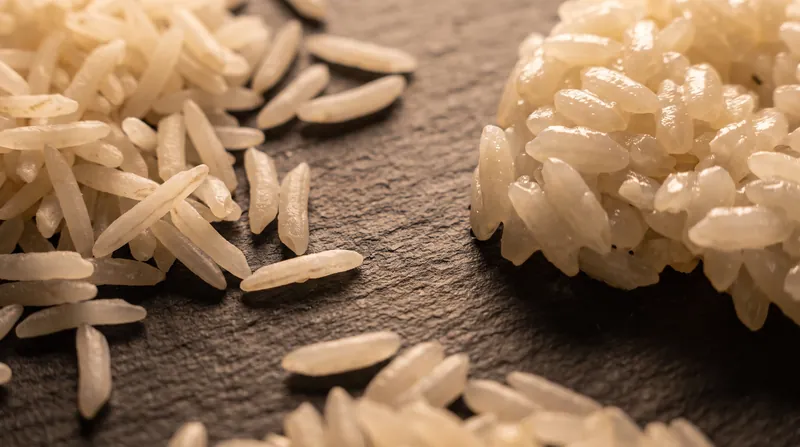
The first real-world indicators of this disruption are already emerging in South Asia. India, the world's largest exporter of rice, is currently experiencing a significantly drier-than-normal monsoon season. Analysts note that some agricultural regions in the country have received only 25% of their historical average rainfall, while parts of central India are recording precipitation levels at roughly 50% of normal. This acute water deficit directly threatens the upcoming harvests of wheat, rice, and sugarcane, commodities that form the caloric foundation for billions of people worldwide.[1][2]
The financial modeling for this climate event paints a stark picture of the potential agricultural losses. Risilience, a climate-risk analytics provider, estimates that an extreme El Niño scenario could result in a 14.3% decline in global agricultural production. In absolute economic terms, this translates to approximately $342 billion in lost output. Because the modern food system relies heavily on a concentrated portfolio of staple crops, even a marginal percentage drop in total global yield can translate into disproportionately large price shocks on the open market.[1]
The financial modeling for this climate event paints a stark picture of the potential agricultural losses.
Analysts at the Italian bank UniCredit have warned that this dynamic puts "climateflation" firmly back on the global economic agenda. Their research indicates that price shocks could range from 10% to 50% across core agricultural commodities. The most heavily exposed crops—specifically rice, palm oil, sugar, and coffee—could see wholesale prices surge by 50% to 100% or more. Palm oil, a ubiquitous ingredient in thousands of packaged supermarket goods, is particularly vulnerable to the drought conditions currently forecast for Southeast Asia.[1][4]
What makes the 2026–2027 forecast uniquely challenging is that it collides with existing geopolitical friction. Economists warn that global supply chains are facing two simultaneous shocks. The ongoing conflict in Iran has already pushed world food prices to their highest levels in three years by disrupting energy markets and fertilizer supplies. When the elevated baseline costs of farming—driven by expensive diesel and synthetic fertilizers—meet the reduced crop yields of a super El Niño, the compounding effect severely limits the market's ability to absorb the climate shock.[1][2]
Despite these alarming wholesale projections, the translation from commodity markets to supermarket shelves is not strictly one-to-one. The food system enters the second half of 2026 with some existing inventory buffers, though analysts caution there is little margin for error. How these wholesale price spikes ultimately affect consumers depends heavily on mitigation strategies, consumer demand shifts, and domestic agricultural policies. Food manufacturers often absorb some commodity costs or alter product formulations before passing the full burden onto the retail buyer.[1][4]
Nevertheless, regional economic impacts are expected to be significant. In Europe, where recent heatwaves have already stressed local agriculture, Goldman Sachs predicts that the El Niño knock-on effect could raise retail food prices by an additional 1.3% across the eurozone. Three years ago, the European Central Bank estimated that a severe El Niño could temporarily inflate global food prices by up to 9%, with the most acute spikes concentrated in soybeans, corn, and rice.[1][3][4]
The prospect of a renewed inflationary wave is also rattling central banks worldwide. Just as monetary policymakers were beginning to manage the post-pandemic and conflict-driven inflation spikes, the introduction of a multi-year, climate-driven supply shock complicates the economic recovery. If food and energy prices remain stubbornly high due to weather disruptions, central banks may be forced to keep interest rates at elevated levels for longer than previously anticipated, adding further pressure to households already managing soaring living costs.[1]
Historical context underscores the severity of extreme Pacific warming events. The El Niño cycles of 1982, 1997, and 2015 were among the strongest on record, each leaving a distinct inflationary footprint on global food markets. Looking further back, the catastrophic El Niño of 1876–1878 triggered simultaneous droughts across China, Brazil, Egypt, and India, devastating global harvests. While modern agricultural technology and globalized trade networks provide far more resilience today, the interconnected nature of the current food system means that localized crop failures now carry global financial consequences.[1]
It is important to note the inherent uncertainty in these long-range economic models. While the meteorological development of El Niño is highly probable, the exact geographic distribution of rainfall and drought remains difficult to predict with pinpoint accuracy. Some agricultural regions may actually benefit from the altered weather patterns, experiencing milder temperatures or increased rainfall that boosts local yields. However, the overarching consensus among agricultural economists is that the net global impact of a "super" El Niño is distinctly negative for total caloric production.[1][4]
Ultimately, the Goldman Sachs forecast serves as a critical early warning system for global supply chains. By identifying the 2028 lag effect now, food manufacturers, commodities traders, and national governments have a window of opportunity to adjust their procurement strategies. Diversifying sourcing regions, adjusting crop subsidies, and optimizing inventory buffers over the next 18 months will be essential steps in mitigating the worst impacts of the coming climateflation wave.[1][4]
Key points
- Goldman Sachs forecasts a 15.8% surge in global food commodity prices driven by a severe El Niño.
- The full inflationary impact on retail grocery shelves is not expected to peak until the second half of 2028.
- NOAA models indicate a 63% probability that Pacific sea surface temperatures will exceed 2°C above normal.
- The climate anomaly threatens to reduce global agricultural production by an estimated 14.3%.
- Compounding the weather disruptions are elevated energy and fertilizer costs stemming from geopolitical conflicts.
Why this matters
Understanding the timeline of agricultural commodity shocks helps consumers and businesses prepare for future grocery costs. By recognizing the 'lag effect,' shoppers can anticipate that current extreme weather will translate into delayed, rather than immediate, price increases at the supermarket.
Sources
Source coverage
4 outlets
3 viewpoints surfaced




- [1]The GuardianMacroeconomists & Analysts
'Super' El Niño could cause global food price shock lasting into 2028, analysts say
Read on The Guardian → - [2]SBSGlobal Supply Chain Observers
From War in Iran to 'Super El Niño': Global Food Price Surge Feared
Read on SBS → - [3]Irish ExaminerMacroeconomists & Analysts
'Climateflation': Food prices could soar as extreme weather takes mounting toll
Read on Irish Examiner → - [4]UNNClimate & Meteorological Agencies
"Super" El Niño could cause a global food price shock lasting until 2028
Read on UNN →
Comments
More in Food & Drink
See all →Food Chemistry
How Potassium Bitartrate Prevents Disulfide Bonds from Forming in Egg White Foam
6 sources

GABA Processing
The Nitrogen Threshold: How Anaerobic Fermentation Converts Glutamic Acid into GABA in Oolong Tea
4 sources

Espresso Mechanics
How Bimodal Grind Distributions Build the Structural Resistance Required for 9-Bar Espresso
2 sources
Wine Labeling
The 4 g/L Residual Sugar Threshold That Legally Defines a Dry Wine in the EU and US
6 sources
Every angle. Every day.
Get Food & Drink stories with full source coverage and perspective breakdowns delivered to your inbox.