
Global Volleyball Injury Report: Sara Hughes' Beach Return and Khori Louis' Resilient Comeback Headline 2026
Across professional beach, indoor leagues, and the collegiate ranks, volleyball athletes are showcasing remarkable resilience in 2026 as they return from severe injuries. Advanced rehabilitation is helping players get back to the court stronger than ever.
By Xia Wu

Share this story
The physical toll of volleyball—relentless jumping, explosive lateral movements, and high-velocity overhead swings—makes injuries an unfortunate reality of the sport. Yet, the narrative across the global volleyball landscape in 2026 is one of triumph over adversity. From the sun-drenched courts of the Beach Pro Tour to the hardwood of the Pro Volleyball Federation, elite athletes are demonstrating remarkable resilience, returning from severe setbacks stronger and more refined than before.[1]
On the sand, former world champion Sara Hughes is embarking on a highly anticipated 2026 season alongside new partner Ally Batenhorst. Hughes endured a grueling 10-month injury layoff that tested her physical and mental endurance. Rather than letting the absence derail her career, she approached her daily physical therapy with a locked-in mentality, determined to rebuild her body from the ground up.
Hughes used the extended downtime not just to heal, but to evolve. She focused on refining specific areas of her game, including her hand setting and developing a new serve. "I honestly didn't have a doubt in my mind that I could come back and play at the highest level again," Hughes noted, adding that the injury period made her a stronger person and a more dynamic player.
Indoors, the Pro Volleyball Federation has witnessed its own inspiring comebacks, highlighted by Atlanta Vibe middle blocker Khori Louis. During a mid-season practice, a routine blocking drill resulted in a fractured small finger. For a middle blocker who relies on precise timing and hand strength at the net, the injury presented a critical career crossroads.[1]
Working with the Vibe's orthopedic team, Louis faced a time-sensitive decision. While a general patient might treat the fracture without surgery, Louis opted for a surgical repair to protect her long-term performance and prevent lingering issues. "I wanted to make sure this didn't become something that lingered or came back later in my career," Louis explained.[1]
The individualized, sport-specific approach paid off. By adhering strictly to her rehabilitation timeline, Louis had her splint removed, regained her mobility, and was cleared to return before the end of the season. Her successful comeback underscores the vital importance of specialized medical care tailored to the unique demands of a volleyball athlete's position.[1]
The collegiate ranks offer equally compelling stories of perseverance, epitomized by Hattie Villegas of the University of Puget Sound. Villegas' journey has been fraught with medical hurdles, culminating in a broken leg during a winter workout that required a seventh surgical procedure to place a rod and screws in her lower leg.[2]
Despite the devastating setback, Villegas refused to step away from the game. She utilized her time off the court to study team systems and absorb tactical knowledge. Supported by a dedicated team of surgeons and coaches, Villegas fought her way back onto the floor, embodying the relentless spirit required to overcome compounding physical trauma.[2]
On the international men's circuit, top-tier athletes are also navigating the delicate balance of recovery. Argentine middle blocker Agustin Loser successfully underwent arthroscopic knee surgery early in the year, while Japanese star Yuki Ishikawa has been progressing through a carefully managed rehabilitation program for a sprain, ensuring neither rushes back before achieving full stability.
These successful returns highlight a broader evolution in sports medicine. Rehabilitation experts emphasize that returning to play is no longer just about medical clearance; it is a multi-phase journey. The process typically moves from reducing swelling and regaining range of motion, to building strength, and finally, restoring the athlete's on-court confidence.[3][4]
"Often athletes are 'cleared' to return to play but they don't feel like themselves yet," explains Skyler Davis, a sports training director. The modern progression ensures athletes move from being medically cleared to feeling capable, competitive, and ultimately confident in their high-impact movements.[3]
Preventative care and sport-specific mechanics are also taking center stage. Physical therapists are increasingly focusing on issues like scapular dyskinesis—abnormal shoulder blade movement—and neuromuscular control to prevent the microtraumas that lead to long-term injuries.
Ultimately, the 2026 season is proving that a severe injury is merely a pause, not an endpoint. Through advanced orthopedic interventions, rigorous multi-phase rehabilitation, and an unwavering love for the game, volleyball's elite are returning to the court ready to write their next chapter.[5]
Key points
- US beach volleyball star Sara Hughes has returned for the 2026 season following a 10-month injury layoff.
- Pro Volleyball Federation middle blocker Khori Louis successfully returned to the court after opting for surgery on a fractured finger.
- Collegiate player Hattie Villegas overcame a broken leg and a seventh surgery to resume her volleyball career.
- Modern sports rehabilitation emphasizes a four-phase progression that prioritizes on-court confidence over simple medical clearance.
How we got here
August 2025
Italian outside hitter Daniele Lavia and US beach star Sara Hughes begin their respective long-term injury rehabilitation programs.
February 2026
Agustin Loser undergoes successful knee surgery, beginning his phased recovery process.
March 2026
Sara Hughes officially returns to the Beach Pro Tour alongside new partner Ally Batenhorst.
April 2026
Khori Louis is cleared to return to the Atlanta Vibe following specialized surgery on a fractured finger.
- Rehabilitating Athletes
- Focuses on the mental resilience and patience required to return to elite form.
- Orthopedic & Rehab Specialists
- Prioritizes long-term joint health, sport-specific mechanics, and structured return timelines.
- Coaches & Management
- Balances the immediate need for on-court talent with the long-term health of the roster.
Perspectives this story doesn't cover
- Youth and amateur athletes lacking access to elite orthopedic care
- Sports psychologists specializing in injury trauma
Sources
Source coverage
5 outlets
3 viewpoints surfaced





- [1]Piedmont HealthcareOrthopedic & Rehab Specialists
Atlanta Vibe's Khori Louis Relies on Piedmont Orthopedics to Return to the Court
- [2]Logger AthleticsRehabilitating Athletes
Student Success Spotlight: Hattie Villegas' Journey to College Athletics
Read on Logger Athletics → - [3]PowerStrengthOrthopedic & Rehab Specialists
Better Than Ever after ACL Rehab- Volleyball Player is Faster, Stronger, and Jumping Higher
- [4]Bone & JointOrthopedic & Rehab Specialists
Returning to Sports After an ACL Injury
Read on Bone & Joint → - [5]Factlen Editorial TeamCoaches & Management
Synthesis by Factlen editorial team
Read on Factlen Editorial Team →
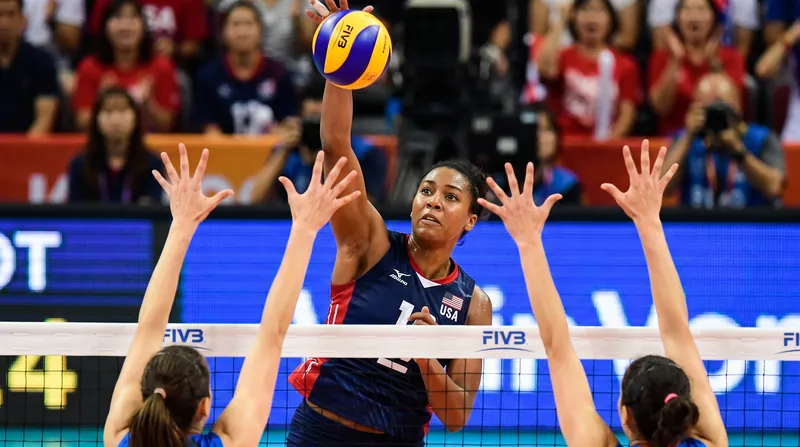
More in Sports
See all →Trade
Coaching Blockbusters and Major League Signings Reshape Global Volleyball Landscape
7 sources
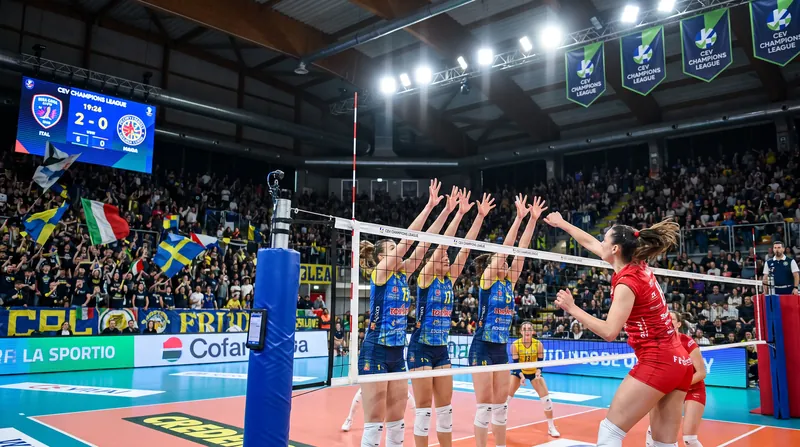
Standings
The Race to LA28 Heats Up as EuroBeachVolley 2026 Enters Championship Weekend
7 sources
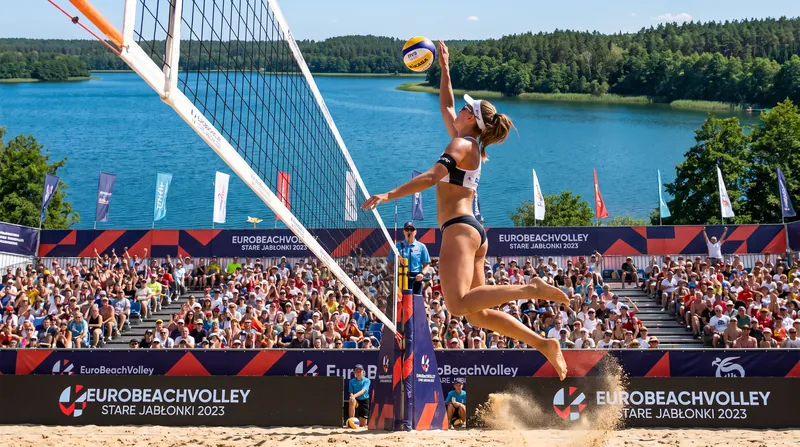
Standings
Nebraska Tops 2026 NCAA Women's Volleyball Preseason Rankings as Texas A&M Begins Title Defense
6 sources
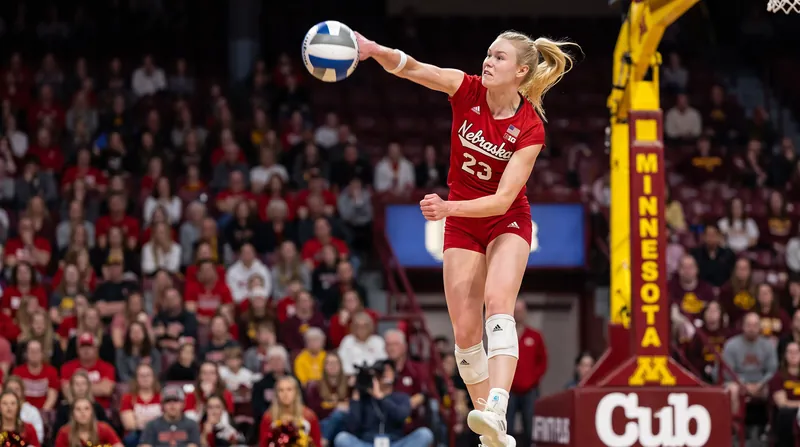
Trade
European Volleyball Transfer Market Explodes: Romanò Heads to Poland as Lube Civitanova Secures Nikolov
8 sources
Comments
Every angle. Every day.
Get Sports stories with full source coverage and perspective breakdowns, free every day.