
Global Swimming Injury Report: Kaylee McKeown Prioritizes LA 2028, Withdraws From Summer Championships
Five-time Olympic gold medalist Kaylee McKeown has medically withdrawn from the 2026 Commonwealth Games and Pan Pacific Championships to recover from glandular fever, highlighting a growing trend of elite swimmers prioritizing long-term health.
By Jackson Reed

- Medical Consensus
- Argues that resting during a glandular fever infection is the only medically sound way to prevent chronic fatigue syndrome.
- Australian Team Management
- Supports the withdrawal as a necessary protective measure to ensure McKeown is fully prepared for the 2028 Olympics.
- Neutral Analysts
- Notes that her absence dramatically reshapes the medal landscape and denies fans a highly anticipated showdown with Regan Smith.
Perspectives this story doesn't cover
- Athletes currently struggling with chronic fatigue syndrome
Key points
- Five-time Olympic gold medalist Kaylee McKeown has withdrawn from the 2026 Commonwealth Games and Pan Pacific Championships.
- The Australian backstroke star was diagnosed with glandular fever after initially believing she had the flu during national trials.
- McKeown and her medical team chose to halt training to prevent the onset of chronic fatigue syndrome.
- The withdrawal leaves American Regan Smith as the heavy favorite in the backstroke events at the upcoming Pan Pacific Championships.
Five-time Olympic gold medalist Kaylee McKeown has officially withdrawn from the 2026 Commonwealth Games and the Pan Pacific Championships. The Australian backstroke superstar made the difficult decision after being diagnosed with glandular fever, opting to prioritize her long-term health over immediate medal contention in the summer's biggest international meets.[1]
McKeown had been struggling with severe fatigue, loss of breath, and a suppressed appetite for several months. During the Australian Swimming Trials in June, she battled through what she initially believed was a stubborn strain of the flu. However, extensive medical evaluations recently confirmed that her body was actually fighting mononucleosis, commonly known as glandular fever.[1]
For an elite endurance athlete, training through glandular fever is a dangerous gamble. The viral infection places immense strain on the immune system and internal organs. Pushing the body to its physical limits during the acute phase of the virus dramatically increases the risk of developing chronic fatigue syndrome—a debilitating condition that has prematurely ended the careers of numerous world-class swimmers.[1]
In a statement released by Swimming Australia, the 24-year-old expressed her disappointment but emphasized the necessity of the decision. "I am gutted to medically withdraw," McKeown said. "I was sick going into trials, and I just have not got better, and I am worried about pushing myself so hard that I end up with chronic fatigue. It was a hard decision to make, but it was the right one."
The Australian national team has fully supported her withdrawal, reflecting a modern, welfare-first approach to sports medicine. Chef de mission Petria Thomas praised McKeown's maturity, noting that forcing a compromised athlete to compete serves no one. The federation's explicit goal is to ensure McKeown enjoys a complete recovery so she can bounce back to her peak form ahead of the 2028 Los Angeles Olympics.
The Australian national team has fully supported her withdrawal, reflecting a modern, welfare-first approach to sports medicine.
McKeown’s decision highlights a significant cultural evolution within global aquatics. In previous decades, the prevailing mentality often pressured swimmers to compete through severe illness or injury, leading to long-term physical and mental burnout. Today, top-tier athletes—from McKeown managing viral infections to Katie Ledecky openly navigating POTS (postural orthostatic tachycardia syndrome)—are setting a new standard by actively managing their physiological limits rather than ignoring them.[2]
While the decision secures McKeown's future, her absence immediately reshapes the competitive landscape of the summer championships. At the Commonwealth Games in Glasgow, the women's backstroke field is suddenly wide open. Fellow Australian Iona Anderson now enters as the fastest seed in both the 100-meter and 200-meter events, while England's Lauren Cox assumes the mantle of heavy favorite in the 50-meter sprint.[1]
The impact is equally profound for the Pan Pacific Championships in Irvine, California—the premier international meet of 2026 for non-European nations. Fans and analysts had highly anticipated a renewed showdown between McKeown and American archrival Regan Smith. Smith recently shattered the 100-meter backstroke world record at the U.S. Olympic Trials, and the Pan Pacs were set to be their first major clash since Paris.[1]
With McKeown sidelined, Smith becomes the undisputed favorite across the backstroke distances in California. The withdrawal also opens crucial podium opportunities for other elite competitors. American Katharine Berkoff and Canada's Taylor Ruck, who recently posted a lifetime best in the 100-meter backstroke, are now primed to capitalize on the shifting dynamics of the field.[1]
Ultimately, McKeown's withdrawal is a strategic retreat designed to win the larger war. By stepping away from the pool this summer, the woman who holds the world records in the 50-meter and 200-meter backstroke is protecting her legacy. When the road to the Los Angeles Olympics intensifies over the next two years, McKeown will return fully healthy, ensuring that her historic rivalry with Smith resumes at the highest possible level.
Sources
Source coverage
2 outlets
3 viewpoints surfaced


- [1]SwimSwamNeutral Analysts
Kaylee McKeown Withdraws From Commonwealth Games And Pan Pacific Championships This Summer
Read on SwimSwam → - [2]ForbesMedical Consensus
Former FBI Profiler: This Is What The Ransom Note Tells Us About Who Abducted Nancy Guthrie
Read on Forbes →
Comments
More in Sports
See all →Managerial Shift
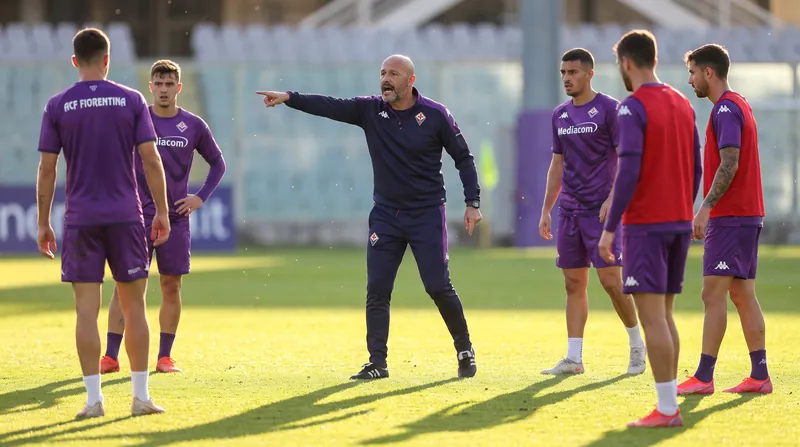
Fiorentina Re-Hire Paolo Vanoli as Head Coach After Sacking Fabio Grosso Three Matches Into Season
6 sources
Revenue Distribution
The €853 Million 'Value Pillar': How UEFA's New Champions League Revenue Engine Actually Works
7 sources

Mount Mizhirgi
Avalanche Kills 11 Climbers and Leaves Six Missing on Russia's Mount Mizhirgi
6 sources

WSL Rules
Crystal Palace Faces Points Deduction After Using Four Substitution Windows in WSL Opener Win
6 sources

Every angle. Every day.
Get Sports stories with full source coverage and perspective breakdowns delivered to your inbox.