
Global Skateboarding Standings: The European Surge Disrupting the Sport's Traditional Powerhouses
Led by Spanish prodigy Egoitz Bijueska and Finnish phenom Heili Sirvio, a new wave of European skaters is rapidly climbing the World Skate rankings, challenging the long-standing dominance of Japan, Brazil, and the United States.

The 2026 World Skate standings are undergoing a geographic revolution. For the better part of a decade, the upper echelons of competitive skateboarding have been heavily monopolized by a 'Big Three': Japan, Brazil, and the United States, who have routinely swept the podiums across major global tours.
But as the summer stretch of the World Skateboarding Tour (WST) heats up, a new narrative is taking over the leaderboards. A highly coordinated, technically lethal wave of European teenagers is rapidly dismantling that traditional hegemony and claiming top spots in the global rankings.
The stakes for this leaderboard shakeup could not be higher. Phase 1 of the Los Angeles 2028 Olympic qualification window is officially open, transforming every WST stop from a standard contest into a high-stakes points grab where careers are made or broken.[1]
Skaters are desperately fighting to secure a spot inside the Top 44 of the global rankings, the strict cutline required to advance to the final Olympic Qualifier Series (OQS). Every point stolen by a surging European skater is a point denied to the established guard.[1]
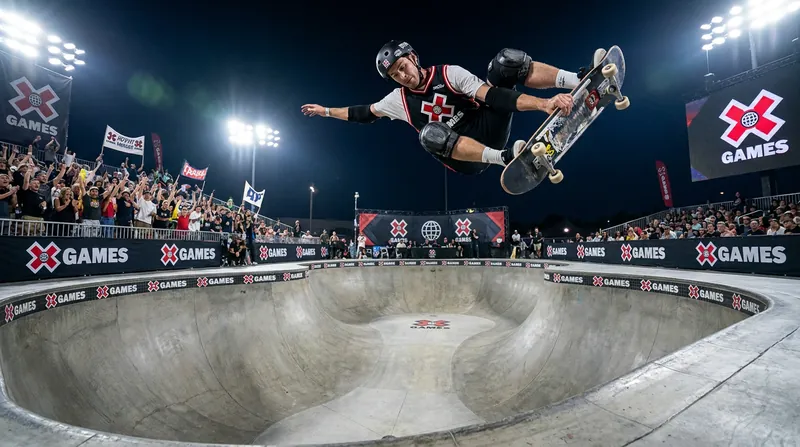
The tip of the European spear in the Men's Park division is Egoitz Bijueska. The 15-year-old prodigy from Bilbao, Spain, has evolved from a regional talent into a bona fide global powerhouse, completely rewriting the top of the men's standings.
Bijueska's momentum is staggering. After capturing the World Championship gold in Sao Paulo earlier this year with a massive 95.83, he proved it was no fluke by dropping a 93.45 at the recent WST Rome event, securing second place in a historically difficult field.[1]
His technical arsenal is forcing the rest of the world to adapt. Bijueska recently became the first Spaniard to land the legendary 900-degree spin in competition, combining that raw aerial rotation with a speed and fluidity that veterans are struggling to match.
The disruption is equally pronounced in the Women's Park standings, led by 15-year-old Finnish phenom Heili Sirvio. After securing gold at X Games Salt Lake City, Sirvio has cemented herself as a top-tier threat on the World Skate rankings.[2][3]
Sirvio's signature McTwist—widely considered one of the best in the industry—helped her secure a crucial 84.00 at the Rome qualifiers. She is consistently breaking up the Japanese block of Mizuho Hasegawa and Cocona Hiraki that usually dominates the podium.[1][3]
Sirvio is not acting alone. Great Britain's Sky Brown continues to set the ultimate tempo, recently dropping an unprecedented 90.55 in Rome, while Spanish skaters Naia Laso and Julia Benedetti Gonzalez are steadily climbing into the Top 20.[1]
This European uprising is creating a brutal 'quota crunch' for Japan, Brazil, and the US. Because Olympic rules limit each nation to just three skaters per discipline, those countries already face vicious internal battles; the European surge now threatens to push their bubble skaters out of the Top 44 entirely.[1]
Ultimately, this geographical diversification is the healthiest possible outcome for competitive skateboarding. As the 2026 standings tighten, the sport is proving that world-class talent is no longer confined to California coastlines or Brazilian concrete—it is a truly global arms race.[2]
Key points
- European skaters are rapidly climbing the World Skate rankings, disrupting traditional powerhouses.
- Spanish 15-year-old Egoitz Bijueska is rewriting the Men's Park standings after winning the World Championship.
- Finnish 15-year-old Heili Sirvio is breaking up the Japanese dominance in the Women's Park division.
- The surge in European talent is creating a 'quota crunch' for the US, Brazil, and Japan.
- Phase 1 of the LA28 Olympic qualification window is now officially open.
How we got here
Early 2025
Egoitz Bijueska becomes the first Spanish skateboarder to land the 900 in competition.
August 2025
Heili Sirvio captures the Skateboard Park gold medal at X Games Salt Lake City.
March 2026
Bijueska wins the World Skateboarding Championship in Sao Paulo, cementing his top-tier ranking.
June 2026
European skaters secure massive points at the WST Rome event as the LA28 qualification window opens.
- European Skate Federations
- Argues that recent investments in localized training facilities and youth development programs are finally putting Europe on equal footing with the Americas and Asia.
- Traditional Powerhouses
- Acknowledges the rising threat from Europe and emphasizes the need for their own skaters to push technical boundaries to maintain their historic dominance.
- Neutral Analysts
- Views the geographic diversification of the standings as a massive win for skateboarding's global health and Olympic longevity.
Perspectives this story doesn't cover
- Skaters currently sitting on the 'bubble' outside the Top 44
- Grassroots skatepark builders in emerging European markets
Sources
Source coverage
3 outlets
3 viewpoints surfaced



- [1]Olympics.comNeutral Analysts
WST Park World Cup Rome 2026: All results and scores as LA28 qualification opens
Read on Olympics.com → - [2]X GamesNeutral Analysts
Athlete Profile: Heili Sirvio
Read on X Games → - [3]The PlatfrmTraditional Powerhouses
Heili Sirvio: Finding the Sweet Spot on the Global Tour
Read on The Platfrm →
More in Sports
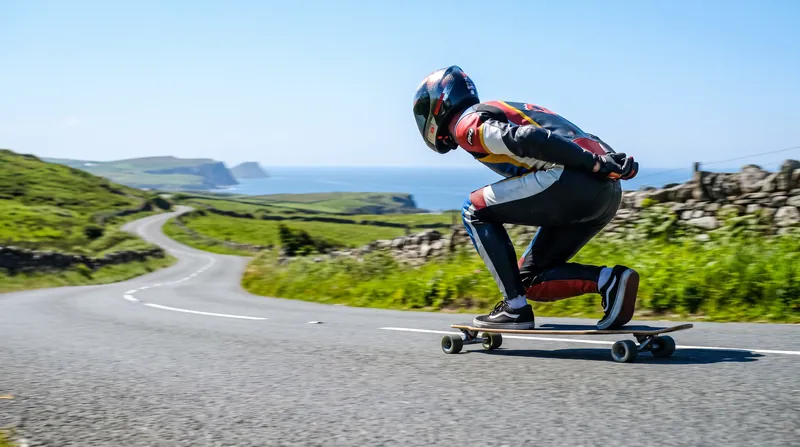
See all →Downhill Skateboarding
Frenchman Adrien Paynel Conquers Iconic TT Mountain Course to Win World Downhill Skateboarding Championship Round
5 sources
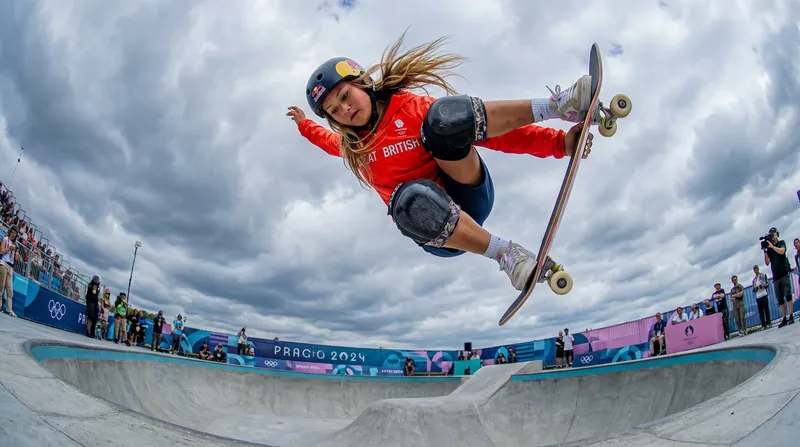
Park Skateboarding
Sky Brown Claims Second World Championship Title in Weather-Shortened São Paulo Park Final
4 sources
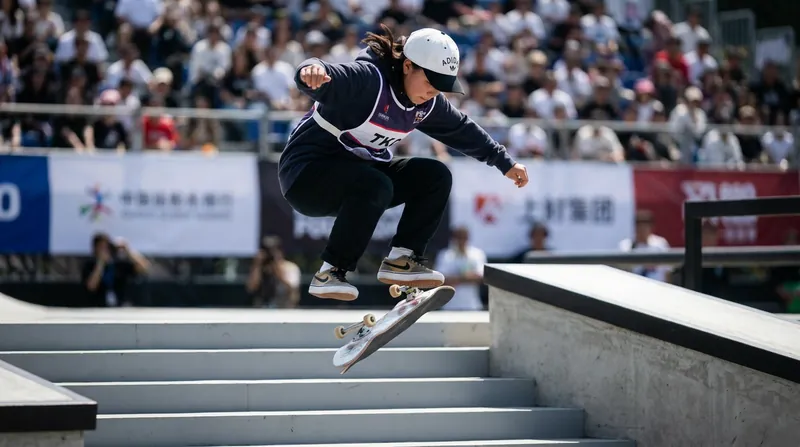
Injury
Skateboarding Injury Report: Momiji Nishiya's Golden Return Highlights Resilience of Japan's Street Roster
2 sources
Standings
X Games League Men's Park Standings: Egoitz Bijueska's Historic Breakthrough Sets Up Thrilling New Orleans Finale
6 sources
Comments
Every angle. Every day.
Get Sports stories with full source coverage and perspective breakdowns, free every day.