
Global Handball Injury Desk: Lichtlein and Remili Headline Summer Returns as Kos Begins Hand Rehab
As the 2026/27 handball season approaches, advanced rehabilitation protocols are paving the way for the return of stars like Nils Lichtlein and Nedim Remili, while Partizan's Milos Kos begins a targeted recovery from a recent hand fracture.

- Sports Medical Professionals
- Advocating for active recovery and preventative technology.
- Club Management & Coaches
- Balancing competitive ambitions with long-term player welfare.
- Players & Athlete Advocates
- Highlighting the psychological resilience required during rehabilitation.
Why this matters
For fans and clubs alike, the health of marquee players dictates the balance of power in domestic leagues and the EHF Champions League. Understanding how modern sports science accelerates these recoveries offers a hopeful glimpse into the future of athlete longevity and performance.
Key points
- Partizan's Milos Kos is expected to miss 6-8 weeks following a fracture to his right metacarpal bone.
- Füchse Berlin's Nils Lichtlein has successfully overcome early-year injuries and severe ankle trauma using advanced preventative technology.
- Veszprém welcomes back Nedim Remili and Luka Cindrić after extensive rehabilitation periods.
- Modern sports medicine protocols emphasize active conditioning to prevent cardiovascular detraining during localized injury recoveries.
Pre-season preparation in elite European handball is a grueling crucible, testing the physical limits of athletes before the first competitive whistle even blows. As clubs gear up for the expanded 2026/27 EHF Champions League and demanding domestic campaigns, medical departments are working tirelessly to transition injured stars from the treatment table back to the court. The summer months are critical for rehabilitation, offering a rare window where players can focus entirely on recovery without the pressure of an impending weekend fixture.[7]
The narrative of handball injuries is shifting significantly across the continent. Historically, a severe fracture or ligament tear meant prolonged isolation, a devastating loss of fitness, and a highly uncertain return to peak performance. Today, a collaborative approach blending orthopedic surgery, localized physical therapy, and immediate active conditioning is allowing players to return faster and more resilient than before. Clubs are investing heavily in sports science, recognizing that a proactive rehabilitation strategy is the best defense against the grueling demands of the modern game.[6][7]
In Belgrade, Partizan’s highly anticipated summer signing, Milos Kos, is experiencing this modern protocol firsthand. The Serbian international left back, who arrived from German club Erlangen on a two-year contract, suffered a fracture to the third metacarpal of his right hand during late July training sessions. The injury occurred just as the squad was ramping up its tactical preparations in Belgrade and Ub, temporarily halting the integration of one of their most important offensive acquisitions of the off-season. Despite the setback, the club remains fully committed to his long-term role within the squad.[1]
The injury directly affects Kos's throwing hand—the third metacarpal absorbs immense force during gripping, passing, and the powerful distance shots he is known for. However, the prognosis is highly optimistic. Medical staff expect a recovery period of six to eight weeks, allowing the bone to heal fully before he resumes court contact. While he will miss the opening Regional League matches in late August, Kos is slated to make a full-strength debut in the autumn, bringing his trademark firepower to Partizan's backcourt.[1]
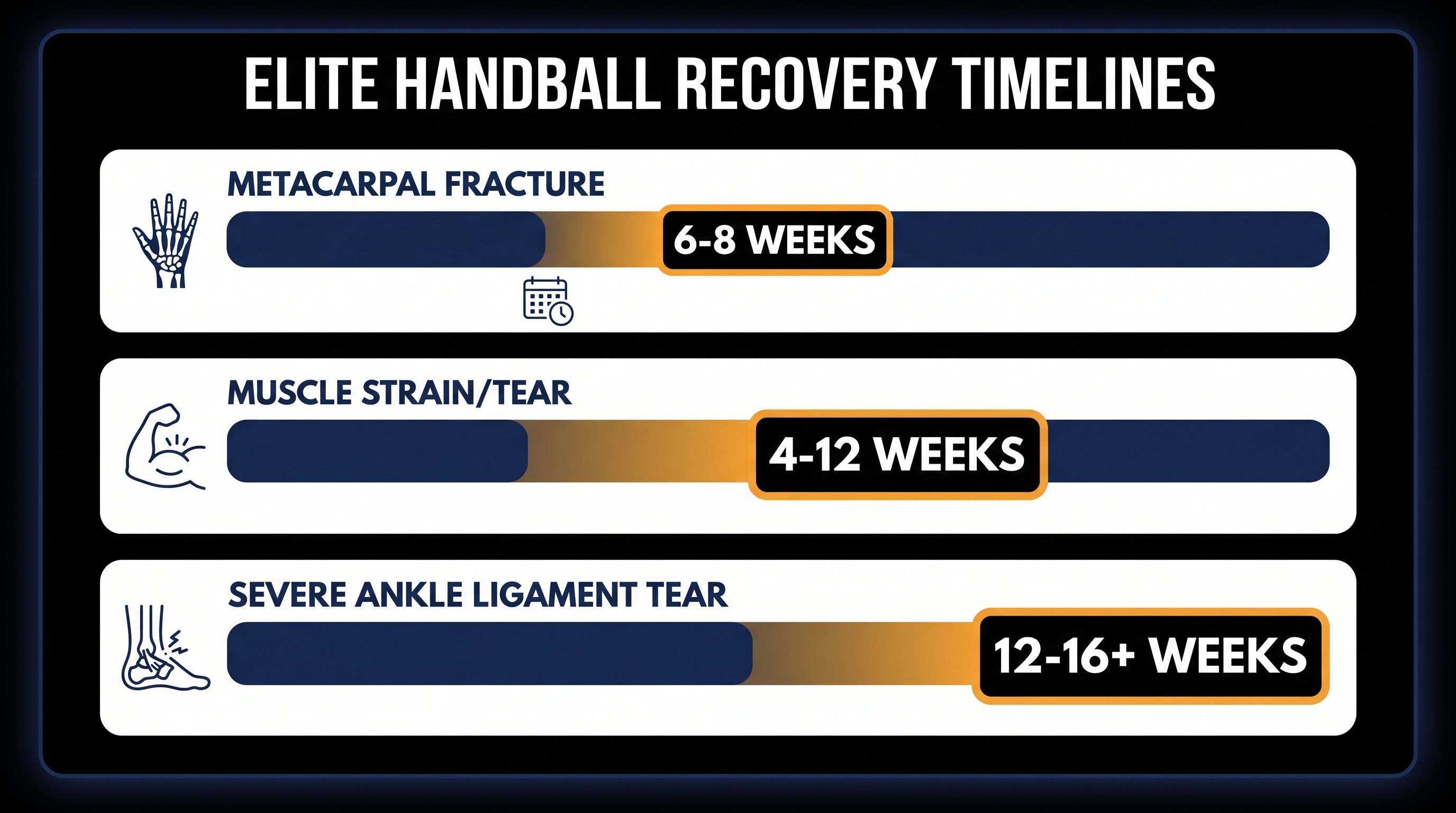
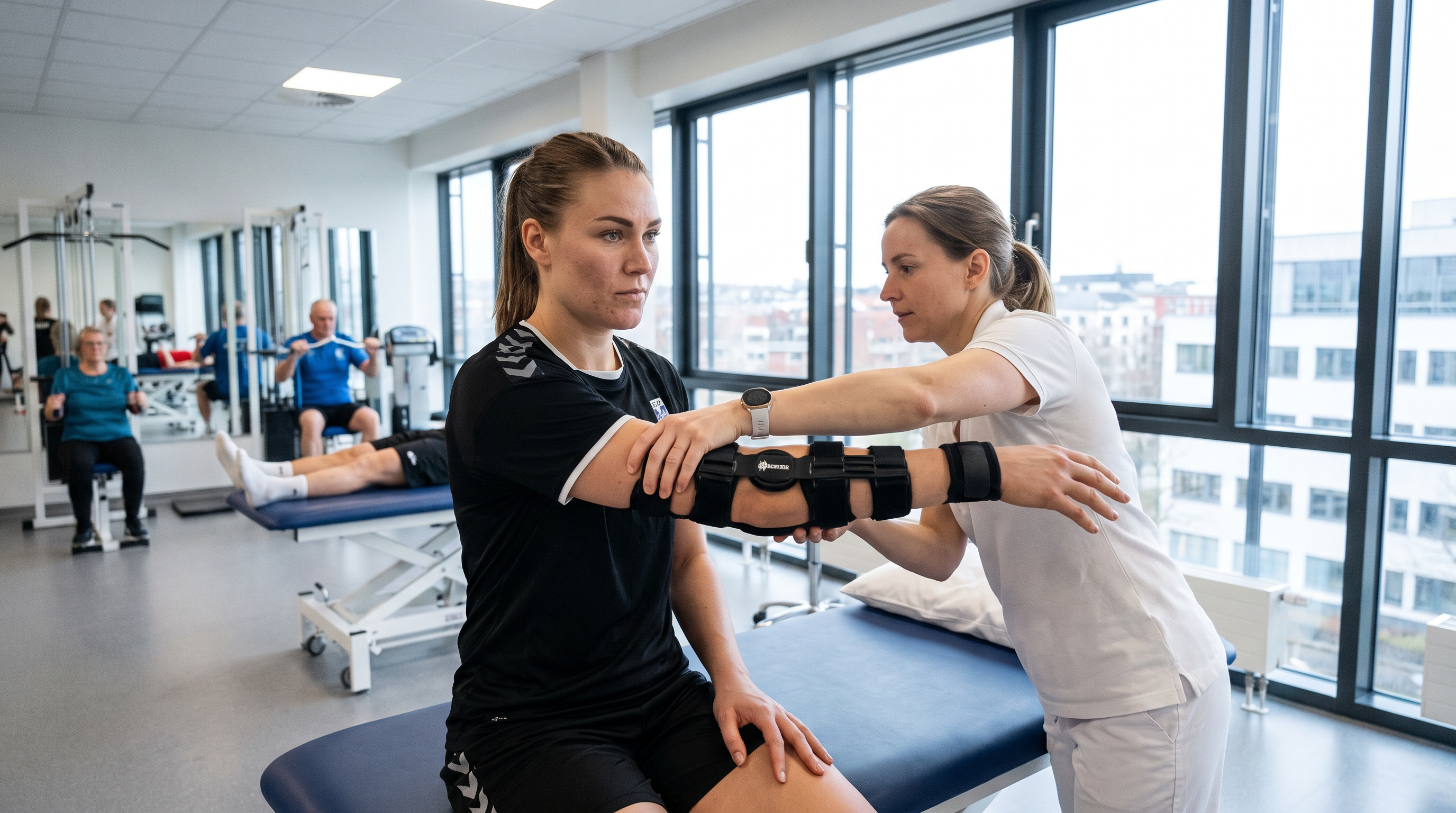
For athletes like Kos, the weeks spent in a cast are no longer idle. Sports medicine experts emphasize that when a localized injury occurs, players immediately begin modified physical conditioning to prevent systemic detraining. Research indicates that highly trained athletes can lose up to 14 percent of their cardiovascular capacity after just a few weeks of total rest. By maintaining rigorous lower-body strength work and aerobic conditioning, Kos will ensure that his legs and lungs are match-ready the moment his hand is cleared for action.[1][6]
In Germany, Füchse Berlin’s Nils Lichtlein stands as a prime example of overcoming physical adversity through perseverance and technological intervention. Lichtlein faced a daunting start to 2026 when a forefoot injury sustained during a training session in Hannover threatened his participation in the European Championship. The setback was particularly frustrating given his excellent form and his growing importance as a left-handed playmaker in the German national team's backcourt rotation alongside stars like Juri Knorr. Fortunately, the injury was managed carefully, allowing him to remain with the squad and eventually return to the fold.[3]
In Germany, Füchse Berlin’s Nils Lichtlein stands as a prime example of overcoming physical adversity through perseverance and technological intervention.
That January scare followed a history of severe ankle trauma; in late 2021, Lichtlein tore all three outer ligaments and the inner ligament of his upper ankle, requiring multiple surgeries and nearly a year of grueling rehabilitation. The psychological toll of such a prolonged absence often rivals the physical pain, as athletes must rebuild their confidence to cut, jump, and pivot at full speed without fear of a catastrophic recurrence. Re-entering the chaotic, high-contact environment of the Bundesliga requires immense mental fortitude and absolute trust in one's own body.[4]
Today, Lichtlein is fully integrated into Füchse Berlin’s pre-season, having adopted advanced ankle-protection technology that triggers faster than the body’s natural reflexes to prevent inversion sprains. His successful return to elite play—and his ability to stay on the court—highlights how preventative gear is becoming as crucial as post-injury rehab in extending professional careers. By combining targeted physical therapy with innovative biomechanical support, Lichtlein has fortified his lower body against the sport's inherent risks, ensuring he remains a vital asset for both his club and country.[4][7]
Meanwhile, Hungarian powerhouse One Veszprém HC is welcoming back crucial firepower ahead of their Champions League campaign. French international right back Nedim Remili suffered a heartbreaking setback in January when an acute thigh and calf injury forced him to withdraw from the EHF EURO just days before throw-off. The timing of the injury was devastating, robbing the French squad of one of their most experienced and dynamic offensive orchestrators on the eve of a major international tournament. Remili was forced to watch from the sidelines as his teammates navigated the grueling European bracket without his signature playmaking.[2]
However, after months of dedicated rehabilitation and careful load management, Remili has successfully navigated his recovery milestones. He is now preparing to lead Veszprém’s backcourt in the upcoming season, bringing fresh legs and renewed motivation to a squad hungry for European glory. His return provides a massive tactical boost for the Hungarian champions, restoring their depth and versatility as they prepare to face the continent's elite defenses. The medical staff's patience in allowing the muscle tissue to heal completely has paid dividends, ensuring that Remili returns at peak explosiveness.[2][7]
Veszprém is also carefully managing the return of center back Luka Cindrić, who sustained an injury during the tense Champions League quarter-final clash against Füchse Berlin in May. The club’s medical team is utilizing the extended summer break to ensure Cindrić regains his explosive first step, a vital component of his offensive game. The meticulous attention given to his recovery underscores the club's commitment to long-term player health over short-term availability. With the Champions League expanding to 24 teams, the physical demands on central playmakers will be higher than ever, making a fully fit Cindrić absolutely essential for Veszprém's title aspirations.[5][7]
The overarching theme across these European camps is one of cautious optimism and scientific precision. The "no pain, no gain" mentality of past decades has been firmly replaced by data-driven load management, objective functional testing, and holistic player welfare. Clubs understand that rushing a player back prematurely often leads to compounding injuries, whereas a structured, evidence-based return-to-play protocol extends careers and maximizes on-court impact. This evolution in sports medicine is fundamentally changing how the sport operates, protecting the incredible athletes who make elite handball so captivating.[6][7]
As the first competitive fixtures of the 2026/27 season loom on the horizon, the successful rehabilitations of Lichtlein and Remili, alongside the targeted recovery of Kos, serve as uplifting reminders of the resilience inherent in the sport. For fans, the sight of these athletes returning to the resin-stained courts is a victory in itself—a testament to the unseen hours of sweat, science, and sheer willpower that happen far away from the arena lights. Their triumphant returns not only elevate the quality of play but also inspire the next generation of players facing their own physical setbacks.[7]
How we got here
Late 2021
Nils Lichtlein suffers a severe ankle ligament tear, initiating a complex, year-long recovery process.
January 2026
Nedim Remili withdraws from the EHF EURO with a thigh injury; Lichtlein battles a forefoot issue.
May 2026
Luka Cindrić sustains an injury during the Champions League quarter-finals.
July 2026
Milos Kos fractures his right metacarpal during pre-season training with Partizan.
August 2026
European clubs finalize pre-season preparations as recovering stars target autumn returns.
Viewpoints in depth
Sports Medical Professionals
Advocating for active recovery and preventative technology.
Modern sports medicine has moved away from the traditional model of complete rest following an injury. Clinical experts emphasize that maintaining cardiovascular capacity and general athletic fitness through modified exercises is crucial. By keeping the uninjured parts of the body active, athletes prevent the rapid detraining that can decrease VO2 max by up to 14 percent in just a few weeks. Furthermore, the integration of preventative technologies, such as reactive ankle braces, is viewed as a necessary evolution to protect players from the high-impact, multidirectional forces inherent to handball.
Club Management & Coaches
Balancing competitive ambitions with long-term player welfare.
For club directors and head coaches, injuries present a complex logistical puzzle. The expansion of the EHF Champions League and the relentless pace of domestic schedules mean that squad depth is tested constantly. Management must balance the immediate need for results with the ethical and financial imperative of not rushing a star player back prematurely. Coaches rely heavily on the data provided by medical staffs to reintegrate players safely, ensuring that when a player like Milos Kos or Nedim Remili steps back onto the court, the risk of re-injury is minimized.
Players & Athlete Advocates
Highlighting the psychological resilience required during rehabilitation.
From the athlete's perspective, the physical pain of an injury is often eclipsed by the psychological toll of isolation and missed opportunities. Missing a major tournament like the EHF EURO or a Champions League Final Four can be devastating. Athlete advocates stress the importance of mental health support during the grueling months of rehab. Returning to the court requires not just physical healing, but the restoration of confidence—trusting a surgically repaired knee or a newly healed hand to withstand the violent collisions of elite handball.
What we don't know
- Exactly how quickly Milos Kos will acclimate to Partizan's tactical system once cleared for full contact.
- Whether the expanded Champions League format will lead to an overall increase in late-season fatigue injuries.
Key terms
- Metacarpal bone
- One of the five long bones in the hand connecting the wrist to the fingers, crucial for gripping and throwing.
- VO2 max
- The maximum rate of oxygen consumption attainable during physical exertion, a key indicator of cardiovascular fitness.
- Active rehabilitation
- A recovery approach where an athlete performs modified exercises to maintain overall fitness while a specific injury heals.
- Inversion sprain
- An ankle injury that occurs when the foot rolls inward, stretching or tearing the outer ligaments.
Frequently asked
What is a metacarpal fracture in handball?
It is a break in one of the long bones of the hand, a common injury in handball due to the immense force of throwing, blocking, and physical contact.
How do players maintain fitness while injured?
Modern protocols involve immediate referral to physical coaches to perform modified cardiovascular and strength training that doesn't stress the injured area.
Who is Milos Kos?
He is a Serbian international left back who recently transferred to Partizan, known for his powerful distance shooting.
Sources
Source coverage
7 outlets
3 viewpoints surfaced







[1]SerbianSportPlayers & Athlete Advocates
Milos Kos hand fracture delays his Partizan handball debut
Read on SerbianSport →[2]FlashscoreClub Management & Coaches
Big blow for France as Veszprém star Remili pulls out of EURO squad with thigh injury
Read on Flashscore →[3]The Munich EyeClub Management & Coaches
Germany Faces Injury Concerns Ahead of European Handball Championship Opener
Read on The Munich Eye →[4]BetterguardsSports Medical Professionals
Nils Lichtlein becomes an official Betterguards Ambassador
Read on Betterguards →[5]European Handball FederationClub Management & Coaches
Füchse Berlin (GER) vs One Veszprém HC (HUN) 35:33
Read on European Handball Federation →[6]Aspetar Sports Medicine JournalSports Medical Professionals
The Importance of Physical Conditioning in Injury Rehabilitation for Handball Players
Read on Aspetar Sports Medicine Journal →[7]Factlen Editorial TeamPlayers & Athlete Advocates
Synthesis by Factlen editorial team
Read on Factlen Editorial Team →
More in sports
See all 34 stories →Injury
Luca Urlando Returns From Injury to Capture 200m Butterfly Title at U.S. Nationals
6 sources
Standings
Global Freestyle Standings Tighten as Dressel and Walsh Surge Ahead of Pan Pacs
7 sources

Injury
Pearly Tan and M. Thinaah Cap Resilient Injury Comeback With Taipei Open Final Run
6 sources
Standings
17-Year-Old Tanvi Sharma Surges in BWF Race to Hangzhou Standings Following Breakthrough Taipei Open Title
6 sources
Every angle. Every day.
Get sports stories with full source coverage and perspective breakdowns delivered to your inbox.