
Pope Leo XIV Issues Encyclical 'Magnifica Humanitas,' Calling for the 'Disarming' of Artificial Intelligence
In a landmark 42,000-word document, the Vatican has established a strict moral baseline for the AI era, warning against autonomous weapons and the technocratic drive to 'optimize' human life.

- Catholic Moral Theologians
- View AI as a profound threat to human dignity that requires a new application of Catholic social teaching, particularly regarding warfare and labor.
- AI Ethics & Tech Industry
- See the encyclical as an aspirational moral baseline that, while not legally binding, shapes the foundational conversations around AI development and civil rights.
- Social Justice Advocates
- Focus on the encyclical's warnings about AI exacerbating global inequality, concentrating wealth, and exploiting the data of the vulnerable.
Why this matters
As artificial intelligence rapidly reshapes the global economy and military landscape, the Vatican's intervention provides a powerful ethical framework for regulating the technology. By demanding that AI serve human dignity rather than optimize it for profit or warfare, the encyclical arms policymakers and tech workers with the moral vocabulary needed to push back against unchecked algorithmic expansion.
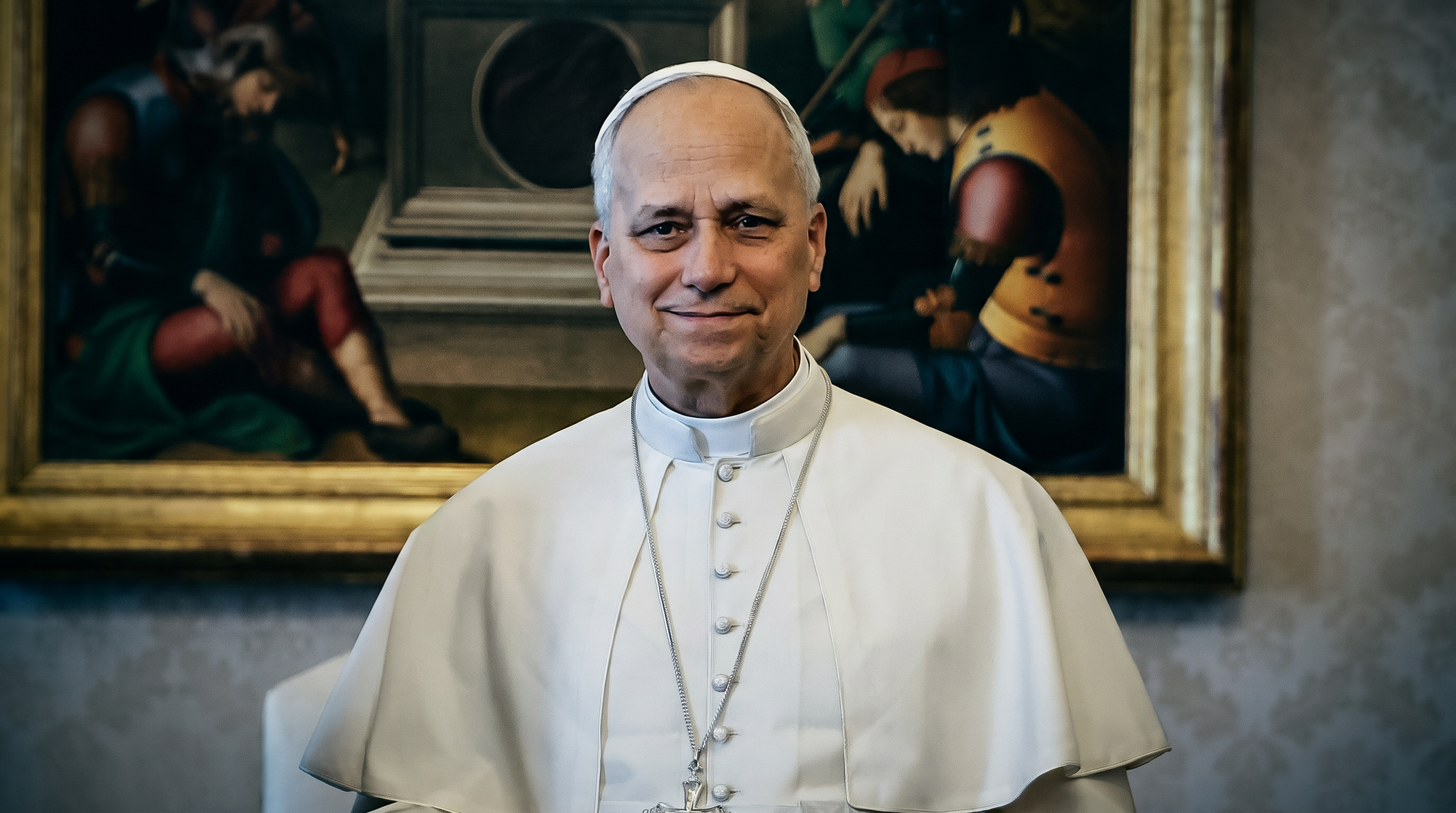
In a sweeping 42,000-word treatise that bridges ancient theology and cutting-edge code, Pope Leo XIV has issued his first encyclical, 'Magnifica Humanitas' (Magnificent Humanity). The document, formally released by the Holy See, establishes a strict moral baseline for the future of artificial intelligence. Rather than dismissing the technology as inherently evil, the Pope argues that AI is 'not neutral' and calls for the literal and philosophical 'disarming' of algorithmic systems that threaten to reduce human beings to data points.
The rollout of the encyclical broke with Vatican precedent. Instead of delegating the presentation to Curial cardinals, Pope Leo XIV personally introduced the document from the Synod Hall. In a striking visual representation of the Church's attempt to engage Silicon Valley, the Pope was joined by leading AI experts, including Anthropic co-founder Chris Olah. The presence of tech executives underscored the Vatican's desire to position its voice not just as a spiritual guide, but as a leading moral authority in the secular governance of emerging technologies.[1]
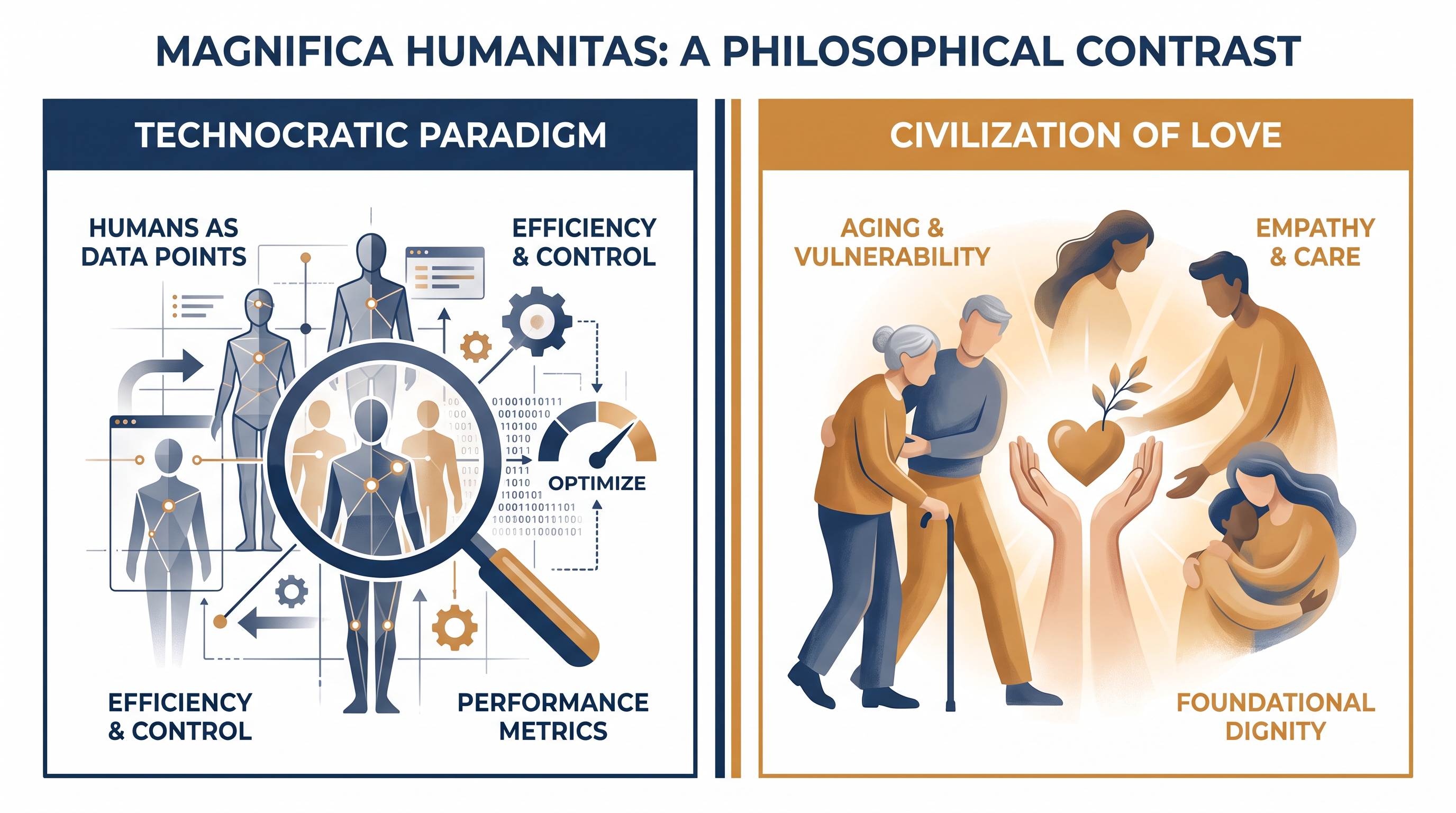
At the heart of 'Magnifica Humanitas' is a profound critique of what the Pope terms the 'technocratic paradigm.' The encyclical acknowledges the familiar anxieties surrounding AI—job displacement, data privacy, and ideological bias—but identifies a deeper, more existential danger. The document warns that humanity is increasingly viewing itself as a project 'to be optimized,' adopting the cold logic of machines to measure the value of human life.
This drive for optimization, the Pope argues, fundamentally misunderstands human nature. In the encyclical's theological framework, human limitations—such as illness, aging, suffering, and vulnerability—are not engineering defects waiting to be solved by a software update. Instead, they are the very spaces where human beings discover wisdom, experience empathy, and encounter the divine. By attempting to use AI to escape these limitations, society risks building a 'culture of power' that discards those who cannot be optimized.
The call to 'disarm' AI operates on two levels. Philosophically, it demands stripping technology of its outsized authority over human self-worth. But practically, it is a direct intervention into the escalating militarization of artificial intelligence. The encyclical forcefully condemns the prospect of AI systems making rapid, autonomous decisions about life and death, entirely detached from human moral responsibility.[2]
This military warning arrives at a highly volatile moment for the tech industry. The Vatican's release strategically coincides with 'Anthropic PBC v. U.S. Department of War', a landmark lawsuit in which the AI research company is clashing with the federal government over the deployment of its models in military and surveillance contexts. The encyclical provides a robust philosophical backing for those resisting the integration of AI into lethal autonomous weapons systems.[1][2]
This military warning arrives at a highly volatile moment for the tech industry.
In fact, Catholic moral theologians have already weaponized the Pope's framework in federal court. A coalition of ethicists, including scholars from the Catholic University of America, filed an amicus curiae brief in the Anthropic case. Drawing directly from 'Magnifica Humanitas' and traditional Just War theory, they argued that human moral agency must remain central to any lethal decision, effectively demanding a hard legal boundary against algorithmic warfare.[2]
Beyond the battlefield, the encyclical addresses the economic extraction inherent in modern AI development. Pope Leo XIV notes that AI is fundamentally 'extractive,' relying on the mass harvesting of human data, expression, and experience—which the Church views as divine creations, not raw materials for corporate profit. The document warns that concentrating technological and economic resources in the hands of a few tech conglomerates will inevitably widen the gap between the included and the excluded.
To counter this, the Pope proposes a 'civilization of love' founded on justice, dialogue, and shared responsibility. This requires ensuring that the development of AI includes the very societies it claims to serve, rather than being dictated by a handful of engineers and executives. The encyclical insists that the principles of Catholic social doctrine—the common good, solidarity, and subsidiarity—must be the tools used to regulate and interpret this ongoing transformation.
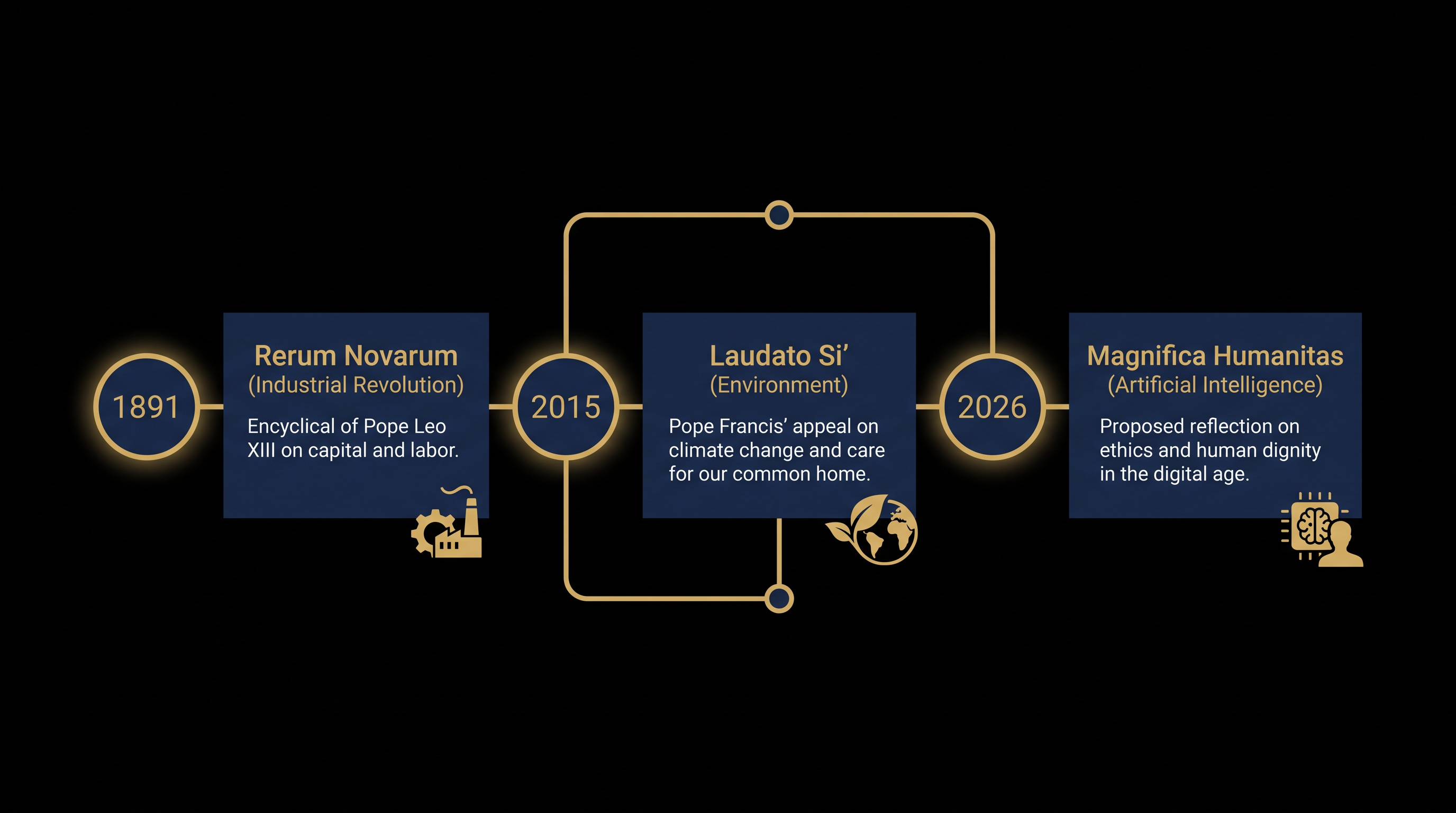
The historical timing of the document is highly deliberate. Pope Leo XIV signed 'Magnifica Humanitas' exactly 135 years after his namesake, Pope Leo XIII, issued 'Rerum Novarum'. That 1891 encyclical responded to the exploitation of workers during the Industrial Revolution, laying the foundation for modern Catholic social teaching. By linking the two documents, the current Pope is signaling that the AI revolution requires a similarly seismic shift in how society protects human dignity and labor.
The reception of 'Magnifica Humanitas' has been swift across both religious and secular spheres. Technology analysts at the Brookings Institution note that while a papal encyclical is unlikely to directly drive federal AI legislation, it is already serving as a foundational text for conversations about AI ethics in the tech space. It provides a vocabulary for tech workers and policymakers who feel uneasy about the rapid deployment of AI but lack a cohesive moral framework to articulate their concerns.
However, the document's aspirational goals face steep hurdles in the real world of code and capital. The tech industry's incentive structures are currently built entirely around the optimization and extraction that the Pope condemns. While executives may attend Vatican presentations, shifting the underlying business models of trillion-dollar companies to align with a 'civilization of love' remains a monumental challenge.
Ultimately, 'Magnifica Humanitas' forces a reckoning not just for developers, but for everyday users of technology. It asks society to decide whether it will use AI to build a new Tower of Babel—a monument to human hubris and technocratic dominance—or whether it will subordinate these powerful new tools to the service of human flourishing. The encyclical makes clear that the choice cannot be left to algorithms; it requires the active, moral discernment of a magnificent humanity.
Viewpoints in depth
The Vatican's Theological Stance
Human limitations are not defects to be optimized, but essential components of dignity.
The core of Pope Leo XIV's argument is a rejection of the Silicon Valley ethos that views aging, illness, and inefficiency as bugs in the human system. The Church argues that these vulnerabilities are exactly where human beings experience empathy, wisdom, and spiritual growth. By attempting to 'solve' humanity through AI, the technocratic paradigm risks erasing the very qualities that make life meaningful, replacing a civilization of love with a culture of power.
Tech Industry Realists
The encyclical provides a valuable moral vocabulary, but clashes with the financial realities of AI development.
While many AI researchers and executives welcome the Vatican's intervention—evidenced by their attendance at the encyclical's launch—industry analysts note a fundamental tension. The Pope condemns the 'extractive' nature of AI and its reliance on harvesting human data. However, the entire economic foundation of modern generative AI is built on mass data extraction and optimization. Bridging the gap between the Pope's aspirational ethics and the fiduciary duties of tech conglomerates remains an unsolved challenge.
Just War Ethicists
Autonomous AI weapons fundamentally violate the moral requirement for human agency in lethal decisions.
For military ethicists and moral theologians, the most urgent application of 'Magnifica Humanitas' is on the battlefield. They argue that delegating life-and-death decisions to an algorithm strips warfare of moral responsibility. Using the encyclical's framework, these advocates are pushing for strict legal boundaries—both domestically and internationally—to ensure that a human being always remains in the loop, preventing the ultimate 'disarming' of human conscience in conflict.
What we don't know
- How the U.S. federal courts will weigh the religious and ethical arguments presented in the Anthropic military AI lawsuit.
- Whether major tech companies will tangibly alter their data extraction models in response to growing moral pressure from global institutions.
- How the Vatican's new Commission on Artificial Intelligence will enforce or promote these guidelines within Catholic institutions worldwide.
Sources
Source coverage
2 outlets
3 viewpoints surfaced


[1]National Catholic ReporterAI Ethics & Tech Industry
Pope Leo XIV to present encyclical on AI alongside Anthropic co-founder
Read on National Catholic Reporter →[2]Catholic University of AmericaCatholic Moral Theologians
Ethics Expert Called Upon by Global News Outlets
Read on Catholic University of America →

More in culture
See all 5 stories →Museum Economics
Why Royal Museums Greenwich Workers Are Striking During the 2026 Solar Eclipse
6 sources

Digital Psychology
The Psychology of Synthetic Intimacy: How Science is Building Guardrails for AI Companions
4 sources
Education Law
How Utah's H.B. 29 Works: The Mechanics Behind the Statewide Removal of Stephen King's 'Different Seasons'
6 sources

Every angle. Every day.
Get culture stories with full source coverage and perspective breakdowns delivered to your inbox.