
FAA Grants Type Certification for Boeing 737 MAX 7, Clearing Way for Commercial Service
After years of delays and rigorous safety reviews, the FAA has certified the smallest and longest-range variant of the Boeing 737 MAX family.
By Adrien Caron

After nearly a decade of development, testing, and unprecedented regulatory scrutiny, the Boeing 737 MAX 7 has officially been cleared for commercial service. On August 3, 2026, the United States Federal Aviation Administration (FAA) granted an amended type certificate for the aircraft, marking the end of a grueling multi-year review process. The approval allows Boeing to begin delivering the smallest and longest-range member of its 737 MAX family to airline customers, closing a significant chapter in the manufacturer's long path to industrial recovery.[1][2]
The certification of the MAX 7 is more than just a routine administrative stamp; it represents a fundamental shift in how commercial aircraft are vetted. Following the tragic MAX 8 crashes in 2018 and 2019, the FAA overhauled its oversight protocols, driven by the Aircraft Certification, Safety, and Accountability Act. This legislation mandated a far more rigorous approach to aircraft certification, requiring regulators to directly review safety-critical areas rather than delegating them entirely to the manufacturer.[5]
To secure the amended type certificate—an official approval issued when an existing certified aircraft design receives approved changes—Boeing had to navigate a gauntlet of new requirements. The FAA demanded comprehensive updates to the aircraft's flight-control software and its flightcrew alerting system. These changes were designed to provide pilots with clearer, more intuitive information and warnings during complex flight scenarios, directly addressing recommendations from the National Transportation Safety Board.[3][5]
One of the most significant technical hurdles that delayed the MAX 7's approval involved the engine anti-ice system. During flight testing, engineers discovered a potential condition where the engine inlet could overheat if the anti-ice system was used in dry air for extended periods. This overheating risked weakening the surrounding carbon-composite structure. The FAA required a complete redesign of the system to eliminate this vulnerability before granting certification, a mandate that pushed the timeline back by several years.[1][5]
Overcoming these engineering challenges required an exhaustive testing campaign. Boeing's development team logged nearly 700 flight-test hours across 440 test flights, alongside approximately 350 hours of ground testing. The process also involved tens of thousands of pages of documentation and extensive human factors reviews, which evaluate how pilots interact with the aircraft's systems under stress. The FAA stated that the final approval reflects years of sustained work to resolve these complex technical issues.[4][7]
With the regulatory hurdles cleared, the aviation industry is now looking at what the MAX 7 brings to the tarmac. The aircraft is designed to seat between 135 and 160 passengers in a standard two-class configuration, making it the lowest-capacity variant in the MAX lineup.
However, it boasts the longest range of the family, capable of flying up to 3,800 nautical miles without refueling. This unique combination of low capacity and high range allows airlines to operate longer, "thin" routes that lack the passenger demand to justify a larger wide-body plane.[3][7]
The MAX 7 is also engineered for exceptional performance in challenging environments. Its aerodynamic design and powerful engines make it particularly well-suited for operators flying out of airports situated at high altitudes or in hot climates, where thinner air typically restricts the takeoff weight of other aircraft. Furthermore, the jet delivers a 20 percent reduction in fuel consumption and carbon dioxide emissions compared to the older airplanes it is designed to replace, while simultaneously cutting its noise footprint in half.[7]
The primary beneficiary of this new capability is Southwest Airlines, the launch customer for the MAX 7. The Dallas-based carrier currently holds 269 orders for the aircraft, which it plans to use to replace its aging fleet of over 270 Boeing 737-700s, some of which have been in service for more than two decades. Aviation analytics firms estimate that Boeing has already assembled about 30 MAX 7s, which have been sitting in storage awaiting this final regulatory green light.[1][6]
Despite the certification, passengers will not be boarding a MAX 7 immediately. Southwest Airlines has indicated that it will take approximately three to six months after receiving its first delivery to integrate the aircraft into its active fleet. This buffer period is necessary for the airline to update its operating specifications, finalize maintenance procedures, and complete pilot training programs. Consequently, the MAX 7 is not expected to appear on Southwest's published flight schedules until early 2027.[3][6]
The approval of the MAX 7 also carries significant implications for the broader Boeing 737 MAX program, which currently boasts an order book of more than 7,200 aircraft. By resolving the complex engineering and regulatory issues associated with the MAX 7, Boeing has paved the way for the final uncertified member of the family: the high-capacity MAX 10. The two variants share several regulatory workstreams, including the redesigned engine anti-ice system.[2][4]
FAA officials have recently indicated that the certification of the MAX 10 is "literally around the corner," following closely behind the MAX 7. Securing approval for the MAX 10 is arguably even more commercially vital for Boeing, as it represents the manufacturer's primary competitor to the highly successful Airbus A321neo in the lucrative upper end of the single-aisle market. Boeing expects to complete the MAX 10 certification process later in 2026.[2][5]
Ultimately, the certification of the Boeing 737 MAX 7 serves as a testament to a transformed aerospace regulatory landscape. The days of expedited approvals have been replaced by a meticulous, evidence-based approach to aviation safety. For Boeing, the milestone validates the resilience of its engineering teams and provides a clear flight path toward completing the MAX family, ensuring that the next generation of narrow-body travel is built on a foundation of uncompromising oversight.[1][7]
Key points
- The FAA granted an amended type certificate for the Boeing 737 MAX 7, clearing it for commercial service.
- The approval follows a multi-year review process delayed by new safety mandates and required engineering redesigns.
- The MAX 7 is the smallest variant in the family but boasts the longest range at 3,800 nautical miles.
- Boeing had to redesign the engine anti-ice system to prevent potential structural weakening from overheating.
Open questions
- Exactly which routes Southwest Airlines will prioritize for the MAX 7's extended range capabilities.
- The precise timeline for the certification of the larger MAX 10 variant, which shares several regulatory workstreams.
Timeline
March 2018
The Boeing 737 MAX 7 completes its first successful test flight.
2019
The global grounding of the MAX family prompts a massive overhaul of FAA certification standards.
2020
Congress passes the Aircraft Certification, Safety, and Accountability Act, mandating stricter oversight.
July 2026
Boeing concludes certification flight testing for both the MAX 7 and MAX 10 variants.
August 2026
The FAA grants the amended type certificate, clearing the MAX 7 for commercial service.
- Airline Operators
- Focus on the aircraft's operational flexibility, fuel efficiency, and the timeline for integrating it into commercial fleets.
- Aerospace Manufacturers
- Highlight the engineering resilience required to overcome technical hurdles and the strategic importance of completing the aircraft family.
- Aviation Regulators
- Emphasize the necessity of rigorous, uncompromising safety reviews and the enforcement of new certification standards.
Perspectives this story doesn't cover
- Aviation Safety Advocates
- Commercial Airline Pilots
Sources
Source coverage
7 outlets
3 viewpoints surfaced







- [1]Aviation WeekAerospace Manufacturers
Boeing 737 MAX 7 Earns FAA Certification
Read on Aviation Week → - [2]Simple FlyingAerospace Manufacturers
It's Official: Boeing 737 MAX 7 Secures FAA Type Certification
Read on Simple Flying → - [3]The Points GuyAirline Operators
Boeing's smallest 737 MAX jet just won FAA approval after years of delays
Read on The Points Guy → - [4]Inc.Airline Operators
After Years of Delays, Boeing's 737 MAX 7 Just Won FAA Approval
Read on Inc. → - [5]Aerospace Testing InternationalAviation Regulators
Boeing 737-7 certified for service
Read on Aerospace Testing International → - [6]AvWebAviation Regulators
FAA Finally Issues Type Certificate For Boeing 737 Max 7
Read on AvWeb → - [7]BoeingAerospace Manufacturers
Longest-range 737 MAX family member cleared for commercial service
Read on Boeing →
More in Automotive & Transportation
See all →Aerodynamics
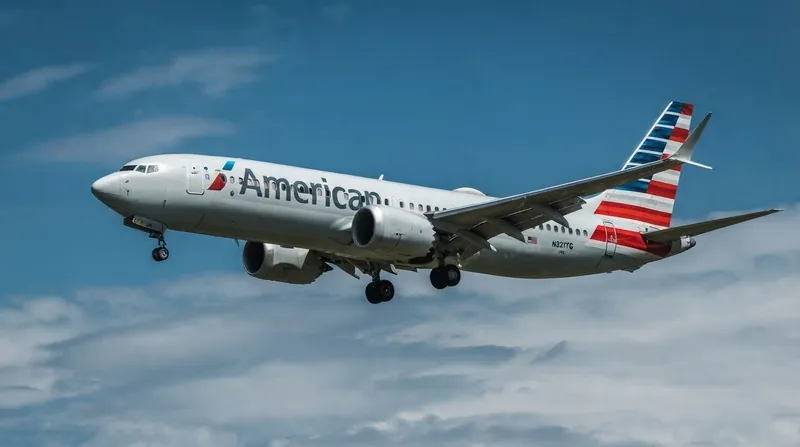
The Aerodynamics of Winglets: How Wingtip Devices Slash Fuel Consumption and Extend Aircraft Range
6 sources
Aviation Health
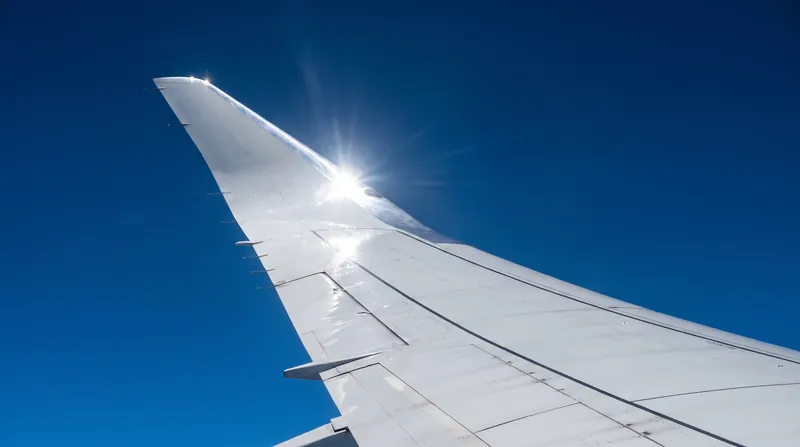
The Mechanics of Bleedless Architecture: Why Next-Generation Aircraft Leave Passengers Less Exhausted
6 sources
Global Auto Market
Toyota Global Sales Decline Exposes Structural Weakness in China Market
4 sources
Defense Tech
F-35's $38 Billion Cooling Problem Nears Resolution, Moving Closer to Implementation
7 sources
Comments
Every angle. Every day.
Get Automotive & Transportation stories with full source coverage and perspective breakdowns, free every day.