
F-35's $38 Billion Cooling Problem Nears Resolution, Moving Closer to Implementation
A major engineering breakthrough in thermal management could soon solve the F-35's most expensive mechanical flaw, saving taxpayers billions in engine maintenance.

Share this story
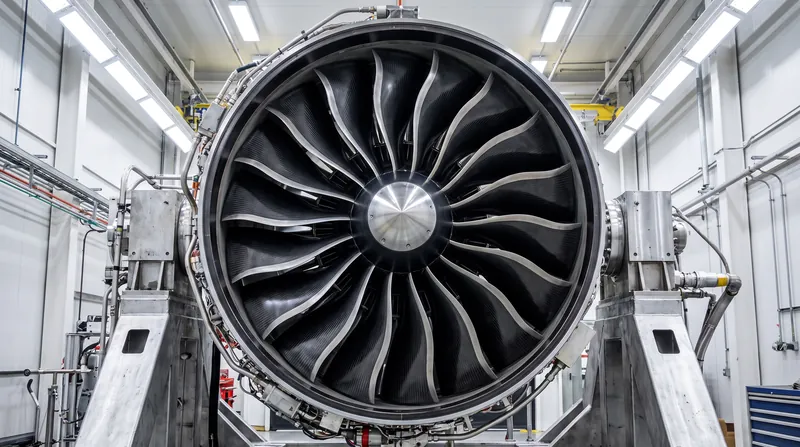
When critics look at the F-35 Lightning II's staggering lifecycle costs, they often blame the Pratt & Whitney F135 engine for failing prematurely. The evidence, however, points to a much more mundane culprit: the stealth fighter's air conditioning. The aircraft's Power and Thermal Management System (PTMS) is severely overtasked by the jet's advanced electronics.
To compensate for the lack of cooling capacity, the system draws significantly more bleed air from the engine than originally intended. This forces the powerplant to run much hotter than its design limits, essentially burning the engine out from the inside just to keep the computers cool.[1][3]
For the taxpayers footing the bill and the base commanders managing daily flight operations, this thermal mismatch is not an abstract engineering footnote. It translates directly into grounded aircraft and blown budgets. The Government Accountability Office estimates that this specific cooling shortfall will add a staggering $38 billion in unexpected maintenance costs over the lifespan of the F-35 fleet. The extra heat degrades engine components at an accelerated rate, forcing local maintenance depots to pull engines for heavy overhauls thousands of flight hours earlier than projected.[1][6]
Now, a definitive resolution to the fighter's biggest mechanical flaw is finally moving from the drawing board to the test chamber. In late August 2026, Collins Aerospace, a subsidiary of RTX, successfully completed altitude testing of its Enhanced Power and Cooling System (EPACS). The tests placed the new cooling architecture in ground-based altitude chambers that simulated the low pressures and extreme temperatures the system will encounter in real-world flight conditions, proving it can handle the intense thermal loads of modern combat.[1][4]
The performance data from the EPACS altitude tests demonstrated that the new system can deliver 80 kilowatts of cooling capacity. That represents a massive leap over the F-35's current cooling architecture, which maxes out at roughly 32 kilowatts. By more than doubling the thermal management threshold, the new system would immediately relieve the strain on the F135 engine, restoring its expected lifespan and drastically reducing the frequency of depot-level engine replacements for squadrons around the globe.[1][2]
The urgency to fix the cooling system stems directly from the F-35's upcoming Block 4 modernization program. These upgrades will introduce a vastly more powerful electronic warfare suite, new high-resolution radars, and advanced processors that generate massive amounts of waste heat. The current cooling system, originally designed when the F-35 was conceptualized as a lighter fighter with lower power demands, is simply incapable of absorbing the thermal output of the Block 4 electronics without destroying the engine in the process.[1][3]
The thermal management crisis has become so pervasive that it is affecting other mundane subsystems across the aircraft. In May 2026, the Department of Defense had to issue a $100 million contract to Lockheed Martin just to supply new heat sinks for the F-35's brake assemblies. The tightly packed internal architecture of the stealth fighter means that excessive heat generated during braking can spread into nearby avionics wiring and sensors, causing damage that forces the aircraft into lengthy maintenance periods.[7]
While Collins Aerospace is positioning EPACS as a total replacement for the current cooling architecture, the incumbent manufacturer is fighting to keep its place on the jet. Honeywell, which built the original PTMS for every F-35 currently flying, has proposed a phased upgrade path. The company argues it can reach the same 80-kilowatt cooling target by reutilizing 95 percent of the existing hardware and simply updating the control software, offering what it claims is a lower-risk and highly expeditious route to solving the thermal crisis.[2]
This cooling system overhaul is running in parallel with the Engine Core Upgrade (ECU) program, a major effort led by Pratt & Whitney to modernize the F135 engine itself. The ECU, which recently approached its critical design review milestone, is designed to give the engine more thrust and inherent durability. However, military acquisition officials have made it clear that upgrading the engine without simultaneously fixing the thermal management system would only subject the new engine core to the same destructive heat cycles.[2][5]
The final decision on how to cool the F-35 now rests on a comprehensive engineering study. The F-35 Joint Program Office previously awarded Lockheed Martin a $107 million contract to evaluate all competing Power Thermal Management Upgrade options. That two-year analysis is scheduled to conclude in December 2026, at which point program officials will select the winning system. For the maintenance crews turning wrenches on the flightline, that decision cannot come soon enough.[1]
Viewpoints in depth
The Incumbent's View
Honeywell argues for a phased, low-risk upgrade to the existing architecture.
As the original manufacturer of the F-35's Power and Thermal Management System, Honeywell maintains that a complete system replacement is unnecessary and risky. The company argues it can achieve the required 80-kilowatt cooling capacity by reutilizing 95 percent of the existing hardware and updating the control software. This approach, they claim, would minimize integration risks and avoid the lengthy certification process required for a brand-new cooling architecture.
The Challenger's View
Collins Aerospace pushes for a total system replacement to guarantee future thermal margins.
Collins Aerospace, an RTX subsidiary, believes the F-35's thermal challenges have outgrown the original system's foundational design. By successfully altitude-testing their Enhanced Power and Cooling System (EPACS), they are proving that a clean-sheet replacement can reliably deliver 80 kilowatts of cooling under extreme flight conditions. They argue that only a total replacement can provide the thermal margin necessary to support not just Block 4, but future Block 5 and Block 6 electronic warfare upgrades without overtaxing the engine.
The Auditor's View
Government watchdogs focus on the $38 billion cost of inaction.
For the Government Accountability Office and taxpayer advocacy groups, the engineering debate is secondary to the financial bleeding. Auditors note that the cooling flaw was identified as early as 2008, yet the system was pushed forward to avoid production delays. Because the current system draws excessive bleed air, the F135 engine runs dangerously hot, degrading components prematurely. Watchdogs warn that unless a permanent cooling fix is implemented swiftly, the Pentagon will absorb $38 billion in completely avoidable engine overhaul costs.
Key points
- The F-35's current cooling system draws excessive bleed air, forcing the engine to run hot and adding $38 billion in projected maintenance costs.
- Collins Aerospace successfully completed altitude testing of a new cooling system capable of delivering 80 kilowatts of cooling capacity.
- The current system maxes out at 32 kilowatts, which is insufficient for the F-35's upcoming Block 4 electronic warfare upgrades.
- Lockheed Martin is conducting a $107 million study to select a final cooling upgrade solution by December 2026.
How we got here
2008
Lockheed Martin first identifies a subsystem flaw indicating the F-35's cooling architecture may be insufficient.
2013
The Pentagon denies a request for a design revision to the cooling system to avoid further program delays.
May 2023
The GAO releases a report revealing the cooling shortfall will add $38 billion in lifecycle maintenance costs.
July 2024
Pratt & Whitney's Engine Core Upgrade (ECU) clears its preliminary design review.
August 2026
Collins Aerospace successfully completes altitude testing of its 80-kilowatt EPACS cooling system.
December 2026
Lockheed Martin is scheduled to present its final recommendation for the Power Thermal Management Upgrade.
- Defense Contractors
- Focus on delivering the 80-kilowatt cooling requirement through competing hardware and software solutions.
- Government Auditors
- Emphasize the staggering $38 billion financial toll of the current cooling shortfall on taxpayers.
- Military Operators
- Prioritize fleet readiness, engine lifespan, and the immediate need for cooling to support Block 4 upgrades.
Perspectives this story doesn't cover
- Allied Defense Ministries
- Flightline Maintenance Crews
Sources
Source coverage
7 outlets
3 viewpoints surfaced







- [1]Aerospace Global NewsDefense Contractors
The F-35's $38 billion cooling problem moves closer to a possible fix
Read on Aerospace Global News → - [2]Breaking DefenseDefense Contractors
Pratt F-35 engine upgrade clears preliminary design review
Read on Breaking Defense → - [3]Aviation WeekGovernment Auditors
Subsystem Flaw Found In 2008 Caused $38 Billion F-35 Issue: GAO
Read on Aviation Week → - [4]RTXDefense Contractors
Collins Aerospace completes altitude testing of its next generation Power and Thermal Management System (PTMS), the Enhanced Power and Cooling System (EPACS)
Read on RTX → - [5]Air & Space Forces MagazineMilitary Operators
F-35 Engine Upgrade Approaches Critical Design Review
Read on Air & Space Forces Magazine → - [6]Taxpayers for Common SenseGovernment Auditors
Engine and Thermal Management Issues Add $38 Billion to F-35 Lifecycle Cost
Read on Taxpayers for Common Sense → - [7]Military Watch MagazineMilitary Operators
The United States Department of War has signed a $100 million contract with the country's largest defence contractor, Lockheed Martin, to address a serious thermal management issue affecting the F-35 fighter's braking system.
Read on Military Watch Magazine →

More in Automotive & Transportation
See all →Aerial Firefighting
FAA Proposes Rule Change to Allow Firefighter Transport on Restricted Category Aircraft
4 sources

Airline Restructuring
airBaltic Files for Chapter 11 Bankruptcy, Secures $404 Million in Debtor-in-Possession Financing
5 sources

Turbofan Efficiency
Turbofan Bypass Ratios: How Airflow Around the Core Cuts Jet Fuel Consumption
7 sources
Battery Supply Chain
US Transportation Secretary Presses Ford to Sever Battery Tech Ties With CATL and Geely
8 sources

Comments
Every angle. Every day.
Get Automotive & Transportation stories with full source coverage and perspective breakdowns, free every day.