
Why Lower Cabin Altitudes in Composite Aircraft Reduce Long-Haul Passenger Fatigue
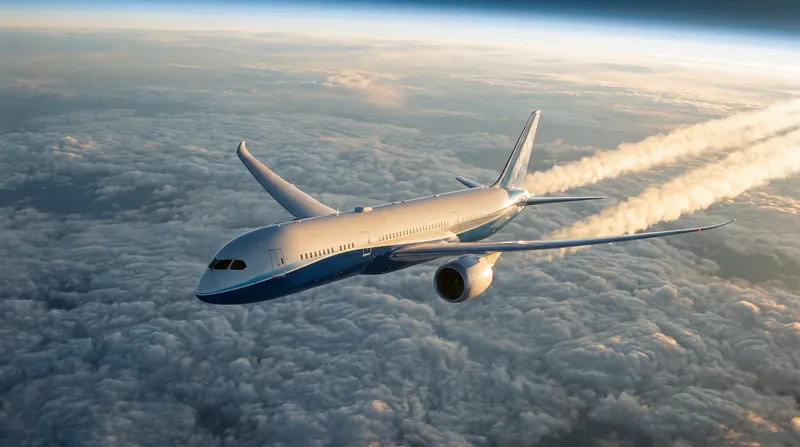
Modern composite aircraft like the Boeing 787 and Airbus A350 have fundamentally changed the biological toll of long-haul flying. By abandoning traditional engine bleed air and utilizing stronger fuselages, these jets lower cabin altitude and triple humidity, significantly reducing passenger fatigue.

Share this story
In short
- Traditional aluminum aircraft are limited to an 8,000-foot cabin altitude to prevent metal fatigue, causing mild hypoxia in passengers.
- A landmark medical study found that an 8,000-foot cabin altitude drops blood oxygen saturation by an average of 4.4 percentage points.
- Next-generation aircraft like the Boeing 787 and Airbus A350 use carbon-fiber composite fuselages that can withstand higher internal pressures.
For most travelers, the exhaustion that follows a 14-hour intercontinental flight is entirely blamed on crossing time zones. But jet lag is only half the story. The headaches, dry eyes, and profound fatigue experienced after a long-haul journey are largely the symptoms of acute mountain sickness.
When you step onto a traditional commercial airliner, you are essentially spending the next dozen hours sitting on the peak of a high mountain, breathing thin, bone-dry air. For decades, this biological toll was simply the unavoidable price of global mobility, dictated by the physical limits of aluminum.[6]
To understand why flying hurts, you have to look at how an aircraft breathes. At a cruising altitude of 35,000 to 40,000 feet, the outside atmosphere is completely incompatible with human life. To keep passengers conscious, the aircraft's environmental control system pumps the sealed fuselage full of compressed air. However, maintaining sea-level pressure inside a tube surrounded by a near-vacuum creates an immense outward force—upwards of eight pounds per square inch. Traditional aluminum airframes simply cannot withstand that level of stress cycle after cycle without suffering severe metal fatigue.[2][3]
As a structural compromise, aviation regulators and manufacturers settled on a maximum "cabin altitude" of 8,000 feet for commercial flights. At this pressure—roughly equivalent to the elevation of Aspen, Colorado—the airframe is protected, but the human body is forced to compensate.
A landmark hypobaric-chamber study published in the New England Journal of Medicine simulated 20-hour flights at various pressures, revealing that an 8,000-foot cabin altitude drops a passenger's blood oxygen saturation by an average of 4.4 percentage points. This mild hypoxia triggers the exact same physiological responses as altitude sickness, including nausea, sleep disruption, and malaise.[1][6]
The introduction of next-generation aircraft, led by the Boeing 787 Dreamliner and the Airbus A350, fundamentally rewrote this equation by replacing aluminum with carbon-fiber reinforced plastic (CFRP). These composite materials are vastly stronger and virtually immune to the metal fatigue that plagues traditional jets. Because a composite fuselage can safely handle a much higher pressure differential, aerospace engineers were finally freed from the 8,000-foot limitation that had dictated cabin environments since the dawn of the jet age.[3][4][5]
By leveraging this structural strength, both Boeing and Airbus lowered the cruising cabin altitude of their flagship widebodies to 6,000 feet. While a 2,000-foot difference might sound marginal on paper, physiologically, it is the difference between standing on a high alpine peak and walking around a mild-elevation city like Denver. At 6,000 feet, the air is significantly denser, allowing the lungs to oxygenate the blood with far less effort. Passengers consistently report arriving at their destinations feeling noticeably more alert, with fewer headaches and less cognitive fog.[2][4][5]
Pressure, however, is only one variable; humidity is the other. At cruising altitude, the outside air is completely devoid of moisture. On legacy aluminum aircraft, the cabin relative humidity is intentionally kept at a desert-like 4 to 7 percent to prevent condensation from forming on the inside of the skin, which would cause the metal to rust and corrode.
Because carbon-fiber composites do not rust, the 787 and A350 can safely manage much higher moisture levels. These aircraft utilize advanced environmental systems to maintain a relative humidity of 15 to 25 percent, effectively eliminating the parched throats and dry nasal passages that disrupt in-flight sleep.[3][4]
Boeing took the environmental overhaul a step further with the 787 by introducing a "bleedless" architecture. Historically, the air you breathe in a cabin is "bleed air"—hot, compressed air siphoned directly from the jet engines, cooled, and mixed with recirculated cabin air. The Dreamliner abandoned this decades-old standard.
Instead, it draws fresh air directly from the outside atmosphere through dedicated inlets and pressurizes it using massive electric compressors. Because the air never passes through the engine core, the risk of "fume events"—where engine oil or hydraulic fluid contaminates the cabin air—is entirely eliminated.[3][4]
Airbus took a different engineering path with the A350, retaining the traditional engine bleed-air system but achieving the same passenger-facing results through its 53 percent composite structure. The A350 still delivers the critical 6,000-foot cabin altitude and elevated humidity levels, while also boasting near-vertical sidewalls and advanced aerodynamics that make it one of the quietest twin-aisle cabins in the sky. For pilots and passengers alike, the reduction in ambient noise compounds the benefits of the lower cabin altitude, further reducing the sensory fatigue of a long-haul sector.[5]
For the modern traveler, these structural engineering choices translate into highly actionable consumer decisions. Booking a 15-hour flight from New York to Tokyo is no longer just a matter of comparing seat pitch, departure times, or airline brands. The physical airframe operating the route dictates the biological environment you will endure. By actively filtering flight searches for composite aircraft like the 787 or A350 over legacy aluminum jets, passengers can effectively buy back their first day on the ground, arriving hydrated, oxygenated, and ready to function.[6]
How we did this
- Method
- Comparing and normalising cabin atmospheric pressure, relative humidity, and blood oxygen saturation drops across legacy aluminum widebody aircraft and next-generation composite airframes to quantify the physiological impact of ultra-long-haul flight.
- What we found
- By lowering the cabin altitude by 2,000 feet and tripling baseline humidity, composite airframes reduce the passenger's oxygen deprivation equivalent from that of a high-mountain pass to that of a mild elevation city like Denver, fundamentally altering the biological toll of ultra-long-haul flight.
- What we worked from
- Legacy cabin altitude limit (8,000 ft): 8,000 ft — MigFlug
- Next-gen composite cabin altitude (6,000 ft): 6,000 ft — Boeing
- Blood oxygen saturation drop at 8,000 ft: 4.4 percentage points — National Institutes of Health
- Limits of this analysis
- Individual physiological responses to altitude vary widely based on age, fitness, and pre-existing conditions; the baseline figures represent averages from controlled hypobaric chamber studies.
Key terms
- Cabin Altitude
- The equivalent elevation above sea level of the air pressure inside the aircraft cabin.
- Bleed Air
- Hot, high-pressure air extracted from the compressor stage of a jet engine, which is then cooled and used to pressurize the cabin.
- Hypoxia
- A condition in which the body or a region of the body is deprived of adequate oxygen supply at the tissue level.
- Composite Fuselage
- An aircraft body made primarily from carbon-fiber reinforced polymers rather than traditional aluminum, offering greater strength and resistance to fatigue.
Reader questions
Why aren't airplane cabins pressurized to sea level?
Pressurizing a cabin to sea level while flying at 40,000 feet creates a massive pressure difference between the inside and outside of the aircraft. Traditional aluminum fuselages would require extremely heavy structural reinforcement to survive this stress, which would make the aircraft too heavy to fly efficiently.
Does the Airbus A350 use a bleedless air system?
No. Unlike the Boeing 787, which uses electric compressors to draw in fresh air, the Airbus A350 still uses a traditional system that bleeds compressed air from the engines. However, both aircraft use composite fuselages to achieve the same 6,000-foot cabin altitude.
How does cabin humidity affect jet lag?
Low humidity (4-7%) on older flights dries out the nasal passages, throat, and eyes, causing discomfort that disrupts sleep and compounds the fatigue of crossing time zones. Next-generation aircraft maintain 15-25% humidity, allowing passengers to rest more comfortably.
Where opinion splits
The Physiological View
Medical researchers emphasize that jet lag is heavily compounded by mild altitude sickness.
Aviation physiologists argue that the traditional focus on crossing time zones obscures the real physical trauma of long-haul flying. At an 8,000-foot cabin altitude, the partial pressure of oxygen drops significantly, leading to a measurable decrease in blood oxygen saturation. This mild hypoxia induces symptoms identical to acute mountain sickness, including nausea, headaches, and disrupted sleep architecture. By lowering the cabin altitude to 6,000 feet, next-generation aircraft keep passengers on the flat, safe portion of the hemoglobin-oxygen dissociation curve, fundamentally reducing the biological stress of the journey.
The Engineering View
Aerospace engineers view cabin pressure as a strict mathematical trade-off between passenger comfort and structural fatigue.
For decades, engineers were forced to compromise between human comfort and metal fatigue. Pressurizing a cabin to sea level at 40,000 feet creates an immense pressure differential that aluminum airframes simply cannot survive over tens of thousands of flight cycles without adding prohibitive amounts of heavy structural reinforcement. The shift to carbon-fiber reinforced polymers (CFRP) broke this stalemate. Composites offer vastly superior tensile strength and fatigue resistance, allowing engineers to safely increase the internal cabin pressure—and thus lower the cabin altitude—without incurring a massive weight penalty that would ruin the aircraft's fuel economics.
- Aviation Physiologists
- Focuses on the biological toll of mild hypoxia and the mitigation of acute mountain sickness symptoms during flight.
- Aerospace Engineers
- Prioritizes the structural integrity, weight trade-offs, and material science that make lower cabin altitudes possible.
- Aircraft Manufacturers
- Views cabin environment improvements as a competitive advantage for passenger bookings and airline fleet economics.
Perspectives this story doesn't cover
- Frequent Flyers
- Flight Attendants Unions
Sources
Source coverage
6 outlets
3 viewpoints surfaced






- [1]National Institutes of HealthAviation Physiologists
Effect of aircraft-cabin altitude on passenger discomfort
Read on National Institutes of Health → - [2]MigFlugAerospace Engineers
Why Airplane Cabins Are Pressurised to 6,000 Feet, Not Sea Level
Read on MigFlug → - [3]WikipediaAerospace Engineers
Boeing 787 Dreamliner
Read on Wikipedia → - [4]BoeingAircraft Manufacturers
Boeing 787 Dreamliner
Read on Boeing → - [5]AirbusAircraft Manufacturers
A350 Family
Read on Airbus → - [6]Factlen Editorial TeamAviation Physiologists
Synthesis by Factlen editorial team
Read on Factlen Editorial Team →
More in Automotive & Transportation
See all →Propeller Tech
The Pitch Change Mechanism: How a Constant Speed Propeller Maintains Engine RPM Across Varying Airspeeds
4 sources
Aerial Firefighting
FAA Proposes Rule Change to Allow Firefighter Transport on Restricted Category Aircraft
4 sources

Airline Restructuring
airBaltic Files for Chapter 11 Bankruptcy, Secures $404 Million in Debtor-in-Possession Financing
5 sources
Turbofan Efficiency
Turbofan Bypass Ratios: How Airflow Around the Core Cuts Jet Fuel Consumption
7 sources
Comments
Every angle. Every day.
Get Automotive & Transportation stories with full source coverage and perspective breakdowns, free every day.