
Supreme Court Eliminates 'Higher Bar' for Disability Discrimination Suits Against K-12 Schools
In a unanimous decision, the Supreme Court ruled that students with disabilities no longer need to prove "bad faith or gross misjudgment" to win discrimination lawsuits against public schools. The landmark ruling levels the playing field, ensuring educational civil rights are protected under the same legal standards as employment and housing.
By Kavya Nair


- Disability Rights Advocates
- Advocates argue the ruling dismantles an unjust double standard that shielded schools from accountability.
- Public School Districts
- School administrators warn the lower legal bar will expose underfunded districts to a surge of costly litigation.
- Legal & Policy Analysts
- Analysts emphasize that the ruling harmonizes education law with broader civil rights statutes.
Why this matters
For decades, families in certain parts of the country faced an uphill battle when seeking monetary damages for schools failing to accommodate their children's disabilities. By lowering the burden of proof to 'deliberate indifference,' this ruling empowers millions of families to hold districts accountable and forces schools to proactively ensure equal access.
Key points
- The Supreme Court unanimously eliminated the 'bad faith' standard for disability discrimination suits against K-12 schools.
- Students can now seek monetary damages under the ADA by proving 'deliberate indifference.'
- The ruling resolves a decades-old geographic divide that made it harder to sue schools in certain federal circuits.
- School districts are warned to reassess compliance strategies as legal liability increases.
For decades, families of students with disabilities faced a daunting legal hurdle when trying to hold public schools accountable for discrimination. If a school failed to accommodate a child's needs, parents seeking monetary damages in certain parts of the country had to prove that administrators acted with "bad faith or gross misjudgment."[7][8]
That standard meant that even if a school clearly violated a student's civil rights, the district could avoid financial liability by arguing that its staff had good intentions or simply made a mistake.[7]
But in a unanimous and consequential decision, the U.S. Supreme Court has permanently eliminated that higher bar. In the landmark case A.J.T. v. Osseo Area Schools, the justices ruled that students suing for disability discrimination in education are subject to the same legal standards as anyone else facing discrimination in employment, housing, or public services.[2][4]
Writing for the 9-0 majority, Chief Justice John Roberts declared that claims brought under the Americans with Disabilities Act (ADA) and Section 504 of the Rehabilitation Act do not require a "distinct, more demanding analysis" just because they occur in a K-12 setting.[2][5]
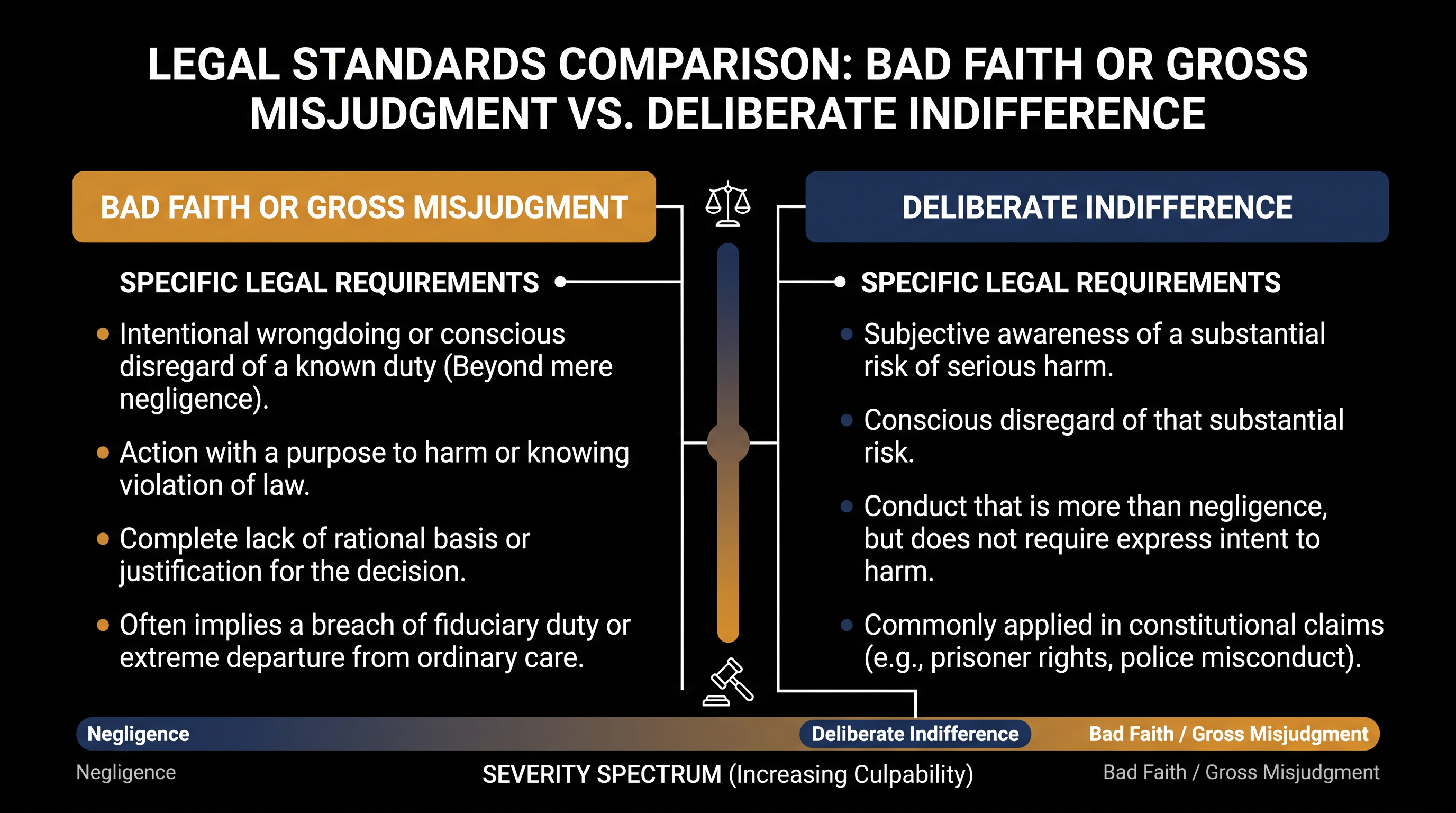
The ruling marks a watershed moment for civil rights in education. By lowering the burden of proof to "deliberate indifference," the Court has leveled the playing field, empowering millions of families to seek justice without having to prove malicious intent on the part of educators.[4]
The case that triggered this nationwide shift centered on Ava Tharpe, a Minnesota teenager with a rare and severe form of epilepsy. Because her condition caused intense morning seizures, it was physically unsafe for her to attend classes before noon.[1][6]
After moving to the Osseo Area School District in 2015, Ava's parents requested that the school provide evening instruction to match the accommodations she had received in her previous district. The district refused, offering shifting rationales and ultimately providing her with only 4.25 hours of daily instruction—significantly less than her peers.[1][6]
When her family sued the district under the ADA and Section 504, seeking compensation for years of lost instruction, they hit a legal wall. The 8th U.S. Circuit Court of Appeals rejected their claims, citing a 1982 precedent that required students to prove the school acted with "bad faith or gross misjudgment."[3][7]
When her family sued the district under the ADA and Section 504, seeking compensation for years of lost instruction, they hit a legal wall.
Under that standard, the lower courts ruled against the Tharpe family, even while acknowledging that the district had failed to provide an appropriate education. The school's actions were deemed negligent, but not egregious enough to meet the 8th Circuit's uniquely high bar.[1][3]
The Supreme Court's intervention resolves a long-standing geographic divide in how federal courts handled these cases. While some circuits already used the "deliberate indifference" standard, schools in the 8th and 6th Circuits had enjoyed a heightened shield against liability for over forty years.[3][7]
During oral arguments, the attorney representing the school district attempted a sweeping defense, suggesting that the Supreme Court should apply the "bad faith" standard to all discrimination cases nationwide, regardless of the setting. The justices firmly rejected that argument, refusing to rewrite decades of civil rights law.[1][3]
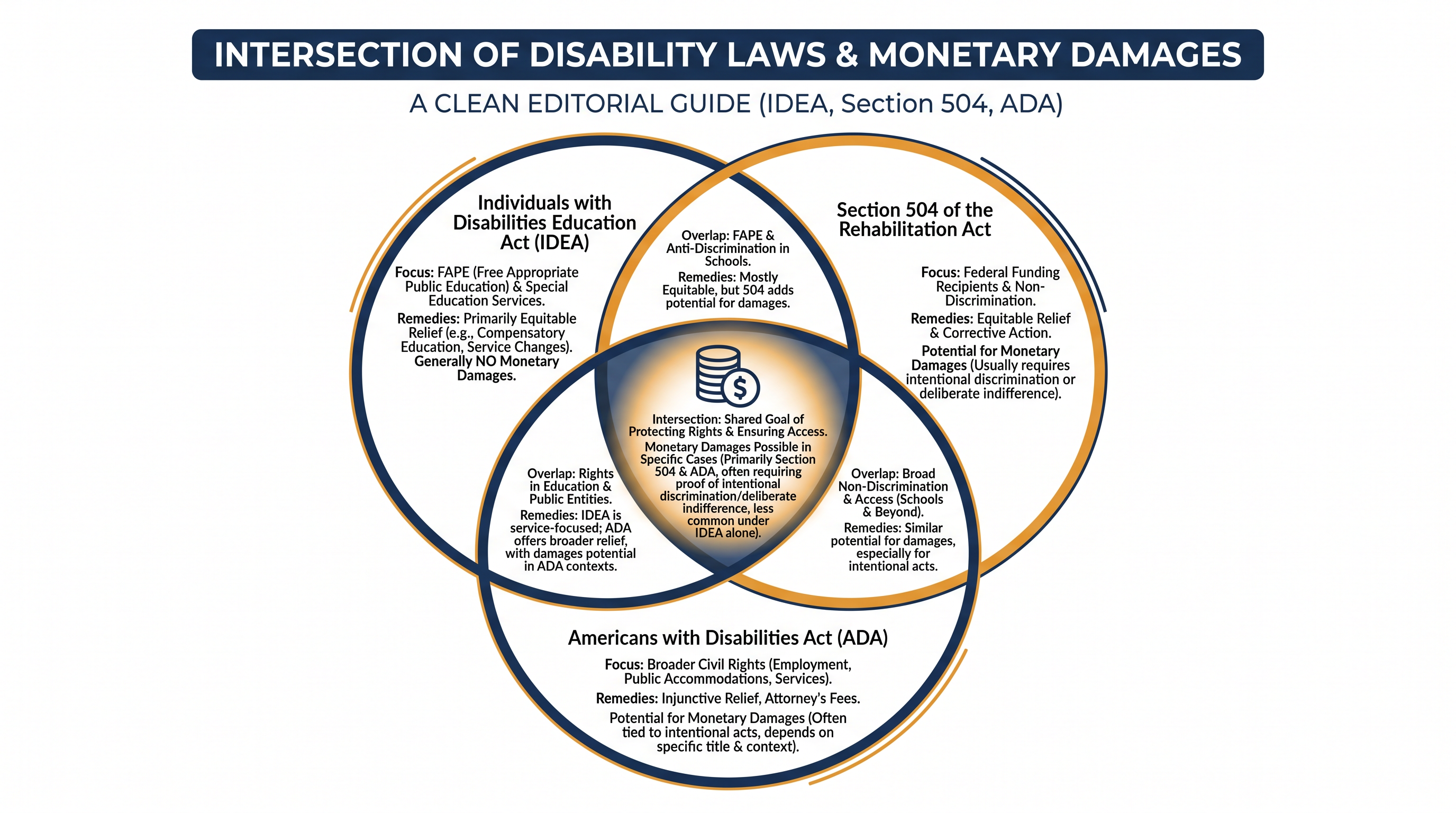
To understand the impact of the ruling, it is essential to distinguish between the different laws protecting disabled students. The Individuals with Disabilities Education Act (IDEA) guarantees a "free appropriate public education," but it does not allow families to sue for monetary damages.[3][8]
When families suffer financial harm—such as out-of-pocket costs for private tutoring or therapy due to a school's failure—they must turn to the ADA or Section 504. Until now, the "bad faith" standard made winning those damages nearly impossible in many states.[7]
The A.J.T. decision builds directly on another recent Supreme Court ruling, the 2023 Perez v. Sturgis case. In that unanimous decision, the Court ruled that families could sue for ADA damages without first exhausting the lengthy administrative hearing process required by the IDEA.[7][8]
Together, these two rulings dramatically alter the legal landscape for special education. Disability rights advocates celebrate the shift, noting that schools can no longer use "good faith" as a shield when they are deliberately indifferent to a student's known and documented needs.[4]
For school districts, the elimination of the higher bar serves as a stark warning. Legal analysts and school board associations anticipate a significant increase in the volume and scope of disability discrimination claims, as families now have a clearer path to federal court.[6][7]
Districts are now being urged to rapidly reassess their compliance strategies. Administrators must ensure that accommodations are not only promised on paper but equitably provided and meticulously documented in practice.[6][7]
Ultimately, the Supreme Court's ruling ensures that the classroom is not a civil rights vacuum. Students with disabilities now hold the same fundamental protections as any other American, ensuring that their right to an equal education is backed by the full weight of federal law.[4]
How we got here
1982
The 8th Circuit Court of Appeals establishes the 'bad faith or gross misjudgment' standard in Monahan v. Nebraska.
2018
The family of Ava Tharpe sues the Osseo Area School District after she is denied evening instruction and receives only 4.25 hours of daily schooling.
March 2023
The Supreme Court rules in Perez v. Sturgis that students can seek ADA damages without exhausting all IDEA administrative remedies.
2024
The 8th Circuit rejects Ava Tharpe's claims, citing the 1982 precedent that the district did not act in bad faith.
June 2025
The Supreme Court unanimously overturns the 8th Circuit in A.J.T. v. Osseo Area Schools, eliminating the 'bad faith' standard nationwide.
Viewpoints in depth
Disability Rights Advocates
Advocates argue the ruling dismantles an unjust double standard that shielded schools from accountability.
For decades, disability rights organizations have argued that the 'bad faith' standard created a nearly insurmountable barrier for families seeking justice. They point out that under the old rules, a school could acknowledge it failed to provide an appropriate education, yet still escape financial liability by claiming its staff meant well. Advocates celebrate the Supreme Court's decision as a restoration of fundamental civil rights, ensuring that disabled students are no longer treated as second-class citizens when seeking remedies for discrimination.
Public School Districts
School administrators warn the lower legal bar will expose underfunded districts to a surge of costly litigation.
School board associations and district legal counsels caution that the ruling fundamentally alters the risk landscape for K-12 education. They argue that special education is inherently complex, and disagreements over Individualized Education Programs (IEPs) are common. By lowering the threshold for monetary damages to 'deliberate indifference,' districts fear that routine, good-faith disputes over educational services will rapidly escalate into federal civil rights lawsuits, draining resources away from classrooms and into legal defense funds.
What we don't know
- How lower courts will interpret 'deliberate indifference' in the context of complex, highly individualized special education plans.
- Whether the anticipated increase in litigation will prompt Congress to allocate additional federal funding to help districts meet special education mandates.
- How the ruling will impact the frequency of out-of-court settlements between school districts and families.
Key terms
- Americans with Disabilities Act (ADA)
- A federal civil rights law that prohibits discrimination against individuals with disabilities in all areas of public life, including schools.
- Section 504 of the Rehabilitation Act
- A federal law that prohibits disability-based discrimination by any program or activity receiving federal financial assistance.
- Deliberate Indifference
- A legal standard requiring proof that an entity was aware of a substantial risk of harm or discrimination and consciously disregarded it.
- Free Appropriate Public Education (FAPE)
- An educational right of children with disabilities in the United States, guaranteed by the IDEA, ensuring services are tailored to their unique needs.
- Compensatory Damages
- Money awarded to a plaintiff in a lawsuit to compensate for damages, injury, or incurred losses, such as out-of-pocket costs for private tutoring.
Frequently asked
What is the difference between the IDEA and the ADA?
The Individuals with Disabilities Education Act (IDEA) guarantees a free appropriate public education but does not allow families to sue for monetary damages. The Americans with Disabilities Act (ADA) is a broader civil rights law that prohibits discrimination and allows plaintiffs to seek financial compensation.
What does 'deliberate indifference' mean in this context?
It is a legal standard requiring proof that a school district knew about a student's serious need for an accommodation but intentionally failed or refused to meet it, even if there was no malicious intent.
Why did the Supreme Court take this case?
The Court intervened to resolve a geographic split among federal courts. While some circuits already used the 'deliberate indifference' standard, others required students to prove 'bad faith,' creating unequal civil rights protections depending on where a student lived.
Will this ruling increase lawsuits against schools?
Legal experts and school board associations anticipate a significant increase in disability discrimination claims, as families no longer have to clear the uniquely high hurdle of proving educators acted with gross misjudgment.
Sources
Source coverage
8 outlets
3 viewpoints surfaced








[1]The Washington PostLegal & Policy Analysts
Supreme Court sympathetic to disabled student in discrimination case
Read on The Washington Post →[2]Education WeekLegal & Policy Analysts
Supreme Court Decision Lets Students Sue Schools More Easily for Disability Bias
Read on Education Week →[3]K-12 DiveLegal & Policy Analysts
Supreme Court weighs higher legal bar for student disability claims
Read on K-12 Dive →[4]Disability ScoopDisability Rights Advocates
Supreme Court Strikes Down Higher Burden Of Proof For Students With Disabilities
Read on Disability Scoop →[5]NewsweekLegal & Policy Analysts
Supreme Court Rules on Disability Discrimination in Schools
Read on Newsweek →[6]National School Boards AssociationPublic School Districts
Supreme Court Changes the Legal Playing Field for Students with Disabilities
Read on National School Boards Association →[7]Thrun Law FirmPublic School Districts
Supreme Court Eliminates Heightened Standard for Disability Discrimination Claims
Read on Thrun Law Firm →[8]Dannis Woliver KelleyPublic School Districts
Supreme Court Rules IDEA Exhaustion Not Required for ADA Damages Claims
Read on Dannis Woliver Kelley →
Every angle. Every day.
Get education stories with full source coverage and perspective breakdowns delivered to your inbox.