
How California's $20 Fast-Food Wage is Accelerating Automation and Reshaping the Labor Model
Two years after California implemented a landmark $20 minimum wage for fast-food workers, new economic data reveals a rapid industry shift toward automation and reduced staff hours.

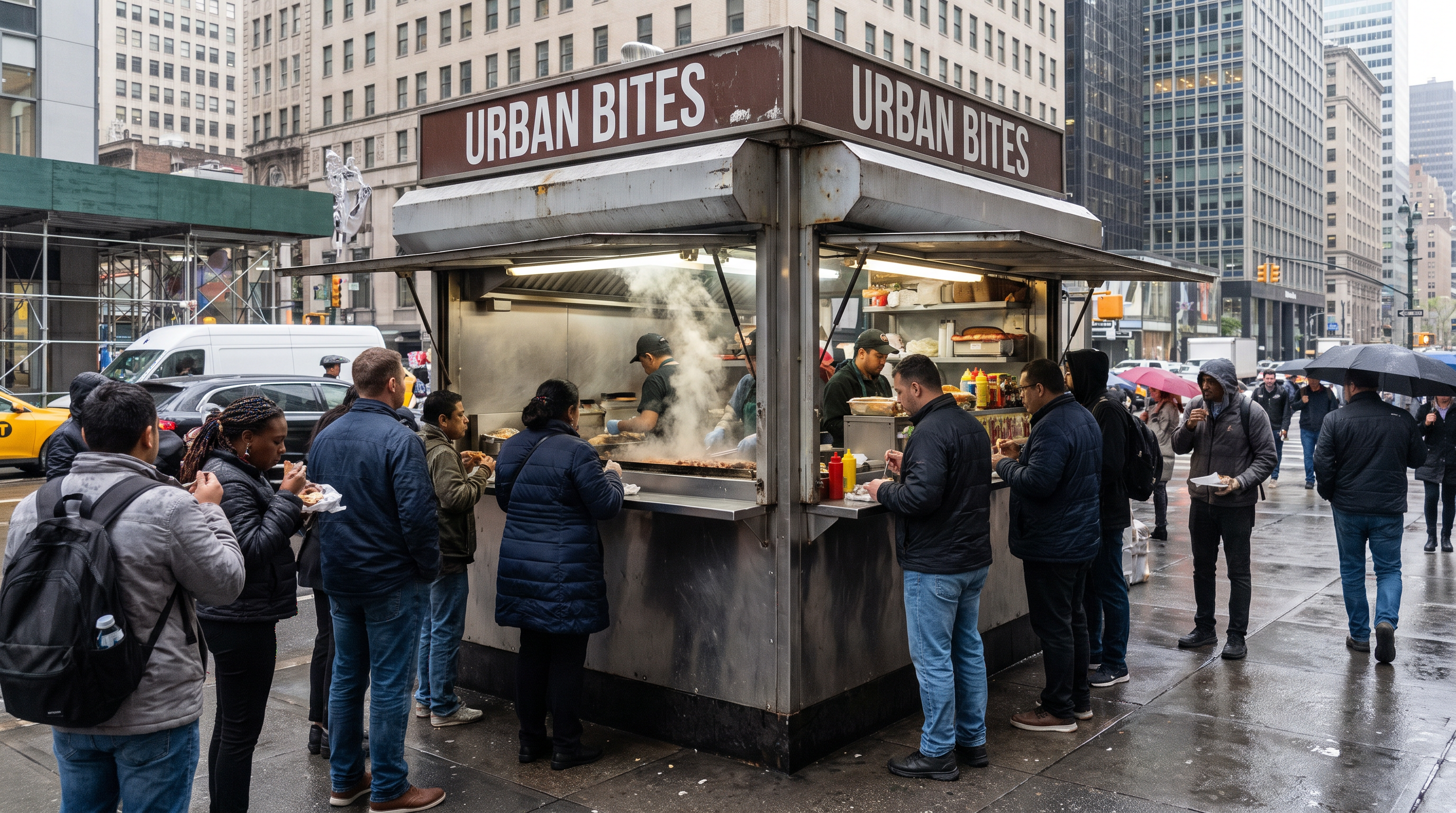
- Franchise Operators
- Argue that wage mandates force businesses to cut hours and automate to survive.
- Labor Advocates
- Maintain that the wage increase successfully lifted hourly pay without destroying overall employment.
- Academic Economists
- Focus on the nuanced data showing a contraction in total hours worked despite stable headcount.
Why this matters
California's wage experiment serves as a real-time laboratory for the rest of the country. Understanding how businesses adapt to sudden labor cost increases—through automation and hour reductions—helps workers and policymakers anticipate the future of entry-level employment.
Key points
- California's $20 fast-food minimum wage has led to an 8% decrease in on-site staffing hours.
- Franchise operators are rapidly accelerating the deployment of self-service kiosks and AI voice ordering.
- While hourly pay increased by 18%, many workers are seeing reduced total take-home pay due to cut hours.
- Menu prices at affected franchised restaurants have risen between 8% and 12%.
- Independent restaurants are also being forced to raise wages to compete for local talent.
Two years after California implemented a landmark $20-per-hour minimum wage for fast-food workers, the economic ripple effects are coming into sharp focus. The legislation, known as the FAST Act, was designed to help service workers keep pace with the state's notoriously high cost of living. However, as the dust settles in 2026, data reveals a complex reality: while hourly pay has undeniably risen, the fundamental structure of fast-food employment is being rapidly rewritten.[1][3]
When labor costs jump 25% overnight, franchise operators face a strict mathematical reality. To maintain profit margins, they can raise menu prices, reduce total labor hours, or invest heavily in automation. According to a wave of recent economic studies, California's restaurant owners are aggressively deploying all three strategies simultaneously, fundamentally altering the entry-level job market.[1][6]
A comprehensive 2026 study published by Northeastern University researchers utilized anonymized cellphone location data to track the physical presence of workers at fast-food locations. The findings were stark: following the wage hike, there was a measurable 8% contraction in on-site staffing at affected restaurants. The research concluded that for every $1 increase in the mandated wage, staffing levels dropped by approximately 3%.[2]
This contraction does not necessarily mean mass layoffs, but rather a structural shift in how hours are allocated. Researchers from the University of California, Santa Cruz, who interviewed owners and managers at more than 100 franchise locations, found that operators are strictly limiting shifts and universally eliminating overtime. As a result, while workers earn a higher hourly rate, many are taking home smaller overall paychecks because they are working fewer hours per week.[3][6]
The most visible and enduring consequence of the wage mandate is the acceleration of labor-replacement technology. Automation is no longer a futuristic concept in the quick-service industry; it is an immediate cost-saving necessity. Major chains like McDonald's, Burger King, and Taco Bell have rapidly expanded their deployment of self-service ordering kiosks, effectively replacing front-counter cashiers.[1][3]
The most visible and enduring consequence of the wage mandate is the acceleration of labor-replacement technology.
The technological shift extends beyond the dining room. Franchises are currently piloting and rolling out AI-driven voice ordering systems for drive-thrus, automated beverage dispensers, and even robotic dishwashing systems. By redirecting funds that would have gone toward payroll into capital expenditures for machines, operators secure more predictable long-term costs that are immune to future legislative wage hikes.[3][7]
Consumers are also absorbing a significant portion of the cost. The UC Santa Cruz study found that menu prices at franchised restaurants rose between 8% and 12% in the immediate aftermath of the wage increase. This price inflation has led to a slight dip in foot traffic, further incentivizing operators to run leaner shifts with fewer human employees on the floor.[3][4]
However, the economic narrative remains fiercely contested. A widely cited study by the UC Berkeley Labor Center offers a contrasting view, finding that the policy successfully increased average hourly pay by a remarkable 18% without causing a drop in overall industry headcount. Proponents of the law argue that this proves wage floors can lift workers out of poverty without destroying jobs.[5]
Critics of the Berkeley study, including the UC Santa Cruz researchers, argue that measuring raw headcount misses the reality on the ground. If a restaurant employs the same number of people but cuts everyone's schedule from 35 hours a week to 20 hours a week, the headcount remains stable while the actual labor opportunity—and the workers' total income—plummets.[6][7]
The ripple effects of the $20 mandate have also spilled over into the broader restaurant ecosystem. Independent restaurant owners, who are exempt from the FAST Act because they do not belong to chains with 60 or more national locations, report mounting pressure to raise their own wages. To compete for talent in the same labor pool, independent operators are being forced to hike pay and menu prices, despite operating on razor-thin margins.[3]
Despite the friction and the rapid shift toward automation, California policymakers show no signs of retreating from aggressive wage mandates. In Los Angeles, a recently enacted law mandates that wages for airport and hotel workers will scale up to $30 per hour by 2028, prompting similar warnings from the hospitality sector about impending job cuts and technological replacement.[3][4]
Ultimately, the fast-food industry in California is transitioning from a high-headcount, low-wage model to a low-headcount, higher-wage model augmented by robotics. While the workers who manage to secure full-time hours are undoubtedly better off, economists warn that the reduction in total shift availability disproportionately impacts teenagers and young adults, who rely on these entry-level positions to gain their first foothold in the workforce.[2][6]
How we got here
September 2023
Governor Gavin Newsom signs Assembly Bill 1228, establishing the FAST Act and the $20 minimum wage.
April 2024
The $20-per-hour minimum wage officially takes effect for fast-food chains with 60 or more national locations.
Early 2025
Major fast-food chains report a significant acceleration in capital expenditures for automated kiosks and AI systems.
March 2026
UC Santa Cruz and Northeastern University release studies detailing the reduction in staff hours and the rise of automation.
Viewpoints in depth
Franchise Operators & Economic Realists
Argue that aggressive wage floors force businesses to cut hours and automate to survive.
This camp points to the strict mathematics of restaurant margins. When labor costs increase by 25% overnight, operators cannot simply absorb the loss. They argue that the FAST Act has forced them to eliminate overtime, reduce overall shift availability, and redirect capital into automation like self-service kiosks and AI drive-thrus. From their perspective, the policy hurts the very workers it intended to help by reducing their total take-home pay and eliminating entry-level job opportunities for young people.
Labor Advocates
Maintain that the wage increase successfully lifted hourly pay without destroying overall employment.
Relying on data from institutions like the UC Berkeley Labor Center, labor advocates argue that the $20 mandate is a resounding success. They emphasize that average hourly pay increased by 18% and point out that overall industry headcount has remained relatively stable. This camp views the modest menu price increases as a fair trade-off for providing service workers with a closer approximation of a living wage in one of the most expensive states in the country.
Academic Labor Economists
Focus on the nuanced difference between headcount and total hours worked.
Independent researchers highlight the methodological flaws in purely looking at job numbers. They note that while a restaurant might employ the same number of people, the total hours worked by that staff have contracted significantly. By tracking cellphone location data and conducting on-the-ground interviews, these economists demonstrate that the industry is shifting toward a model of fewer hours per worker, fundamentally changing the nature of fast-food employment from a full-time pursuit to a strictly limited part-time role.
What we don't know
- Whether the reduction in fast-food hours will permanently lock teenagers out of the entry-level job market.
- How quickly AI voice ordering will achieve full saturation across all major drive-thru lanes.
- If the higher menu prices will eventually lead to a long-term decline in fast-food consumer demand.
Key terms
- FAST Act (Assembly Bill 1228)
- California legislation that established a $20 minimum wage and a regulatory council for fast-food chains with 60 or more national locations.
- Labor-Replacement Technology
- Automation, such as self-service kiosks and AI voice ordering, designed to perform tasks traditionally done by human workers.
- On-Site Staffing Contraction
- A reduction in the total number of employee hours worked at a physical location, often measured via metrics like anonymized cellphone location data.
- Capital Expenditure (CapEx)
- Funds used by a company to acquire, upgrade, and maintain physical assets, such as investing in automated restaurant equipment instead of payroll.
Frequently asked
Did the $20 minimum wage cause fast-food layoffs?
While mass layoffs were largely avoided, operators significantly reduced the total number of hours available to workers, leading to smaller paychecks for many despite the higher hourly rate.
How much did fast-food prices go up in California?
Studies indicate that menu prices at franchised restaurants rose between 8% and 12% following the implementation of the wage mandate.
Are independent restaurants affected by the $20 wage?
Legally, no. The law only applies to chains with 60 or more national locations. However, independent owners report having to raise their wages anyway to compete for workers.
What kind of automation is replacing workers?
The most common technologies are self-service ordering kiosks in the dining room, AI voice ordering systems in the drive-thru, and automated dishwashing equipment.
Sources
Source coverage
7 outlets
3 viewpoints surfaced







[1]CalMattersAcademic Economists
California's $20 fast food wage yields higher prices, fewer jobs, more automation
Read on CalMatters →[2]Northeastern Global NewsAcademic Economists
Fast-food workers in California may be earning more money, but their employers are cutting their hours
Read on Northeastern Global News →[3]The Washington TimesFranchise Operators
California's landmark $20-per-hour minimum wage for fast-food workers has produced a range of unintended consequences
Read on The Washington Times →[4]Fox NewsFranchise Operators
California's $20 minimum wage for fast-food workers led to 'negative outcomes,' researchers say
Read on Fox News →[5]UC Berkeley Labor CenterLabor Advocates
The Impact of California's $20 Fast Food Minimum Wage on Employment and Prices
Read on UC Berkeley Labor Center →[6]UC Santa Cruz EconomicsAcademic Economists
Real-World Appraisal of the $20 Mandate on Fast Food Franchises
Read on UC Santa Cruz Economics →[7]Pasadena NowFranchise Operators
California's $20 fast food wage yields higher prices, fewer jobs, more automation
Read on Pasadena Now →
Every angle. Every day.
Get food drink stories with full source coverage and perspective breakdowns delivered to your inbox.