
Global Creator Economy Projected to Hit $1.3 Trillion by 2033 as a 'Creator Middle Class' Emerges
Driven by AI tools and diversified revenue streams, the creator economy is maturing into a structured industry where mid-tier creators can build sustainable businesses without needing viral fame.
By Chen Wang

Share this story
The definition of a "content creator" has fundamentally shifted. What began as a hobbyist pursuit—often characterized by a desperate chase for viral fame and algorithmic favor—has matured into a structured, venture-backed industry. Today, the creator economy is no longer just a trend; it is a foundational layer of global digital commerce.
The financial trajectory of this sector is staggering. According to a new industry analysis by Grand View Research, the global creator economy is projected to reach $1.3 trillion by 2033. Driven by a compound annual growth rate (CAGR) of 23.3%, the market is expanding faster than nearly every traditional media and advertising channel.
Historically, the creator economy mirrored a lottery system. It was a winner-takes-all arena where a tiny fraction of mega-influencers captured almost all the wealth, brand deals, and attention, while a massive "long tail" of smaller creators struggled to monetize their work. That extreme inequality is beginning to flatten.[1]
A robust "creator middle class" is quietly emerging to redefine the industry. This new tier is not defined by massive, multi-million follower counts or extravagant celebrity sponsorships. Instead, it is defined by financial sustainability—creators who consistently earn a living wage through highly engaged, niche audiences.[1]
The numbers back up this structural shift. According to the 2026 Creator Economy Report released by The Influencer Marketing Factory, 45.6% of surveyed creators now earn between $10,000 and $100,000 annually. This signals the emergence of a viable middle class that is successfully turning digital content into a reliable career path.
These mid-tier professionals are often categorized as "nano" (under 10,000 followers) or "micro" (under 50,000 followers) influencers. Rather than broadcasting generic lifestyle content to the masses, they operate as subject-matter experts, educators, and community builders who command deep trust within specific verticals.
The mechanism driving this newfound stability is revenue diversification. The creator middle class is no longer solely reliant on unpredictable ad-revenue payouts from platforms like YouTube or TikTok. Instead, they are building resilient businesses by layering multiple income streams.[1]
This direct-to-consumer shift includes subscription-based communities, digital products, online courses, and affiliate commerce. By moving their most loyal followers off algorithmic feeds and onto owned platforms—like email newsletters or paid Discord servers—creators are insulating themselves from sudden platform policy changes.
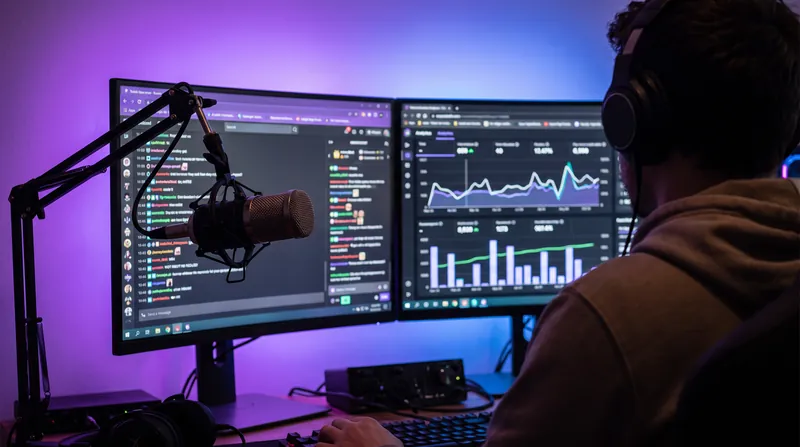
Artificial intelligence is the invisible engine accelerating this professionalization. AI tools are dramatically lowering the barrier to entry, allowing solo creators to operate with the output and polish of a full media company. Over 56% of U.S. creators believe AI will significantly change how they work in the coming years.
From automated video editing and AI-generated avatars to predictive analytics for audience targeting, these technologies streamline workflows. This allows creators to scale their content production efficiently without the overhead costs of hiring large production teams or agencies.
Brands and advertisers are aggressively following this shift. U.S. advertising spend allocated specifically to creator partnerships is projected to hit $43.9 billion in 2026, representing an 18% jump from the previous year. Corporate marketing budgets are treating creator-led commerce as a primary acquisition channel.
Crucially, marketers are increasingly favoring the middle class over mega-celebrities. Brands have realized that smaller, niche audiences often yield significantly higher conversion rates and more authentic engagement. Consumers are growing tired of seeing top-tier macro creators act as rotating ad units, making the "everyday" creator far more persuasive.
Social platforms and software providers are also adapting to serve this demographic. Creators who utilize integrated business platforms—tools that combine email, commerce, and community management—are seeing retention rates three times higher than those stitching together fragmented software stacks.
Despite these optimistic projections, significant vulnerabilities remain. Platform dependency is a persistent threat; a single algorithm update on TikTok or Instagram can still severely damage a creator's top-of-funnel reach. Furthermore, the pressure to constantly produce content continues to fuel industry-wide concerns about burnout and mental health.[1]
The wealth gap, while narrowing, has not completely closed. Data indicates that the top 10% of creators still capture over 60% of total ad payments, highlighting that extreme financial success remains concentrated at the very top.
Ultimately, the creator economy of 2026 is less about chasing viral moments and more about building a resilient digital infrastructure. As the industry marches toward a $1.3 trillion valuation, the future belongs to creator-entrepreneurs who treat their platforms not as stages for fame, but as scalable, diversified businesses.[1]
Key points
- The global creator economy is projected to reach $1.3 trillion by 2033.
- A 'creator middle class' is emerging, defined by financial sustainability rather than viral fame.
- Nearly 46% of surveyed creators now earn between $10,000 and $100,000 annually.
- Revenue diversification—including subscriptions and digital products—is replacing reliance on ad payouts.
What we don’t know
- How impending regulations on AI-generated content might impact creators who rely heavily on automated production tools.
- Whether the rapid influx of new creators will eventually oversaturate the market, driving down engagement rates and brand payout minimums.
- How traditional media and entertainment conglomerates will adapt as more advertising dollars shift permanently to independent creators.
How we got here
Early 2000s
The blog era gives writers a publishing platform without traditional media gatekeepers.
2005–2010
The launch of YouTube and Instagram creates the first wave of visual influencers and ad-revenue sharing.
2020
The pandemic accelerates digital media consumption, flooding the creator economy with new audiences and venture capital.
2023
The industry reaches an estimated $250 billion valuation as brands heavily integrate influencer marketing.
2026
AI tools and integrated monetization platforms fuel the rise of a financially sustainable 'creator middle class'.
- Creator-Entrepreneurs
- Focus on building sustainable, diversified businesses and owning the audience relationship.
- Industry Analysts
- View the creator economy as a maturing digital infrastructure with massive growth potential.
- Brand Marketers
- Focus on the efficiency, authenticity, and high conversion rates of mid-tier creators.
Perspectives this story doesn't cover
- Traditional Media Executives losing ad revenue to independent creators
- Labor Organizers advocating for creator unionization and standardized pay
Sources
Source coverage
1 outlets
3 viewpoints surfaced

- [1]ForbesCreator-Entrepreneurs
The Creator Middle Class Is Real, and Millennials Are Quietly Building It
Read on Forbes →
More in Culture
See all →AI Content Rules
Snapchat Bans Fully AI-Generated Video From Spotlight Discovery Feed, Prioritizing Human Content
3 sources
Online Privacy
House Passes the KIDS Act: How the New Age Verification Mandates Would Reshape the Internet
8 sources
Military Comms
U.S. Army Orders Deactivation of Thousands of Unit-Level Social Media Accounts to 'Unify Voice' and Reduce Risk
3 sources

Digital Privacy
How the US 'TAKE IT DOWN Act' Forces Platforms to Remove Deepfakes
4 sources
Comments
Every angle. Every day.
Get Culture stories with full source coverage and perspective breakdowns, free every day.