
Gaming Industry Cements Accessibility as a Core Design Standard Following Summer Showcases
Major announcements from the 2026 summer gaming showcases reveal a paradigm shift in video game development, moving inclusive design from an optional bonus to a baseline expectation.
By Factlen Editorial Team
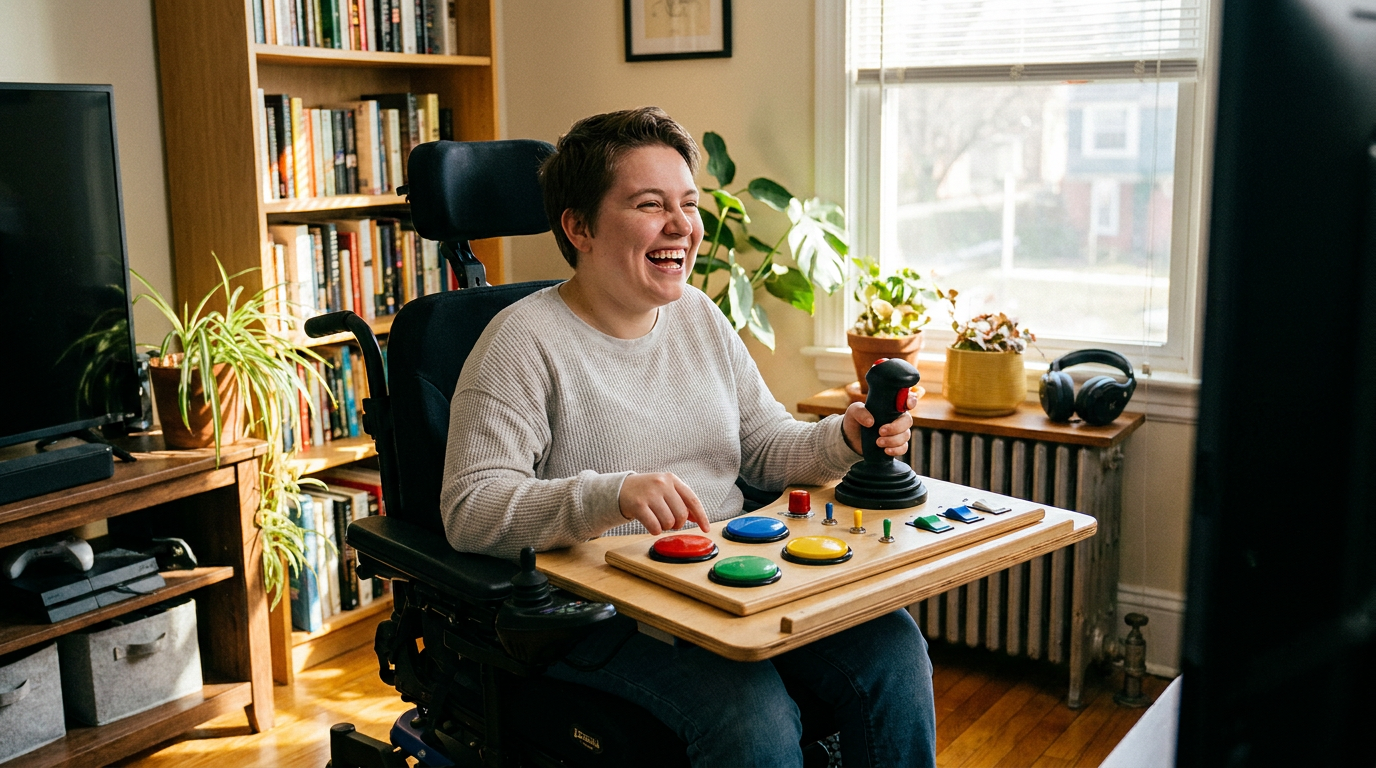
- Accessibility Advocates
- Argue that inclusive design must be integrated from day one, emphasizing that standardized tags and remappable controls are baseline requirements.
- Hardware & Platform Holders
- Focus on ecosystem-wide solutions, investing in adaptive controllers and API integrations to make their platforms welcoming.
- Indie Developers
- Champion innovative, ground-up accessible design, often leading the charge in cognitive accessibility and screen-reader integration.
What's not represented
- · Medical professionals utilizing gaming for physical rehabilitation.
- · Esports organizers adapting tournament rules for players using non-standard adaptive controllers.
Why this matters
For millions of disabled players, these standardized tools—ranging from eye-tracking controls to screen-reader compatibility—mean the difference between being locked out of digital worlds and participating fully in modern social gaming.
Key points
- The 2026 summer gaming showcases highlighted a major industry shift toward treating accessibility as a core design pillar.
- The Access-Ability Summer Showcase featured titles integrating directly with screen readers and offering tailored colorblind palettes.
- Microsoft unveiled new adaptive hardware and expanded support for voice and facial-expression controls via Cephable.
- Digital storefronts are increasingly adopting standardized accessibility tags to help players identify supported features before purchasing.
- Research indicates that accessible gaming significantly improves social interaction and provides vital stress relief for disabled players.
June 2026's slate of gaming showcases—including Summer Game Fest and the dedicated Access-Ability Summer Showcase—marked a definitive turning point for the video game industry. Accessibility is no longer treated as a post-launch afterthought or a niche bonus feature; it has officially become a core design pillar. Across major platform holders and independent studios alike, developers are building inclusive mechanics directly into their foundational code, ensuring that players of all physical and cognitive abilities can participate in digital worlds.[2][3]
Historically, disabled gamers have faced significant barriers, ranging from visual overload and screen-reader gaps to highly complex, inaccessible control schemes. However, the narrative shifted dramatically during the fourth annual Access-Ability Summer Showcase. Hosted by accessibility advocate Laura Kate Dale, the event highlighted dozens of upcoming titles that have prioritized inclusive design from day one, allowing players to know with confidence whether a game will support their specific needs before they purchase it.[5][8]
Among the standout reveals was Torment Hexus, a tactical role-playing game that integrates directly with operating system screen readers like NVDA. This integration provides a running narration of on-screen events, making the complex, grid-based combat fully accessible to blind and low-sight individuals. Similarly, the platformer Colorbound introduced tailored color palettes specifically corrected for protanopia, deuteranopia, and tritanopia, ensuring that color-based puzzles remain solvable for players with various forms of colorblindness.[5]

The push for inclusivity extends far beyond software into the realm of physical hardware. Microsoft used its Xbox Games Showcase and the recent Global Accessibility Awareness Day to unveil new adaptive peripherals. These include the Xbox Adaptive Thumbstick Toppers, designed to provide better grip and leverage for players with limited motor control, further expanding the highly customizable Xbox ecosystem.[1][4]
Furthermore, Xbox highlighted its expanded support for Cephable, an innovative application that allows players to control games using voice commands, facial expressions, and subtle head movements. By translating these alternative inputs into standard controller commands, the platform is opening doors for individuals who cannot use traditional gamepads or keyboards, allowing them to engage with high-speed action titles seamlessly.[4]
The frontier of alternative inputs was also on display at the Nordic Game 2026 conference, where the UK-based charity SpecialEffect presented its Eye Gaze Games initiative. The organization demonstrated a suite of mobile and PC titles that can be played entirely through eye movement. Using specialized eye-tracking cameras, players can navigate menus, execute complex commands, and even compete in online multiplayer matches without ever touching a physical interface.[6]

The organization demonstrated a suite of mobile and PC titles that can be played entirely through eye movement.
Digital storefronts are evolving to match this hardware and software revolution. Xbox has rolled out standardized accessibility tags across its digital store, allowing users to filter games by specific features—such as remappable controls, high contrast modes, and subtitle customization—before making a purchase. Industry advocates are now pressuring competitors to adopt similar standardized tagging systems to unify the purchasing experience across all platforms.[5][8]
The definition of accessibility is also expanding to include cognitive and emotional well-being. The Wholesome Direct 2026, which ran alongside Summer Game Fest, showcased over 50 cozy games. Titles like Fields of Mistria and Cozy Grove: Camp Spirit emphasize low-stress environments, untimed puzzles, and no-fail states. For players who experience cognitive fatigue, anxiety, or motor skill limitations in high-twitch, competitive environments, these games offer a welcoming, accommodating alternative.[7]
International efforts are further accelerating this momentum. In South Korea, Kakao Games recently received a government commendation for its Play Buddy Together program. Over the past three years, the initiative has successfully matched disabled players with hundreds of customized assistive devices, including eye trackers and specialized mouth-operated joysticks, proving that corporate partnerships can directly bridge the hardware accessibility gap.[8]

The broader impact of these initiatives is profound. Recent industry research indicates that 84 percent of disabled players report improved social interaction through accessible gaming, while 87 percent cite it as a crucial tool for stress relief. Virtual worlds are uniquely positioned to erase the physical and transportation barriers that disabled individuals often face in offline spaces, fostering friendships and shared challenges that might otherwise be inaccessible.[4][8]
Looking ahead, the integration of artificial intelligence is poised to lower the barrier to entry even further. AI tools are currently being used by the modding community to retrofit accessibility features—such as real-time audio descriptions—into older, mainstream titles that were originally built without inclusive design in mind, breathing new life into classic libraries.[8]
Ultimately, the gaming industry is realizing that accessible design functions much like curb cuts on physical sidewalks. Features originally designed to assist disabled users—such as highly legible subtitles, remappable buttons, and high-contrast visuals—routinely improve the quality of life for the entire player base. As the 2026 summer showcases proved, when developers build games for everyone, the entire medium takes a massive step forward.[8]
How we got here
March 2023
Kakao Games launches South Korea's first assistive-device support program for disabled players.
May 2026
Xbox celebrates Global Accessibility Awareness Day with new adaptive hardware and Cephable voice-control support.
June 5, 2026
The fourth annual Access-Ability Summer Showcase highlights upcoming games built with deep inclusive design.
June 7, 2026
Xbox Games Showcase reinforces platform-wide commitments to accessibility tags and adaptive ecosystems.
Viewpoints in depth
Accessibility Advocates
Argue that inclusive design must be integrated from day one, emphasizing that standardized tags and remappable controls are baseline requirements.
Advocacy groups and specialized showcases like Access-Ability stress that retrofitting games post-launch is often inefficient and leaves players behind. They champion the idea that accessibility is a fundamental right in digital spaces. By pushing for standardized storefront tags and mandatory control remapping, these advocates aim to remove the guesswork for disabled consumers, ensuring they know exactly what barriers might exist before purchasing a title.
Hardware & Platform Holders
Focus on ecosystem-wide solutions, investing in adaptive controllers and API integrations to make their platforms welcoming.
Companies like Microsoft and Sony approach accessibility through a platform-wide lens. Rather than relying solely on individual game developers to build custom solutions, platform holders are investing heavily in operating-system-level features. This includes co-pilot modes, system-wide button remapping, and specialized hardware like the Xbox Adaptive Controller and new thumbstick toppers, which provide a universal baseline of accessibility that applies to every game on their console.
Indie Developers
Champion innovative, ground-up accessible design, often leading the charge in cognitive accessibility and screen-reader integration.
Independent studios, unburdened by the massive legacy codebases of AAA developers, are frequently at the forefront of experimental accessibility. Showcases like the Wholesome Direct highlight how indies are pioneering cognitive accessibility by removing fail states and time limits. Furthermore, smaller teams are increasingly integrating their games directly with OS-level screen readers, proving that deep, complex mechanics can be made fully accessible to blind players when designed with intention from the start.
What we don't know
- Whether major competitors like PlayStation and Nintendo will fully adopt standardized storefront accessibility tags to match Xbox's current system.
- How quickly AAA studios will be able to retrofit massive legacy game engines to natively support OS-level screen readers.
Key terms
- Screen Reader
- Assistive software that translates on-screen text and interface elements into synthesized speech, essential for blind and low-vision users.
- Adaptive Controller
- A highly customizable gaming gamepad designed to meet the needs of players with limited mobility, often featuring large programmable buttons and external switch ports.
- Cognitive Accessibility
- Design choices that reduce mental strain, such as removing time limits, offering no-fail states, or providing clear, simplified user interfaces.
- High Contrast Mode
- A visual setting that simplifies background colors and highlights essential gameplay elements to assist players with low vision.
- Protanopia
- A type of red-green color blindness where the red cones in the eye do not detect enough red light, which games can correct via tailored color palettes.
Frequently asked
What is the Access-Ability Summer Showcase?
It is an annual digital event dedicated entirely to highlighting upcoming video games that feature robust accessibility options for disabled players.
How do eye-gaze games work?
They use specialized cameras to track a player's eye movements, allowing them to control gameplay, navigate menus, and compete online without needing a traditional controller or touchscreen.
What are storefront accessibility tags?
They are standardized labels on digital platforms like the Xbox Store that tell buyers exactly what accessibility features a game supports before they purchase it.
What is cognitive accessibility in gaming?
It involves design choices that reduce mental strain, such as removing time limits, offering no-fail states, or providing clear, simplified user interfaces, often seen in cozy games.
Sources
Source coverage
8 outlets
3 viewpoints surfaced








[1]IGNHardware & Platform Holders
Everything Announced at Xbox Games Showcase 2026
Read on IGN →[2]EurogamerIndie Developers
Summer Game Fest 2026 schedule: All showcase dates, times and streams
Read on Eurogamer →[3]EngadgetIndie Developers
Summer Game Fest 2026 roundup: All the shows, trailers, news and reviews
Read on Engadget →[4]Xbox WireHardware & Platform Holders
XBOX Celebrates Global Accessibility Awareness Day with Improved Adaptive Thumbstick Toppers and More
Read on Xbox Wire →[5]Access-AbilityAccessibility Advocates
Access-Ability Summer Showcase 2026
Read on Access-Ability →[6]Nordic GameAccessibility Advocates
Accessibility Revolution! | Gaming's New Frontier | NG26
Read on Nordic Game →[7]TheGamerIndie Developers
Everything Revealed At Wholesome Direct 2026
Read on TheGamer →[8]PolygonAccessibility Advocates
Adaptive Gaming Interfaces Multiply as Industry Pushes Accessibility to Core Designs
Read on Polygon →

More in entertainment
See all 6 stories →Pixar Animation
'Toy Story 5' Premieres to Critical Acclaim as Pixar Tackles the Screen-Time Era
0 sources

Toy Story 5
Toy Story 5 Premieres With Taylor Swift Original Song, Tackling the Modern Dilemma of Screen Time
0 sources
Awards History
The EGOT Explained: How Entertainment's Ultimate Crown is Actually Won
0 sources

Game Accessibility
Gaming Giants Unite to Launch Universal Accessibility Standard Across All Consoles
0 sources
Every angle. Every day.
Get entertainment stories with full source coverage and perspective breakdowns delivered to your inbox.