
Gaming Accessibility Moves From Bonus Feature to Core Design Standard in 2026
A wave of new adaptive hardware, standardized storefront tags, and royalty-free software patents is transforming video game accessibility into an industry-wide expectation.
By Factlen Editorial Team
- Accessibility Advocates
- Push for standardized tags across all platforms and warn that many major releases still lack crucial audio descriptions.
- Hardware & Platform Creators
- Focus on developing adaptive controllers, 3D-printable parts, and storefront filtering to lower the physical barrier to entry.
- Software Developers
- Emphasize in-game solutions like high-contrast modes, remappable controls, and sharing patents royalty-free.
- Healthcare Partners
- View adaptive gaming as a vital tool for physical rehabilitation, social connection, and mental health.
What's not represented
- · Disabled players who cannot afford the baseline hardware required to utilize adaptive software
- · Independent developers struggling to fund the implementation of complex accessibility features
Why this matters
For the estimated 250 million gamers worldwide with visual, motor, or cognitive impairments, these advancements mean the difference between being locked out of a cultural touchstone and being able to play, connect, and compete alongside their peers.
Key points
- The video game industry is shifting accessibility from a post-launch patch to a core design expectation.
- Xbox released new adaptive joysticks and free 3D-printable thumbstick schematics for GAAD 2026.
- The Accessible Games Initiative introduced 24 standardized storefront tags to help players identify compatible games.
- Electronic Arts expanded its Patent Pledge, offering accessibility patents to other developers royalty-free.
- Hospitals are increasingly using adaptive gaming setups for physical and cognitive rehabilitation.
- Advocates warn that visual accessibility, like screen reader support, still lags behind motor accessibility in major titles.
In 2026, the video game industry has crossed a critical threshold: accessibility is no longer treated as an afterthought or a post-launch patch, but as a core pillar of game design. For the estimated 250 million gamers worldwide who identify as having visual, motor, or cognitive impairments, the landscape of digital entertainment is rapidly opening up. Developers and platform holders are moving away from proprietary, walled-off solutions and instead embracing standardized tools, open-source hardware, and shared software patents. This collective effort is transforming the medium, ensuring that the social and cognitive benefits of gaming are available to a much broader audience.[4][6][8]
The recent Global Accessibility Awareness Day (GAAD) and the Summer Game Fest showcases served as a victory lap for inclusive design, highlighting a wave of new hardware and software standards. Rather than focusing solely on graphical fidelity or processing power, major presentations dedicated significant time to showcasing how players of all physical abilities can actually interact with these virtual worlds. Industry leaders emphasized that welcoming players of varying skill levels and physical needs is now a baseline expectation for any major release.[2][7]
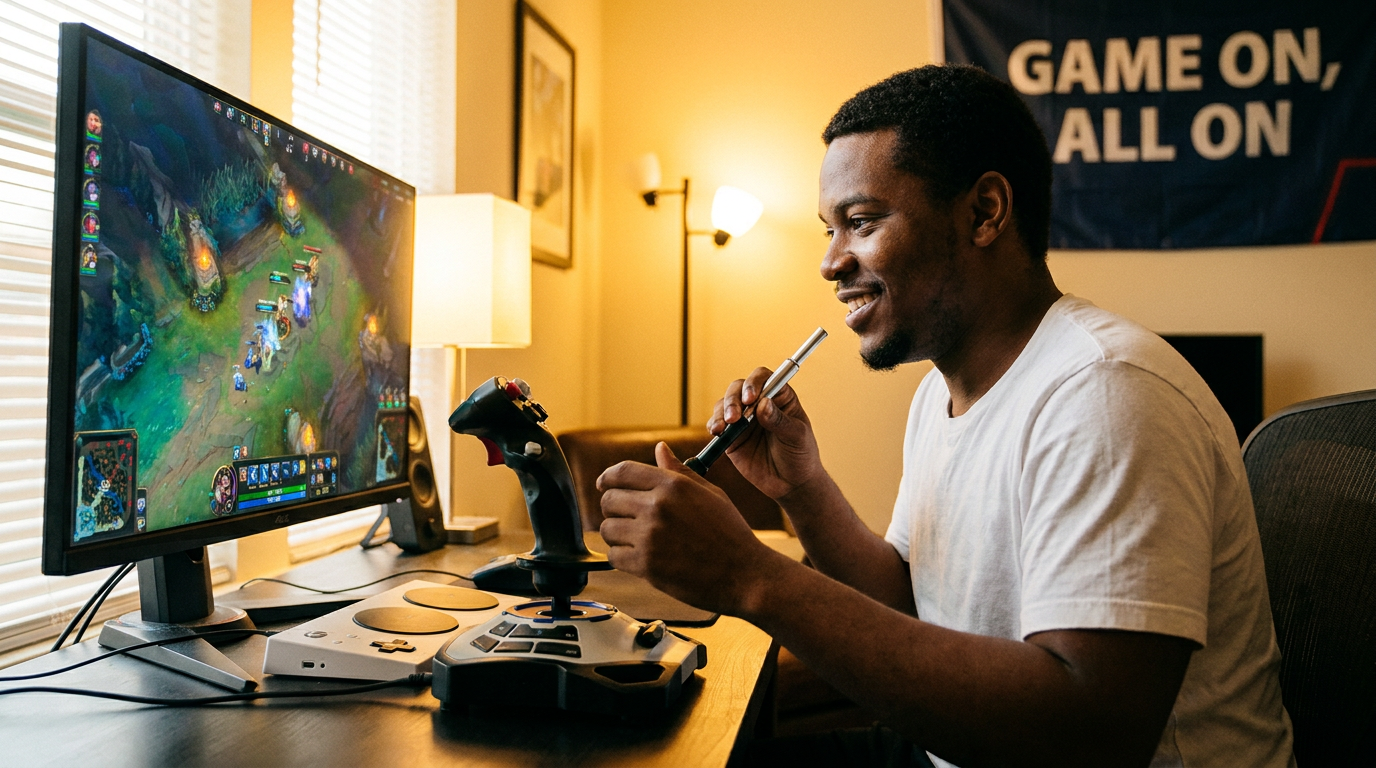
On the hardware front, Microsoft expanded its pioneering ecosystem with the introduction of the Xbox Adaptive Joystick. Acknowledging that no single controller can accommodate every physical requirement, the company also released free 3D-printable schematics for seven new adaptive thumbstick toppers via the Xbox Design Lab. This open-source approach allows players to manufacture highly customized parts at home, at local libraries, or through community networks, drastically lowering the financial barrier to entry for bespoke adaptive setups.[2][5]
Software innovations are matching the rapid pace of hardware development. Programs like "PlayAbility" are gaining widespread traction across the PC and console ecosystems, allowing players to bypass traditional controllers entirely. By using intelligent technologies to translate gestures, body movements, and alternative inputs into precise in-game actions, these software layers offer a completely personalized control experience. This flexibility is particularly vital for players with severe motor difficulties who cannot use standard button-based interfaces. Furthermore, cloud gaming infrastructure is helping to process these complex alternative inputs without requiring players to purchase expensive, high-end local hardware.[5]

To help players find games that actually work for them, the Accessible Games Initiative recently introduced 24 standardized accessibility tags. These labels—which include specific criteria like "playable with buttons only," "narrated menus," and "stick inversion"—are designed to eliminate the frustrating guesswork of buying a new title. Previously, disabled players often had to purchase a game and boot it up just to discover if they could physically play it, leading to wasted money and deep disappointment. Standardized tags ensure that crucial compatibility information is clearly communicated on the digital box art before a transaction ever takes place.[1][7]
Xbox has already integrated these standardized tags into its digital storefront, completely overhauling its Accessible Gaming page to improve content discoverability and navigation. Accessibility advocates are now pushing heavily for PlayStation and Nintendo to adopt the exact same universal language before the end of the year. A unified tagging system across all major consoles would represent a monumental leap forward, allowing parents, teachers, and players to easily assess built-in features and assistive device compatibility regardless of their preferred platform. Consistency in this terminology prevents confusion and ensures developers know exactly what metrics they need to hit to earn a specific accessibility certification.[1][2][7]
Accessibility advocates are now pushing heavily for PlayStation and Nintendo to adopt the exact same universal language before the end of the year.
Inside the games themselves, features that were once considered rare luxuries are becoming baseline expectations. High-contrast modes, which desaturate complex backgrounds to highlight critical gameplay elements and enemies, are now appearing in fast-paced, competitive online titles like EA Sports FC 26. Historically, developers restricted these visual aids to offline single-player campaigns out of fear they might provide an unfair competitive advantage in multiplayer environments. Their inclusion in online arenas signals a maturing industry that prioritizes inclusion over rigid, traditional definitions of competitive balance. Additionally, co-pilot modes—where two separate controllers act as one—are allowing friends and family to assist disabled players with complex inputs in real-time.[4][7]
To accelerate this industry-wide shift, major publishers are actively sharing their proprietary technology rather than hoarding it. Electronic Arts recently expanded its Patent Pledge, offering its accessible technology patents to independent developers and rival studios completely royalty-free. By removing the fear of infringement claims, massive corporations are encouraging the entire industry to work together to dismantle unintended barriers. This collaborative approach ensures that a breakthrough developed by a massive studio can quickly be implemented by a small indie team. It represents a rare instance of the highly competitive tech sector prioritizing social good and universal access over exclusive intellectual property rights.[1]
The impact of these advancements extends far beyond entertainment, bleeding directly into physical rehabilitation and healthcare. In Florida, a unique partnership between Orlando Health and Full Sail University is using adaptive gaming setups to help patients recover motor skills. By blending gaming with physical therapy, the program provides patients with an engaging, motivating way to rebuild strength, while simultaneously giving university students hands-on experience in developing accessible technology. Internationally, programs like South Korea's "Play Buddy Together" have successfully matched nearly 100 disabled players with over 600 customized devices, proving the massive global demand for these initiatives. Virtual worlds erase the physical barriers that disabled individuals often face, opening up vital avenues for psychological recovery.[3][6]

Developers and accessibility consultants frequently point to the "curb cut effect" when designing these systems—the phenomenon where features built specifically for people with disabilities end up benefiting the entire user base. Just as sidewalk ramps help parents with strollers and delivery workers, gaming accessibility features have incredibly broad appeal. Options like auto-shots, pass assists, and widened parry windows help fatigued players enjoy a game after a long day at work without demanding pixel-perfect reflexes. Similarly, robust subtitle options are universally popular among players in noisy environments, and remappable controls allow left-handed gamers or those with unique ergonomic preferences to play comfortably.[4][6]
Despite the overwhelming progress, accessibility advocates caution that the industry still has significant blind spots that need urgent attention. Many high-profile tentpole releases continue to rely heavily on visual cues, small user interface elements, and complex button combinations without offering adequate audio descriptions. For the visually impaired community, the lack of comprehensive screen reader support in major role-playing games and action titles remains a glaring omission that effectively locks them out of the medium's biggest cultural moments. Advocates stress that while motor accessibility has seen revolutionary leaps, visual and cognitive accessibility still require a much deeper commitment from AAA development studios.[8]
Furthermore, the broader digital entertainment ecosystem surrounding video games often fails to meet basic accessibility standards. Live gaming broadcasts, massive esports tournaments, and highly anticipated streaming premieres frequently launch without human-edited captions. Instead, event organizers rely on delayed and often highly inaccurate automated captioning, leaving deaf and hard-of-hearing audiences excluded from the live reactions and shared excitement that define modern gaming culture. Advocates argue that if a publisher can spend millions marketing a live event, they must allocate the necessary budget to ensure the broadcast is fully accessible to all viewers in real-time.[8]

Still, the overall trajectory of the industry is undeniably positive and moving faster than ever before. As 2026's biggest titles prepare for launch, the community's core message has been heard and internalized by the world's largest tech companies. True next-generation gaming is no longer defined solely by photorealistic graphical fidelity, massive open worlds, or lightning-fast processing power. Instead, the new benchmark for quality is fundamentally tied to inclusive design—measured by how many people are actually invited to pick up a controller, customize their experience, and play alongside their friends without encountering arbitrary barriers.[5][7]
How we got here
2018
Microsoft launches the original Xbox Adaptive Controller, bringing mainstream attention to motor accessibility.
2023
Major publishers begin standardizing high-contrast modes and granular difficulty sliders in single-player campaigns.
December 2025
Electronic Arts expands its Patent Pledge, offering accessibility patents royalty-free to all developers.
May 2026
Xbox releases new adaptive joysticks and 3D-printable thumbstick schematics for Global Accessibility Awareness Day.
June 2026
The Accessible Games Initiative rolls out 24 standardized storefront tags to help players identify playable titles.
Viewpoints in depth
Accessibility Advocates
Advocates celebrate recent wins but stress that true inclusion requires early testing and universal standards.
Groups like the Accessible Games Initiative argue that accessibility cannot be a post-launch patch. They are pushing for all major console storefronts to adopt standardized tags, ensuring players know if a game is playable before purchasing. Furthermore, advocates highlight that while motor accessibility has seen massive leaps, visual accessibility—such as full screen-reader support and audio descriptions for environmental cues—still lags behind in many AAA titles.
Hardware Creators
Platform holders are focusing on modular, customizable physical interfaces.
Companies like Microsoft are leaning into open-source and modular design. By releasing free 3D-printable schematics for thumbsticks and supporting third-party peripherals, platform creators acknowledge that no single controller can serve every disabled player. The goal is to provide a flexible ecosystem where players can build the exact physical interface their body requires.
Healthcare Partners
Medical professionals are integrating gaming into physical and cognitive therapy.
Hospitals and rehabilitation centers are increasingly partnering with universities and developers to use gaming as a recovery tool. Because virtual worlds erase the physical barriers of the offline world, adaptive gaming allows patients to rebuild motor function, practice cognitive tasks, and maintain vital social connections during long recovery periods.
What we don't know
- Whether PlayStation and Nintendo will fully adopt the Accessible Games Initiative's standardized tags by the end of the year.
- How quickly independent studios will be able to implement EA's newly released royalty-free patents.
- If automated live-captioning technology will improve enough to adequately serve deaf audiences during fast-paced esports events.
Key terms
- Adaptive controller
- A highly customizable video game controller designed to meet the needs of players with limited mobility.
- High-contrast mode
- A visual setting that desaturates background environments to make critical gameplay elements and enemies stand out clearly.
- Screen reader
- Software that reads aloud on-screen text and menu options, essential for blind and low-vision players to navigate digital spaces.
- Co-pilot mode
- A feature that allows two separate controllers to act as one, letting a second player assist with complex inputs in real-time.
Frequently asked
What are the new accessibility tags?
They are 24 standardized labels (like 'narrated menus' or 'stick inversion') added to digital storefronts to help players know if a game supports their specific needs before buying.
What is the EA Patent Pledge?
A commitment by Electronic Arts to share its proprietary accessibility technology and software patents with other developers royalty-free to encourage industry-wide inclusion.
How does 3D printing help gamers?
Companies like Xbox have released free schematics, allowing players to 3D-print customized thumbsticks and controller mounts that perfectly fit their unique physical requirements.
Sources
Source coverage
8 outlets
4 viewpoints surfaced








[1]MashableSoftware Developers
New video game initiative is a boost for players with disabilities
Read on Mashable →[2]Console CreaturesHardware & Platform Creators
For GAAD 2026, Xbox Releases Fresh Accessibility Updates
Read on Console Creatures →[3]FOX 35 OrlandoHealthcare Partners
Adaptive gaming technology opens new doors for players with disabilities
Read on FOX 35 Orlando →[4]A RedeSocialHealthcare Partners
Gaming Accessibility – Key Advances This Year
Read on A RedeSocial →[5]ForAllWeHardware & Platform Creators
Accessible Games & Inclusive Gaming Culture
Read on ForAllWe →[6]TestDevLabSoftware Developers
Game Accessibility Features—How to Make Games More Inclusive
Read on TestDevLab →[7]Access-AbilityAccessibility Advocates
2026 Gaming Accessibility Predictions / Questions
Read on Access-Ability →[8]Direct AccessAccessibility Advocates
Still Not Playing Fair: Accessibility Gaps in Gaming and Digital Entertainment
Read on Direct Access →
Every angle. Every day.
Get entertainment stories with full source coverage and perspective breakdowns delivered to your inbox.