
From Surgery to the Podium: The Remarkable Injury Comebacks Defining the 2026 Figure Skating Season
As the figure skating off-season begins, athletes like Niina Petrokina and Deanna Stellato-Dudek are being celebrated for their rapid, medal-winning recoveries from severe injuries.

The 2025-2026 figure skating season was a crucible of physical endurance, defined just as much by what happened in the operating room as what happened on the ice. As the sport enters its off-season in June 2026, the global skating community is reflecting on a year characterized by spectacular medical comebacks.
The sheer physical toll of modern figure skating—with its quadruple jumps, high-velocity throws, and punishing landing impacts—has made injuries an inevitable part of the elite circuit. Yet, the recent Olympic cycle saw athletes returning from severe trauma to the podium in record time, showcasing a level of resilience that captivated fans worldwide.
Perhaps the most stunning recovery belonged to Estonia's Niina Petrokina. On October 9, 2025, Petrokina underwent surgery to repair her Achilles tendon, an injury that typically sidelines athletes for the better part of a year. The procedure cast immediate doubt on her ability to defend her European title, let alone compete in the Winter Olympics. For weeks, she was confined to off-ice rehabilitation, slowly rebuilding the strength required to handle the immense forces of a figure skating jump, wondering if she would ever regain her elite form.[2][6]
Incredibly, Petrokina was back on the ice within weeks. She was unable to train her triple jumps until less than two weeks before the European Championships in Sheffield in January 2026. Defying all medical odds, the 21-year-old landed seven triple jumps in a flawless free skate to Hans Zimmer's "Dune," scoring 216.14 points to retain her European title.
"I don't know how I do it, but I know I am unstoppable because I love what I do," she remarked after the victory, silencing critics who believed a back-to-back title was impossible.[2][6]
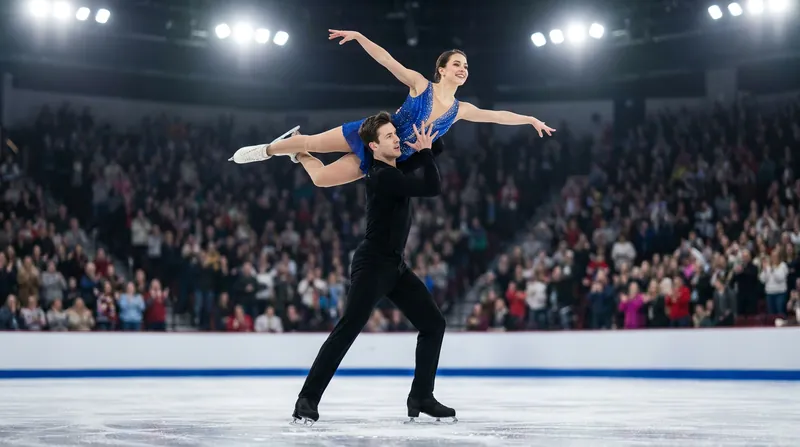
Across the Atlantic, Canadian pairs skater Deanna Stellato-Dudek faced her own harrowing timeline. At 42 years old, Stellato-Dudek was already defying age norms when she hit her head on the ice during a January 30 training session in Montreal. The accident forced Stellato-Dudek and her partner Maxime Deschamps to withdraw from the Olympic team event. She described the subsequent week and a half as a "living nightmare," as she underwent rigorous medical evaluations to determine if her Olympic dream was over.
Doctors ultimately cleared her, citing a "remarkable recovery." While she declined to specify the exact nature of the head injury, citing privacy laws, she and Deschamps successfully competed in the individual pairs event in Milan. To protect her health, the duo safely removed a signature backflip from their routine, prioritizing her long-term well-being over a non-scoring element.
"When I set out on this journey in 2016, not one person told me I would make it to the Olympics," she said. "To know me is to know that I wasn't going down without a fight."
The Belgian national team also spent the season battling the medical bay. Loena Hendrickx, the country's most successful female skater, was forced to undergo ankle surgery in February 2025 to repair ligaments that had been loose since a 2019 fracture. Hendrickx's ankle was so compromised she could no longer perform explosive jumps like the flip and Lutz, and doctors warned she could not endure another season without surgical intervention.[3]
After months of grueling rehabilitation—starting with basic straight-line skating and slowly progressing to edges and turns—Hendrickx returned to peak form. She captured bronze at the Skate to Milano qualifier and silver at the 2026 European Championships, successfully securing her spot at her third Winter Olympics. "I was very relieved when I knew there was still a chance to come back at my level," Hendrickx noted, crediting her deep love for the sport for pushing her through the darkest days of rehab.[3][5]
Her younger compatriot, Nina Pinzarrone, faced a similarly steep climb. Pinzarrone fractured her right foot during off-ice training in May 2025, an injury exacerbated by severe boot inflammation. She spent eight weeks in a cast and was forced to withdraw from the entire Grand Prix series. Pinzarrone's return culminated at the 2026 World Championships in Prague in March. Skating pain-free for the first time in months, she shattered her personal bests to win the world bronze medal, a feat she admitted she would not have believed possible during her recovery.[1]
In the United States, the pairs team of Ellie Kam and Danny O'Shea embodied the same relentless grit. O'Shea remarkably skated on a broken foot to secure an Olympic quota spot for the U.S. before finally undergoing necessary surgery, while Kam battled back from a severe concussion that halted her training. Together, they successfully navigated the rigorous U.S. Championships to punch their ticket to Italy, proving that persistence, patience, and mutual trust could overcome even the most severe physical setbacks in a highly synchronized discipline.[4]
Even minor injuries required major adaptations on the sport's biggest stage. Italy's Sara Conti stretched a right knee ligament just weeks before the Olympics. Forced to skip the European Championships, she competed in Milan wearing a visible blue knee brace. She heavily modified her training to protect her leg on the Salchow jump, relying on adrenaline and hometown support to push through the lingering pain and deliver for the local crowds.[1]
As the 2026-2027 season approaches, these athletes are currently enjoying a hard-earned off-season, choreographing new routines and allowing their bodies to fully heal. Their successful returns highlight not only the incredible advancements in sports medicine but the extraordinary mental fortitude required to step back onto the ice after a catastrophic fall. For the fans watching, the season served as a powerful reminder that the most inspiring moments in sports often happen long before the medals are handed out.
Looking ahead, the sheer volume of these medical comebacks is prompting broader conversations within the International Skating Union about athlete safety. Coaches and biomechanical experts are increasingly analyzing boot stiffness, jump repetition limits, and off-ice conditioning protocols to prevent these injuries from occurring in the first place. But for now, the narrative remains focused on triumph. The 2025-2026 season will be remembered not for the falls, but for the spectacular, gravity-defying resilience of skaters who refused to let an injury dictate the end of their story.
Key points
- Estonia's Niina Petrokina won the 2026 European Championship just three months after undergoing Achilles tendon surgery.
- Canadian pairs skater Deanna Stellato-Dudek recovered from a January head injury to compete at the Winter Olympics at age 42.
- Belgium's Loena Hendrickx and Nina Pinzarrone both overcame severe lower-body injuries to secure international medals.
- The physical demands of quadruple jumps and complex lifts continue to drive up injury rates across the sport.
How we got here
February 2025
Loena Hendrickx undergoes ankle surgery to repair loose ligaments.
May 2025
Nina Pinzarrone fractures her right foot during off-ice training.
October 2025
Niina Petrokina undergoes surgery for a torn Achilles tendon.
January 2026
Deanna Stellato-Dudek suffers a head injury in training, missing the Olympic team event.
March 2026
Pinzarrone caps her comeback season with a bronze medal at the World Championships.
- Athletes & Coaches
- Prioritizes mental resilience, overcoming fear, and returning to competitive form.
- Medical Professionals
- Focuses on safe recovery timelines, biomechanics, and preventing re-injury.
- Figure Skating Analysts
- Examines the sport's escalating technical demands and the resulting physical toll on skaters.
Perspectives this story doesn't cover
- Orthopedic surgeons specializing in long-term joint health post-retirement.
- Figure skating boot manufacturers addressing the role of stiff equipment in foot and ankle injuries.
Sources
Source coverage
6 outlets
3 viewpoints surfaced






- [1]Olympics.comAthletes & Coaches
ISU World Figure Skating Championships 2026: Nina Pinzarrone triumphs over injury with maiden bronze
Read on Olympics.com → - [2]The Straits TimesFigure Skating Analysts
Figure skating-Estonia's Petrokina bounces back from surgery to win European title
Read on The Straits Times → - [3]International Skating UnionFigure Skating Analysts
Loena Hendrickx: The long road back to the Olympic ice
Read on International Skating Union → - [4]CBS NewsAthletes & Coaches
After overcoming surgeries and concussion, Colorado figure skating duo to represent U.S. in 2026 Winter Olympics
Read on CBS News → - [5]The SpunFigure Skating Analysts
Belgian figure skater Loena Hendrickx overcomes injury to compete at 2026 Winter Olympics
Read on The Spun → - [6]Bastille PostFigure Skating Analysts
Petrokina stuns by retaining European figure skating title after Achilles tendon surgery
Read on Bastille Post →
More in Sports
See all →Standings
The Race for Number One: Alysa Liu and Mone Chiba Headline the Post-Sakamoto Era in the ISU Women's World Standings
4 sources
Ice Dance
Two-Time World Champion Shoma Uno Announces Competitive Return in Ice Dance, Vows to Win
4 sources
Injury
Figure Skating Injury Report: Young You and Boyang Jin Target Grand Prix Comebacks as Carrillo Builds on Post-Surgery Success
3 sources
Standings
The Race for the Top Five: Efimova and Mitrofanov Crash the Elite Tier in ISU Pairs Standings
2 sources
Comments
Every angle. Every day.
Get Sports stories with full source coverage and perspective breakdowns, free every day.