
Formula 1's 2026 Revolution: How Active Aero and Sustainable Fuels Will Change Racing
The 2026 Formula 1 regulations represent the sport's biggest technological leap in a decade, introducing a 50/50 hybrid power split, fully sustainable fuels, and active aerodynamics.
By Factlen Editorial Team
- The FIA & Regulators
- Prioritizing road relevance and environmental sustainability.
- Automotive Manufacturers
- Viewing F1 as a high-speed R&D laboratory.
- The Drivers & Teams
- Focused on tactical complexity and competitive margins.
- Motorsport Media
- Analyzing the technical loopholes and racing impact.
What's not represented
- · Consumer Road Car Drivers
- · Environmental Advocacy Groups
Why this matters
This overhaul transforms Formula 1 from an entertainment spectacle into a multi-billion dollar proving ground for green technologies. The advancements in sustainable 'drop-in' fuels and hybrid efficiency developed here are designed to eventually filter down into everyday consumer vehicles, offering a parallel path to reducing global emissions alongside electric cars.
Key points
- The 2026 regulations introduce a 50/50 power split between the internal combustion engine and electrical systems.
- Cars will run on 100% sustainable 'drop-in' fuels derived from non-food biomass or municipal waste.
- Traditional DRS is replaced by full-time active aerodynamics, featuring 'Straight Mode' and 'Corner Mode.'
- The 'Nimble Car' concept reduces the vehicle's weight, wheelbase, and width to improve agility and racing.
- The new rules have successfully attracted major manufacturers like Ford, Audi, and Cadillac to the sport.
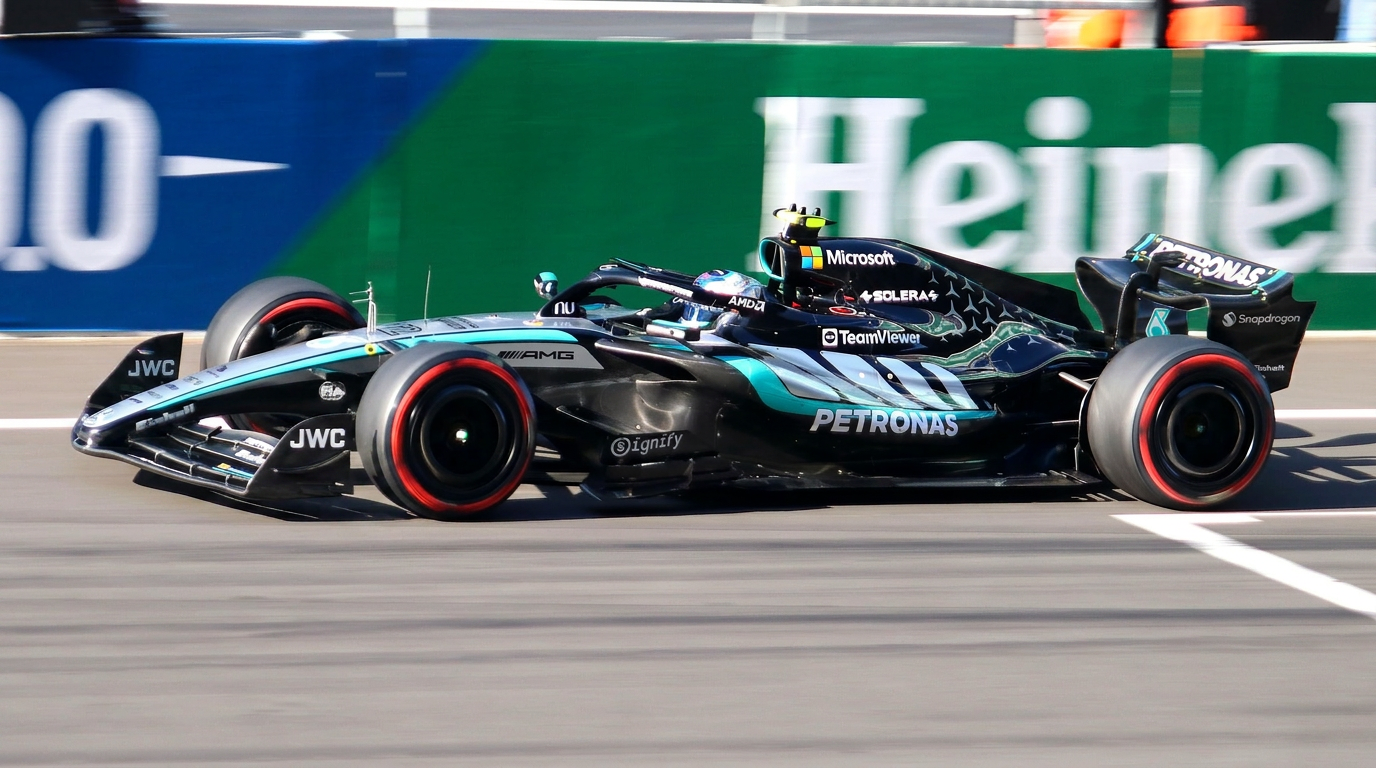
Formula 1 is bracing for the most radical transformation in its modern history. When the grid lines up for the 2026 season, the cars will not just look different—they will race under a fundamentally rewritten rulebook designed to push the boundaries of hybrid engineering and environmental sustainability. The Fédération Internationale de l'Automobile (FIA) has introduced sweeping regulations that touch every aspect of the vehicle, from the aerodynamic surfaces to the chemical composition of the fuel burning inside the engine. This overhaul is not merely a tweak to the existing formula; it is a complete reimagining of what a Grand Prix car can be, aiming to balance the visceral spectacle of motorsport with the pressing demands of a carbon-conscious world.[3][4]
For years, drivers and fans alike have lamented the swelling silhouette and increasing weight of F1 machinery, which had grown to the size of small SUVs. The 2026 regulations tackle this bloat head-on with the 'Nimble Car' concept. The new blueprint mandates a machine that is smaller, lighter, and designed to dance through corners rather than lumber through them. The maximum wheelbase has been shortened by 200 millimeters, the floor width reduced by 100 millimeters, and the overall minimum weight limit dropped from 800 kilograms to 768 kilograms. Combined with narrower Pirelli tires, these dimensional reductions are intended to make the cars more agile and responsive, directly addressing complaints that the previous generation of cars had become too cumbersome for tight street circuits.[3][6][7]
Beneath the newly sculpted bodywork lies the heart of the 2026 revolution: a radically redesigned hybrid power unit. While the sport will retain the 1.6-liter turbocharged V6 internal combustion engine (ICE), the balance of power is shifting dramatically. The new regulations mandate an approximate 50/50 power split between the combustion engine and the electrical systems. The ICE's output will drop from roughly 550 kilowatts to 400 kilowatts, while the electrical power generated by the hybrid system will skyrocket from 120 kilowatts to a staggering 350 kilowatts—an increase of nearly 300 percent. This massive electrification push forces teams to rethink how energy is harvested, stored, and deployed over the course of a racing lap.[1][6]

To achieve this new electrical benchmark, the FIA has simplified the power unit architecture by eliminating the Motor Generator Unit-Heat (MGU-H), a highly complex and expensive component that previously recovered energy from exhaust gases. While its removal reduces costs and lowers the barrier to entry for new manufacturers, it also eliminates roughly 60 percent of the car's previous energy recovery capacity. To compensate, the Kinetic Motor Generator Unit (MGU-K), which harvests energy under braking, has been vastly upgraded. The MGU-K is now solely responsible for energy recovery, doubling the amount of energy that can be harvested per lap to 8.5 megajoules. This places an immense premium on mechanical braking efficiency and sophisticated energy deployment strategies.[1][4]
Equally significant to the electrical upgrades is the fuel that will power the internal combustion engine. Beginning in 2026, Formula 1 power units are mandated to run on 100 percent sustainable, 'drop-in' fuels. This marks a definitive departure from the E10 blend—which contained only 10 percent renewable ethanol—used in previous seasons. The new regulations stipulate that these advanced sustainable fuels must be derived from non-food biomass, municipal waste, or atmospheric carbon capture. By ensuring that no new fossil carbon is released into the atmosphere during combustion, the sport is taking a critical step toward its ambitious 'Net Zero by 2030' target, proving that high-performance internal combustion engines can still have a place in an increasingly electric automotive landscape.[6][8]
The development of these sustainable fuels is a fiercely competitive frontier. Each team works closely with its petrochemical partners to formulate a unique chemical blend that maximizes power output while strictly adhering to the FIA's greenhouse gas emissions thresholds. Because the fuel must be a 'drop-in' replacement, it is designed to be compatible with the existing global fleet of over one billion internal combustion engines. This road relevance is a major selling point for the sport, transforming the F1 grid into a high-speed laboratory for green technologies that could eventually find their way into everyday consumer vehicles, offering a parallel solution to battery-electric vehicles for reducing global transport emissions.[8]

The development of these sustainable fuels is a fiercely competitive frontier.
On the aerodynamic front, the 2026 regulations introduce full-time active aerodynamics, fundamentally altering how cars interact with the air. For over a decade, Formula 1 relied on the Drag Reduction System (DRS)—a movable flap on the rear wing that could only be opened in specific zones when trailing another car by less than a second. In 2026, DRS as a dedicated overtaking aid is dead. Instead, the cars will feature dynamically adjustable flaps on both the front and rear wings that operate continuously throughout the lap. This system allows the cars to switch between two distinct aerodynamic configurations depending on their track position, optimizing performance for both high-speed straights and demanding corners.[3][6]
The active aero system is divided into two primary settings: 'Corner Mode' and 'Straight Mode.' In Corner Mode, which is the default setting, the wing flaps remain closed to generate maximum downforce, providing the grip necessary to navigate turns at high speeds. Once the car exits a corner and accelerates onto a straight, the system transitions into Straight Mode. Both the front and rear wings flatten out, drastically reducing aerodynamic drag. This low-drag configuration is essential because the new power units rely so heavily on electrical energy; without the ability to shed drag on the straights, the cars would quickly deplete their battery reserves and struggle to achieve competitive top speeds.[3][7]
With traditional DRS removed, overtaking mechanics have been completely reimagined through a new electrical deployment system known as 'Overtake Mode.' Operating similarly to the push-to-pass systems seen in other racing categories, Overtake Mode grants a driver an additional 0.5 megajoules of electrical energy when they are within one second of the car ahead. This manual override allows the driver to sustain a higher top speed for a longer duration at the end of a straight. Because both the attacking and defending cars will be in the low-drag Straight Mode, the battle for track position will be dictated entirely by who has managed their electrical reserves more effectively and who deploys their Overtake Mode at the optimal moment.[1][3]

This heightened reliance on electrical power elevates energy management to the most critical tactical variable of the 2026 season. Drivers will have to constantly juggle their deployment and harvesting phases using a 'Recharge' function. Harvesting occurs primarily under heavy braking, but can also be achieved through partial throttle application or by lifting off the accelerator early at the end of a straight. The race engineer and driver must work in tandem to decide when to conserve energy and when to unleash it. A driver who misjudges their Recharge strategy risks 'clipping'—running out of electrical deployment before the end of a straight—leaving them highly vulnerable to attack from behind.[3]
The combination of sustainable fuels, increased electrification, and the removal of the hyper-complex MGU-H has achieved exactly what the FIA intended: attracting major automotive manufacturers back to the sport. The 2026 regulations have triggered an unprecedented influx of OEM (Original Equipment Manufacturer) participation. Ford is returning to the grid in a high-profile partnership with Red Bull Powertrains, Audi is entering as a full works team after acquiring Sauber, and General Motors is bringing the Cadillac brand to the paddock. For these automotive giants, the new rulebook offers a highly visible, cost-capped arena to develop and market the hybrid and sustainable fuel technologies that align with their consumer road-car strategies.[5]
However, the transition to this new era has not been without intense political and technical friction. With power units now developed under strict cost caps and tight homologation windows, the margins for error are razor-thin, and teams are aggressively scrutinizing the rulebook for loopholes. A significant controversy has already erupted regarding the measurement of the engine's compression ratio. The regulations mandate a strict geometric compression ratio limit of 16:1, designed to level the playing field. Yet, whispers in the paddock suggest that some manufacturers have found ways to exploit how this ratio is verified during static FIA compliance tests, potentially allowing the engine to operate at a higher, more powerful compression ratio when running at full load on the track.[2][4]

The stakes of this regulatory gamesmanship are immense. Engineering models suggest that successfully pushing the compression ratio from 16:1 to 18:1 could yield a performance uplift of roughly 10 kilowatts, translating to a massive lap-time advantage of up to 0.4 seconds per lap depending on the circuit. In a sport where championships are decided by fractions of a second, a loophole of this magnitude could effectively end a rival team's title hopes before the season even begins. Because the cost cap restricts a manufacturer's ability to rapidly redesign and validate a new engine architecture, early misinterpretations of the rules carry severe, long-lasting financial and competitive consequences.[2]
Ultimately, the 2026 regulations represent a bold, high-stakes gamble for the future of Formula 1. By forcing the integration of active aerodynamics, mandating fully sustainable fuels, and demanding a 50/50 hybrid power split, the sport is actively shedding its gas-guzzling past to position itself at the vanguard of automotive innovation. If successful, the new era will deliver the nimble, close-quarters racing that fans crave, while providing the road-relevant technological breakthroughs that manufacturers demand. As the countdown to the 2026 season opener continues, the battle is already raging—not just on the simulator screens, but in the laboratories and engineering war rooms where the next generation of motorsport is being forged.[5][9]
How we got here
2014
Formula 1 introduces the turbo-hybrid V6 era, beginning the sport's push toward electrification.
August 2022
The FIA officially approves the 2026 power unit regulations, confirming the removal of the MGU-H.
February 2023
Ford announces its return to Formula 1 in 2026 through a technical partnership with Red Bull.
June 2024
The FIA publishes the first draft of the 2026 chassis regulations, detailing the active aero and nimble car concepts.
December 2025
Debates escalate among teams regarding potential loopholes in the 2026 engine compression ratio limits.
March 2026
The new generation of cars will make their competitive debut at the season-opening Grand Prix.
Viewpoints in depth
The FIA & Regulators
Prioritizing road relevance and environmental sustainability.
For the sport's governing body, the 2026 regulations are an existential necessity. The FIA recognizes that motorsport can no longer justify burning fossil fuels purely for entertainment. By forcing teams to develop 100% sustainable drop-in fuels and highly efficient 50/50 hybrid systems, the FIA is positioning Formula 1 as an incubator for green technologies that can be applied to the billion-plus internal combustion engines currently on global roads. They view the cost caps and simplified engine architecture as essential tools to keep the sport financially viable and attractive to new manufacturers.
Automotive Manufacturers
Viewing F1 as a high-speed R&D laboratory.
Incoming giants like Ford, Audi, and Cadillac see the 2026 rules as the perfect alignment of marketing and research. The removal of the hyper-complex and road-irrelevant MGU-H lowers the barrier to entry, while the massive increase in electrical deployment directly mirrors the automotive industry's shift toward hybridization. For these OEMs, the hundreds of millions spent on F1 engine development are justified as advanced R&D for their consumer road cars, particularly in the realm of battery efficiency and sustainable fuel chemistry.
The Drivers & Teams
Focused on tactical complexity and competitive margins.
Within the paddock, the focus is entirely on performance and strategy. Drivers are bracing for a vastly more complicated workload inside the cockpit, as they will need to constantly manage their 'Recharge' and 'Overtake Mode' electrical deployments while adjusting to the shifting balance of active aerodynamics. Meanwhile, engineering teams are aggressively hunting for loopholes—such as the ongoing debate over compression ratio measurements—knowing that under a strict cost cap, finding an early regulatory gray area could secure a multi-year competitive advantage.
What we don't know
- How accurately the simulator data for the new active aero systems will translate to real-world track conditions.
- Whether the FIA will close the alleged compression ratio loophole before the 2026 season begins.
- How the massive increase in electrical deployment will affect tire degradation and race strategies.
Key terms
- Active Aerodynamics
- A system that allows the car's front and rear wings to dynamically adjust their angles while on track to reduce drag or increase downforce.
- Drop-in Fuel
- A sustainable fuel designed to be chemically compatible with existing internal combustion engines without requiring any modifications to the hardware.
- MGU-K
- The Kinetic Motor Generator Unit, a hybrid component that recovers kinetic energy generated under braking and converts it into electricity.
- Overtake Mode
- A manual electrical boost system that gives drivers an extra surge of power when they are within one second of the car ahead.
- Straight Mode
- The active aero setting that flattens the wings on straightaways to minimize air resistance and maximize top speed.
Frequently asked
Will the 2026 F1 cars be slower?
While the internal combustion engines produce less power, the massive increase in electrical output and reduced aerodynamic drag means overall lap times are expected to remain similar to the 2025 cars.
What happens to DRS?
The traditional Drag Reduction System (DRS) is being replaced by active aerodynamics, which all cars will use on straights, combined with a new electrical 'Overtake Mode' for passing.
Are the new fuels actually green?
Yes, the 2026 fuels must be 100% sustainable and derived from non-food sources, municipal waste, or carbon capture, ensuring no new fossil carbon is added to the atmosphere.
Sources
Source coverage
9 outlets
4 viewpoints surfaced









[1]Motor Sport MagazineMotorsport Media
All the key aspects changing on F1's 2026 engines
Read on Motor Sport Magazine →[2]The RaceMotorsport Media
No hope for rivals until 2027? The impact of F1's loophole controversy
Read on The Race →[3]Formula 1The FIA & Regulators
The beginner's guide to the 2026 Formula 1 regulations
Read on Formula 1 →[4]FIAThe FIA & Regulators
2026 FORMULA 1 TECHNICAL REGULATIONS
Read on FIA →[5]S&P GlobalAutomotive Manufacturers
Formula 1 2026 Regulations and the newfound growth in popularity
Read on S&P Global →[6]SilverstoneMotorsport Media
The five biggest changes coming with the F1 2026 regulations
Read on Silverstone →[7]Red Bull RacingThe Drivers & Teams
Bulls' Guide: The F1 2026 Regulations Technical
Read on Red Bull Racing →[8]SUSTAIN FuelsMotorsport Media
SUSTAIN's guide to the F1 2026 regulations
Read on SUSTAIN Fuels →[9]Factlen Editorial TeamMotorsport Media
Synthesis by Factlen editorial team
Read on Factlen Editorial Team →

More in sports
See all 13 stories →Olympic Sustainability
How the LA 2028 Olympics Will Run Entirely on Existing Stadiums
0 sources

NBA Finals
New York Knicks Win 2026 NBA Finals, Ending 53-Year Championship Drought
0 sources

NBA Finals
New York Knicks Capture First NBA Championship Since 1973
0 sources

Hockey Strategy
How the PWHL's 'Jailbreak' and 'No Escape' Rules Are Rewriting Hockey Strategy
0 sources

Every angle. Every day.
Get sports stories with full source coverage and perspective breakdowns delivered to your inbox.