
FDA Approves First New Sunscreen Filter in 20 Years, Closing the Gap with Europe and Asia
The FDA has officially approved bemotrizinol, a highly stable and transparent UV filter, marking the first major upgrade to U.S. sunscreens in over two decades.
By Factlen Editorial Team
- Dermatologists & Public Health Advocates
- Emphasize that better-feeling sunscreens will directly reduce skin cancer rates by increasing daily use.
- Cosmetic Chemists & Formulators
- Focus on the technical advantages of large-molecule filters, photostability, and the challenge of creating elegant textures.
- Regulatory Agencies
- Focus on the necessity of rigorous safety testing, systemic absorption data, and the GRASE standard to protect consumers.
What's not represented
- · Environmental scientists studying the long-term impact of new UV filters on coral reefs and marine ecosystems.
- · Independent consumer advocacy groups monitoring the pricing and accessibility of next-generation skincare.
Why this matters
For decades, Americans have settled for greasy, eye-stinging sunscreens or smuggled better formulas from abroad. This landmark approval means U.S. consumers will finally have access to lightweight, invisible, and highly effective sun protection, which dermatologists believe will drastically increase daily use and reduce skin cancer rates.
Key points
- The FDA has approved bemotrizinol (BEMT), the first new chemical UV filter for U.S. sunscreens in over 20 years.
- Bemotrizinol is a broad-spectrum, highly photostable filter that has been used in European and Asian sunscreens for decades.
- Unlike older U.S. filters, it is a large molecule that does not penetrate the skin deeply, reducing irritation and systemic absorption.
- The filter dissolves completely, allowing for transparent, lightweight formulas that leave no white cast on any skin tone.
- The approval follows a rigorous $18 million testing process to meet the FDA's strict over-the-counter drug safety standards.
- The first U.S. sunscreens featuring bemotrizinol are expected to hit store shelves by September 2026.
For decades, Americans traveling abroad have smuggled home a highly coveted, technically illegal souvenir: European and Asian sunscreens. The reason was simple. Foreign formulas felt like luxurious, invisible serums, while domestic options often resembled greasy, chalky pastes that stung the eyes and ruined clothing.[1]
The discrepancy was never a matter of brand superiority, but of federal regulation. The U.S. Food and Drug Administration (FDA) had not approved a genuinely new chemical ultraviolet (UV) filter since 1999. But on June 9, 2026, that two-decade drought officially ended.[1][2]
The FDA issued a final administrative order approving bemotrizinol (BEMT)—a highly advanced, broad-spectrum UV filter—for use in over-the-counter sunscreens in the United States. The decision marks a watershed moment for American dermatology, cosmetic chemistry, and public health.[1][4]
To understand why dermatologists are celebrating, one must look at the mechanics of sun protection. Sunscreens rely on active ingredients called UV filters to shield the skin from radiation. These come in two main categories: mineral (physical) filters like zinc oxide, which sit on the skin and scatter light, and organic (chemical) filters, which absorb UV rays and convert them into a harmless amount of heat.[3][5]

For years, U.S. formulators have been stuck relying on older chemical filters like avobenzone and oxybenzone. While effective at preventing sunburns, these legacy ingredients come with significant drawbacks. Avobenzone, the primary UVA blocker available in the U.S., is notoriously photounstable—meaning it degrades quickly when exposed to sunlight, requiring frequent reapplication and the addition of heavy stabilizing chemicals.[4][5]
Furthermore, older chemical filters are composed of relatively small molecules. This allows them to penetrate the skin barrier, which can cause stinging, eye irritation, and systemic absorption into the bloodstream—a factor that has raised long-term safety questions and driven some consumers away from chemical sunscreens entirely.[4][5]
Bemotrizinol, widely known by its trade name Tinosorb S, solves almost all of these problems. It is a large-molecule organic filter, meaning it sits closer to the skin's surface without penetrating deeply. This drastically reduces the risk of irritation, allergic reactions, and systemic absorption.[4][6]
More importantly, bemotrizinol is highly photostable. It does not break down easily under UV exposure. In fact, it is so stable that formulators often use it to help stabilize other, weaker filters in the same bottle. It also provides true broad-spectrum coverage, absorbing both sunburn-causing UVB rays and the deeper-penetrating UVA rays responsible for premature aging and melanoma.[3][4]
In fact, it is so stable that formulators often use it to help stabilize other, weaker filters in the same bottle.
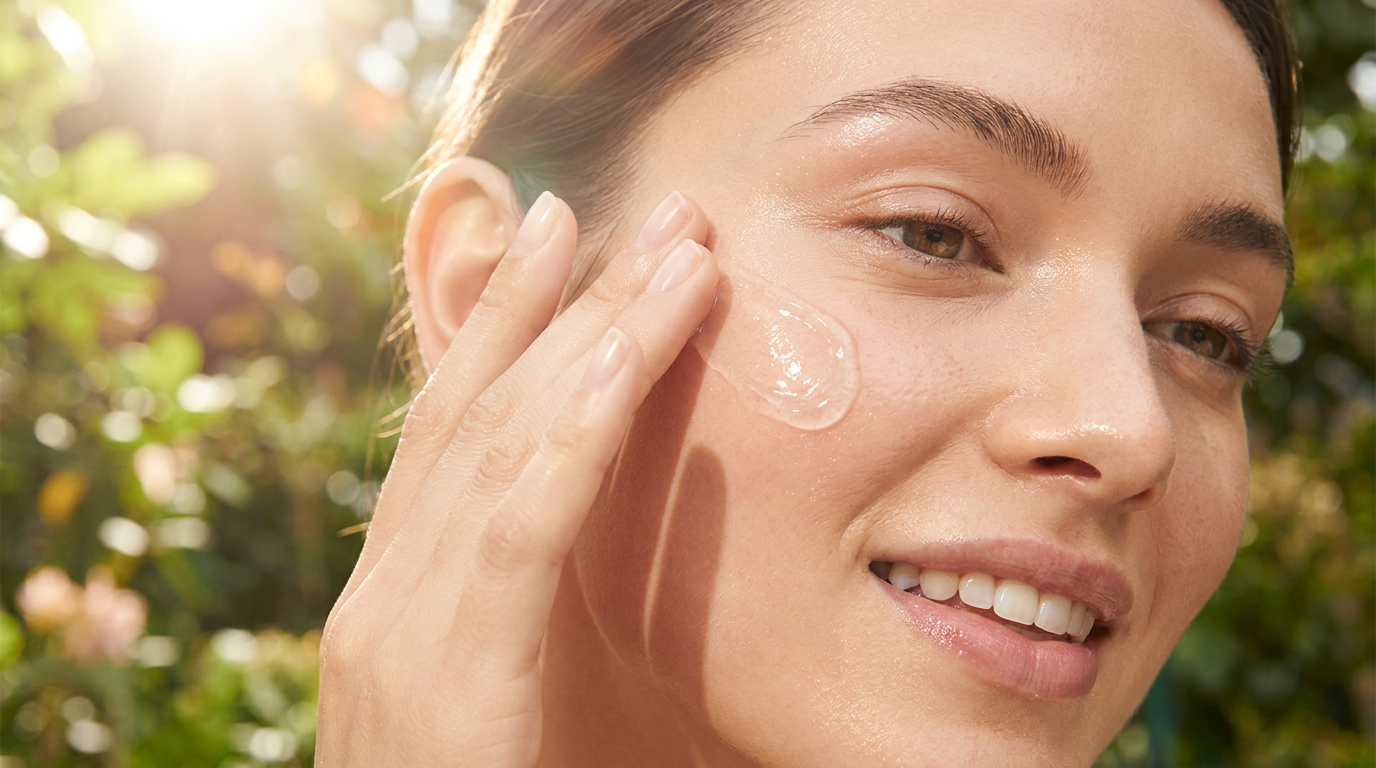
Because it is highly soluble and efficient, bemotrizinol allows chemists to create formulas that are entirely transparent and cosmetically elegant. It leaves zero white cast, even on deep skin tones, and avoids the heavy, greasy finish that deters many Americans from daily sunscreen use.[1][4]
If bemotrizinol is so superior, why did it take over 20 years to reach the U.S. market? The answer lies in how different governments classify sun protection. In the European Union, South Korea, and Japan, sunscreens are regulated as cosmetics. This allows for a streamlined approval process that has fostered rapid innovation, giving European formulators access to roughly 30 different UV filters.[2][5]

In the United States, however, sunscreens are classified as over-the-counter (OTC) drugs. The FDA requires sunscreen ingredients to meet a rigorous "Generally Recognized as Safe and Effective" (GRASE) standard. Proving this requires extensive human and animal testing to track systemic absorption, endocrine disruption, and long-term toxicity.[2][5]
The financial burden of this testing is immense. The European manufacturer DSM-Firmenich spent more than two decades and an estimated $18 million to push bemotrizinol through the FDA's rigorous approval pipeline. Their success was aided by recent legislative updates that modernized the OTC monograph system, finally clearing the path for BEMT's approval at concentrations up to 6 percent.[2][4]
While bemotrizinol's approval is a massive leap forward, the global sunscreen industry is already looking toward the next frontier: ultra-long UVA and high-energy visible (HEV) light. The UV spectrum is vast, and traditional filters—even bemotrizinol—begin to lose efficacy at the extreme end of the UVA spectrum, between 380 and 400 nanometers.[6][7]
To close this gap, European laboratories have developed specialized next-generation filters. L'Oréal and BASF co-developed Methoxypropylamino Cyclohexenylidene Ethoxyethylcyanoacetate (MCE), marketed as Mexoryl 400. Approved in Europe, MCE specifically targets ultra-long UVA1 rays, which are heavily implicated in deep dermal damage and stubborn pigmentary disorders like melasma.[1][6]

Similarly, the French pharmaceutical company Pierre Fabre introduced TriAsorB, an ultra-broad-spectrum filter that protects against UVB, short UVA, long UVA, and even blue light (HEV). Blue light, emitted by the sun and digital screens, has been shown to induce oxidative stress and prolonged hyperpigmentation.[7]
While Mexoryl 400 and TriAsorB remain unavailable in the U.S., the approval of bemotrizinol provides hope that the FDA's updated regulatory pathways will eventually allow these cutting-edge filters to cross the Atlantic without another two-decade delay.[5][7]
For American consumers, the immediate future looks significantly brighter. DSM-Firmenich holds exclusive rights to market bemotrizinol in the U.S. for 18 months under the brand name Parsol Shield. The first wave of modernized, lightweight U.S. sunscreens featuring the ingredient is expected to hit store shelves by September 2026.[2][4]
Public health advocates view this not just as a victory for cosmetic elegance, but for cancer prevention. Skin cancer remains the most common cancer in the United States. By providing consumers with sunscreens that feel like luxury skincare rather than medicinal chores, dermatologists hope that daily compliance will skyrocket, ultimately saving lives and preserving skin health for millions.[3][5]
How we got here
1999
The FDA approves its last new chemical sunscreen filter for the U.S. market, beginning a decades-long drought in domestic sun care innovation.
2000s–2010s
European and Asian markets rapidly adopt next-generation filters like bemotrizinol, creating cosmetically elegant sunscreens unavailable in America.
October 2024
European manufacturer DSM-Firmenich submits a formal request and extensive safety data to the FDA to approve bemotrizinol.
June 9, 2026
The FDA officially issues a final administrative order approving bemotrizinol for use in U.S. sunscreens at concentrations up to 6 percent.
September 2026
The first wave of modernized U.S. sunscreens containing bemotrizinol is expected to arrive on store shelves.
Viewpoints in depth
Dermatologists & Public Health Advocates
Emphasize that better-feeling sunscreens will directly reduce skin cancer rates by increasing daily use.
For medical professionals, the approval of bemotrizinol is less about cosmetic vanity and entirely about compliance. Skin cancer is the most common cancer in the United States, yet daily sunscreen use remains low because legacy formulas are often greasy, chalky, or irritating. By giving consumers access to lightweight, invisible formulas that don't sting the eyes or cause breakouts, dermatologists believe daily application will become as routine as brushing teeth, leading to a measurable drop in melanoma and photoaging over the next decade.
Cosmetic Chemists & Formulators
Focus on the technical leap in photostability and formulation elegance.
From a chemistry perspective, older U.S. filters like avobenzone were notoriously difficult to work with. They degraded quickly in sunlight and required a cocktail of stabilizing ingredients that made formulas heavy and prone to pilling. Bemotrizinol changes the paradigm because it is inherently photostable and acts as an anchor, stabilizing other ingredients in the mix. Formulators celebrate this large-molecule filter because it stays on the skin's surface, allowing them to create water-light gels and serums that were previously impossible to achieve under FDA constraints.
Regulatory & Safety Advocates
Defend the FDA's rigorous, decades-long testing requirements to ensure long-term safety.
While the 20-year delay frustrated consumers and brands, regulatory advocates argue the FDA's caution was entirely justified. Unlike Europe, which treats sunscreens as cosmetics, the U.S. classifies them as over-the-counter drugs. Because modern consumers apply sunscreen daily over large areas of their bodies, the FDA required definitive proof that new chemicals do not absorb into the bloodstream at toxic levels or disrupt the endocrine system. The rigorous $18 million testing process for bemotrizinol ensures that the American public is receiving a product that is definitively safe for lifelong use.
What we don't know
- It remains unclear how quickly major U.S. drugstore brands will reformulate their existing product lines to include bemotrizinol.
- The FDA has not yet indicated a timeline for approving other advanced European filters, such as Mexoryl 400 or TriAsorB.
- It is unknown how the inclusion of this heavily researched, newly approved ingredient will impact the retail price of U.S. sunscreens.
Key terms
- Bemotrizinol (BEMT)
- A highly stable, broad-spectrum chemical UV filter, also known as Tinosorb S, recently approved by the FDA for use in U.S. sunscreens.
- Photostability
- The ability of a sunscreen ingredient to remain effective and not break down when exposed to sunlight.
- Organic (Chemical) Filter
- A type of sunscreen ingredient that protects the skin by absorbing UV rays and converting them into a harmless amount of heat.
- GRASE
- An FDA acronym standing for 'Generally Recognized as Safe and Effective,' the strict standard required for over-the-counter drugs in the U.S.
- Ultra-long UVA
- The longest wavelengths of ultraviolet light (380–400 nm), which penetrate deeply into the skin and are heavily responsible for aging and pigmentation.
Frequently asked
When can I buy sunscreens with the new filter in the US?
The FDA order takes effect on August 9, 2026. The first products containing bemotrizinol are expected to hit U.S. store shelves around September 2026.
Will I still have to deal with a white cast?
No. Bemotrizinol is an organic (chemical) filter that dissolves completely into the formula. It is designed to be entirely transparent and leaves no white, chalky residue, even on deep skin tones.
Is bemotrizinol safe for sensitive skin?
Yes. Because it is a large-molecule filter, it sits on the surface of the skin rather than penetrating deeply. This significantly reduces the risk of stinging, eye irritation, and allergic reactions.
Why did it take 20 years for the FDA to approve this?
The U.S. regulates sunscreens as over-the-counter drugs, requiring extensive human and animal testing to prove they are safe and don't absorb dangerously into the bloodstream. In Europe, sunscreens are regulated as cosmetics, allowing for faster approvals.
Sources
Source coverage
7 outlets
3 viewpoints surfaced







[1]Business InsiderRegulatory Agencies
The FDA just glowed up your sunscreen — by approving a popular ingredient in European and Asian formulas
Read on Business Insider →[2]NPRDermatologists & Public Health Advocates
4 things to know about the new sunscreen ingredient the FDA approved
Read on NPR →[3]Times NowRegulatory Agencies
The Future of Sunscreen Is Here: FDA Approves Powerful New UV Shield
Read on Times Now →[4]HAESKNCosmetic Chemists & Formulators
FDA Approved the First New Sunscreen Filter in 20 Years
Read on HAESKN →[5]Journal of Clinical and Aesthetic DermatologyDermatologists & Public Health Advocates
Modernizing U.S. Sunscreen Regulations: How Newer Filters Can Improve Public Health
Read on Journal of Clinical and Aesthetic Dermatology →[6]Dr. Jane YooCosmetic Chemists & Formulators
UV Filter: Mexoryl 400 / MCE
Read on Dr. Jane Yoo →[7]Pierre FabreCosmetic Chemists & Formulators
TRIASORB™: the launch of a new ultra broad-spectrum sun filter
Read on Pierre Fabre →

Every angle. Every day.
Get lifestyle stories with full source coverage and perspective breakdowns delivered to your inbox.