
Explainer: How 'Regenerative Tourism' and Local Guides Are Reshaping Travel in 2026
The travel industry is moving beyond basic sustainability toward 'regenerative tourism,' a model that actively restores ecosystems and empowers local communities. At the center of this shift are indigenous and community-based local guides who are reclaiming economic control over how their cultures are shared.
By Factlen Editorial Team
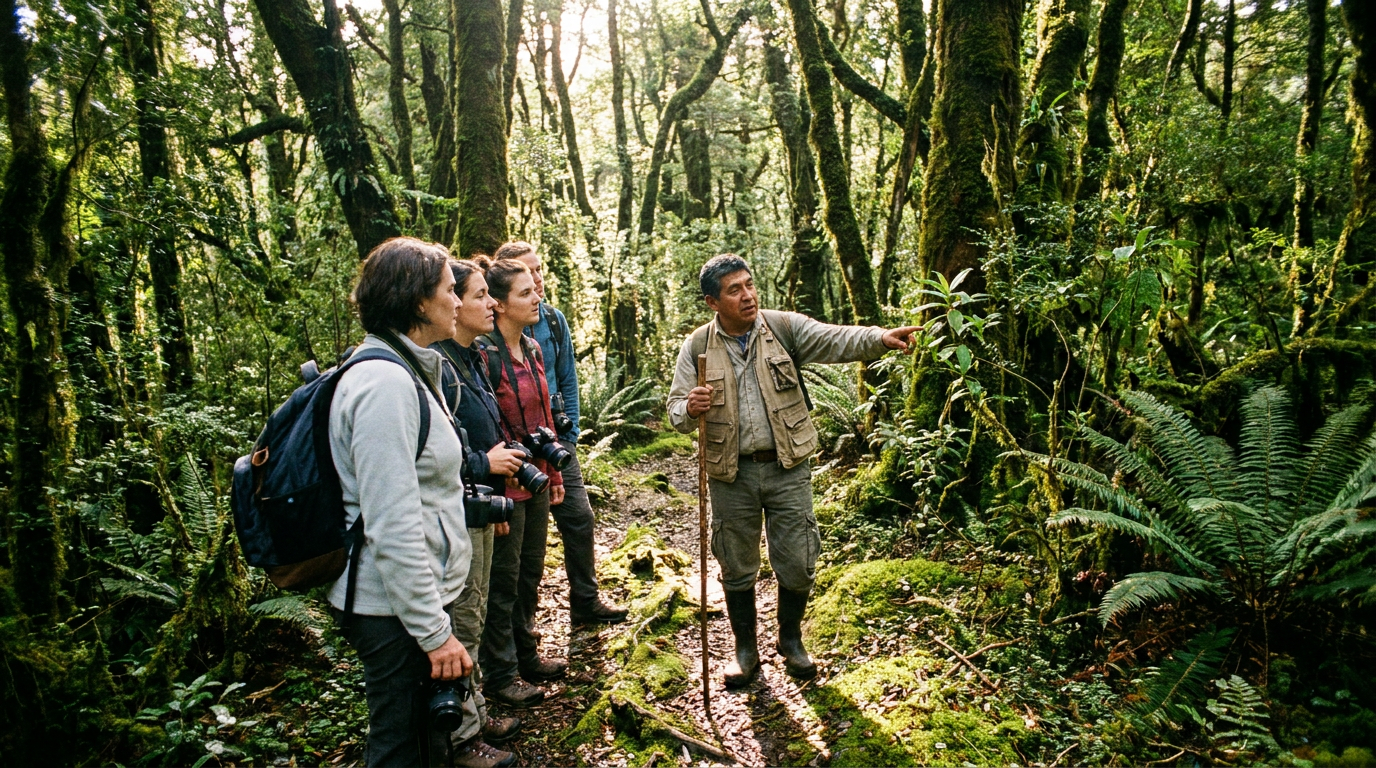
- Regenerative Advocates
- Argue that tourism must move beyond harm reduction to actively restore ecosystems and communities.
- Indigenous & Community Leaders
- Emphasize that true regeneration requires local autonomy, cultural preservation, and equitable revenue sharing.
- Industry Analysts
- Focus on the economic viability, market growth, and consumer demand driving the shift toward community-based tourism.
What's not represented
- · Mass-Market Tour Operators
- · Budget Travelers
Why this matters
For decades, mass tourism has extracted wealth from local communities while degrading their environments. The rise of community-owned guiding networks means travelers can now ensure their money directly funds conservation and local livelihoods, rather than multinational operators.
Key points
- Regenerative tourism is replacing traditional sustainability by focusing on actively restoring ecosystems and communities.
- Community-Based Tourism (CBT) empowers local residents to own and manage travel experiences, preventing economic leakage.
- The ethno-tourism and community-based eco-tourism market is projected to exceed $16 billion in 2026.
- Indigenous guides are utilizing Traditional Ecological Knowledge (TEK) to lead conservation and cultural preservation efforts.
- Travelers are advised to look for transparent revenue-sharing models to avoid 'greenwashing' by multinational operators.
The era of "leave no trace" is coming to an end. For decades, the gold standard for responsible travel was simply to minimize the damage inflicted upon a destination—to use fewer plastic bottles, offset carbon emissions, and stick to marked trails. But in 2026, the travel industry is embracing a significantly more ambitious mandate: leave the destination better than you found it. This concept, known as regenerative tourism, is rapidly replacing traditional sustainability frameworks across the globe. Rather than merely pausing the degradation of natural and cultural resources, regenerative travel treats the tourism economy as a powerful tool to actively restore ecosystems, revive local economies, and strengthen community heritage. It is a fundamental shift from a mindset of extraction to one of renewal, demanding that visitors contribute to the long-term health of the places they explore.[1][7]
While sustainable tourism focuses on achieving a neutral footprint, regenerative tourism seeks a "net positive" outcome. Industry leaders argue that the old sustainability models are no longer sufficient to combat the compounding pressures of climate change and globalization. Instead, regeneration requires a holistic approach that connects the economic engine of travel directly to the environmental and social recovery of a region. This means that a portion of every dollar spent on a tour, a meal, or a bed must flow directly into tangible improvements, such as reforestation projects, wildlife corridor expansion, or the preservation of endangered languages. The goal is to build resilience, ensuring that destinations can withstand both ecological shocks and the pressures of future visitor influxes.[1][7]
At the absolute center of this transition is the evolving role of the local guide. Historically, global tour operators and multinational agencies dominated the itinerary, often hiring locals at low wages while funneling the bulk of the profits back to foreign headquarters—a phenomenon known as tourism leakage. Today, those intermediaries are increasingly being bypassed in favor of Community-Based Tourism (CBT). In the CBT model, local neighborhoods, rural villages, and indigenous groups retain full ownership and management of the travel experiences. They design the tours, set the boundaries, and dictate the narrative, ensuring that the economic benefits remain anchored within the community.[6][7]
The economic momentum behind this shift is substantial. The global ethno-tourism and community-based eco-tourism market is projected to reach $16.17 billion in 2026, expanding at a rapid compound annual growth rate of nearly 20 percent. This surge is driven by a fundamental change in consumer behavior. Modern travelers are actively turning away from overcrowded, mass-market attractions and manufactured cultural shows. Instead, they are seeking out authentic, localized experiences that offer genuine connection and emotional resonance. Whether it is foraging in an alpine forest or learning ancestral crafts, visitors are demonstrating a willingness to pay a premium for experiences that are rooted in real community life and directly support local livelihoods.[4][7]

Grassroots initiatives in Panama provide a clear blueprint for how community ownership alters the economic and ecological math of a destination. The country's tourism authority has aggressively pivoted toward this model, setting a 2026 objective to train over 500 local guides specifically in regenerative practices. By prioritizing skills development over sheer visitor volume, the initiative aims to boost rural economies while safeguarding biodiversity. Programs like the ReD SOSTUR initiative have already demonstrated the viability of this approach, recording a 40 percent increase in visits by focusing purely on authentic cultural exchanges rather than high-volume resort traffic.[2]
The impact of these programs extends far beyond basic income generation. In Panama's Naso Comarca region, indigenous communities have successfully reduced their historical reliance on logging by developing and offering ancestral chocolate-making tours. The profits generated from these guide-led experiences are not siphoned off by external corporations; instead, they are retained by the community and reinvested directly into local education, healthcare, and infrastructure. This creates a self-sustaining loop where the preservation of cultural heritage and natural resources becomes the most economically viable path forward for the community.[2]
The impact of these programs extends far beyond basic income generation.
Indigenous communities are widely recognized as indispensable to the success of the regenerative model. Their Traditional Ecological Knowledge (TEK)—which encompasses sustainable land management, biodiversity conservation, and seasonal harvesting practices honed over thousands of years—provides the exact framework needed to help destinations recover from the scars of overtourism. Indigenous guides offer visitors a perspective that views humanity as an integrated part of the ecosystem rather than a dominant force over it. By placing these knowledge-keepers at the forefront of the visitor experience, destinations can foster a deeper, more respectful relationship between travelers and the natural world.[3][7]
In East Africa, community-led guiding networks are already proving their capacity for large-scale ecological renewal. Near Uganda's Kyambura Gorge, local guides and community members have spearheaded reforestation efforts that are actively creating safe wildlife corridors for the region's endangered chimpanzee populations. Similarly, in Kenya, eco-lodges in coastal regions like Kilifi are forming deep partnerships with nearby villages. These collaborations ensure that guided nature walks, agricultural tours, and artisan craft workshops directly support the economic empowerment of the residents, transforming tourism from a passive backdrop into an active engine for community development.[1][5]

Even the highest echelons of the luxury travel sector are adapting to the regenerative mandate. Certifications such as Regenera Luxury are establishing rigorous new standards for high-end retreats and boutique hotels, explicitly requiring active collaboration with indigenous and local communities. The definition of luxury is shifting away from exclusive isolation and excessive consumption toward immersive, culturally respectful engagement. High-net-worth travelers are increasingly evaluating properties based on their tangible positive impact, favoring lodges that restore degraded land and integrate local families into their core operations and ownership structures.[1][3]
However, the rapid mainstreaming of regenerative travel is not without significant friction and uncertainty. As the term becomes a lucrative marketing buzzword, the risk of "greenwashing" grows exponentially. Industry analysts and advocates warn that some traditional operators are simply rebranding their basic sustainability efforts—such as carbon offsetting or towel-reuse programs—as "regenerative" without making any fundamental changes to their business models. True regeneration requires a structural transfer of economic control and decision-making power to local residents, a step that many multinational corporations remain hesitant to take.[1][7]
At the heart of genuine regeneration is the absolute respect for community autonomy. Tourism operators and visitors alike must engage with profound cultural sensitivity, actively avoiding the commodification of sacred traditions or the disruption of daily life. Indigenous and local communities must maintain the unassailable right to dictate the flow of visitors, set strict boundaries, and even close off certain areas entirely to allow ecosystems and neighborhoods to rest. Without this level of local sovereignty, tourism initiatives risk repeating the extractive mistakes of the past under a new, more palatable label.[3][7]

For travelers navigating the landscape in 2026, identifying authentic community-based guides requires looking beyond slick promotional materials. Experts recommend seeking out tours and operators that explicitly publish their revenue-sharing models and demonstrate transparent local hiring practices. Travelers should look for clear evidence of partnerships with local conservation groups or indigenous councils, and prioritize platforms that facilitate direct booking with community cooperatives. Asking direct questions about who owns the itinerary and where the money goes is becoming a standard part of the conscious traveler's planning process.[6][7]
Ultimately, the shift toward community-led regenerative tourism represents a fundamental realignment of the global travel economy. By placing local guides and indigenous knowledge at the helm, destinations are proving that tourism does not have to be an extractive, depleting industry. When managed with intention and respect, travel can serve as a powerful, self-sustaining engine for ecological restoration and cultural renewal. As the 2026 travel landscape continues to evolve, the most sought-after destinations will not be those that simply cater to the visitor, but those that invite the visitor to participate in their healing.[7]
How we got here
2020–2022
The pandemic pauses global travel, sparking industry-wide debates about overtourism and the need for a 'reset' in how destinations are managed.
2022
The launch of Regenera Luxury establishes the first formal certification specifically for regenerative luxury hotels and retreats.
Late 2025
The World Economic Forum issues 'Principles for Transformative Tourism,' signaling a mainstream institutional shift toward regenerative models.
2026
The community-based eco-tourism market surpasses $16 billion as travelers actively bypass global operators in favor of indigenous-led guides.
Viewpoints in depth
Regenerative Advocates
Argue that tourism must move beyond harm reduction to actively restore ecosystems and communities.
This camp, which includes specialized travel designers and eco-certification bodies, asserts that the "leave no trace" era is over. They point to successful reforestation and wildlife corridor projects funded entirely by visitor revenue as proof that travel can be a net-positive force. Their primary concern is ensuring that the industry adopts rigorous standards to prevent the dilution of the regenerative concept.
Indigenous & Community Leaders
Emphasize that true regeneration requires local autonomy, cultural preservation, and equitable revenue sharing.
For community leaders, the focus is on sovereignty and economic justice. They argue that traditional ecological knowledge (TEK) is the only viable blueprint for sustainable land management, and that local residents must have the final say over visitor flow and access. This camp frequently pushes back against multinational operators who attempt to commodify cultural practices without transferring actual economic control to the community.
Industry Analysts
Focus on the economic viability, market growth, and consumer demand driving the shift toward community-based tourism.
Analysts view the rise of regenerative travel through the lens of market dynamics, noting the projected $16 billion valuation of the community-based eco-tourism sector. They highlight that modern travelers are willing to pay a premium for authenticity, making local guiding networks highly profitable. However, they also caution that scaling these intimate, community-led experiences without destroying their core appeal remains a significant logistical challenge for the broader industry.
What we don't know
- How effectively the broader travel industry can scale community-based models without overwhelming fragile local ecosystems.
- Whether new international regulations will be introduced to standardize what legally qualifies as 'regenerative' travel to prevent greenwashing.
Key terms
- Regenerative Tourism
- A travel model that aims to leave destinations in a better ecological and social condition than they were found, moving beyond basic harm reduction.
- Community-Based Tourism (CBT)
- Tourism experiences and accommodations that are owned, managed, and led by local community members, ensuring revenue stays local.
- Traditional Ecological Knowledge (TEK)
- The evolving knowledge acquired by indigenous and local peoples over generations through direct contact with their environment.
- Tourism Leakage
- The economic phenomenon where revenue generated by tourism is lost to outside economies, such as multinational tour operators or foreign-owned hotel chains.
- Greenwashing
- The deceptive practice of marketing a company or initiative as environmentally friendly or sustainable when it does not actually make a meaningful impact.
Frequently asked
What is the difference between sustainable and regenerative tourism?
Sustainable tourism aims to minimize harm and maintain the status quo, such as by reducing carbon emissions. Regenerative tourism actively seeks to improve the destination by restoring ecosystems and strengthening local communities.
Why is Community-Based Tourism (CBT) growing?
Travelers are increasingly seeking authentic, localized experiences rather than crowded, mass-market attractions. CBT ensures that the money spent by tourists directly supports the local residents who own and operate the tours.
How can I find authentic local guides?
Look for tours that transparently share their revenue models, prioritize local hiring, and partner with indigenous councils or local conservation groups. Booking directly through community cooperatives is also highly recommended.
What role do indigenous communities play in this trend?
Indigenous communities possess Traditional Ecological Knowledge (TEK) that provides a proven blueprint for sustainable land management. Their leadership is essential for ensuring that tourism respects cultural boundaries and actively heals the environment.
Sources
Source coverage
7 outlets
3 viewpoints surfaced







[1]ForbesRegenerative Advocates
What Is Regenerative Travel and Who's Leading in 2026
Read on Forbes →[2]CarbonClickRegenerative Advocates
Regenerative tourism examples in small communities
Read on CarbonClick →[3]Regenera LuxuryIndigenous & Community Leaders
Regenerative Tourism seeks active collaboration with indigenous communities to boost positive change
Read on Regenera Luxury →[4]Research and MarketsIndustry Analysts
Ethno Tourism Community Based Eco Tourism Market Report 2026
Read on Research and Markets →[5]ExoticcaRegenerative Advocates
The Conscious Explorer's Guide: Traveling With Purpose and Sustainability 2026
Read on Exoticca →[6]Trove Tourism Development AdvisorsIndustry Analysts
Empowering Community-Based Tourism for Emerging and Established Destinations
Read on Trove Tourism Development Advisors →[7]Factlen Editorial TeamRegenerative Advocates
Synthesis by Factlen editorial team
Read on Factlen Editorial Team →

Every angle. Every day.
Get travel stories with full source coverage and perspective breakdowns delivered to your inbox.