
Ethereum Activates 'Glamsterdam' Upgrade, Slashing Network Fees and Targeting Institutional Scale
The world's most utilized blockchain successfully deployed its highly anticipated Glamsterdam upgrade, fundamentally altering how transactions are processed to lower costs and improve speeds.
By Factlen Editorial Team
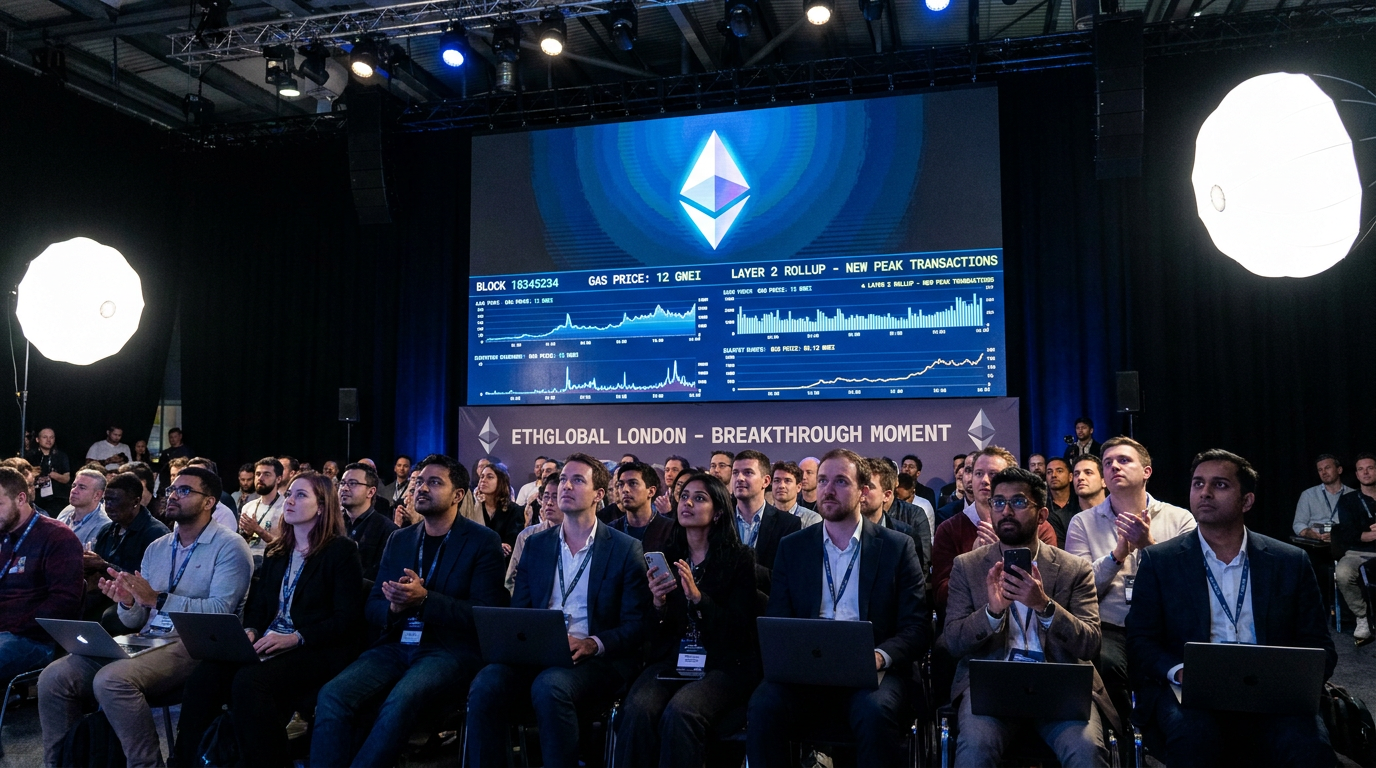
- Institutional Asset Managers
- Focus on network reliability, predictable fees, and capacity for tokenized real-world assets.
- Ethereum Core Developers
- Prioritize network decentralization, security, and long-term architectural sustainability.
- Layer-2 Ecosystem Builders
- Advocate for lower base-layer data costs to enable cheap, consumer-friendly decentralized applications.
What's not represented
- · Retail crypto investors navigating the fragmented user experience across multiple Layer-2 networks.
- · Regulators monitoring the systemic risk of stablecoins settling on public blockchains.
Why this matters
By fundamentally restructuring how transactions are ordered and processed, the Glamsterdam upgrade drastically reduces the cost of operating on the Ethereum network. This paves the way for mainstream financial institutions to move trillions of dollars in tokenized assets and stablecoins without the friction of high network fees.
Key points
- Ethereum successfully activated the Glamsterdam protocol upgrade on its mainnet without interruption.
- The update introduces enshrined Proposer-Builder Separation (ePBS) to streamline transaction processing.
- Layer-2 networks, which handle 95% of ecosystem volume, will see significantly reduced operational costs.
- The upgrade aligns with institutional demands for predictable, high-capacity blockchain settlement rails.
The Ethereum network successfully activated its highly anticipated "Glamsterdam" protocol upgrade on Monday morning, marking a critical milestone in the blockchain's multi-year transition toward becoming a high-speed global settlement layer. The upgrade, which deployed seamlessly across thousands of global nodes without any network interruption, fundamentally alters how transactions are ordered and processed on the world's most utilized smart-contract platform. For years, the network has been criticized for high fees and occasional congestion during periods of peak demand. By restructuring the foundational architecture of block creation, Glamsterdam addresses these bottlenecks head-on, signaling to both retail users and institutional giants that the network is ready to handle the scale required for mainstream global finance.[1][2]
At the core of the Glamsterdam release is a complex technical mechanism known as "enshrined Proposer-Builder Separation" (ePBS). Previously, the network validators that proposed new blocks of transactions were also responsible for building them—a dynamic that occasionally led to network congestion and allowed specialized, highly capitalized actors to extract hidden value from everyday users by front-running their trades. By separating these two roles directly at the protocol level, Ethereum has streamlined its execution efficiency and created a more predictable, censorship-resistant environment. This separation ensures that block builders compete in an open market to create the most profitable blocks, while proposers simply select the best one, democratizing the rewards and fortifying the network against centralization risks.[2][3]
The immediate and most visible beneficiaries of this architectural shift are Layer-2 scaling networks—such as Arbitrum, Optimism, and Coinbase's Base network—which sit on top of Ethereum and bundle thousands of user transactions together before settling them. As of mid-2026, these Layer-2 solutions have become the de facto user interface for crypto, handling an estimated 95 percent of all transaction volume in the broader Ethereum ecosystem. By significantly lowering the data costs required for these secondary networks to post their cryptographic receipts back to the main blockchain, Glamsterdam effectively slashes the end-user fees for trading, transferring funds, and interacting with decentralized applications, making micro-transactions economically viable on a global scale.[3][6]

For mainstream financial institutions, the successful deployment of Glamsterdam signals that Ethereum is rapidly maturing into a sustainable, enterprise-grade infrastructure capable of handling Wall Street volume. Asset managers and global banks have increasingly viewed the blockchain not merely as a ledger for speculative digital assets, but as a highly efficient rail for tokenizing real-world assets like Treasury bills, mutual funds, and private credit. The enhanced predictability, faster finality, and lower execution friction introduced by this upgrade remove major technical hurdles that had previously kept some conservative institutional capital on the sidelines, paving the way for a massive influx of traditional financial products onto public ledgers.[1][4]
This institutional embrace is already highly visible in the explosive growth of on-chain fiat settlement, which has become a primary use case for blockchain technology. While US Dollar-denominated stablecoins continue to dominate the market with hundreds of billions in monthly processing volume, the ecosystem is rapidly diversifying across different jurisdictions. Recent data indicates that Euro-denominated stablecoins have experienced a staggering 12-fold growth over the past 15 months, driven by clear regulatory frameworks like Europe's MiCA legislation and the increasing efficiency of blockchain rails. As network fees drop further post-Glamsterdam, analysts expect stablecoin settlement to increasingly displace traditional cross-border payment networks like SWIFT.[5]

This institutional embrace is already highly visible in the explosive growth of on-chain fiat settlement, which has become a primary use case for blockchain technology.
The flawless deployment of Glamsterdam also highlights a broader philosophical shift within the Ethereum developer community regarding how blockchains should scale. Rather than attempting to process every global transaction on a single "monolithic" chain—a strategy that inevitably leads to bloat and high hardware requirements—Ethereum has fully embraced a modular, scalability-first architecture. In this model, the base layer acts strictly as a highly secure, decentralized settlement and data availability engine. The actual user activity, complex smart contract execution, and high-frequency trading occur on faster, cheaper peripheral networks that inherit the base layer's ironclad security without clogging its main arteries.[3][7]
Market analysts note that this modular approach positions crypto networks to compete directly with traditional financial clearinghouses and payment processors. Industry strategists frequently point out that the most lucrative segment of global finance is not holding money, but moving it efficiently from one party to another. With stablecoin issuers and decentralized lending protocols now generating billions of dollars in annual revenue while employing a fraction of the headcount required by legacy banks, the operational efficiency gap is becoming impossible for traditional finance to ignore. Glamsterdam accelerates this trend by making the underlying infrastructure cheaper to operate.[4][7]
Looking ahead, the Ethereum Foundation has committed to a faster, more consistent release cycle to avoid the high-risk, multi-year "mega-upgrades" that characterized the network's early history. With Glamsterdam successfully integrated and running smoothly, core developers and researchers are already turning their attention to the next major milestone: the "Hegota" upgrade, which is tentatively slated for the second half of 2026. This shift toward smaller, more frequent updates reflects a growing engineering maturity, ensuring that the network can adapt to emerging technological demands without jeopardizing the hundreds of billions of dollars in value currently secured by its smart contracts.[2][3]

The upcoming Hegota upgrade is expected to tackle the network's long-term state growth by introducing Verkle Trees, a novel cryptographic data structure that will drastically reduce the storage overhead required to run an Ethereum node. Currently, the sheer size of the blockchain's history makes it difficult for average users to operate independent nodes, creating a reliance on centralized cloud providers. By shrinking these hardware requirements, Hegota will make it easier for everyday users to participate directly in securing the network, further decentralizing the system and ensuring its resilience against state-level censorship or corporate capture.[3]
For now, the broader cryptocurrency industry is celebrating a flawless technical execution that proves decentralized, open-source networks can evolve safely at a massive scale. As global liquidity continues to flow into digital assets and autonomous artificial intelligence agents begin requiring machine-speed financial settlement layers, Ethereum's latest upgrade ensures it has the foundational bandwidth to support the next generation of the internet economy. By prioritizing long-term sustainability over short-term hype, the network has cemented its position as the critical infrastructure layer for a rapidly modernizing global financial system.[1][4][7]
How we got here
Sept 2022
The Merge transitions Ethereum from proof-of-work to proof-of-stake, cutting energy use by 99%.
April 2023
The Shanghai upgrade allows validators to withdraw staked ETH, de-risking institutional participation.
March 2024
The Dencun upgrade introduces 'blobs', drastically lowering data costs for Layer-2 networks.
June 2026
The Glamsterdam upgrade activates, enshrining Proposer-Builder Separation and boosting execution efficiency.
Late 2026
The planned Hegota upgrade aims to introduce Verkle Trees to reduce node storage requirements.
Viewpoints in depth
Ethereum Core Developers
Focused on long-term protocol sustainability, decentralization, and security.
For the engineers maintaining the network, Glamsterdam is less about immediate price action and more about architectural hygiene. By enshrining Proposer-Builder Separation at the base layer, developers argue they are removing dangerous centralizing forces that had crept into the block-building process. Their ultimate goal is to ensure that running an Ethereum node remains accessible to individuals, preventing the network from being captured by massive institutional data centers.
Institutional Asset Managers
Evaluating the network as a reliable settlement rail for tokenized traditional finance.
Wall Street views these upgrades through the lens of risk and capacity. Traditional finance firms are eager to tokenize real-world assets like Treasuries and money market funds to gain 24/7 settlement and programmable compliance. For them, Glamsterdam provides the necessary proof that Ethereum can handle institutional throughput without the unpredictable fee spikes that plagued the network during previous market cycles.
Layer-2 Ecosystem Builders
Operating the consumer-facing networks that rely on Ethereum for security.
Teams building networks like Arbitrum, Optimism, and Base see the base layer strictly as a security anchor. Their primary concern is the cost of 'data availability'—the fee they pay to post their transaction receipts back to Ethereum. By optimizing how the main chain handles this data, Glamsterdam directly increases the profit margins of Layer-2 operators, allowing them to subsidize transaction costs for end-users and onboard millions of new wallets.
What we don't know
- It remains to be seen exactly how much transaction fees on Layer-2 networks will drop once the upgrade is fully priced in by operators.
- The exact deployment date for the subsequent 'Hegota' upgrade in late 2026 has not yet been finalized by core developers.
Key terms
- Layer-2 (L2)
- A secondary network built on top of a main blockchain designed to process transactions faster and cheaper, relying on the main chain for security.
- Proposer-Builder Separation (PBS)
- A network design that separates the role of the computer assembling a block of transactions from the computer proposing it to the network, improving fairness and efficiency.
- Stablecoin
- A cryptocurrency pegged to a reserve asset like the US Dollar or Euro, designed to maintain a stable value for everyday payments and trading.
- Tokenization
- The process of issuing a digital representation of a real-world asset, such as a stock or bond, on a blockchain.
- Verkle Trees
- A cryptographic data structure planned for future upgrades that will allow Ethereum nodes to verify transactions without storing the entire history of the network.
Frequently asked
Will this upgrade make Ethereum faster?
While it streamlines how transactions are processed, the main speed and cost benefits will be felt on Layer-2 networks rather than the base Ethereum chain itself.
Do I need to do anything with my ETH?
No. Network upgrades are handled entirely by node operators and developers; everyday users and investors do not need to migrate or upgrade their tokens.
Why are Layer-2 networks so important?
They handle roughly 95% of all transaction volume, acting as the consumer-facing layer of the ecosystem while Ethereum serves as the secure settlement foundation.
What is the Hegota upgrade?
It is the next major planned update for late 2026, which will focus on reducing the data storage requirements for running an Ethereum node.
Sources
Source coverage
7 outlets
3 viewpoints surfaced







[1]BloombergInstitutional Asset Managers
Ethereum's 'Glamsterdam' Upgrade Goes Live, Targeting Wall Street Tokenization
Read on Bloomberg →[2]CoinDeskEthereum Core Developers
Ethereum Successfully Deploys Glamsterdam, Enshrining Proposer-Builder Separation
Read on CoinDesk →[3]TatumEthereum Core Developers
Roadmap & Blockchain Upgrades to Watch in 2026: Ethereum's Glamsterdam
Read on Tatum →[4]VanEckInstitutional Asset Managers
Ethereum in 2026: Comparison & Outlook Following Major Protocol Upgrades
Read on VanEck →[5]TRM LabsInstitutional Asset Managers
Global Crypto Adoption Index: Stablecoin Settlement Accelerates Post-Upgrade
Read on TRM Labs →[6]BeInCryptoLayer-2 Ecosystem Builders
Layer 2 Fees Plummet as Ethereum's Glamsterdam Upgrade Takes Effect
Read on BeInCrypto →[7]CNBCInstitutional Asset Managers
What Ethereum's latest major upgrade means for your crypto portfolio
Read on CNBC →

More in finance
See all 7 stories →Retirement Strategy
Why Late-Career Workers Are Shifting to Roth 401(k)s Ahead of Retirement
6 sources

Housing Market
How Homebuyers Are Bypassing 6.5% Mortgage Rates in 2026
6 sources

Retirement Strategy
The 2026 Roth 401(k) Mandate: Why Late-Career Workers Are Changing Their Tax Strategy
6 sources

Stablecoin Adoption
Global Banking Networks Embrace Stablecoins, Slashing Cross-Border Remittance Costs
6 sources

Every angle. Every day.
Get finance stories with full source coverage and perspective breakdowns delivered to your inbox.