
EPA Finalizes Repeal of Greenhouse Gas 'Endangerment Finding,' Dismantling Core Climate Authority
The Environmental Protection Agency has formally revoked the 2009 legal determination that greenhouse gases threaten public health, stripping the federal government of its primary tool to regulate carbon emissions.

The common misconception is that the Environmental Protection Agency just rolled back another set of emissions standards for cars or power plants. The reality is far more structural: the agency has dismantled the legal foundation that allows those standards to exist in the first place.
On Monday, the EPA finalized the repeal of the 2009 "Endangerment Finding," the landmark scientific and legal determination that greenhouse gases threaten public health and welfare. By revoking this document, the agency has effectively stripped itself of the authority to regulate carbon dioxide and other climate-warming gases under the Clean Air Act.[1][2]
The 2009 finding was the linchpin of federal climate policy. Because the Supreme Court previously ruled that the EPA must regulate greenhouse gases if they are found to endanger public health, declaring that they do not removes the mandate. This instantly invalidates the legal justification for federal limits on tailpipe emissions, power plant pollution, and industrial methane leaks.[2]
The administration framed the repeal as a necessary correction of executive overreach. EPA officials argued that the Clean Air Act, drafted in 1970 and amended in 1990, was designed by Congress to combat local smog and acid rain, not global atmospheric carbon. They assert that regulating greenhouse gases requires an explicit, new act of Congress, rather than an administrative reinterpretation of a decades-old statute.
Fossil fuel producers and heavy manufacturing lobbies welcomed the final rule. Industry groups have long argued that the Endangerment Finding forced the EPA to construct a sprawling, economy-wide regulatory apparatus that Congress never authorized. They contend this framework drove up energy costs, created deep regulatory uncertainty, and stifled domestic industrial expansion without meaningfully altering global temperatures.[3]
Environmental organizations and a coalition of 22 Democratic-led states immediately filed for emergency injunctions in federal court to block the repeal. They argue the agency's action ignores decades of peer-reviewed climate science and violates the Administrative Procedure Act by discarding established physical evidence without a valid factual basis.[1]
The looming legal battle will hinge on whether an agency can reverse a science-based finding without presenting new scientific evidence that contradicts the original conclusion. The EPA's new rule relies heavily on economic and statutory arguments rather than disputing the physical warming of the planet, setting up a novel test of administrative law that is widely expected to reach the Supreme Court.[3]
This structural shift leaves the United States without a federal mechanism to enforce carbon reductions, severely complicating its standing in international climate agreements. Domestically, it fractures the regulatory landscape, leaving automakers and energy companies to navigate a patchwork of strict state-level mandates in places like California alongside a deregulated federal baseline.[2]
Perspectives explored
The Administration and Industry View
The repeal is framed as a restoration of constitutional order and a necessary check on administrative overreach.
Proponents of the repeal argue that the Clean Air Act was never intended to regulate the global climate. They assert that by using a 1970 statute to enforce economy-wide carbon reductions, previous administrations bypassed Congress and imposed massive compliance costs on American industry. Industry groups argue that returning this authority to the legislative branch provides regulatory certainty and protects domestic energy production from executive branch overreach.
Environmental and State Regulators' View
The rollback is viewed as an unlawful abdication of the EPA's core mission that ignores physical science.
Opponents argue that the Supreme Court explicitly affirmed the EPA's authority to regulate greenhouse gases if they pose a danger, and that the physical evidence of that danger has only grown stronger since 2009. State attorneys general contend that the EPA cannot legally erase a scientific finding simply because the current administration dislikes the regulatory consequences. They warn that stripping federal authority leaves the US incapable of addressing the primary driver of extreme weather and rising sea levels.
Legal Analysts' View
Legal scholars see the repeal as a high-stakes test of the Administrative Procedure Act.
Legal experts note that while agencies have broad discretion to change policies, they must provide a reasoned explanation for doing so. Because the EPA's repeal relies heavily on statutory interpretation rather than presenting new scientific data that disproves the 2009 climate science, courts will have to decide if a change in legal philosophy is sufficient to overturn a finding originally rooted in physical evidence. This sets the stage for a defining Supreme Court battle over the limits of agency power.
Key points
- The EPA finalized a rule revoking the 2009 Endangerment Finding, which classified greenhouse gases as a threat to public health.
- The repeal removes the legal foundation for federal climate regulations under the Clean Air Act.
- Environmental groups and 22 Democratic-led states immediately filed lawsuits to block the repeal in federal court.
- Fossil fuel industry groups praised the move, arguing the original finding overstepped congressional intent.
Timeline
2007
The Supreme Court rules in Massachusetts v. EPA that greenhouse gases are pollutants under the Clean Air Act.
2009
The EPA issues the Endangerment Finding, determining that greenhouse gases threaten public health and welfare.
2015
The Obama administration uses the finding to launch the Clean Power Plan and strict vehicle emissions standards.
Aug 2026
The EPA formally finalizes the repeal of the Endangerment Finding, dismantling its climate regulatory authority.
- Climate Policy Defenders
- Maintain that the repeal ignores established science and unlawfully abandons the federal government's duty to protect public health from climate impacts.
- Deregulation Advocates
- Argue that the EPA overstepped its congressional mandate and that climate policy should be legislated, not regulated by administrative agencies.
- Administrative Law Experts
- Focus on the legal mechanics of the repeal, questioning whether an agency can revoke a science-based finding using primarily statutory and economic arguments.
Perspectives this story doesn't cover
- International climate negotiators adjusting to the lack of US federal enforcement mechanisms
- Automakers facing a fractured market of state-level emissions rules
Sources
Source coverage
3 outlets
3 viewpoints surfaced



- [1]ReutersAdministrative Law Experts
EPA finalizes repeal of foundational greenhouse gas endangerment finding
Read on Reuters → - [2]The New York TimesClimate Policy Defenders
In Historic Reversal, EPA Strips Itself of Climate Authority
Read on The New York Times → - [3]The Wall Street JournalDeregulation Advocates
EPA Repeals Climate Finding, Setting Up Supreme Court Showdown
Read on The Wall Street Journal →

More in News & Politics
See all →Water Policy
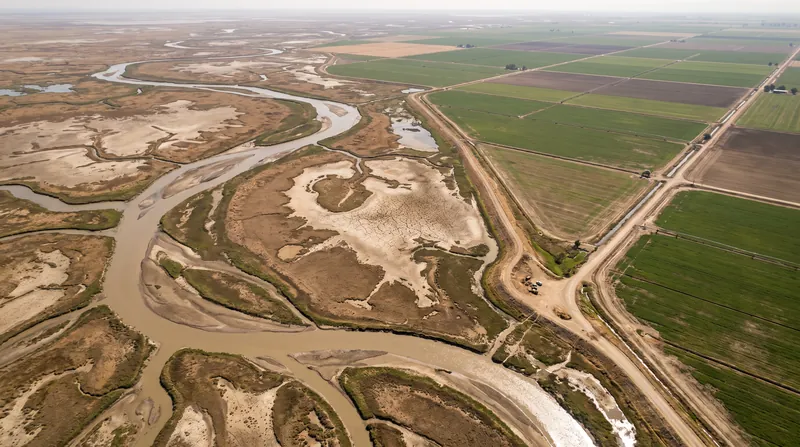
EPA and Army Corps Propose Rule Stripping Federal Protection from 94% of US Wetlands
4 sources
Carbon Markets
Structuring the International Carbon Market: The Article 6.2 and 6.4 Mechanisms Explained
7 sources

Clean Air Act
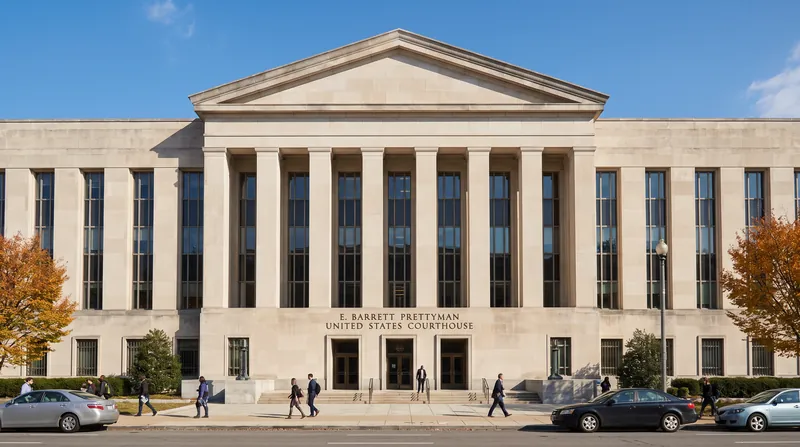
Federal Judge Blocks EPA Attempt to Use Congressional Review Act Against California Emissions Waivers
5 sources
Emissions Accounting
The Mechanics of Corporate Emissions Accounting: Understanding Scope 1, 2, and 3 Greenhouse Gases
6 sources

Comments
Every angle. Every day.
Get News & Politics stories with full source coverage and perspective breakdowns, free every day.