
Supreme Court Upholds EPA Rescission of Greenhouse Gas 'Endangerment Finding'
In a landmark 5-4 decision, the Supreme Court ruled that the Environmental Protection Agency acted within its authority when it rescinded the 2009 Endangerment Finding, effectively ending the agency's mandate to regulate greenhouse gases under the Clean Air Act.
By Javier Cruz

The Supreme Court fundamentally reshaped the landscape of American environmental law on Monday, issuing a 5-4 decision that upholds the Environmental Protection Agency’s controversial move to rescind the 2009 Endangerment Finding. The ruling effectively strips the federal government of its primary statutory tool to regulate greenhouse gas emissions, marking the culmination of a decades-long conservative legal campaign to rein in the administrative state.
By validating the EPA's February 2026 policy reversal, the Court has dismantled the legal foundation that underpinned nearly two decades of federal climate regulations, including sweeping emissions standards for both passenger vehicles and industrial power plants. The decision arrives at a critical juncture for global climate policy, severely hamstringing the United States' ability to meet its international emissions reduction commitments just as global temperatures continue to breach historic thresholds.[1][2]
Writing for the conservative majority, Chief Justice John Roberts leaned heavily on the "major questions doctrine," a legal framework that has increasingly defined the Roberts Court's approach to executive power. The majority opinion asserted that if Congress intended for an unelected executive agency to wield the power to fundamentally restructure the American energy grid and transportation sectors, it needed to say so explicitly in the text of the law.
Because the 1970 Clean Air Act was drafted long before the global consensus on climate change emerged, the Court concluded it lacks the clear congressional authorization required for such sweeping regulatory authority. The Justices ruled that the EPA acted well within its legal rights earlier this year when it determined that the statute was designed to address local and regional air pollution—like smog and acid rain—rather than a global phenomenon like climate change.[3][5]
The decision represents a massive, historic victory for deregulation advocates, fossil fuel industry groups, and the current administration, which finalized the rescission rule in February 2026. In its filings, the EPA contended that U.S. vehicle emissions do not "in any material way" affect global public health and welfare on their own, arguing that unilateral domestic regulation imposes crippling economic costs without meaningfully altering the trajectory of global warming.
This argument marks a stark departure from the agency's previous scientific consensus, which held that the cumulative impact of U.S. emissions was a primary driver of climate instability. Proponents of the ruling argue that it restores the proper constitutional balance of power, forcing major economic policy decisions back into the halls of Congress rather than leaving them to the discretion of agency bureaucrats.[3]
Environmental and public health organizations reacted to the ruling with immediate and fierce condemnation, warning of catastrophic long-term consequences. The World Resources Institute issued a blistering statement, characterizing the decision as a "dangerous breach of responsibility" that will leave everyday Americans significantly more vulnerable to the economic and physical impacts of extreme weather.
Advocates argue that the ruling willfully ignores established, peer-reviewed science demonstrating that greenhouse gases are a direct and escalating threat to human health, driving deadly heatwaves, supercharging hurricanes, and devastating agricultural yields. By stripping the EPA of its mandate, critics warn that the United States has effectively abdicated its leadership role on the global stage, giving heavy-polluting nations diplomatic cover to abandon their own climate pledges.[2]
The immediate practical effect of Monday's ruling is the permanent repeal of federal greenhouse gas emissions standards for light-, medium-, and heavy-duty vehicles, which had been the cornerstone of the federal government's climate strategy. According to EPA data cited extensively during the litigation, the U.S. transportation sector produces enough carbon emissions annually that, if it were classified as a separate sovereign country, it would rank as the fifth-largest source of greenhouse gases in the entire world.
Without the Endangerment Finding to legally compel action, automakers are no longer bound by federal mandates to aggressively phase out internal combustion engines or hit escalating fleet-wide fuel efficiency targets, fundamentally altering the trajectory of the electric vehicle transition.[4]
Beyond the transportation sector, the ruling also removes the federal mandate to regulate carbon emissions from existing power plants, an area of environmental law that has been tied up in relentless litigation for years. Without the 2009 Endangerment Finding serving as a legal anchor, the EPA has no statutory obligation—and arguably no legal authority whatsoever—to force public utilities to transition away from coal and natural gas toward renewable energy sources like wind and solar.
Energy market analysts predict that this will likely extend the operational lifespan of dozens of aging fossil-fuel power plants across the country, as utility companies pause planned investments in green infrastructure in the absence of federal regulatory pressure.[1][5]
For the global automotive industry, the Supreme Court's decision offers immediate relief from stringent federal mandates but introduces a daunting new layer of logistical complexity. Automakers now face the prospect of a deeply fractured domestic market. California, leveraging its unique historical authority under the Clean Air Act, has vowed alongside over a dozen allied states to enforce their own strict emissions standards regardless of the federal rollback.
This sets up a nightmare scenario for supply chain managers and auto executives, who may be forced to design, manufacture, and distribute different fleets of vehicles to comply with a patchwork of conflicting state laws, undermining the economies of scale that drive the modern auto industry.[2][4]
In a sharp and deeply critical dissent, Justice Elena Kagan argued that the Clean Air Act's definition of an "air pollutant" is intentionally broad enough to encompass greenhouse gases, accusing the majority of substituting its own policy preferences for the plain text of the statute.
The dissent pointed heavily to the Court's own landmark 2007 precedent in Massachusetts v. EPA, which originally established that greenhouse gases qualify as pollutants subject to regulation under the Act. Kagan warned that by arbitrarily narrowing the scope of the law, the Court is stripping the federal government of the flexibility required to respond to emerging, existential threats that Congress could not have specifically predicted half a century ago.[2][5]
The Supreme Court's ruling arrives against a grim backdrop of escalating global climate concerns and stark warnings from the international scientific community. Just days prior to the decision, the United Nations marked World Environment Day by releasing data showing that the past eleven years have been the hottest on empirical record.
Concurrently, the World Meteorological Organization forecast an 80% likelihood of a severe El Niño event developing this summer, which is expected to exacerbate global temperatures and trigger extreme weather events across multiple continents. The juxtaposition of the Court's deregulatory ruling with these dire scientific forecasts has amplified the urgency among climate advocates, who view the decision as a catastrophic setback at the worst possible moment.[2]
Legal scholars and policy analysts note that the decision effectively shifts the entire burden of climate action away from the executive branch and squarely onto the shoulders of the legislative branch. However, with Congress remaining deeply and bitterly deadlocked on comprehensive climate legislation, federal action is expected to stall indefinitely.
Lawmakers have not passed a major, standalone piece of legislation explicitly targeting greenhouse gas emissions in decades, and the current partisan divide makes it highly unlikely that Congress will amend the Clean Air Act to provide the explicit authorization the Supreme Court is now demanding.[1][5]
As the federal government steps back, the battle over climate policy is rapidly migrating to state legislatures and the lower federal courts. Environmental groups and blue-state attorneys general are already preparing a massive wave of litigation to defend state-level waivers, arguing that federal inaction necessitates aggressive local intervention to protect citizens.
This dynamic is setting the stage for the next major constitutional clash over environmental federalism, as conservative states and industry groups are expected to sue California and its allies, arguing that individual states cannot dictate national economic policy or regulate interstate commerce through backdoor environmental mandates.[4][5]
Key points
- The Supreme Court ruled 5-4 to uphold the EPA's rescission of the 2009 Endangerment Finding, ending the agency's mandate to regulate greenhouse gases.
- Chief Justice John Roberts invoked the 'major questions doctrine,' stating Congress never explicitly authorized the EPA to regulate global climate change.
- The ruling permanently repeals federal greenhouse gas emissions standards for light, medium, and heavy-duty vehicles.
- Without federal mandates, the battle over climate policy shifts to state legislatures, with California and allied states vowing to enforce their own strict standards.
What we don’t know
- It remains unclear how federal courts will rule on upcoming lawsuits challenging California's authority to set its own vehicle emissions standards.
- The exact impact on the timeline of the U.S. transition to electric vehicles is uncertain, as automakers navigate a fractured regulatory market.
- It is unknown if or when a divided Congress might attempt to pass new legislation explicitly authorizing the EPA to regulate greenhouse gases.
How we got here
2007
The Supreme Court rules in Massachusetts v. EPA that greenhouse gases qualify as air pollutants under the Clean Air Act.
2009
The EPA issues the Endangerment Finding, establishing the legal basis for federal climate regulations.
February 2026
The EPA officially rescinds the Endangerment Finding, arguing it lacks statutory authority to regulate global climate change.
June 2026
The Supreme Court upholds the EPA's rescission in a 5-4 decision, invoking the major questions doctrine.
- Environmental Advocates
- Contend that the ruling ignores overwhelming scientific consensus and abdicates the government's duty to protect citizens from climate impacts.
- Deregulation Advocates
- Argue that the EPA overstepped its statutory authority for 17 years and that major economic restructuring requires explicit Congressional legislation.
- State-Level Regulators
- View the federal retreat as a mandate for aggressive state action, preparing to enforce their own strict emissions standards.
Perspectives this story doesn't cover
- International climate treaty negotiators
- Auto industry supply chain managers
Sources
Source coverage
5 outlets
3 viewpoints surfaced





- [1]ReutersState-Level Regulators
Supreme Court upholds EPA reversal on greenhouse gas regulations
Read on Reuters → - [2]The New York TimesEnvironmental Advocates
Supreme Court Strips EPA of Climate Mandate in Historic Blow to Emissions Rules
Read on The New York Times → - [3]Fox NewsDeregulation Advocates
Conservative groups say Justice Kagan cannot be impartial in upcoming Supreme Court climate litigation
Read on Fox News → - [4]The Wall Street JournalDeregulation Advocates
Supreme Court Ruling on EPA Clears Path for Automakers, Shifts Climate Fight to States
Read on The Wall Street Journal → - [5]PoliticoState-Level Regulators
SCOTUS invokes 'major questions' to uphold EPA's climate retreat
Read on Politico →
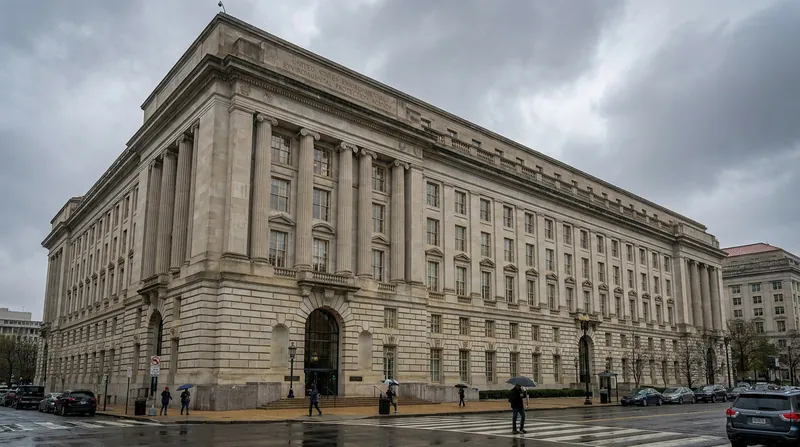
More in News & Politics
See all →Climate Policy
EPA Finalizes Repeal of Greenhouse Gas Endangerment Finding and Federal Vehicle Emission Standards
4 sources
State Preemption
Florida Law Takes Effect Banning Local Government Net-Zero Emissions Policies
7 sources
Climate Law
UN General Assembly Adopts Landmark Resolution Operationalizing ICJ Opinion on State Climate Obligations
5 sources
Climate Litigation
New Zealand Parliament Advances Bill to Block All Corporate Climate Liability Lawsuits
6 sources
Comments
Every angle. Every day.
Get News & Politics stories with full source coverage and perspective breakdowns, free every day.