
Empty Office Towers Are Becoming Vibrant Neighborhoods in Record 2026 Conversion Boom
The U.S. office-to-residential conversion pipeline has surged to over 90,000 units, transforming obsolete commercial real estate into much-needed housing.
By Factlen Editorial Team
- Real Estate Developers
- Focus on the financial and architectural hurdles, arguing that flexible zoning and tax incentives are required to make deep-floorplate conversions profitable.
- City Governments
- View tax abatements for conversions as a necessary investment to stabilize the commercial tax base and bring foot traffic back to local businesses.
- Affordable Housing Advocates
- Advocate for co-living models and inclusionary zoning to ensure revitalized downtowns house low- and middle-income workers, not just luxury buyers.
What's not represented
- · Current Commercial Tenants
- · Suburban Commuters
Why this matters
As remote work leaves millions of square feet of office space vacant, this conversion boom offers a dual solution: revitalizing hollowed-out downtowns and injecting tens of thousands of new homes into a severely constrained housing market.
Key points
- The U.S. office-to-residential conversion pipeline has reached a record 90,300 units in 2026.
- Office buildings now account for 47% of all future adaptive reuse projects nationwide.
- New York City leads the trend, highlighted by the $1.3 billion conversion of 5 Times Square.
- Washington, D.C., recently broke ground on its largest-ever conversion project, the 532-unit Geneva.
- Developers are utilizing co-living models and centralized amenities to overcome the architectural challenges of deep office floor plates.
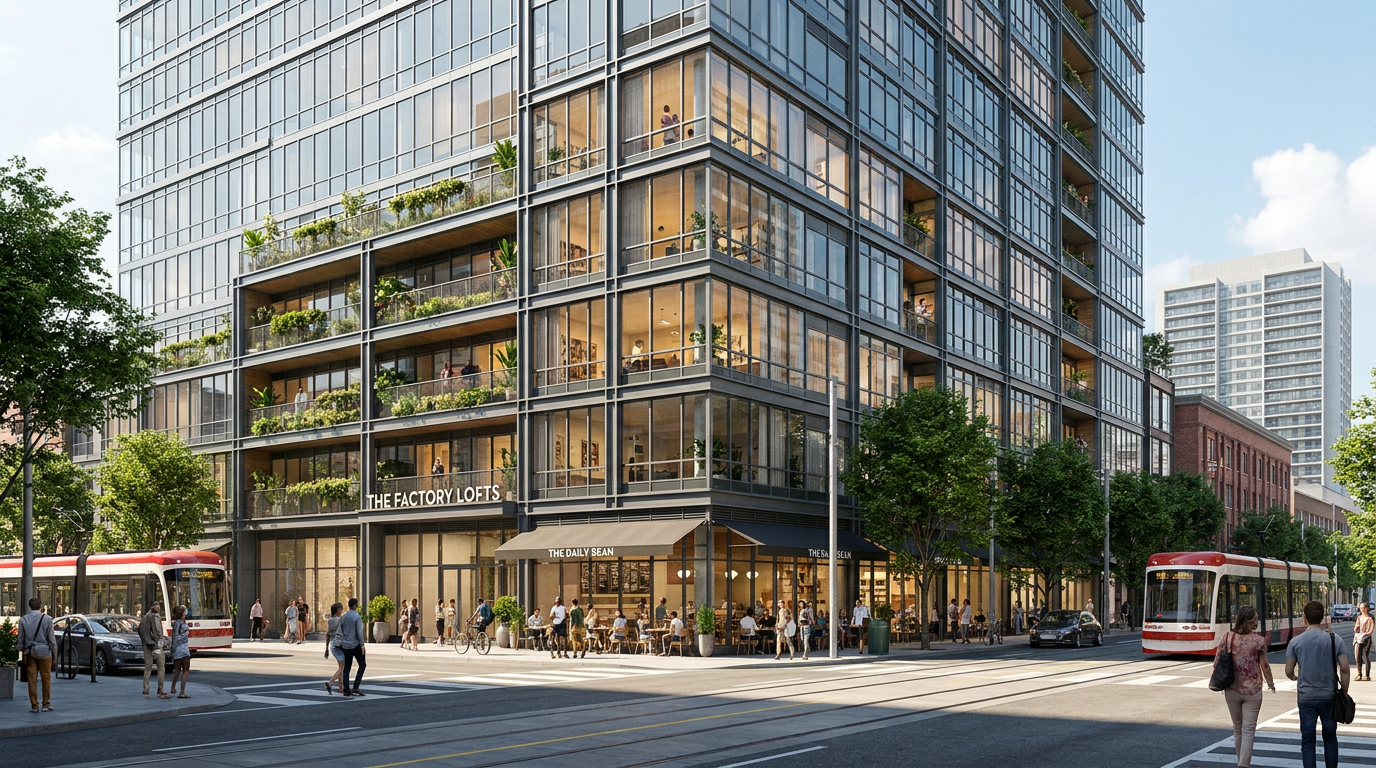
The post-pandemic "doom loop" of empty downtowns is finding a massive, concrete solution in 2026: turning cubicles into kitchens. For years, urban planners have warned about the hollowing out of central business districts as remote and hybrid work left millions of square feet of commercial real estate vacant. Now, a wave of adaptive reuse projects is fundamentally rewriting the blueprint of the American city, transforming obsolete office towers into vibrant, 24/7 residential neighborhoods.[1][2]
The scale of this transformation has reached unprecedented levels. According to a March 2026 report from RentCafe, the United States office-to-residential conversion pipeline has surged to a record 90,300 units. This represents a 28 percent year-over-year increase and is nearly four times higher than the volume recorded just four years ago in 2022.[1]
Office buildings have officially become the primary target for developers looking to repurpose existing structures. These commercial towers now account for 47 percent of all future adaptive reuse projects nationwide, easily outpacing former hotels, industrial warehouses, and healthcare facilities. The shift is largely driven by the obsolescence of older Class B and Class C office buildings, which struggle to attract commercial tenants who now demand premium, amenity-rich spaces to lure employees back to the desk.[1][7]

New York City is currently leading the national charge, fueled by aggressive policy shifts like the "City of Yes" zoning reforms and the state's 467-m tax abatement program. These initiatives offer up to a 35-year tax exemption for projects that secure their change-of-use permits by the summer of 2026. As a result, the New York metro area boasts over 16,300 future converted units in its pipeline, a staggering 97 percent increase from the previous year.[3][5]
The crown jewel of New York's revitalization effort is the massive redevelopment of 5 Times Square. Once the glitzy corporate headquarters for Ernst & Young, the 38-story skyscraper is currently undergoing a $1.3 billion transformation. When completed, the nearly one-million-square-foot building will house 1,250 apartments, including over 300 units permanently designated as affordable housing for residents earning up to 80 percent of the area median income.[3][8]
Washington, D.C., follows closely behind New York, with nearly 8,500 office-to-residential units in its development pipeline. The nation's capital has heavily incentivized developers through its "Housing in Downtown" program, which offers a 20-year tax abatement to catalyze new residential construction in commercial corridors that were decimated by the absence of federal workers.[1][2]
In January 2026, Washington officials broke ground on "The Geneva" in the Dupont Circle neighborhood, marking the largest conversion project in the city's history. The $750 million endeavor will transform the former Universal Plaza office complex into 532 apartments. The project was made possible by a record-setting $465 million in Commercial Property Assessed Clean Energy financing, ensuring the new 15-story building will meet strict LEED environmental standards.[2]

In January 2026, Washington officials broke ground on "The Geneva" in the Dupont Circle neighborhood, marking the largest conversion project in the city's history.
Despite the enthusiasm, converting a modern office tower into a livable apartment building is a notoriously complex architectural puzzle. The primary hurdle is the physical shape of the buildings themselves. Modern offices feature massive, deep floor plates designed to pack in as many cubicles as possible. However, residential building codes strictly require that all bedrooms have access to natural light and ventilation, rendering the dark, cavernous center of an office building virtually useless for traditional apartment layouts.[5][6]
To solve this geometry problem, architecture firms are getting creative with the unlivable core space. At projects like Franklin Tower in Philadelphia, designers are stacking communal amenities vertically through the dark center of the building. By placing fitness centers, indoor basketball courts, spin rooms, and coworking lounges in the windowless interior, developers can reserve the valuable, light-filled perimeter space entirely for residential units.[5]
While luxury amenities help developers recoup the high costs of conversion, housing advocates stress the need for these projects to serve a broader demographic. To make the math work for affordable housing, developers and policy groups are increasingly exploring alternative residential layouts. The Pew Charitable Trusts recently highlighted the rising viability of "co-living" conversions as a way to stretch scarce housing subsidies.[4]
In a co-living conversion, developers leave the existing commercial plumbing infrastructure concentrated in the central core of the building, rather than running new pipes to dozens of individual apartments. Tenants rent private, light-filled bedrooms around the perimeter but share communal kitchens, bathrooms, and living spaces in the center. This streamlined approach can cut construction costs by 25 to 35 percent compared to building traditional, self-contained studio apartments.[4]

The financial efficiency of the co-living model offers a powerful tool for municipalities battling severe housing shortages. By drastically lowering the per-unit development cost, policymakers can house nearly four times as many residents using the exact same amount of public subsidy, accelerating the delivery of affordable units in high-demand downtown corridors.[4]
The momentum extends far beyond the major coastal hubs. Cities like Chicago, Los Angeles, and Dallas are each tracking roughly 4,000 future converted units in their respective pipelines. In Chicago, developers are targeting historic buildings with an average age of 90 years, proving that both mid-century high-rises and modern glass towers can be successfully adapted for residential use.[1]
For city governments, these conversion projects represent a critical economic lifeline. As commercial property values drop due to high vacancy rates, municipalities face the terrifying prospect of plummeting tax revenues. By transitioning these empty towers into housing, cities not only stabilize their tax base but also inject a steady stream of permanent residents into neighborhoods, providing much-needed foot traffic to local restaurants and retail shops that previously relied entirely on the lunch-hour rush.[2][3]

Real estate experts caution that adaptive reuse is not a silver bullet for the national housing crisis. The United States still needs millions of newly constructed homes to fully meet demand, and not every obsolete office building is structurally or financially suited for a residential second act.[4][6]
Nevertheless, the 2026 conversion boom stands as a remarkable pivot in urban planning. By taking the greatest liability of the remote-work era—the empty office tower—and transforming it into a high-density housing asset, cities are successfully engineering a more resilient, mixed-use future for the American downtown.[5][7]
How we got here
2020–2022
The shift to remote work empties downtown office buildings, sparking fears of an urban doom loop.
2023–2024
Cities begin passing zoning reforms and tax incentives, such as NYC's City of Yes, to encourage adaptive reuse.
Jan 2026
Washington, D.C., breaks ground on The Geneva, a 532-unit project that marks the largest conversion in the city's history.
Mar 2026
Industry data reveals the U.S. conversion pipeline has hit a record 90,300 units, a fourfold increase since 2022.
May 2026
New York approves the $1.3 billion conversion of 5 Times Square into 1,250 apartments.
Viewpoints in depth
City Governments
Municipalities view conversions as a necessary tool to replace lost commercial tax revenue.
For city officials, the remote-work era presented an existential threat to municipal budgets. As commercial property values plummeted, cities faced massive shortfalls in property tax revenue. Mayors and city councils argue that offering 20- to 35-year tax abatements for residential conversions is not a handout to developers, but a necessary investment to stabilize the tax base. Furthermore, officials emphasize that replacing 9-to-5 office workers with permanent residents brings crucial 24/7 foot traffic back to downtown restaurants, retail shops, and transit hubs.
Real Estate Developers
Developers argue that without significant tax incentives, the math on deep-floorplate conversions simply doesn't work.
The real estate industry points out that converting an office into an apartment is often more expensive than building from scratch. Modern office towers have massive floor plates that leave the center of the building devoid of natural light, requiring expensive architectural workarounds like coring out the center or stacking amenities vertically. Developers argue that without aggressive zoning flexibility and long-term property tax exemptions, the high cost of retrofitting plumbing, HVAC, and electrical systems makes these projects financially unviable.
Affordable Housing Advocates
Advocates warn against turning revitalized downtowns into exclusive luxury enclaves.
While housing advocates celebrate the addition of new units to the market, they stress that conversions must serve a broad demographic. Because developers often rely on high-end luxury rents to offset the massive construction costs of adaptive reuse, advocates argue that cities must mandate affordable housing minimums in exchange for tax breaks. They also champion innovative approaches like the co-living model, which drastically reduces construction costs and allows public housing subsidies to stretch further, ensuring that low- and middle-income workers can afford to live in these newly revitalized urban centers.
What we don't know
- How many of the 90,300 planned units will successfully secure financing and reach completion.
- Whether the influx of downtown residents will be enough to fully offset the commercial tax revenue lost to remote work.
- How the shift from commercial to residential dominance will impact long-term public transit funding and routing.
Key terms
- Adaptive Reuse
- The process of repurposing an existing building for a use other than what it was originally designed for, such as turning an office into housing.
- Class B and C Office Space
- Older, less modern commercial buildings that lack the premium amenities of newer spaces, making them highly vulnerable to vacancy in the remote-work era.
- Floor Plate
- The total rentable area on a single floor of a building. Deep floor plates in modern offices are a major architectural hurdle for residential conversions.
- Co-Living
- A residential model where tenants rent private bedrooms but share common areas like kitchens and living rooms, often used to lower housing costs.
Frequently asked
Why is it so hard to convert an office into an apartment?
Modern office buildings have large, deep floor plates, meaning the center of the building is far from the windows. Residential building codes require bedrooms to have natural light and ventilation, making the dark central core difficult to use for traditional apartments.
Are these new apartments affordable?
It depends on the project. While many conversions result in luxury units to offset high construction costs, cities are increasingly tying tax breaks to affordability mandates. For example, the 5 Times Square project in NYC includes over 300 permanently affordable units.
What is a co-living conversion?
A co-living model leaves the building's plumbing in the central core and creates private bedrooms that share communal kitchens and living spaces. This reduces construction costs by up to 35 percent compared to building traditional, self-contained apartments.
Sources
Source coverage
8 outlets
3 viewpoints surfaced








[1]Multifamily ExecutiveReal Estate Developers
Office-to-Residential Conversion Pipeline Reaches 90,300 Units
Read on Multifamily Executive →[2]The Washington PostCity Governments
D.C.'s largest office-to-residential conversion is officially underway
Read on The Washington Post →[3]NYC.govCity Governments
Mayor Adams, Governor Hochul Announce Approval of Massive Office-to-Housing Conversion at 5 Times Square
Read on NYC.gov →[4]The Pew Charitable TrustsAffordable Housing Advocates
Converting Obsolete Offices to Small Co-Living Apartments Could Help Ease U.S. Housing Shortage
Read on The Pew Charitable Trusts →[5]GenslerReal Estate Developers
What Other Cities Can Learn From New York City's Conversion Boom
Read on Gensler →[6]J.P. MorganReal Estate Developers
What to know about office-to-residential conversion
Read on J.P. Morgan →[7]CaliberReal Estate Developers
Rising Trend of Office Space Conversion to Multifamily Residential Units
Read on Caliber →[8]Time OutAffordable Housing Advocates
This Times Square skyscraper is being converted into hundreds of affordable apartments
Read on Time Out →

Every angle. Every day.
Get community stories with full source coverage and perspective breakdowns delivered to your inbox.