
Electric Motorcycles Come of Age: A 2026 Buyer’s Guide to Range, Charging, and Solid-State Tech
Breakthroughs in solid-state batteries and standardized fast-charging are eliminating traditional compromises, making 2026 a tipping point for electric motorcycles.
By Hui Lin

The era of the "compromise" electric motorcycle is officially ending. For years, riders intrigued by electric powertrains faced a frustrating trilemma: they could have acceptable range, manageable weight, or an affordable price—but rarely all three at once.
In 2026, that equation is being aggressively rewritten. Driven by breakthroughs in battery chemistry and a rapidly maturing manufacturing sector, the latest generation of electric motorcycles is bridging the gap between internal combustion nostalgia and electrified practicality.
The most significant catalyst for this shift is the commercial arrival of solid-state batteries. Unlike traditional lithium-ion cells that rely on liquid electrolytes, solid-state designs utilize a solid conductive material. This fundamental change allows the battery to store significantly more energy in a smaller, lighter footprint.
"Solid-state batteries are viewed by many as the potential solution to [short ranges and long charging times]," notes RevZilla, highlighting that the technology is more stable, more energy-dense, and faster to charge than previous iterations.[1]
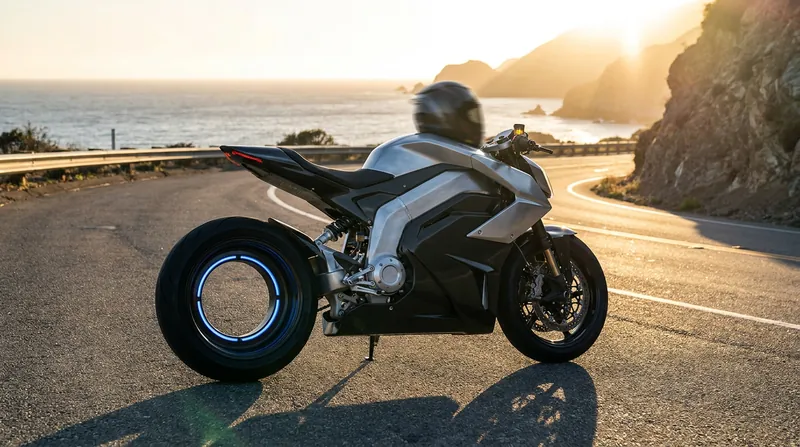
Finland's Verge Motorcycles has pushed this technology into the spotlight with its TS Pro model, showcased prominently at CES 2026. Equipped with a 33.3 kWh solid-state pack, the hubless motorcycle claims a staggering 370 miles of range on a single charge.[1]
Just as importantly, solid-state technology dramatically reduces charging times. The TS Pro reportedly accepts enough DC fast-charging current to add roughly 60 kilometers (37 miles) of range per minute, effectively delivering an 80 percent charge in under 10 minutes.[1]
This rapid-charging capability addresses the psychological hurdle of "range anxiety." As Moto-Newsblog points out, a motorcycle is fundamentally about freedom; riders want to explore back roads without meticulously planning their route around charging stations.
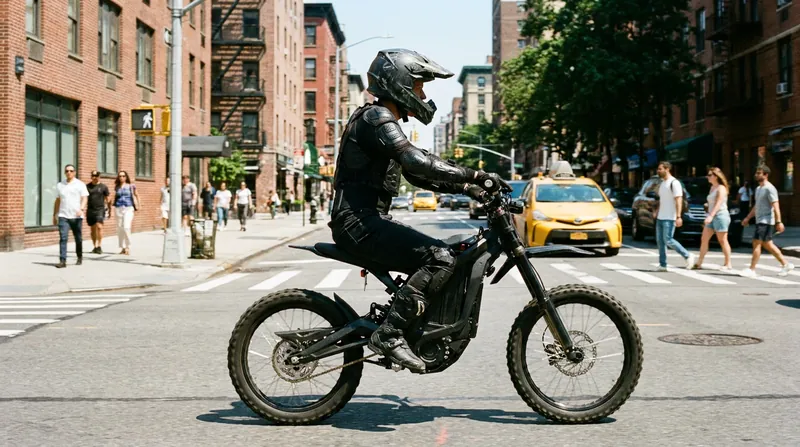
Beyond flagship solid-state models, the broader 2026 market has segmented into highly specialized categories that cater to specific riding profiles. For urban commuters, lightweight models like the LiveWire S2 Del Mar and the Zero SR/F offer punchy acceleration and nimble handling perfectly suited for city grids.
These urban-focused machines typically offer 100 to 120 miles of real-world city range. Because regenerative braking captures energy during stop-and-go traffic, electric motorcycles actually perform at their most efficient in dense urban environments—the exact opposite of gas-powered bikes.[2]
Highway touring, however, remains the ultimate test for electric powertrains. Sustained high speeds generate massive aerodynamic drag, which depletes battery reserves exponentially faster than city riding.
To combat this, touring models like the Energica Experia utilize massive battery packs and aerodynamic fairings. While the Experia boasts a 261-mile city range, its highway range settles closer to 130 miles, making CCS DC fast-charging compatibility an absolute necessity for cross-country trips.
The off-road segment has also seen a massive electric disruption. Dirt bikes like the Stark Varg and the Sur-Ron Light Bee X have gained massive popularity because electric motors deliver 100 percent of their torque instantly at zero RPM—a massive advantage for navigating technical trails and steep inclines.
Alongside powertrain advancements, 2026 electric motorcycles are serving as testbeds for Advanced Rider-Assistance Systems (ARAS). Because electric motors can be controlled with digital precision, they integrate seamlessly with six-axis Inertial Measurement Units (IMUs).
An IMU continuously tracks the motorcycle's pitch, roll, and yaw, feeding data to the bike's computer. This enables cornering-aware ABS and lean-sensitive traction control, allowing the motorcycle to modulate power and braking force even when leaned heavily into a turn, preventing the wheels from locking or slipping.
Cost remains a complex calculation for prospective buyers. While premium models like the Zero SR/S or the bespoke Arc Vector command high upfront prices, the entry-level market has expanded dramatically. Models from brands like CSC and Naxeon now offer capable urban commuting for under $6,000.[2]
Furthermore, the total cost of ownership heavily favors electric platforms. Without valve clearances to check, oil to change, or clutches to replace, maintenance is largely reduced to tires, brake pads, and drive belts.
Despite these objective advantages, the transition is not without cultural friction. Many traditional riders lament the absence of a mechanical clutch, the visceral vibration of an engine, and the signature exhaust note that has defined motorcycling for a century.
Yet, as the performance gap closes and prices stabilize, the sheer practicality and exhilarating instant torque of electric motorcycles are becoming impossible to ignore. For a growing segment of riders, the future of two-wheeled freedom is undeniably electric.
Key points
- Solid-state batteries are entering the 2026 electric motorcycle market, offering higher energy density and faster charging times than traditional lithium-ion packs.
- Flagship models equipped with solid-state technology claim ranges up to 370 miles and the ability to recharge to 80% in under 10 minutes.
- Urban commuters benefit most from current electric platforms, as regenerative braking maximizes efficiency in stop-and-go city traffic.
- Advanced Rider-Assistance Systems (ARAS), including cornering ABS and lean-sensitive traction control, integrate seamlessly with digital electric powertrains.
What we don’t know
- How quickly solid-state battery production can scale to lower the price of entry-level models.
- Whether rural charging infrastructure will expand fast enough to fully alleviate highway range anxiety for touring riders.
How we got here
2010
Zero Motorcycles begins mass production of its early electric models, establishing the foundation for the modern e-moto market.
2019
Harley-Davidson launches the LiveWire, bringing mainstream legacy manufacturer validation to the premium electric motorcycle segment.
2023
The Stark Varg electric dirt bike disrupts the off-road market, proving electric powertrains can outperform gas in motocross.
Jan 2026
Verge Motorcycles showcases the TS Pro at CES, signaling the commercial arrival of solid-state batteries in two-wheeled vehicles.
- Urban & Performance Adopters
- Riders who value the instant torque, low maintenance, and seamless city commuting offered by modern electric platforms.
- Touring & Traditional Riders
- Riders who remain cautious about highway range depletion, charging infrastructure gaps, and the loss of mechanical engagement.
- Industry Technologists
- Engineers and analysts focused on the rapid advancement of solid-state batteries and smart rider-assistance systems.
Perspectives this story doesn't cover
- Independent motorcycle mechanics facing a shift away from combustion engine repairs.
Sources
Source coverage
2 outlets
3 viewpoints surfaced


- [1]RevZillaTouring & Traditional Riders
Verge Motorcycles pushes solid-state battery claims at CES 2026
Read on RevZilla → - [2]MotawillUrban & Performance Adopters
12 Cheapest Electric Motorcycles in 2026
Read on Motawill →
More in Shopping & Reviews
See all →Motorcycle Market
Harley-Davidson's Sub-$6,000 'Sprint' Launch: How the Legacy Brand is Fighting the Affordability Crisis
3 sources
Motorcycle Emissions
The 2026 Motorcycle Market Shift: How the EPA's Emissions Rollback Changes What You Can Buy
3 sources
Solid-State Tech
How Verge Motorcycles Beat the Auto Industry to Solid-State Batteries
5 sources
Motorcycle Safety
The Tech Revolution in Beginner Motorcycles: Why 2026 is the Safest Time to Start Riding
3 sources
Comments
Every angle. Every day.
Get Shopping & Reviews stories with full source coverage and perspective breakdowns, free every day.