
Does Cold Plunging Actually Work? The Science of Cold Water Immersion for Recovery
Cold water immersion is highly effective for reducing muscle soreness and recovering power, but new research shows it actively blunts muscle growth if used immediately after lifting weights.
By Factlen Editorial Team
- Hypertrophy Researchers
- Focus on the necessity of acute inflammation for long-term muscle adaptation.
- Endurance & Field Athletes
- Prioritize the rapid restoration of power and reduction of perceived soreness.
- Recovery Practitioners
- Emphasize the systemic, psychological, and nervous system benefits of cold exposure.
What's not represented
- · Recreational Lifters
- · Cold Plunge Manufacturers
Why this matters
Millions of fitness enthusiasts are adopting daily ice baths to improve their health. Understanding the precise timing of cold exposure ensures you aren't accidentally erasing the muscle gains you just worked hard to achieve in the gym.
Key points
- Cold water immersion is highly effective at reducing Delayed Onset Muscle Soreness (DOMS).
- Applying cold water immediately after resistance training blunts muscle hypertrophy and strength gains.
- Acute inflammation after lifting weights is a necessary biological signal for muscle growth.
- Active recovery (like light cycling) is often just as effective as cold plunging for clearing cellular stress without blunting gains.
- Athletes should periodize cold exposure, saving it for rest days or times when immediate performance is required.
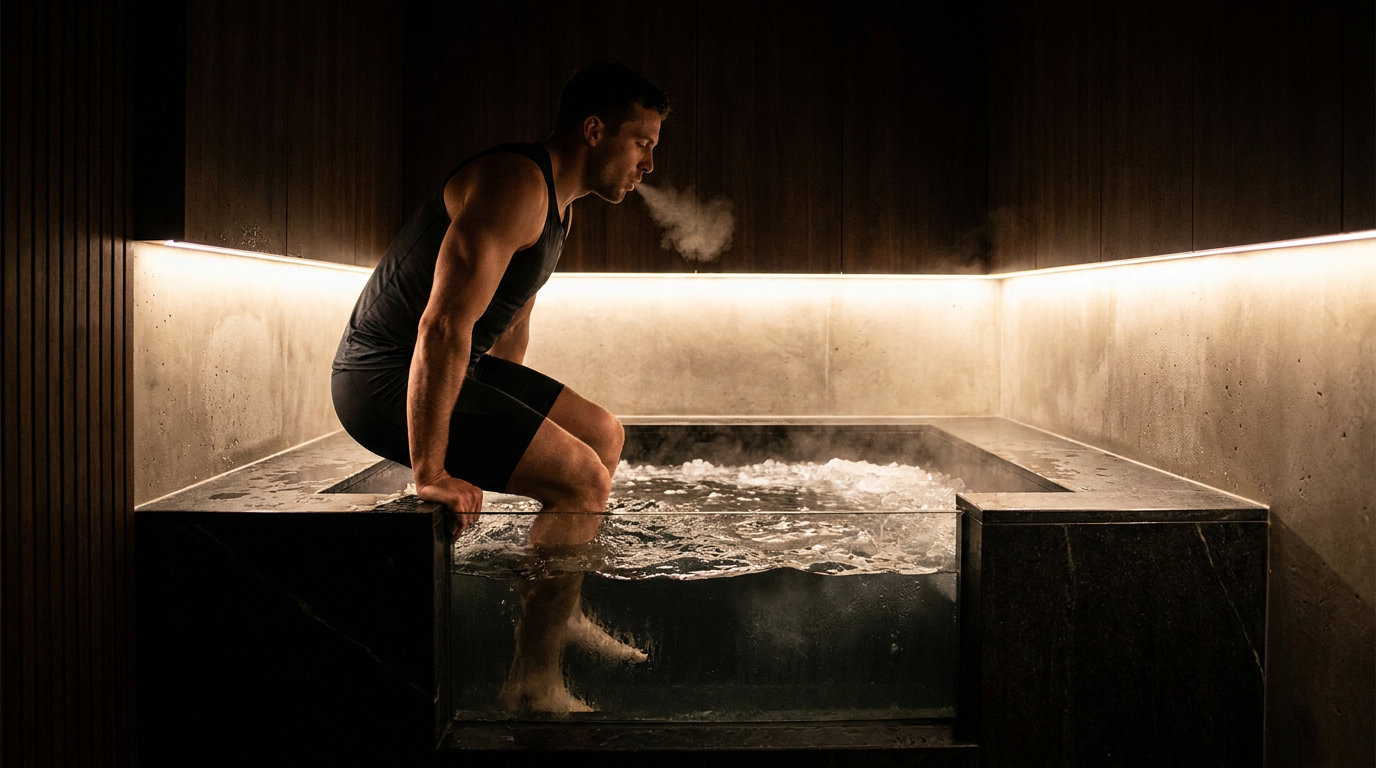
The cold plunge has officially migrated from the esoteric fringes of extreme sports into the mainstream fitness consciousness. Walk into any modern recovery lounge, high-end gym, or even a dedicated biohacker’s garage, and you will find a temperature-controlled tub chilling water to a brisk 10 degrees Celsius.[1]
Athletes and weekend warriors alike are willingly subjecting themselves to near-freezing temperatures, chasing the promise of accelerated muscle recovery, reduced inflammation, and a psychological edge. The hashtag #coldplunge commands billions of views across social platforms, driven by testimonials of instantaneous relief from crippling muscle soreness.[1]
But as the popularity of Cold Water Immersion (CWI) has skyrocketed, sports scientists and exercise physiologists have begun to ask a crucial question: Does throwing ice water on a fatigued muscle actually help it recover, or does it actively sabotage the body’s natural adaptation process? The answer, according to a wave of recent meta-analyses, depends entirely on what kind of athlete you are trying to be.[2][3]
To understand the debate, we first have to look at the physiological mechanism of cold exposure. When you submerge your body in 10°C to 15°C water, the immediate shock triggers severe vasoconstriction. The blood vessels in your extremities rapidly narrow, forcing blood away from the skin and muscles and redirecting it toward your vital organs to preserve core temperature.[2]

Once you step out of the tub and begin to rewarm, vasodilation occurs. The blood vessels expand, and fresh, highly oxygenated blood rushes back into the muscle tissues. Proponents of CWI argue that this flushing mechanism helps clear out metabolic waste products, such as lactate, while the cold itself numbs nerve endings to provide immediate analgesic relief.[4][6]
The evidence supporting CWI for pain relief is remarkably robust. A comprehensive meta-analysis published in Sports Medicine evaluated dozens of recovery modalities and found that cold water immersion was superior to active recovery and passive rest for alleviating Delayed Onset Muscle Soreness (DOMS).[2]
Furthermore, blood plasma markers back up the subjective feelings of relief. Athletes who utilize CWI after high-intensity exercise show significantly lower levels of creatine kinase—a primary biomarker for exercise-induced muscle damage—at the 24-hour mark compared to those who simply rest.[4]
Furthermore, blood plasma markers back up the subjective feelings of relief.
For endurance athletes, CrossFit competitors, or field-sport players engaged in multi-day tournaments, this rapid reduction in soreness is invaluable. When the primary goal is to restore muscular power and perceived readiness for another grueling event the very next day, the ice bath unequivocally delivers on its promises.[2][7]
However, a massive caveat has emerged for anyone whose primary goal is building muscle size and strength. A systematic review and meta-analysis published in SportRxiv delivered a sobering verdict for bodybuilders: applying cold water immersion immediately after resistance training significantly blunts muscle hypertrophy.[3]

The mechanism behind this blunting effect lies in the very inflammation that athletes are trying to eliminate. For decades, fitness culture viewed post-exercise inflammation as an enemy to be vanquished. But modern exercise physiology recognizes that acute, localized inflammation is a vital biological signal.[5]
When you lift heavy weights, you create micro-tears in the muscle fibers. The body responds by sending inflammatory cytokines and macrophages to the site of the damage. This cellular stress response is the exact trigger required to activate muscle protein synthesis—the process by which the body builds thicker, stronger muscle fibers to handle future loads.[5]
By jumping into an ice bath immediately after a heavy squat session, you are effectively putting out the fire before it can cook the meal. The cold blunts the anabolic signaling pathways, reduces the infiltration of necessary inflammatory cells, and ultimately results in smaller gains in muscle mass over a training block.[3][5]

Interestingly, studies comparing CWI to active recovery—such as 10 minutes of light cycling—found that active recovery was often just as effective at clearing cellular stress without carrying the penalty of blunted hypertrophy. Active recovery promotes blood flow and nutrient delivery without artificially suppressing the necessary inflammatory cascade.[5][7]
So, where does this leave the everyday fitness enthusiast staring down a tub of ice water? The scientific consensus points to a strategy of periodization and timing. If your current training block is focused on maximizing muscle size and absolute strength, you should keep the cold plunge far away from your lifting sessions, ideally separating them by at least six hours or saving the ice for rest days.[3]

Conversely, if you are in-season, peaking for a competition, or simply trying to survive a brutal week of high-intensity conditioning where performance trumps long-term adaptation, the cold plunge remains one of the most effective tools in the recovery arsenal. Like any powerful intervention, cold water immersion is neither universally good nor bad—it is simply a tool that requires the right application.[2][6]
How we got here
2015
Early studies begin to suggest that regular cold water immersion might attenuate long-term muscle mass gains.
2017
Research demonstrates that active recovery is just as effective as cold plunging for clearing cellular stress, without the negative side effects on growth.
2022
A comprehensive meta-analysis confirms that cold water immersion is highly effective for reducing Delayed Onset Muscle Soreness (DOMS).
2023
Multiple systematic reviews definitively conclude that applying cold water immediately after resistance training blunts muscle hypertrophy.
Viewpoints in depth
Hypertrophy Researchers
Focus on the necessity of acute inflammation for long-term muscle adaptation.
Exercise physiologists focused on muscle growth view post-workout inflammation not as a symptom to be treated, but as a critical biological signal. When heavy resistance training creates micro-tears in muscle fibers, the resulting inflammatory cascade—driven by cytokines and macrophages—is exactly what tells the body to synthesize new proteins and build thicker fibers. By using cold water to artificially suppress this inflammation, researchers argue that athletes are effectively short-circuiting their own gains, trading long-term adaptation for short-term pain relief.
Endurance & Field Athletes
Prioritize the rapid restoration of power and reduction of perceived soreness.
For athletes competing in multi-day tournaments, CrossFit competitions, or grueling endurance events, the calculus changes entirely. In these scenarios, the primary objective is to perform at a high level again within 24 hours. The ability of cold water immersion to rapidly flush metabolic waste, lower creatine kinase levels, and numb the sensation of Delayed Onset Muscle Soreness (DOMS) provides a massive competitive advantage. To this camp, any marginal loss in long-term muscle hypertrophy is a worthwhile trade-off for immediate functional recovery.
Recovery Practitioners
Emphasize the systemic, psychological, and nervous system benefits of cold exposure.
Beyond the localized effects on muscle tissue, recovery specialists advocate for cold plunging as a systemic reset for the autonomic nervous system. The intense thermal shock forces the body to regulate its stress response, triggering a massive release of norepinephrine and endorphins. Practitioners argue that this neurochemical cascade improves mental resilience, enhances sleep quality, and provides a psychological edge that is just as important to an athlete's overall recovery as the repair of muscle fibers.
What we don't know
- Whether the hypertrophy-blunting effects of cold water immersion compound over multiple years of training, or if the body eventually adapts to the cold stimulus.
- The exact molecular threshold at which cold exposure begins to interfere with muscle protein synthesis.
- How significant the differences in cold-water thermoregulation and recovery are between male and female athletes, as most studies have predominantly featured male participants.
Key terms
- Cold Water Immersion (CWI)
- The practice of submerging the body in water colder than 15°C (59°F) to accelerate physical recovery and reduce pain.
- Hypertrophy
- The biological process of increasing muscle mass and cross-sectional area, typically achieved through resistance training.
- Vasoconstriction
- The narrowing of blood vessels in response to cold, which redirects blood flow away from the extremities and toward the body's core.
- Delayed Onset Muscle Soreness (DOMS)
- The stiffness and pain felt in muscles 24 to 72 hours after performing unfamiliar or highly intense exercise.
- Creatine Kinase
- An enzyme that leaks into the bloodstream when muscle tissue is damaged, commonly used by sports scientists to measure exercise-induced muscle trauma.
- Macrophage
- A type of white blood cell that rushes to damaged muscle tissue to clear cellular debris and trigger the repair and growth process.
Frequently asked
Should I take an ice bath immediately after lifting weights?
No. If your goal is to build muscle size and strength, applying cold water immediately after resistance training blunts the necessary inflammatory signals required for muscle growth.
Does cold water immersion actually reduce muscle soreness?
Yes. Multiple meta-analyses confirm that cold plunging significantly reduces Delayed Onset Muscle Soreness (DOMS) and lowers markers of muscle damage like creatine kinase.
Is a cold shower as effective as an ice bath?
No. While cold showers can improve thermal comfort and provide a psychological boost, they do not lower deep tissue temperature enough to match the physiological recovery benefits of full-body immersion.
How cold should the water be for optimal recovery?
Research indicates that water temperatures between 10°C and 15°C (50°F to 59°F) for 10 to 15 minutes provide the best balance of recovery benefits without excessive physiological stress.
Sources
Source coverage
7 outlets
3 viewpoints surfaced







[1]Factlen Editorial TeamRecovery Practitioners
Synthesis by Factlen editorial team
Read on Factlen Editorial Team →[2]Sports MedicineEndurance & Field Athletes
Effects of Cold-Water Immersion Compared with Other Recovery Modalities on Athletic Performance Following Acute Strenuous Exercise
Read on Sports Medicine →[3]SportRxivHypertrophy Researchers
Throwing cold water on muscle growth: A systematic review with meta-analysis of the effects of post-exercise cold water immersion
Read on SportRxiv →[4]Frontiers in PhysiologyRecovery Practitioners
Effects of cold water immersion after exercise on fatigue recovery and exercise performance--meta analysis
Read on Frontiers in Physiology →[5]The Journal of PhysiologyHypertrophy Researchers
The effects of cold water immersion and active recovery on inflammation and cell stress responses in human skeletal muscle
Read on The Journal of Physiology →[6]Cleveland ClinicRecovery Practitioners
Delayed Onset Muscle Soreness (DOMS): What It Is & Treatment
Read on Cleveland Clinic →[7]Canadian Science PublishingEndurance & Field Athletes
Is active recovery during cold water immersion better than active or passive recovery in thermoneutral water
Read on Canadian Science Publishing →
Every angle. Every day.
Get fitness stories with full source coverage and perspective breakdowns delivered to your inbox.