
Do Sleep Trackers Actually Work? The 2026 Evidence on Smart Rings and Watches
A comprehensive review of the latest clinical data reveals where consumer sleep wearables excel, where their algorithms fall short, and how to use the data to genuinely improve your rest.
By Factlen Editorial Team
- Clinical Researchers
- Medical professionals who view wearables as useful for broad trend tracking but caution against using them for clinical diagnosis.
- Wearable Optimists
- Advocates who emphasize the behavioral benefits and accountability provided by continuous health tracking.
- Data Skeptics
- Critics who highlight the psychological risks of over-quantifying natural bodily processes.
What's not represented
- · Individuals with chronic insomnia whose sleep anxiety is exacerbated by tracking devices.
- · Low-income consumers priced out of premium subscription-based wearable ecosystems.
Why this matters
Millions of consumers base their daily routines and health anxiety on wearable sleep scores. Understanding the scientific accuracy of these devices helps users separate actionable health trends from algorithmic noise, turning a potential source of stress into a practical tool for better rest.
Key points
- Consumer wearables achieve 85% to 95% accuracy for basic sleep-versus-wake detection compared to clinical sleep studies.
- Devices systematically overestimate total sleep time by misclassifying periods of lying still as light sleep.
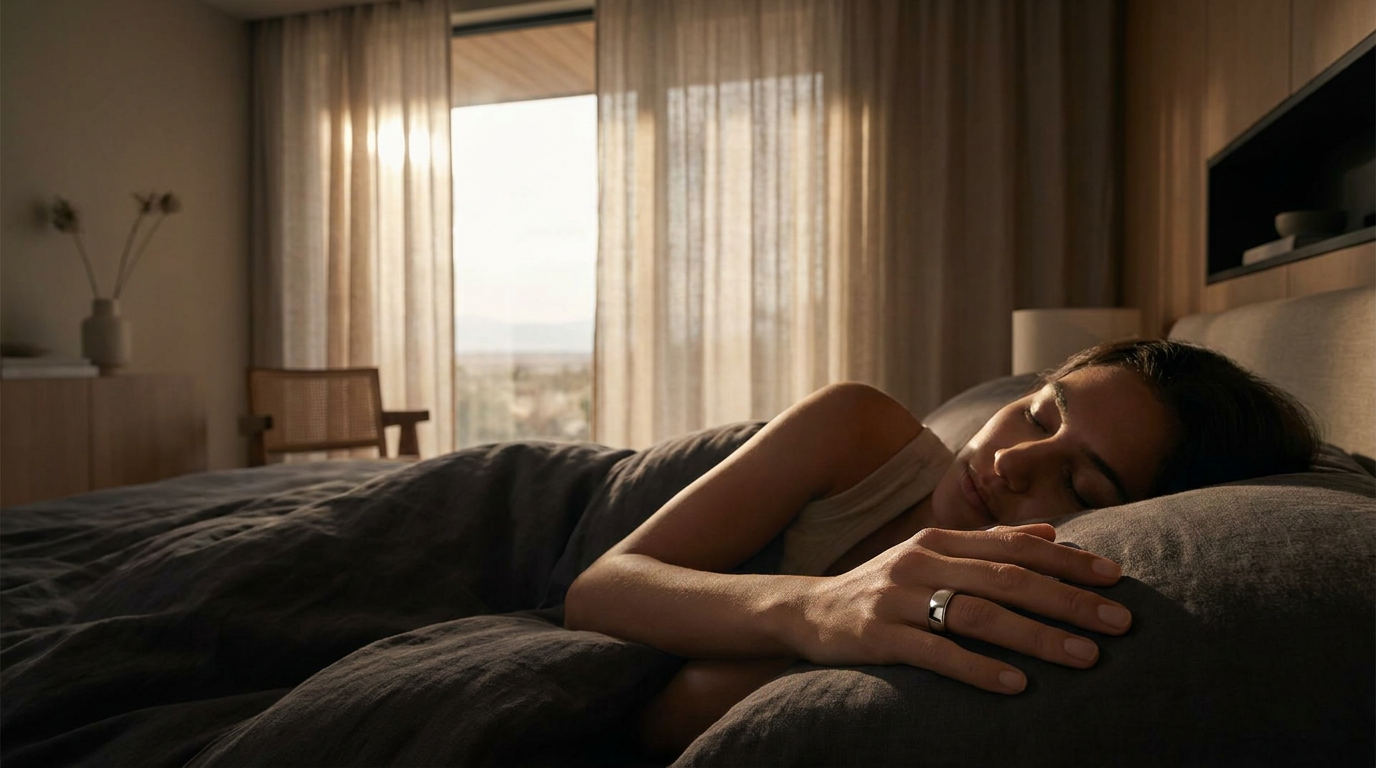
- Smart rings offer a structural advantage for sleep tracking due to better sensor contact on the finger.
- The primary benefit of sleep trackers is behavioral, helping users identify trends and maintain consistent routines.
- Experts warn against 'orthosomnia,' where an obsession with perfect sleep scores creates anxiety that actively degrades rest.
The wearable health technology market has evolved into distinct, highly specialized categories, with smart rings and smartwatches now dominating the bedside table. In 2026, devices like the Oura Ring 4, the Apple Watch Series 11, and the Samsung Galaxy Ring 2 promise to decode our nightly rest, turning the abstract experience of tossing and turning into concrete, actionable data. For millions of consumers, checking a morning "sleep score" has become as routine as brewing a first cup of coffee. But as these devices become more ubiquitous, a critical question remains: how accurate are these algorithms, and do they actually help us achieve better rest? The evidence base on consumer wearable sleep accuracy has grown substantially, allowing researchers to separate marketing claims from clinical reality.[2][4]
To understand the data, it is essential to first understand the mechanism of measurement. Clinical sleep studies, known as polysomnography (PSG), remain the undisputed gold standard in sleep medicine. During a PSG, a patient is hooked up to an array of sensors that measure brain waves via an electroencephalogram (EEG), alongside eye movements, muscle activity, and respiratory effort. By directly monitoring electrical activity in the brain, clinicians can definitively chart the progression through light sleep, deep sleep, and rapid eye movement (REM) sleep. Consumer wearables, however, do not measure brain waves.[4][7]
Instead, consumer devices rely on a combination of movement and cardiovascular proxies. They utilize micro-accelerometers to track the subtle movements of the wrist or finger, paired with photoplethysmography (PPG)—tiny optical sensors that shine green and red LEDs into the skin to measure heart rate, blood oxygen levels, and heart rate variability (HRV). Proprietary algorithms then take this physical and cardiovascular data and attempt to reverse-engineer it into estimates of sleep stages. It is an exercise in correlation rather than direct observation.[1][8]
When it comes to the basic binary of determining whether a user is asleep or awake, the 2026 data shows that modern wearables are highly capable. A comprehensive 2025 meta-analysis published in the Journal of Clinical Sleep Medicine, which evaluated 24 studies and nearly 800 patients across a dozen different devices, confirmed that wrist and finger wearables are highly useful for tracking general sleep patterns. Most premium devices now achieve 85% to 95% agreement with PSG for basic sleep-versus-wake detection.[1][5]

For the average consumer looking to measure their total time in bed and establish a consistent routine, this level of accuracy is more than sufficient. Knowing exactly when you fell asleep and when you woke up provides a reliable baseline for adjusting daily habits. However, the evidence becomes much more nuanced when evaluating the specific sleep stages that these apps so confidently display in colorful morning charts.[4][7]
The same 2025 meta-analysis noted that consumer devices systematically overestimate total sleep time. They do this by frequently misclassifying brief, subtle awakenings—moments where a person might be lying perfectly still but is technically awake—as light sleep. Because the algorithms lean heavily on a lack of movement to infer sleep, individuals who suffer from insomnia and lie motionless in frustration often receive data suggesting they slept much more than they actually did.[4][7]
Differentiating between deep sleep (N3) and REM sleep remains the highest area of measurement error across the industry. While sensor hardware has improved, independent validation studies show that even the best consumer devices achieve only moderate agreement with clinical PSG when attempting four-stage sleep classification. The algorithms often struggle to distinguish the physiological signatures of REM sleep from those of light sleep, leading to skewed stage percentages.[4][7]
In clinical validation studies, the Oura Ring has frequently demonstrated a slight edge over wrist-worn competitors in healthy populations. A 2024 study found that the Oura Ring achieved roughly 79% four-stage sleep classification accuracy, outperforming several popular wrist-worn devices. However, researchers explicitly note that this accuracy drops significantly when tested on clinical populations with actual sleep disorders, highlighting a gap between healthy-cohort testing and real-world medical utility.[6][7]
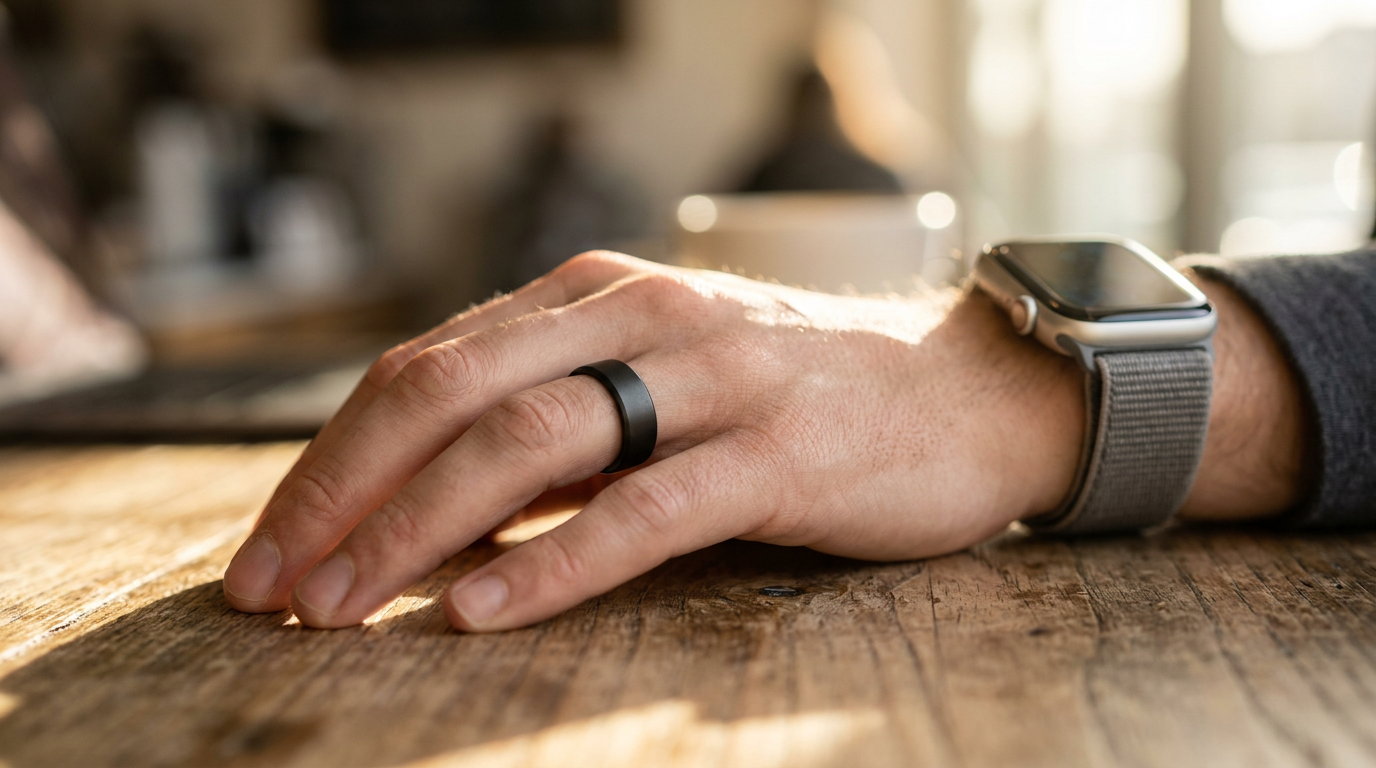
This limitation brings up the ongoing form-factor debate: is a smart ring or a smartwatch better for overnight tracking? Structurally, smart rings possess a distinct physiological advantage for capturing nocturnal biometrics. The arteries in the finger are closer to the skin's surface and feature a denser capillary network than the wrist.[2][3]

This limitation brings up the ongoing form-factor debate: is a smart ring or a smartwatch better for overnight tracking?
This physiological reality gives the optical PPG sensors in a ring a much cleaner signal. There is less noise from ambient light leaking under the sensor, and the ring is less prone to shifting out of place when a user rolls over or sleeps in an awkward position. The result is a more consistent stream of heart rate and HRV data throughout the night.[2]
Furthermore, compliance and comfort heavily favor the ring form factor. Weighing typically between 4 and 8 grams, a screenless ring is entirely unobtrusive. In contrast, wearing a bulky smartwatch to bed introduces the risk of screen illumination and notification vibrations, which can actively disrupt the sleep environment. Many users simply find a watch too cumbersome to wear consistently every single night.[2][3]
Yet, smartwatches remain the undisputed champions of active daytime tracking. For athletes who need real-time GPS routing, on-wrist workout metrics, and smartphone integration, a smartwatch is indispensable. The choice ultimately depends on whether the user prioritizes active daytime coaching and connectivity, or passive, distraction-free nighttime observation.[2][6]
Beyond the technical debate over sensor accuracy, the most profound impact of sleep trackers is behavioral. For many users, the simple act of monitoring bedtimes and wake times serves as a powerful psychological nudge. Seeing the data can validate the negative effects of a late-night heavy meal, an evening alcoholic drink, or excessive screen time, prompting users to adopt better sleep hygiene.[2]
In this sense, the tracker acts as an objective accountability partner. It encourages consistency, helping users align their circadian rhythms by going to bed and waking up at the same time every day. For athletes and individuals focused on wellness, this continuous feedback loop is invaluable for managing training loads and prioritizing recovery.[1]

But this constant stream of biometric feedback carries a documented psychological risk. Sleep researchers have identified a growing phenomenon known as "orthosomnia"—an unhealthy, obsessive preoccupation with achieving perfect sleep metrics. For these individuals, the quest for a high sleep score paradoxically becomes a source of intense anxiety.[1][4]
For someone suffering from orthosomnia, going to bed transforms from a relaxing necessity into a high-stakes test. If they wake up feeling refreshed but open their app to see a low "recovery score" or a warning that they didn't get enough deep sleep, they may experience a powerful nocebo effect.[1]
A landmark Oxford University study highlighted this exact vulnerability, demonstrating that manipulated sleep scores could directly alter a participant's mood and daytime concentration. Participants who were falsely told they had a poor night's sleep exhibited increased daytime sleepiness and lower cognitive performance, regardless of how well they actually slept. The data itself became a self-fulfilling prophecy.[1][8]
Ultimately, the consensus among sleep specialists is to treat wearable data as a useful mirror for long-term trends, rather than a flawless medical diagnostic. If a device shows a sudden, multi-day drop in heart rate variability or a sustained spike in nighttime skin temperature, it can serve as a reliable early warning sign of overtraining, stress, or an impending illness.[8]

However, users should avoid micromanaging their nightly stage percentages. The algorithms are simply not precise enough to warrant stressing over whether you achieved 15% or 20% REM sleep on a given Tuesday. The value lies in the macro trends, not the micro-fluctuations.[1][4]
The most effective approach is to use the technology to build sustainable, healthy habits—like maintaining a cool bedroom environment and a consistent sleep schedule—and then step back. The best sleep tracker is the one that helps you understand your body's broad patterns, not the one that keeps you up at night worrying about your score.[1][8]
How we got here
2015
Early wrist-worn fitness trackers introduce basic movement-based sleep tracking, offering rudimentary awake/asleep estimates.
2018
The integration of optical heart rate (PPG) sensors allows consumer wearables to begin estimating specific sleep stages (Light, Deep, REM).
2021
Sleep researchers formally identify 'orthosomnia'—an unhealthy obsession with sleep tracking data that paradoxically worsens sleep quality.
2024
Smart rings gain mainstream traction, offering a more comfortable, screen-free alternative to smartwatches for overnight wear.
2025
Major meta-analyses confirm that while consumer wearables are highly accurate for sleep duration, they still struggle to perfectly match clinical polysomnography for specific sleep stages.
Viewpoints in depth
Clinical Researchers
Medical professionals who view wearables as useful for broad trend tracking but caution against using them for clinical diagnosis.
Sleep specialists emphasize that polysomnography (PSG) remains the only definitive way to diagnose sleep disorders like apnea or insomnia. Because consumer wearables rely on movement and heart rate rather than brain waves, they cannot definitively map sleep architecture. Researchers value the longitudinal data wearables provide—such as tracking a patient's sleep duration over six months—but warn patients not to treat a poor wearable 'sleep score' as a medical diagnosis.
Wearable Optimists
Advocates who emphasize the behavioral benefits and accountability provided by continuous health tracking.
For this camp, the exact clinical precision of a sleep stage algorithm is secondary to the behavioral nudges the device provides. By making sleep a measurable metric, wearables encourage users to prioritize their rest, maintain consistent bedtimes, and observe how lifestyle choices—like late-night alcohol or screen time—negatively impact their recovery. They argue that even an imperfect mirror is better than flying blind.
Data Skeptics
Critics who highlight the psychological risks of over-quantifying natural bodily processes.
Skeptics point to the rising phenomenon of 'orthosomnia,' where users become so obsessed with achieving perfect sleep metrics that the anxiety actually degrades their rest. They argue that outsourcing our sense of restfulness to an algorithm can create a nocebo effect, where a user wakes up feeling fine but becomes fatigued after seeing a low score. For this group, the healthiest approach to sleep is often to disconnect from the data entirely.
What we don't know
- How proprietary, closed-source algorithms from major tech companies weigh different biometric signals to generate their final sleep scores.
- Whether the long-term psychological stress of continuous biometric monitoring outweighs the behavioral benefits for the average consumer.
Key terms
- Polysomnography (PSG)
- A comprehensive medical sleep study that measures brain waves, blood oxygen, heart rate, and breathing, considered the gold standard for sleep analysis.
- Photoplethysmography (PPG)
- An optical sensor technology used in wearables that shines light into the skin to measure blood flow and heart rate.
- Heart Rate Variability (HRV)
- The variation in time between consecutive heartbeats, used by wearables as a key indicator of physical recovery and stress.
- Orthosomnia
- A psychological condition where an individual becomes unhealthily obsessed with achieving perfect sleep tracking scores, often leading to increased anxiety.
- Nocebo Effect
- A negative psychological response where expecting a bad outcome (like seeing a low sleep score) causes a person to actually feel worse.
Frequently asked
Can a smart ring or watch diagnose sleep apnea?
No. While some devices can detect breathing disturbances or blood oxygen drops that suggest a problem, they cannot officially diagnose sleep apnea. A clinical polysomnography test is required for a medical diagnosis.
Are smart rings more accurate than smartwatches for sleep?
Generally, yes. The blood vessels in the finger provide a clearer signal for optical sensors than the wrist, and rings are less prone to moving around during the night. They also boast higher user compliance due to comfort.
Why does my tracker say I was asleep when I was just lying awake?
Consumer wearables rely heavily on movement data. If you are lying perfectly still in bed—such as when experiencing insomnia—the device's algorithm may misinterpret your lack of movement as light sleep.
Should I wear my tracker every night?
It depends on your personality. If the data helps you maintain a consistent routine, nightly wear is beneficial. If checking your score causes anxiety or dictates how you feel the next day, experts recommend taking a break from tracking.
Sources
Source coverage
8 outlets
3 viewpoints surfaced








[1]Mito HealthData Skeptics
Do Sleep Trackers Help or Hurt Sleep Quality?
Read on Mito Health →[2]VoraWearable Optimists
Smart Ring or Smartwatch? How to Choose the Right Wearable in 2026
Read on Vora →[3]BGRWearable Optimists
Smart Rings Vs. Smartwatches: Which Is Better For Sleep Tracking?
Read on BGR →[4]JCVitalClinical Researchers
Smart Band Sleep Tracking: Does It Actually Work? (2026 Research Review)
Read on JCVital →[5]CentraliveWearable Optimists
Ring vs. Watch for Sleep Monitoring: A Practical Comparison
Read on Centralive →[6]Kygo HealthData Skeptics
What's the Most Accurate Wearable Data? A 2024-2025 Study Breakdown
Read on Kygo Health →[7]Journal of Clinical Sleep MedicineClinical Researchers
Accuracy of Wrist-Worn Sleep Tracking Devices: A 2025 Meta-Analysis
Read on Journal of Clinical Sleep Medicine →[8]Oxford NeuroscienceClinical Researchers
Are sleep trackers accurate? Here's what researchers currently know
Read on Oxford Neuroscience →

More in shopping
See all 5 stories →

Every angle. Every day.
Get shopping stories with full source coverage and perspective breakdowns delivered to your inbox.