
Discovery of HESJAS Syndrome Proves DNA 'Biological Clock' Actively Drives Aging, Not Just Measures It
An international study of a rare accelerated-aging syndrome has provided the first direct evidence that the epigenetic clock actively causes tissue decay, shifting DNA methylation from a biomarker to a prime drug target.
By Harper Lane

Share this story
For over a decade, scientists have known that human DNA carries a hidden, highly accurate biological clock. As we age, chemical tags known as methyl groups accumulate across the genome in highly predictable patterns, altering how genes are expressed without changing the underlying genetic code.
These epigenetic marks are so reliable that researchers can use them to estimate a person's biological age with remarkable precision, often predicting health outcomes better than chronological age. However, a fundamental question has haunted the field of longevity science since the clock's discovery: do these methylation marks merely measure the passage of time, like the hands on a clock, or do they actively drive the biological decay and tissue breakdown we call aging?[1][2]
A landmark study published this week in the journal Nature Genetics has provided the clearest, most definitive answer to date. An international consortium comprising 76 researchers from seven different countries has discovered a rare genetic disorder that proves DNA methylation is a direct driver of age-related disease.
The newly identified condition, named Heyn-Sproul-Jackson syndrome (HESJAS), causes patients to age at a dramatically accelerated rate. By studying individuals with this rare syndrome, scientists have uncovered the first direct evidence that the epigenetic clock actively degrades tissue function, fundamentally shifting our understanding of human biology and opening new avenues for rejuvenation therapies.[1]
The sheer scale of the investigation highlights the complexity of unraveling the human aging process. The study brought together experts from the University of Cambridge, the Institute of Cancer Research in London, and partner institutions across Spain, France, Norway, Mexico, New Zealand, and the United States.
"That marks on someone's DNA can precisely predict their age has fascinated me for a long time," said Professor Andrew Jackson, the study's lead author from the Institute of Genetics and Cancer at the University of Edinburgh. "It has been exciting to be able to discover a rare human genetic disorder that helps us understand this clock's role for all our long-term health in old-age."[3]
At the center of this international investigation is the DNMT3A gene, a critical component of the body's epigenetic machinery. This gene provides the instructions for building DNA methyltransferase 3 alpha, an enzyme whose primary job is to attach methyl groups to the genome.
In a healthy individual, this enzyme operates at a tightly regulated pace, slowly adding marks over decades. However, the researchers discovered that patients with HESJAS carry a specific gain-of-function mutation in this gene. This genetic error causes the enzyme to become hyperactive, aggressively writing methylation marks onto the DNA at a speed far exceeding normal biological limits.[1][2]
Claim 1: HESJAS mirrors normal aging, just faster. The most compelling piece of evidence in the study comes from mapping the genomes of HESJAS patients. Researchers found that the excessive methylation marks in these individuals do not appear randomly across the DNA.
Instead, the methyl groups accumulate at the exact same genomic locations as they do during normal human aging. The critical difference is the speed: in HESJAS patients, the biological clock ticks at a vastly accelerated rate. This rapid accumulation is driven entirely by the hyperactive DNMT3A enzyme, isolating methylation as the sole variable.[1][2]
Because the locations of the epigenetic marks are identical to those found in normal aging, HESJAS serves as a perfect, accelerated model of the human lifespan. Children and young adults diagnosed with the syndrome develop conditions typically reserved for the elderly.
Clinical observations documented severe early-onset osteoporosis, premature hair loss, and a dangerous decrease in blood cell production that leaves patients highly susceptible to infections. This exact parallel between the rare syndrome and normal aging strongly suggests that accelerated methylation alone—without other genetic damage or environmental wear-and-tear—is sufficient to trigger the pathologies we associate with getting older.
Claim 2: Methylation directly disables adult stem cells. To understand exactly how these chemical tags destroy tissue health at a cellular level, the research team focused their investigation on adult stem cells. These specialized cells act as the body's internal repair system, responsible for renewing organs and replacing damaged tissues. The evidence shows that as methylation marks rapidly accumulate, they specifically target and hypermethylate Polycomb-regulated genes within these stem cells. Normally, these genomic regions are carefully managed by protein complexes to maintain the stem cell's identity and regenerative potential.[1][2]
When these critical regulatory regions are smothered in methyl groups, the stem cells suffer from what researchers term "multilineage dysfunction." In practical terms, this means the stem cells lose their ability to produce the correct ratios of specialized cells needed to keep tissues healthy and functional.
The body essentially loses its capacity to regenerate. This stem cell exhaustion provides a clear, mechanistic explanation for the physical frailty associated with old age, proving that the epigenetic marks are actively shutting down the body's repair systems rather than just passively accumulating over time.[1][3]
Claim 3: Metabolic decline is epigenetically driven. To validate their human genomic data, the researchers engineered a custom mouse model carrying the specific DNMT3A mutation responsible for HESJAS syndrome. The animal evidence strongly corroborated the clinical findings in human patients. As the mice rapidly accumulated DNA methylation marks, they developed severe metabolic dysfunctions that mirrored human age-related decline. The affected mice exhibited elevated cholesterol levels and systemic metabolic changes closely resembling human diabetes, confirming that the epigenetic clock's acceleration triggers widespread systemic failure across different mammalian species.[2][3]
The Paradigm Shift: From Biomarker to Drug Target. For the biotechnology and pharmaceutical industries, the implications of the HESJAS discovery are profound and immediately actionable. "By studying a rare disease in depth, our colleagues have gained new insight into the biology of human aging and identified promising directions for future rejuvenation therapies," noted Professor Joris Veltman, director of the Institute of Genetics and Cancer at the University of Edinburgh.
Previously, many drug developers viewed DNA methylation primarily as a diagnostic biomarker—a useful tool to measure whether a lifestyle change or experimental anti-aging intervention was working.
Now, the evidence firmly establishes the methylation machinery itself as a primary therapeutic target. If accumulating methyl groups actively cause stem cell failure and tissue decay, then safely removing or preventing these marks could theoretically halt or even reverse the aging process. This validation provides crucial mechanistic support for emerging longevity-focused biotech companies working on epigenetic reprogramming. The goal is no longer just to slow the clock, but to actively rewind it by targeting the specific enzymes that write these destructive marks onto our DNA.[3]
Transparent Uncertainty: The path to rejuvenation. Despite the strength of the evidence presented in the Nature Genetics paper, significant scientific hurdles remain before this discovery can be translated into safe human therapies. The primary unknown is whether scientists can selectively erase age-related methylation marks without disrupting the essential epigenetic patterns that prevent cells from becoming cancerous.
Epigenetic reprogramming is a delicate balancing act; over-correcting the biological clock could lead to uncontrolled cell division and tumor growth. Furthermore, researchers must determine if reversing the marks in already-aged tissues can actually restore lost function, or if it merely halts further decline.[1][2]
Nevertheless, the discovery of Heyn-Sproul-Jackson syndrome marks a permanent and optimistic shift in longevity science. The biological clock is no longer viewed as just a passive observer of our inevitable decline; it is the engine driving it. For the first time, scientists know exactly what that engine looks like and how it operates at the molecular level. As global life expectancies continue to rise, this breakthrough offers a tangible roadmap toward extending not just lifespan, but "healthspan"—the years of life spent free from debilitating age-related diseases.
Key points
- A newly discovered genetic condition, HESJAS syndrome, causes patients to age at a dramatically accelerated rate.
- The syndrome is driven by a mutation that causes DNA methylation marks to accumulate much faster than normal.
- These marks appear at the exact same genomic locations as in normal aging, proving the epigenetic clock actively drives tissue decay.
- Accelerated methylation hypermethylates critical genes in adult stem cells, causing them to fail at repairing tissues.
Unanswered questions
- Whether scientists can selectively erase age-related methylation marks without disrupting the essential epigenetic patterns that prevent cancer.
- If reversing these chemical marks in already-aged tissues can actually restore lost function, or if it merely halts further decline.
- How environmental factors like diet and stress interact with the DNMT3A enzyme to accelerate or slow the clock in people without the HESJAS mutation.
How we got here
2013
Scientists develop the first highly accurate 'epigenetic clocks' capable of measuring biological age based on DNA methylation patterns.
2019–2021
Researchers identify hypermethylation hallmarks in early clinical case studies of patients with undiagnosed rapid-aging conditions.
June 2026
An international consortium publishes the definitive HESJAS study in Nature Genetics, proving that accelerated methylation directly drives age-related disease.
- Longevity Researchers
- View the discovery as foundational proof that aging is an actively driven epigenetic process that can theoretically be reversed.
- Biotech Industry
- Focus on the commercial and therapeutic potential of targeting DNA methylation machinery for age-related diseases.
- Clinical Observers
- Emphasize the immediate medical insights gained into stem cell failure, osteoporosis, and metabolic decline.
Perspectives this story doesn't cover
- Patients living with HESJAS syndrome
- Bioethicists evaluating life-extension therapies
Sources
Source coverage
3 outlets
3 viewpoints surfaced



- [1]Nature GeneticsLongevity Researchers
A progeria syndrome links DNA hypermethylation to accelerated aging
- [2]LabRootsClinical Observers
A Disease of Rapid Aging is Discovered & Linked to the Epigenome
Read on LabRoots → - [3]Daily ExpressClinical Observers
Scientists discover 'rare ageing disorder' that makes you age faster
Read on Daily Express →

More in Science
See all →Postmortem Biology
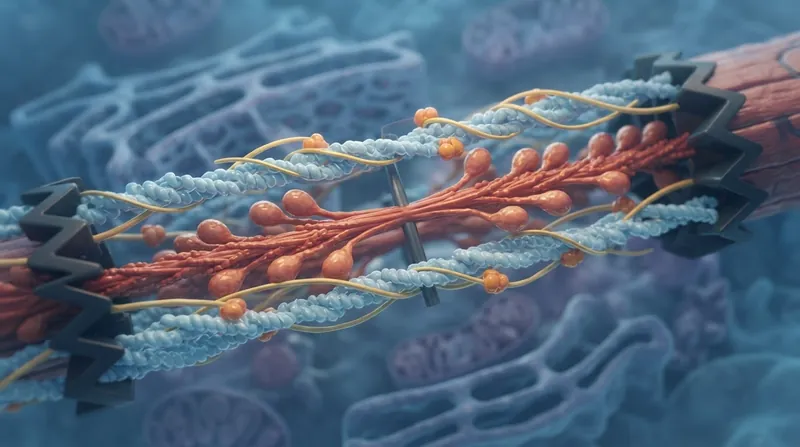
Why Muscles Lock After Death: How ATP Depletion and Autolysis Drive Rigor Mortis
4 sources
Microplastic Chemistry
Microplastics Spontaneously Generate Toxic Radicals in Water, Upending Inertness Assumption
5 sources

Carbon Emissions
Amazon Wildfires Turn Rainforest Into Net Carbon Source, Emitting Over 1 Billion Tons Annually
4 sources

Marine Ecosystems
IUCN Red List Classifies 96 Percent of Shallow Coral Reefs as Critically Endangered
6 sources

Comments
Every angle. Every day.
Get Science stories with full source coverage and perspective breakdowns, free every day.