
Construction Job Openings Surge 36% Mid-Year, Costing Homebuilders $10.8 Billion Annually
A severe shortage of skilled tradespeople has driven construction job openings up 36%, adding nearly two months to build times and costing the residential sector $10.8 billion a year.
By Tao Yang

The U.S. construction industry does not have enough workers to build the homes the country needs, and the shortfall is costing homebuilders billions while leaving everyday buyers in a frustrating state of limbo.
Despite a broader economic cooling that has slowed down other sectors, the demand for skilled tradespeople has skyrocketed, creating a severe bottleneck that is fundamentally altering the timeline and cost of residential real estate. For local markets, this means that abstract national employment data is showing up directly on the neighborhood cul-de-sac, where half-finished framing sits idle for weeks waiting for a specialized crew to arrive.[6]
The numbers underlying this quiet crisis reveal a stark reality about the modern labor force. According to the Bureau of Labor Statistics' latest Job Openings and Labor Turnover Survey, the construction sector recorded 305,000 open positions at the end of June 2026.
That figure represents a massive 36% surge compared to the 224,000 openings posted just twelve months prior, signaling that the gap between the workers needed and the workers available is widening rapidly. This jump in unfilled roles is occurring even as overall residential construction spending has shown signs of cooling, pointing to a structural mismatch rather than a simple cyclical boom.[1][3][4]
For a family waiting to move into a new build or a homeowner trying to schedule a major remodel, these abstract labor statistics translate directly into lost time and escalating out-of-pocket expenses. Research conducted by the Daniels College of Business in partnership with the National Association of Home Builders quantifies the annual economic impact of this skilled labor shortage at a staggering $10.8 billion.
This is not merely a theoretical loss of potential revenue; it represents real capital being burned through extended project timelines, wasted materials, and the sheer administrative friction of trying to coordinate a shrinking pool of subcontractors across multiple job sites.[2][7]
That $10.8 billion figure is not just a corporate loss absorbed by large developers; it is a structural inefficiency that is ultimately passed down to the consumer at the closing table. The National Association of Home Builders breaks the cost down into $2.66 billion in higher carrying costs—such as extended construction loans, ongoing property taxes, and prolonged builder's risk insurance—and $8.14 billion in lost single-family home production.
Because there simply are not enough hands to swing the hammers, pour the concrete, and run the electrical wiring, the industry is building roughly 19,000 fewer homes this year than it otherwise would under normal labor conditions.[2][7]
The shortage is also dragging out project timelines to a degree that actively disrupts buyers' lives. Builders report that the lack of available electricians, plumbers, and framers adds an average of nearly two full months—specifically 1.98 months—to the construction schedule of a standard single-family home.
For a buyer, that delay carries severe financial and logistical consequences. It often means carrying two mortgages for an extra 60 days, extending a costly short-term rental lease, or paying fees to lock in a mortgage rate for an extended period while waiting for the builder to finally hand over the keys.[5][6][7]
The immediate cause of this mid-year labor squeeze is a fierce tug-of-war between residential and commercial developers. While homebuilding starts have softened under the weight of high interest rates and cautious consumer sentiment, commercial construction is experiencing a historic boom. Specifically, the explosive growth of data centers—driven by the relentless expansion of artificial intelligence and cloud computing—is running 46% higher year-over-year. These massive infrastructure projects require the exact same specialized trades that residential builders need, creating a zero-sum competition for a workforce that is already stretched far too thin.[3][6]
Commercial contractors building these massive server farms and infrastructure megaprojects are aggressively recruiting from the local labor pools that residential builders have traditionally relied upon. Because these commercial projects are heavily capitalized and often carry higher profit margins, they can offer the competitive wages, extensive overtime, and steady, long-term work that local homebuilders simply cannot match. As a result, commercial developers are effectively outbidding residential contractors for the limited supply of skilled tradespeople, leaving housing subdivisions understaffed and behind schedule while the commercial sector absorbs the available talent.[3][6]
Beneath the current bidding war between commercial and residential developers lies a much deeper, structural demographic cliff. The construction industry is rapidly losing its most experienced and highly skilled workers to retirement, and younger generations are not entering the trades fast enough to replace them.
Industry estimates suggest the sector needs to hire roughly 723,000 new workers annually just to keep pace with current demand and offset the wave of retiring baby boomers, a target it is consistently missing month after month. Without a massive influx of new talent, the baseline capacity of the industry will continue to shrink.[5][6]
To cope with the persistent shortfall, residential builders are being forced to fundamentally adapt their operations and building methods. Many are turning to modular construction, pre-fabricated wall panels, and advanced preconstruction software to reduce the number of human hours required on the actual job site.
While these innovations help mitigate some of the delays, they cannot fully replace the need for skilled tradespeople to assemble and finish the homes. Until the workforce pipeline expands significantly, the cost of building—and buying—a home will continue to carry the heavy premium of a scarce and highly contested labor market.[4][6]
Key points
- U.S. construction job openings surged 36% year-over-year to 305,000 in June 2026.
- The skilled labor shortage costs the residential building industry $10.8 billion annually.
- Scarcity of tradespeople adds an average of nearly two months to home construction timelines.
- Commercial projects, particularly data centers, are outbidding residential builders for workers.
How we got here
2008–2010
The Great Recession forces nearly a million workers out of the construction industry, creating a deficit the sector never fully recovers from.
August 2025
Research quantifies the annual cost of the residential labor shortage at $10.8 billion, citing 19,000 lost homes.
June 2026
BLS data reveals construction job openings have surged 36% year-over-year, driven heavily by commercial and data center demand.
- Residential Homebuilders
- Argue that the severe lack of skilled tradespeople is the primary bottleneck preventing new housing supply and driving up costs for buyers.
- Commercial Contractors
- Capitalizing on the boom in data center and infrastructure spending, effectively outbidding residential builders for the same limited labor pool.
- Labor Economists
- Focus on the structural data, noting that an aging workforce and a 36% year-over-year spike in job openings indicate a long-term demographic challenge.
- Market Analysts
- Assess the macroeconomic impact of the labor shift, noting how commercial demand masks the underlying residential slump.
Perspectives this story doesn't cover
- Independent Tradespeople
- First-Time Homebuyers
Sources
Source coverage
7 outlets
4 viewpoints surfaced







- [1]Bureau of Labor StatisticsLabor Economists
Job Openings and Labor Turnover – June 2026
Read on Bureau of Labor Statistics → - [2]National Association of Home BuildersResidential Homebuilders
Fall 2025 Construction Labor Market Report
Read on National Association of Home Builders → - [3]REI PrimeCommercial Contractors
Construction Job Openings Hit 305K as Data Centers Mask a Homebuilding Slump
Read on REI Prime → - [4]Design Cost DataCommercial Contractors
Construction Job Openings Rise 36% From Year Ago
Read on Design Cost Data → - [5]Fox BusinessResidential Homebuilders
Inside the impact of the housing bill
Read on Fox Business → - [6]Factlen Editorial TeamMarket Analysts
Synthesis by Factlen editorial team
Read on Factlen Editorial Team → - [7]Daniels College of BusinessLabor Economists
Research: Skilled Labor Shortage Costs Construction Industry $10.8B Per Year
Read on Daniels College of Business →
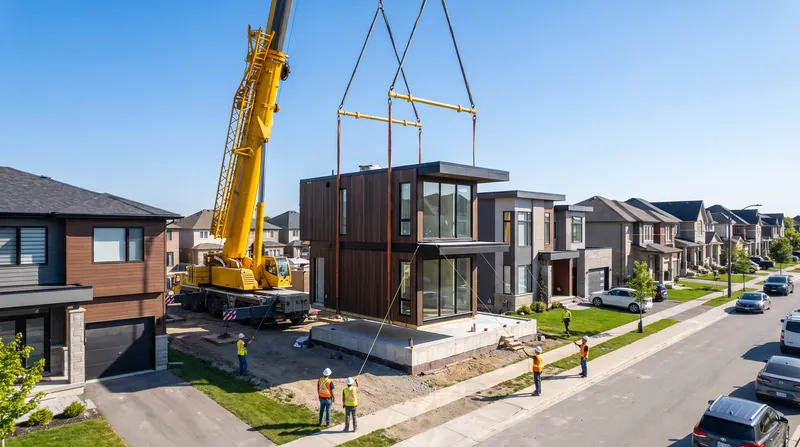
More in Home
See all →Acoustic Engineering
The Science of Soundproofing: How Decoupling, Damping, and Mass Actually Block Noise
3 sources
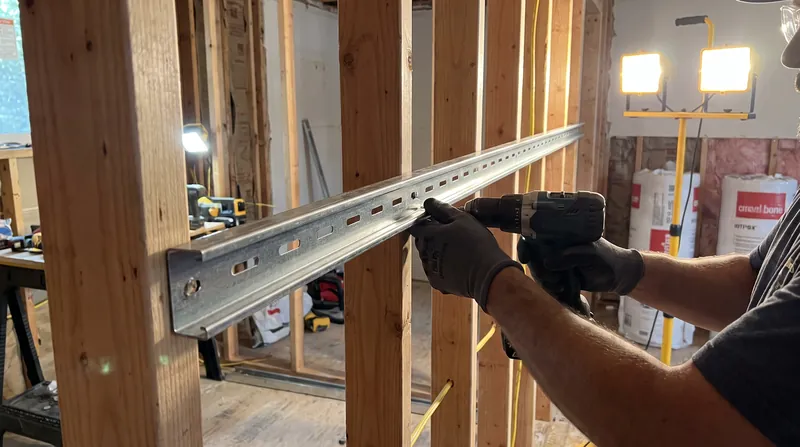
Building Codes
2027 Model Building Codes Finalized With Major Changes for Off-Site Construction and Flood Resistance
4 sources
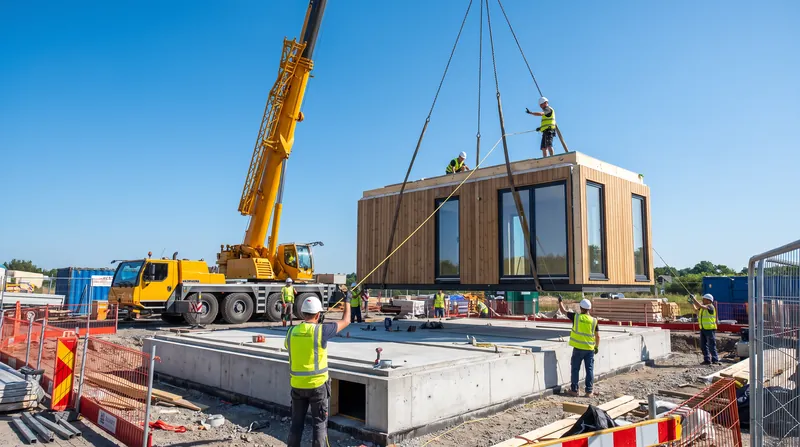
Home Electrification
California's 2026 Building Code Makes Heat Pumps the Default, Locks in Rules for Six Years
6 sources
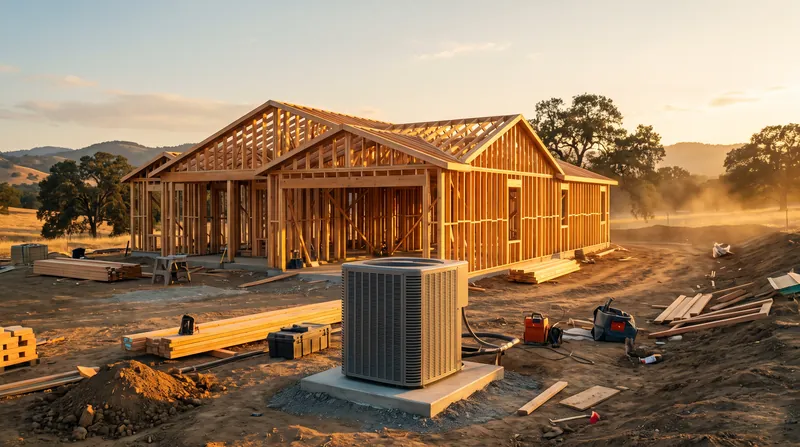
Material Costs
Building Material Prices Surge 3.7% in April, Hitting Fastest Pace in Three Years
4 sources
Comments
Every angle. Every day.
Get Home stories with full source coverage and perspective breakdowns, free every day.