
Comparing Mid-Drive and Hub Motor E-Bikes for 2026 Buyers
Choosing the right electric bicycle motor fundamentally changes the riding experience. This breakdown compares performance, maintenance, and value to help riders select the optimal system for their terrain.
By Factlen Editorial Team
- Budget Commuters
- Hub motors democratize e-bikes by keeping prices accessible for everyday transportation.
- Performance Cyclists
- Mid-drives offer the only authentic, bionic cycling feel that mimics traditional riding.
- Cargo Haulers
- Gear-leveraged torque from mid-drives is a strict necessity for moving heavy loads safely.
Why this matters
Choosing the wrong e-bike motor can lead to thousands of dollars in buyer's remorse, either through burnt-out hub motors on steep hills or excessive maintenance costs on mid-drives. Understanding this mechanical distinction ensures riders invest in a machine perfectly suited for their daily terrain, budget, and maintenance capabilities.
Key points
- Mid-drive motors leverage the bicycle's gears, making them vastly superior for climbing steep hills and hauling heavy cargo.
- Hub motors operate independently of the chain, reducing drivetrain wear and allowing for throttle-only riding if a chain breaks.
- Mid-drive systems typically cost $1,000 to $2,000 more than comparable hub-motor bikes due to custom frame requirements.
- Fixing a rear flat tire is significantly more difficult on a hub motor due to the motor's weight and integrated electrical wiring.
- Premium 2026 hub motors are increasingly adopting torque sensors to mimic the natural, responsive feel traditionally reserved for mid-drives.
The global electric bicycle market in 2026 has matured significantly, moving far past the early, clunky designs of the previous decade into a landscape of highly specialized, purpose-built machines. As cities expand cycling infrastructure and consumers increasingly turn to e-bikes for both recreation and primary transportation, the technical specifications of these vehicles have come under intense scrutiny. At the absolute heart of this evolution is the electric motor, the defining component that dictates a bike's capability, longevity, and price. For new buyers navigating showrooms or online retailers, the choice between a mid-drive motor and a hub motor remains the most consequential decision they will make [1]. This single hardware difference fundamentally alters the physics of how the bicycle moves, how it interacts with the rider's physical exertion, and what kind of terrain it can realistically conquer without leaving the rider stranded or facing a hefty repair bill [3].[1][3]
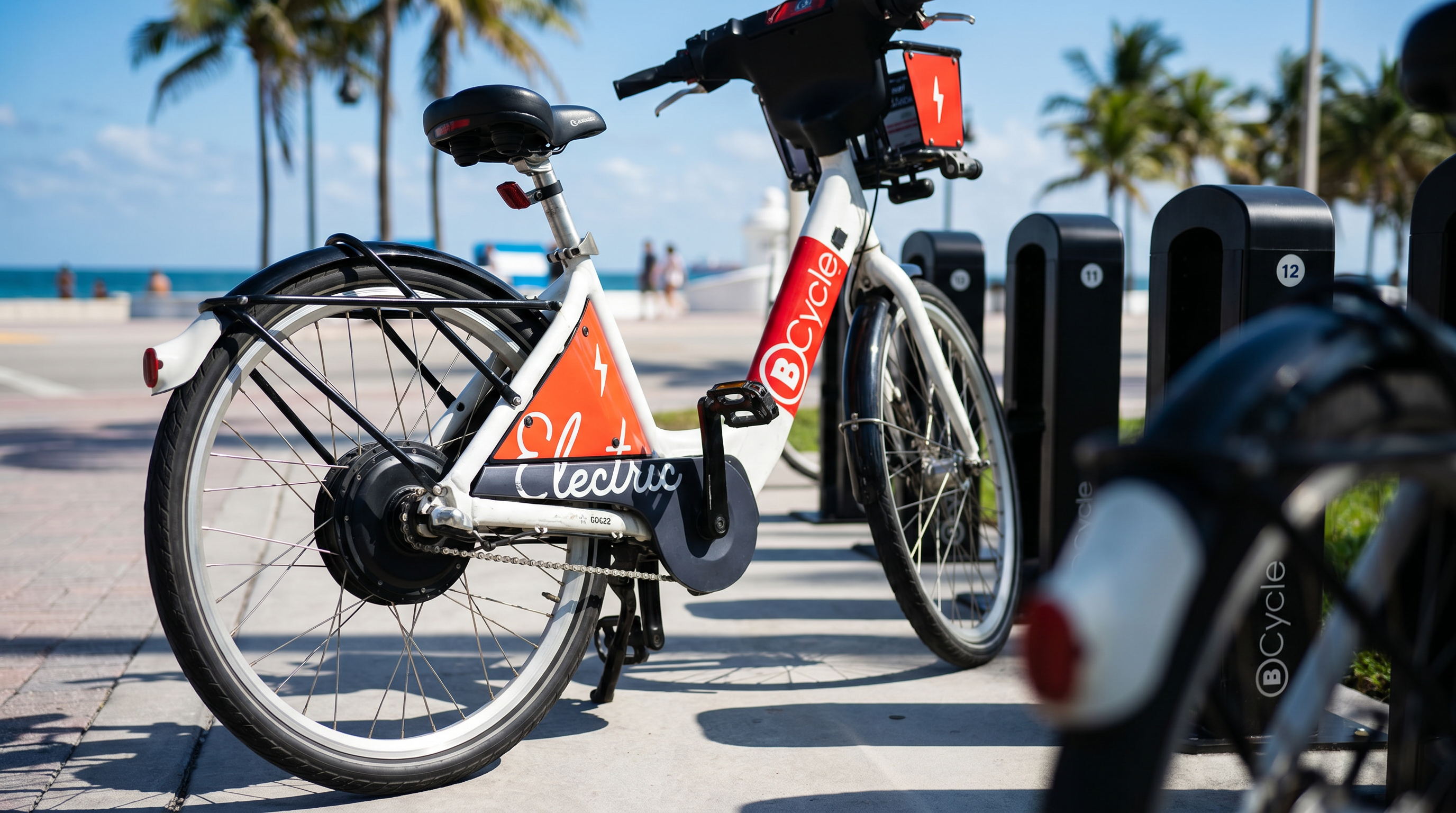
Hub motors represent the older, more ubiquitous, and generally more affordable technology in the e-bike sector. As the name suggests, these motors are housed directly within the central hub of either the front or rear wheel, completely separate from the bicycle's main pedaling drivetrain. When the motor engages, it uses electromagnets to spin the outer shell of the hub around the stationary axle, effectively pushing or pulling the wheel independently of whatever gear the bicycle is currently in [2]. This creates a distinct riding sensation akin to being pushed along from behind by a gentle, invisible hand, making them highly popular for casual city riding, flat commutes, and budget-friendly consumer models. Because they are self-contained units, hub motors can be laced into standard bicycle wheels and mounted on traditional bike frames with minimal modification, which keeps manufacturing costs low and allows for a massive variety of entry-level e-bikes to flood the market [3].[2][3]
In stark contrast to the wheel-mounted approach, mid-drive motors are positioned centrally at the bicycle's bottom bracket, directly between the rider's pedals. Instead of turning the wheel itself, a mid-drive motor turns the front chainring, meaning its electrical power is transferred through the bicycle's existing mechanical drivetrain—the chain, the cassette, and the derailleur [4]. This integration provides a profound mechanical advantage that fundamentally alters how the bike climbs hills and manages heavy loads. By operating through the gears, a mid-drive motor can spin at its most efficient, high-RPM speed even when the bicycle itself is moving slowly up a steep incline, provided the rider has shifted into a low gear [5]. This synergy between human input, electrical assistance, and mechanical gearing makes mid-drives the undisputed champions for demanding applications like electric mountain biking (eMTB) and heavy-duty cargo hauling [4].[4][5]

The primary advantage of a mid-drive system's ability to leverage the bike's gearing cannot be overstated when it comes to varied topography. Just as a traditional cyclist shifts into a lower, easier gear to pedal up a steep mountain pass without exhausting themselves, the mid-drive motor benefits from that exact same lower gear. This allows the motor to maintain an optimal rotational speed—often referred to as its cadence—while delivering massive, multiplied torque to the rear wheel [5]. In the 2026 market, premium mid-drive motors from manufacturers like Bosch, Shimano, and Brose routinely output between 85 and 90 Newton-meters (Nm) of torque, which, when multiplied by a low gear ratio, can easily propel a rider and 100 pounds of cargo up a 15-percent grade without the motor breaking a sweat or overheating [8].[5][8]
Hub motors, lacking this mechanical synergy with the bicycle's drivetrain, can struggle significantly on long, steep ascents or when carrying heavy loads. Because a direct-drive or geared hub motor spins at a speed directly proportional to the wheel's rotation, a slow slog up a steep hill forces the motor to operate at a very low, inefficient RPM [3]. In this state, the motor draws massive amounts of current from the battery in an attempt to maintain momentum, which rapidly generates excess heat. If pushed too hard on a sustained climb, a hub motor's thermal protection circuits will often trigger, temporarily shutting down the system to prevent the internal magnets and wiring from melting [6]. However, it is crucial to note that for flat urban commutes or rolling suburban hills, a standard 500-watt or 750-watt rear hub motor provides more than enough propulsion, rendering the hill-climbing limitations moot for a vast majority of casual riders [2].[2][3][6]
Hub motors, lacking this mechanical synergy with the bicycle's drivetrain, can struggle significantly on long, steep ascents or when carrying heavy loads.
Beyond raw power and hill-climbing physics, the riding experience diverges significantly based on how these different motor systems sense and respond to rider input. Mid-drive systems almost universally employ advanced, highly sensitive torque sensors. These sensors measure exactly how hard the rider is pushing down on the pedals in real-time, hundreds of times per second, and amplify that physical effort proportionally with electrical power [6]. If you pedal lightly, the motor provides a gentle assist; if you stand up and mash the pedals to sprint away from a traffic light, the motor instantly surges with maximum power. This results in a highly natural, bionic feel—the motor feels like a seamless extension of the rider's own muscles, which is why cycling purists and mountain bikers overwhelmingly prefer mid-drive systems [4].[4][6]

Conversely, many entry-level and mid-tier hub motor e-bikes rely on simpler, less expensive cadence sensors. Rather than measuring the force of the rider's pedaling, a cadence sensor merely detects whether the pedals are turning at all, acting essentially as an on/off switch for the motor [7]. This can result in a slightly jerky, delayed power delivery that feels more like riding a low-powered moped than a traditional bicycle; you turn the pedals, wait a half-second, and then the motor kicks in at a predetermined speed based on the selected assist level. While some riders actually prefer this 'ghost pedaling' sensation because it requires minimal physical exertion, it lacks the intuitive control of a torque sensor. However, by 2026, an increasing number of premium hub motors are integrating sophisticated torque sensors, significantly narrowing the gap in ride quality and offering a smoother experience for urban commuters [3].[3][7]
Maintenance profiles and long-term durability present another crucial point of divergence that buyers must consider. Because mid-drive motors channel all of their substantial electrical power directly through the bicycle's chain and rear cogs, they subject the drivetrain to significantly higher stress and accelerated wear [8]. Riders who fail to shift gears properly—such as trying to accelerate from a dead stop in a high gear—or those who neglect regular chain cleaning and lubrication will find themselves replacing snapped chains and worn-out cassettes far more frequently than they would on a traditional bicycle or a hub-driven e-bike [5]. To combat this in 2026, the industry has seen a massive rise in heavy-duty, e-bike-specific chains and internally geared hubs designed specifically to withstand the relentless torque of mid-drive motors, though these components add further to the initial purchase price [1].[1][5][8]
On the other hand, hub motors operate entirely independently of the bicycle's chain, meaning the drivetrain experiences only the standard wear and tear of the rider's own physical pedaling [2]. In fact, this separation provides a unique fail-safe: if a chain breaks on a hub-motor e-bike equipped with a throttle, the rider can simply rely on the motor to get them home without needing to pedal at all [7]. The major maintenance trade-off for hub motors comes when dealing with the inevitable flat tire. Removing a rear wheel that houses a heavy, 10-pound hub motor and is tethered to the bike's frame by thick electrical cables is notoriously cumbersome and intimidating for the average consumer, whereas mid-drive bikes utilize standard quick-release or thru-axle wheels that can be removed in seconds [6].[2][6][7]

Despite the performance advantages of mid-drives, price remains the ultimate, unavoidable deciding factor for the vast majority of consumers entering the e-bike market. Hub motors are significantly cheaper to manufacture at scale and can be easily bolted onto standard, mass-produced bicycle frames, keeping the overall cost of the complete e-bike remarkably low [1]. In 2026, highly capable hub-motor commuter bikes can easily be found in the $1,000 to $1,500 range. Mid-drive motors, however, require custom-designed, proprietary frames with specialized mounting brackets to house the motor at the bottom bracket. This custom engineering, combined with the higher cost of the motor unit itself and the required torque sensors, pushes the entry price of mid-drive e-bikes significantly higher, with most reliable models starting well above the $2,500 mark and premium mountain bikes easily exceeding $6,000 [4].[1][4]
As the 2026 riding season approaches, the strict boundaries between these two technologies are beginning to blur slightly thanks to rapid technological innovation. Manufacturers are introducing ultra-lightweight mid-drives that offer less torque but preserve the aesthetic and weight of a traditional acoustic bike, appealing to road cyclists and fitness enthusiasts [8]. Simultaneously, hub motors are becoming lighter, more efficient, and increasingly paired with auto-shifting continuously variable transmissions (CVTs) designed to eliminate drivetrain wear entirely [3]. Ultimately, the optimal choice hinges entirely on the rider's local terrain, intended use, and budget: hub motors continue to offer unmatched value and low-maintenance cruising for flat-city commuters, while mid-drives provide the essential mechanical leverage and natural, intuitive feel required by off-road adventurers, cargo haulers, and those living in mountainous regions [1, 5].[1][3][5][8]
How we got here
Early 2010s
Heavy, direct-drive hub motors dominate the early consumer e-bike market, offering basic propulsion but poor hill-climbing ability.
2014
Bosch introduces its Gen 2 mid-drive system, revolutionizing electric mountain bikes by proving motors could survive off-road abuse.
2020-2022
The pandemic-era e-bike boom sees a massive influx of affordable, direct-to-consumer hub motor bikes flood city streets.
2026
Integration of auto-shifting transmissions and advanced torque sensors begins to blur the performance lines between the two motor types.
Viewpoints in depth
Urban Commuters
City riders prioritize reliability, low upfront costs, and sweat-free arrivals.
For riders navigating flat city grids, the hub motor remains the undisputed champion of value. Urban commuters often rely on throttle-assist to accelerate quickly away from traffic lights without breaking a sweat in their work clothes. Because hub motors bypass the chain, these riders experience fewer dropped chains or drivetrain failures, ensuring they get to the office on time. The lower price point also makes the inevitable risk of city bike theft slightly less financially devastating.
Off-Road & Cargo Riders
Mountain bikers and parents hauling children require maximum gear-leveraged torque.
For those carrying 100 pounds of groceries or tackling 20-percent dirt grades, a hub motor is often a liability that will overheat and stall. These riders view mid-drive motors as a non-negotiable safety feature. By leveraging the bicycle's lowest gears, mid-drives allow riders to maintain a steady, powerful cadence up the steepest hills. Furthermore, the centralized weight distribution of a mid-drive motor keeps the bike balanced, which is critical for navigating technical mountain bike trails.
Local Bike Mechanics
Bicycle technicians face unique repair challenges depending on the motor type.
From a service perspective, mechanics often have a love-hate relationship with both systems. Hub motors make fixing a simple rear flat tire a grueling 30-minute chore involving zip-ties, heavy lifting, and delicate wiring harnesses. Conversely, mid-drive bikes allow for standard, rapid wheel removal, but mechanics see them far more often for drivetrain replacements, as the immense torque rapidly chews through cassettes and chains if the owner neglects basic maintenance.
What we don't know
- Whether the e-bike industry will ever standardize mid-drive motor mounts, which would allow consumers to swap different motor brands onto a single frame.
- How long the new generation of ultra-lightweight mid-drive motors introduced in 2026 will last under the stress of heavy daily commuting.
- If the rising popularity of auto-shifting transmissions will eventually make drivetrain wear on mid-drive bikes a problem of the past.
Sources
Source coverage
8 outlets
3 viewpoints surfaced







[1]Hi Power Cycles
Mid-Drive vs. Hub Motor: Which Is Better in 2026?
Read on Hi Power Cycles →[2]Bike-EV
Mid-Drive vs Hub Motor E-Bike 2026
Read on Bike-EV →[3]PXID
Mid-Drive vs Hub Motor: 2026 E-Bike OEM Selection Guide
Read on PXID →[4]Clip Clop Bike
What Actually Moves an E-Bike: A Motor Deep Dive
Read on Clip Clop Bike →[5]Zeus eBikes
The 30-Second Answer: Mid-Drive vs Hub Motor at a Glance
Read on Zeus eBikes →[6]Tenways
Mid-drive vs hub motor: which e-bike motor is better?
Read on Tenways →[7]Polygon Bikes
Mid-Drive vs Hub-Drive Electric Bike Motors
Read on Polygon Bikes →[8]Gyroor
Mid Drive vs Hub Drive Ebike
Read on Gyroor →

More in shopping
See all 5 stories →


Every angle. Every day.
Get shopping stories with full source coverage and perspective breakdowns delivered to your inbox.