
Cold-Climate Heat Pumps Break the Freezing Barrier, Proving Reliable in Sub-Zero Winters
Results from a multi-year Department of Energy challenge confirm that a new generation of heat pumps can efficiently heat homes in extreme cold without relying on expensive backup systems.
By Factlen Editorial Team
- Energy Efficiency Researchers
- Focuses on the empirical data, COP metrics, and the successful field validation of the technology in extreme climates.
- HVAC Manufacturers
- Focuses on commercialization, engineering breakthroughs, and expanding production capacity to meet surging demand.
- Consumer Advocates
- Focuses on the practical benefits for homeowners, including utility bill savings, improved indoor comfort, and the elimination of backup heating costs.
What's not represented
- · Fossil Fuel Industry Representatives
- · Traditional Single-Stage HVAC Installers
Why this matters
Homeowners in freezing climates can now fully electrify their heating, saving money and cutting emissions, without the fear of freezing or relying on wildly expensive backup heat during winter storms.
Key points
- The DOE's Cold Climate Heat Pump Challenge has successfully validated units that operate efficiently in sub-zero temperatures.
- Field tests show modern heat pumps maintain 100% of their heating capacity down to 5°F, eliminating the need for expensive backup heat.
- Variable-speed inverter compressors allow the systems to modulate their output, providing consistent comfort and up to 270% efficiency.
- Major manufacturers are rolling out commercialized versions in 2025 and 2026, backed by billions in U.S. manufacturing investments.
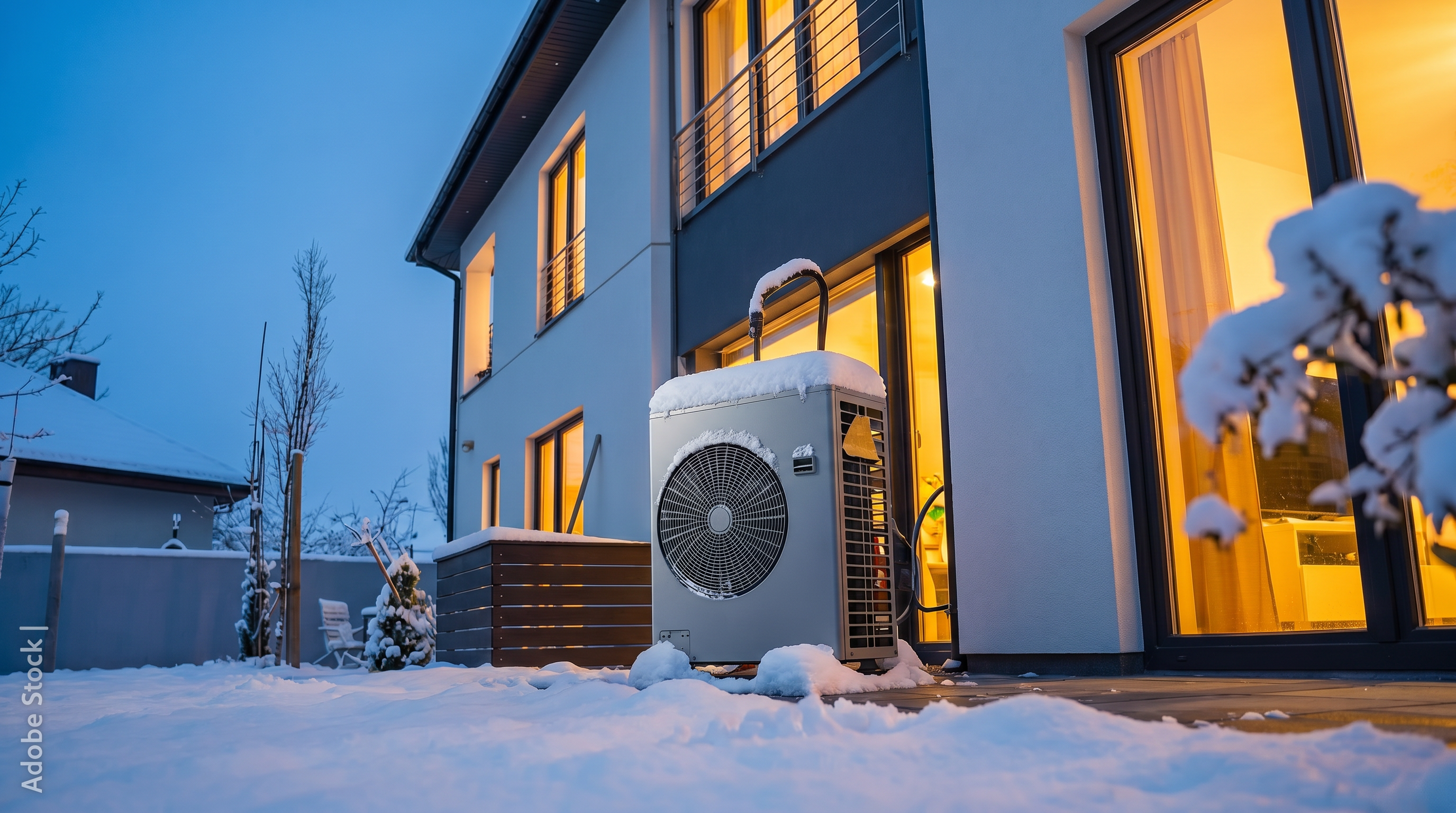
For decades, conventional wisdom in home heating was simple: heat pumps were fantastic for the mild winters of the American South, but practically useless in the Snow Belt. When temperatures plummeted below freezing, older models would freeze up or rely on wildly expensive electric resistance backup heat. That era of geographical limitation is officially over. Thanks to a concerted push by the U.S. Department of Energy (DOE) and major HVAC manufacturers, a new generation of cold-climate heat pumps (CCHPs) has broken the freezing barrier, proving capable of heating homes efficiently even in sub-zero conditions.[1][7]
The catalyst for this technological leap was the DOE’s Residential Cold Climate Heat Pump Challenge. Launched to incentivize the industry, the challenge set a seemingly impossible bar: design a heat pump that not only operates efficiently at 5°F but maintains 100% of its rated heating capacity at that temperature. The goal was to eliminate the need for supplemental backup heating, which has historically caused utility bills to spike during severe winter storms.[5]
The results of the multi-year field validation are now in, and they are unequivocally positive. According to a comprehensive report by the Pacific Northwest National Laboratory (PNNL), twenty-two prototype units from major brands were installed in occupied homes across the United States and Canada. Monitored through extreme winter conditions, these units consistently delivered reliable, comfortable heat without heavily relying on auxiliary elements.[1][5]

To understand this breakthrough, it helps to understand the underlying mechanism. A heat pump does not burn fuel to create heat; it uses a refrigeration cycle to move ambient heat from one place to another. Even when the air outside feels freezing to human skin, it still contains abundant thermal energy. The engineering challenge has always been extracting that diffuse energy efficiently when the temperature drops below 30°F.[5][7]
The secret weapon of the new CCHPs is the variable-speed inverter compressor. Older, single-stage heat pumps operated like a light switch—they were either running at full blast or completely off. Variable-speed compressors, by contrast, act like a car’s accelerator. When the temperature plummets, the compressor seamlessly ramps up its speed to extract more heat from the frigid air, modulating its output to match the home's exact heating load.[6]
This modulation translates directly into remarkable efficiency, measured by the Coefficient of Performance (COP). A traditional gas furnace has a maximum efficiency of about 95%, meaning it produces 0.95 units of heat for every unit of energy consumed. The PNNL field tests revealed that even at temperatures below 30°F, the new cold-climate heat pumps achieved a median COP between 1.6 and 2.7. In practical terms, this means they are delivering 160% to 270% efficiency, producing up to nearly three times as much heat energy as the electrical energy they consume.[1][5]
This modulation translates directly into remarkable efficiency, measured by the Coefficient of Performance (COP).
The most critical milestone achieved during the DOE challenge was capacity retention. In the past, a heat pump's ability to actually warm a house would drop off a cliff as the thermometer dipped. However, manufacturers successfully engineered units that maintain 100% heating capacity down to 5°F, with some models, like Carrier's Infinity Variable-Speed unit, operating at full capacity down to 0°F and remaining reliable at an astonishing -23°F.[2]

Beyond the mechanical upgrades, this new generation of heat pumps is also driving a shift in the chemicals used for refrigeration. To meet federal environmental regulations taking effect in 2026, these systems are utilizing low-GWP (Global Warming Potential) refrigerants such as R-32 and R-454B. This ensures that the systems are not only reducing carbon emissions by moving away from fossil fuels but also minimizing the climate impact of the refrigerants themselves.[2]
For homeowners, the transition to a cold-climate heat pump often results in a surprising upgrade in daily comfort. Because variable-speed systems run continuously at lower speeds rather than blasting on and off, they maintain a much steadier indoor temperature. Users report fewer cold drafts, better humidity control, and the elimination of the dry, scorching air typically associated with forced-air gas furnaces. Furthermore, modern units have been engineered to be exceptionally quiet, with some operating at noise levels as low as 50 decibels, making them neighbor-friendly even in dense urban areas.[4][6]
The financial equation for consumers is also shifting favorably. While the initial installation of a high-tech variable-speed heat pump can be more expensive than a standard furnace replacement, the long-term economics are compelling. The sheer efficiency of the COP multiplier means significantly lower monthly utility bills, and the systems provide both heating and cooling, eliminating the need to purchase and maintain a separate central air conditioner. Additionally, robust utility rebates and government incentives are currently available to help offset the upfront capital costs.[3]

From a macroeconomic perspective, the global heat pump market has evolved into an economic powerhouse. Industry revenues are projected to reach $95.2 billion in 2026, driven by the widespread adoption of these advanced systems. Recognizing the massive domestic demand, major HVAC manufacturers are investing billions of dollars to expand their U.S. manufacturing footprints, building new facilities dedicated to producing heat pump components and battery assemblies.[2][4]
These systems are also becoming vital assets for the broader electrical grid. Modern CCHPs are designed to integrate with smart thermostats and utilize advanced control strategies, such as the AHRI 1380 standard. During periods of peak grid demand, the heat pump's compressor and fan speeds can be slightly reduced—lowering power consumption while still providing enough capacity to maintain indoor comfort. This smart-grid readiness is crucial as neighborhoods increasingly electrify their heating and transportation.[2][4]
Despite the overwhelming success of the technology, the industry does face lingering hurdles, primarily regarding workforce training. The performance of a high-efficiency heat pump is heavily dependent on proper sizing and installation. A poorly installed unit, or one connected to leaky ductwork in a poorly insulated home, will fail to deliver the promised savings and comfort. The rapid rollout of these systems requires a massive upskilling of the HVAC technician workforce to ensure real-world results match laboratory potential.[5][7]

As commercialized versions of the DOE challenge prototypes flood the market throughout 2025 and 2026, the narrative around home heating has fundamentally changed. The heat pump is no longer viewed as a compromise or a niche technology for temperate zones. It has proven itself as a robust, primary heating solution capable of handling the harshest winters, offering a rare win-win for household budgets and global emissions.[1][4][7]
How we got here
2021
The U.S. Department of Energy launches the Residential Cold Climate Heat Pump Challenge.
Winter 2022–2024
Prototype units undergo rigorous field validation in occupied homes across the U.S. and Canada.
Early 2025
The Pacific Northwest National Laboratory publishes the successful field validation results.
2025–2026
Major HVAC manufacturers roll out commercialized versions of the challenge-winning heat pumps to the public.
Viewpoints in depth
Energy Efficiency Researchers
Focuses on the empirical data and grid-level benefits of widespread electrification.
Researchers emphasize that the transition to cold-climate heat pumps is a cornerstone of decarbonizing the residential sector. By proving that these units can achieve a COP of over 2.0 in sub-freezing temperatures, the data dismantles the primary argument against full home electrification. Furthermore, researchers highlight that smart-grid integration will allow these highly efficient units to dynamically reduce power draw during peak winter demand, preventing grid strain while maintaining indoor comfort.
HVAC Manufacturers
Focuses on engineering breakthroughs and the massive market opportunity.
For the industry, the DOE challenge was an accelerant for innovation. Manufacturers point out that engineering a system to maintain 100% capacity at 5°F required fundamentally rethinking compressor design and refrigerant flow. Having solved the technical hurdles, the focus has now shifted to scale. With the global market projected to surpass $95 billion, companies are investing heavily in domestic manufacturing facilities to produce these units as drop-in replacements for aging gas furnaces.
Consumer & Homeowner Advocates
Focuses on upfront costs, installation quality, and long-term utility savings.
While celebrating the technological leap, consumer advocates caution that the hardware is only as good as its installation. They argue that the biggest bottleneck is no longer the technology itself, but the shortage of HVAC technicians trained to properly size and calibrate variable-speed systems. Advocates also stress the importance of navigating complex utility rebates and federal tax credits to ensure the higher upfront costs remain accessible to middle- and low-income households.
What we don't know
- How quickly the existing HVAC workforce can be retrained to properly size and install advanced variable-speed systems.
- Whether the electrical grid in older neighborhoods will require significant upgrades to handle the simultaneous winter peak load of fully electrified heating.
Key terms
- Coefficient of Performance (COP)
- A metric of heating efficiency, representing the ratio of heat energy produced to electrical energy consumed.
- Variable-Speed Compressor
- An advanced motor that can smoothly adjust its operating speed to match the exact heating or cooling demand of a home, rather than just turning on and off.
- Low-GWP Refrigerant
- Cooling fluids designed to have a significantly lower Global Warming Potential, reducing their environmental impact if they leak.
- Auxiliary Heat
- A secondary, often expensive, heating source (like electric resistance strips) used by older heat pumps when they cannot extract enough heat from cold outdoor air.
Frequently asked
Do cold-climate heat pumps really work below freezing?
Yes. Modern variable-speed heat pumps have been field-tested to operate efficiently at temperatures as low as -15°F, extracting ambient heat even from frigid air.
Will I still need a backup gas furnace?
In most cases, no. The latest models are designed to maintain 100% of their heating capacity down to 5°F, significantly reducing or eliminating the need for supplemental backup heat.
Are these new heat pumps more expensive?
The initial installation can cost more than a standard gas furnace. However, utility rebates, federal incentives, and long-term energy savings typically offset the higher upfront cost.
How is this different from older heat pumps?
Older models used single-stage compressors that struggled in the cold. New cold-climate units use variable-speed inverter technology that ramps up power seamlessly to match extreme temperature drops.
Sources
Source coverage
7 outlets
3 viewpoints surfaced







[1]Pacific Northwest National LaboratoryEnergy Efficiency Researchers
Performance Results from DOE Cold Climate Heat Pump Challenge Field Validation
Read on Pacific Northwest National Laboratory →[2]Facilities DiveHVAC Manufacturers
Carrier completes DOE cold climate heat pump challenge
Read on Facilities Dive →[3]GlobeNewswireHVAC Manufacturers
Modern heat pump technology offers a more cost-effective way to maintain home comfort
Read on GlobeNewswire →[4]JNOD EnergyHVAC Manufacturers
2026 marks a new era for sustainable heating
Read on JNOD Energy →[5]Local Energy CodesEnergy Efficiency Researchers
Residential Cold Climate Heat Pump Challenge
Read on Local Energy Codes →[6]A1 Solar StoreConsumer Advocates
Cold climate heat pump performance and efficiency
Read on A1 Solar Store →[7]Factlen Editorial TeamConsumer Advocates
Synthesis by Factlen editorial team
Read on Factlen Editorial Team →
Every angle. Every day.
Get home stories with full source coverage and perspective breakdowns delivered to your inbox.