
Choosing Between a Smart Ring and a Smartwatch for Health Tracking in 2026
As smart rings mature into powerful health monitors, consumers face a choice between the passive, screen-free tracking of a ring and the interactive, feature-rich experience of a smartwatch.
By Nabil Faris

The wearable technology landscape in 2026 has officially bifurcated, offering consumers two distinct paths to better health. For years, individuals looking to monitor their fitness and recovery had one primary option: strapping a miniature, screen-equipped computer to their wrist.
Today, the rapid maturation of smart rings has transformed the market entirely, turning the purchasing decision into a philosophical debate over how we interact with our personal data. Consumers are no longer just deciding which brand of watch to buy, but whether they want to wear a watch at all, as rings offer a compelling alternative that prioritizes subtlety over screen time.[3][4]
At the core of the divide between these two form factors is the fundamental difference between passive data collection and active user interaction. Smartwatches are inherently designed to command attention, offering vibrant AMOLED displays, haptic notifications, and real-time coaching that keeps the user engaged throughout the day.
Smart rings, conversely, are built around the concept of digital minimalism. They silently gather biometric data in the background without ever demanding the user's focus, allowing individuals to track their health without adding another screen to their daily routine. This screenless approach appeals heavily to those experiencing notification fatigue.
This divergence in philosophy is most obvious in the physical footprint of the devices. Modern smart rings are typically forged from lightweight aerospace-grade titanium, often weighing less than five grams, and are designed to blend seamlessly into everyday life as a piece of jewelry.
Smartwatches, while increasingly sleek and refined, still introduce undeniable bulk, strap tension, and a glowing interface to the wrist. For many users, this physical presence dictates whether the device is actually worn continuously, as a heavy watch can become cumbersome during quiet moments or formal events where a subtle ring goes unnoticed.[2]
When it comes to the critical metric of sleep tracking, smart rings hold a distinct physiological and practical advantage over their wrist-worn counterparts. The arteries located in the finger provide a stronger, cleaner signal for the optical photoplethysmography (PPG) sensors than the capillaries found in the wrist. Because a ring sits snugly against the skin and is far less prone to shifting during movement, it captures highly accurate resting heart rate and Heart Rate Variability (HRV) data, which are essential markers for determining physical recovery and nervous system stress.[3][5]
Beyond pure sensor accuracy, rings win decisively on overnight comfort, which directly impacts the quality of the data collected. Wearing a bulky watch to bed can be irritating, particularly for side sleepers who may feel the device pressing into their wrist, and the risk of a screen inadvertently lighting up in the middle of the night can actively disrupt the very sleep it is attempting to measure.
Consequently, user compliance—the likelihood that an individual actually keeps the device on every single night—is significantly higher for smart rings, leading to more consistent and reliable long-term health baselines.[2]
However, the moment the user wakes up and begins an active workout, the smartwatch immediately reclaims its dominance. Devices like the Apple Watch and Samsung Galaxy Watch are purpose-built for active fitness and athletic performance. They feature built-in GPS modules for phone-free run tracking, high-resolution sensor sampling that adapts to rapid heart rate spikes, and real-time pacing metrics displayed directly on the wrist. For anyone training for a marathon, cycling long distances, or needing immediate feedback on their physical exertion, the smartwatch remains an unparalleled training companion.[1][3]
Smart rings inherently struggle in this active fitness arena due to their minimalist design. Lacking a screen, they cannot provide live feedback during a run or a high-intensity interval training session, forcing users to pull out their smartphones to check their progress. Furthermore, gripping a heavy barbell or a bicycle handlebar can push the ring away from the skin, introducing significant noise into the heart rate data. The titanium finish, while durable, is also susceptible to scratching against knurled gym equipment, making rings less than ideal for heavy weightlifting.[4]
Battery life exposes another stark contrast between the two categories, fundamentally altering how users interact with their devices. The screenless nature of smart rings allows them to sip power incredibly efficiently, with most premium models lasting between five and seven days on a single charge. This multi-day endurance is a crucial factor in gathering uninterrupted health data, as users can wear the device for nearly a week without ever having to think about taking it off to find a charger.[4]
In contrast, the vibrant displays, continuous notifications, and GPS modules of smartwatches demand frequent and routine charging. Most mainstream smartwatches require a charge every 18 to 36 hours, depending on workout frequency and screen brightness. This creates a logistical hurdle for consistent sleep tracking: users must consciously find a dedicated window during the day—often while showering or working at a desk—to charge their watch, or risk the battery dying in the middle of the night and losing valuable recovery data.[1][4]
Despite their battery constraints, smartwatches remain the undisputed leaders when it comes to housing advanced medical sensors. Premium wrist wearables now routinely feature electrocardiogram (ECG) capabilities to detect irregular heart rhythms, advanced sleep apnea detection algorithms, and, in certain global regions, blood pressure monitoring. The larger physical chassis of a watch allows manufacturers to pack in complex hardware and larger batteries that simply cannot fit inside the millimeter-thin confines of a smart ring, making watches the better choice for proactive medical monitoring.[1][3]
The financial investment required for these devices also demands a long-term perspective from buyers. While the upfront retail cost of both form factors is often comparable—typically ranging from $250 to $400—the total cost of ownership can diverge significantly over time.
Several leading smart rings require a monthly subscription fee of roughly $6 to $10 to unlock their comprehensive data analytics and personalized insights, which adds up substantially over a two- or three-year lifespan. Smartwatches generally offer their core health metrics without recurring software fees, though cellular data plans remain an optional extra.[1][2]
Ecosystem lock-in is another critical consideration that shapes the purchasing decision. The Apple Watch is famously restricted to iPhone users, serving as a seamless but exclusive extension of the iOS ecosystem. Smart rings, on the other hand, are generally platform-agnostic, syncing effortlessly with both Apple Health and Android platforms like Google Fit or Samsung Health. This cross-platform compatibility makes smart rings a much more flexible choice for users who prefer not to be tied to a single smartphone brand for the foreseeable future.[4]
Recognizing these distinct strengths and limitations, a growing segment of health enthusiasts are adopting a dual-wearable approach to get the best of both worlds. These users rely on a smartwatch during the day for managing notifications, making contactless payments, and tracking intense workouts, then switch exclusively to a smart ring at night for frictionless, comfortable sleep and recovery monitoring. While this requires a higher financial investment, it perfectly bridges the gap between active daytime utility and passive nighttime comfort.[4]
Ultimately, the decision between a smart ring and a smartwatch comes down to lifestyle compatibility and personal priorities. A smart ring fits perfectly when the primary goal is improving sleep hygiene, tracking holistic recovery, and maintaining a continuous health baseline without the distraction of another glowing screen. It is the ideal tool for those who suffer from notification fatigue, value traditional aesthetics, and want their health technology to remain entirely invisible until they choose to open an app on their smartphone to review their daily readiness scores.
Ultimately, the decision between a smart ring and a smartwatch comes down to lifestyle compatibility and personal priorities.
Conversely, a smartwatch is the definitive choice when the user is an active athlete who relies on real-time pacing, GPS mapping, and on-the-fly workout adjustments. It remains the superior option for anyone who views their wearable not just as a passive health monitor, but as a dynamic digital assistant that keeps them connected, safe, and informed throughout the day. There is no universal winner in this rapidly evolving wearable space—only the right technological tool for a specific set of daily habits and personal wellness goals.[1][3]
Key points
- Smart rings offer superior overnight comfort and multi-day battery life, making them ideal for consistent sleep tracking.
- Smartwatches dominate active fitness tracking with built-in GPS, real-time pacing, and high-resolution heart rate sampling.
- The finger provides a cleaner physiological signal for resting heart rate and HRV compared to the wrist.
- Many smart rings require monthly subscriptions for full data access, whereas smartwatches typically do not.
What we don’t know
- Whether smart rings will eventually incorporate non-invasive blood glucose monitoring, a feature currently in development across the wearable industry.
- How long-term subscription models for smart rings will evolve as hardware margins compress and competition increases.
How we got here
2015
Early smart rings enter the market, primarily focusing on basic step counting and sleep duration with limited accuracy.
2020–2022
Smartwatches introduce advanced medical sensors like ECG and SpO2, cementing their role as comprehensive health monitors.
2024–2026
Smart rings achieve parity in resting biometrics, introducing titanium designs, multi-day battery life, and AI-driven recovery insights.
- Minimalist Health Trackers
- Argues that wearables should collect data passively without adding screen time or daily charging anxiety.
- Active Fitness Enthusiasts
- Prioritizes real-time performance metrics, GPS accuracy, and on-device coaching during intense workouts.
- Connected Ecosystem Users
- Values the smartwatch as an extension of the smartphone for notifications, safety features, and app integration.
Perspectives this story doesn't cover
- Traditional watch collectors who prefer rings to keep their wrists free for mechanical timepieces.
Sources
Source coverage
5 outlets
3 viewpoints surfaced





- [1]ForbesConnected Ecosystem Users
Oura Ring Vs. Apple Watch: Which Fitness Tracker Is Right For You?
Read on Forbes → - [2]BGRConnected Ecosystem Users
Smart Rings Vs. Smartwatches: Which Is Better For Sleep Tracking?
Read on BGR → - [3]WareableActive Fitness Enthusiasts
Oura Ring vs. Apple Watch: Key differences revealed
Read on Wareable → - [4]MashableConnected Ecosystem Users
Oura Ring vs Apple Watch: Which fitness tracker is best?
Read on Mashable → - [5]LiveWorkSleepMinimalist Health Trackers
How Accurate Are Smart Rings for Sleep Tracking?
Read on LiveWorkSleep →

More in Shopping & Reviews
See all →Memory Standards
How CAMM2 Memory Forces Laptop Buyers to Choose Battery Life Over Upgradability
3 sources

Appliance Upgrades
How Heat Pump Dryers Cut Electricity Use 60 Percent at the Cost of Slower Drying
2 sources

Battery Tech
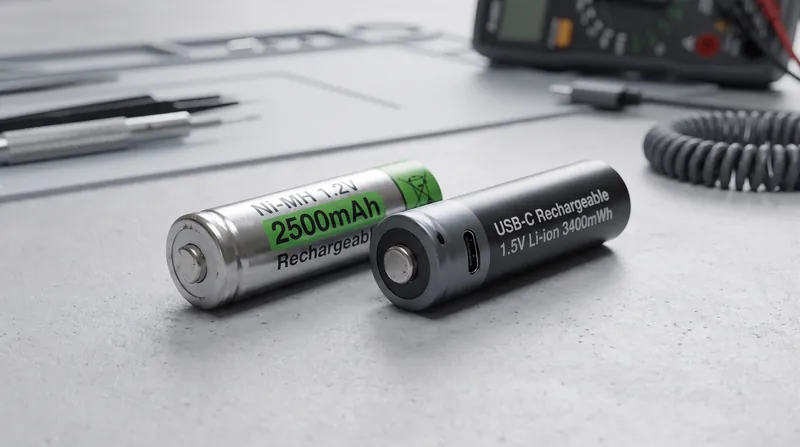
The Economics of Smart Home Power: Comparing 1.5V Lithium-Ion vs. NiMH Rechargeable Batteries
2 sources
Hardware Buying Guide
The Hidden Cost of AI: How Data Center Demand is Causing 'Shrinkflation' in Laptops
6 sources

Comments
Every angle. Every day.
Get Shopping & Reviews stories with full source coverage and perspective breakdowns, free every day.