
CAR-T Cell Therapy Shows Promise in 'Resetting' the Immune System for Severe Lupus
A pioneering clinical trial in the UK has successfully used genetically modified T-cells to put severe, treatment-resistant lupus into remission. The one-time therapy appears to eliminate disease-causing cells and allow a healthy immune system to rebuild.
By Factlen Editorial Team
- Immunology Researchers
- Focus on the mechanism of the immune reset and the clinical efficacy data.
- Patient Advocates
- Focus on the quality-of-life improvements and the burden of chronic illness.
- Health Economists & Skeptics
- Focus on the high cost, scalability challenges, and need for long-term data.
What's not represented
- · Insurance Providers
- · Manufacturers of traditional immunosuppressants
Why this matters
For decades, severe autoimmune diseases have been managed with lifelong immunosuppressants that carry heavy side effects. If this one-time cellular therapy proves durable, it could shift the medical paradigm from merely suppressing autoimmune conditions to functionally curing them.
Key points
- A UK clinical trial has successfully used CAR-T cell therapy to put severe lupus patients into remission.
- The therapy genetically modifies a patient's T-cells to hunt down and destroy disease-causing B cells.
- Once the rogue B cells are eliminated, the body generates new, healthy B cells, effectively resetting the immune system.
- Five of the first six patients treated at a lower dose achieved remission and stopped taking immunosuppressants.
- The treatment has shown a favorable safety profile so far, avoiding the severe neurological side effects sometimes seen in cancer trials.
- Long-term durability remains unknown, and the high cost of cellular manufacturing poses scalability challenges.
For more than three decades, Katie Tinkler lived with severe systemic lupus erythematosus, an autoimmune disease that forced her to give up her career and eventually required a complex regimen of medications just to manage the daily pain and fatigue. Today, she is entirely off her lupus medication, her joint pain has vanished, and her blood markers have returned to normal levels for the first time since 1993. Her dramatic recovery is the result of an experimental cellular treatment that researchers believe may have fundamentally "reset" her immune system.[1][2]
Tinkler is one of the first participants in the CARLYSLE clinical trial, a pioneering Phase I study led by University College London (UCL) and University College London Hospitals NHS Foundation Trust (UCLH). The trial is testing a therapy called obecabtagene autoleucel (obe-cel), which utilizes a technology previously reserved for treating aggressive blood cancers. By adapting this oncology breakthrough for rheumatology, investigators are exploring whether a single infusion can halt the relentless internal attacks characteristic of severe autoimmune disorders.[3][5]
Systemic lupus erythematosus occurs when the body's immune system mistakenly identifies its own healthy tissues as foreign threats. A central driver of this dysfunction is the B cell, a type of white blood cell that normally produces antibodies to fight infections. In lupus patients, rogue B cells produce autoantibodies that trigger widespread inflammation, progressively damaging critical organs such as the kidneys, heart, and lungs. An estimated five million people worldwide live with the condition, the vast majority of whom are women.[4][6]
Historically, the only way to manage severe lupus has been through broad immunosuppression. Patients are prescribed lifelong regimens of steroids and targeted biologics designed to dampen the immune response. However, these treatments leave patients highly vulnerable to infections and often fail to halt the progression of the disease in refractory cases. The CARLYSLE trial specifically enrolled patients who had exhausted these standard options and were facing irreversible organ damage.[3][6]
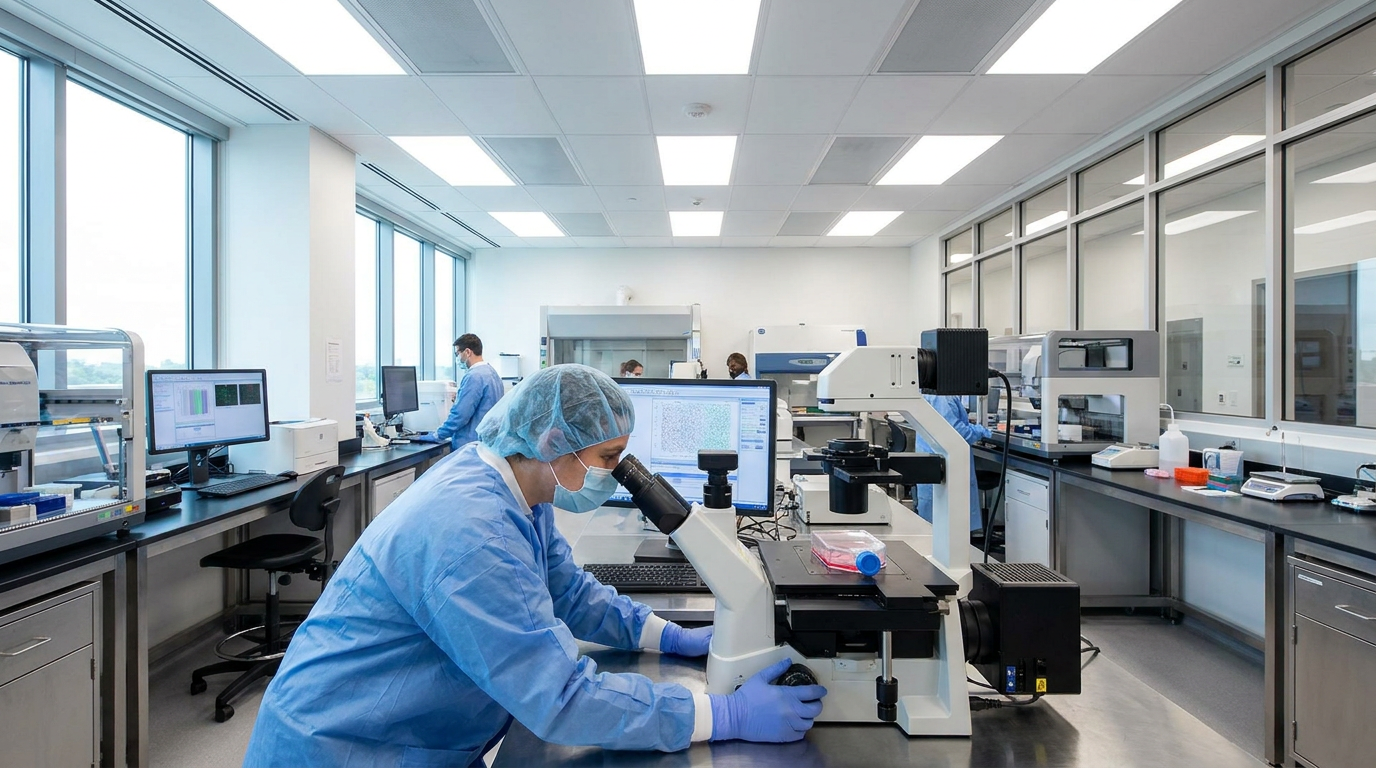
The experimental intervention relies on Chimeric Antigen Receptor (CAR) T-cell therapy. The process begins by extracting a patient's own T-cells—another type of immune cell—and genetically modifying them in a laboratory. The cells are engineered to express a synthetic receptor that specifically hunts down CD19, a protein found on the surface of B cells. Once millions of these modified T-cells are infused back into the patient's bloodstream, they act as a targeted strike force, systematically destroying the entire B cell population.[1][2]

The therapeutic goal is not permanent B cell depletion, but rather an "immune reset." Clinical data shows that after the CAR-T cells wipe out the existing B cells, the patient's body eventually begins to generate new ones. Crucially, when these B cells return—typically between three and six months post-infusion—they emerge as naive, early-stage cells. They lack the autoreactive memory that drove the lupus, effectively giving the patient a newly minted, healthy immune system.[3][4]
Crucially, when these B cells return—typically between three and six months post-infusion—they emerge as naive, early-stage cells.
Early clinical evidence from the CARLYSLE trial has been highly encouraging. According to data presented by UCLH researchers, nine adults with severe, treatment-resistant lupus had received the therapy as of late 2025. Among the first six patients treated at a lower dose, five achieved clinical remission within months. These patients experienced rapid reductions in disease activity and were able to safely discontinue their standard immunosuppressive medications.[2][3]

The therapy's impact on organ function has been particularly notable for patients suffering from lupus nephritis, a severe complication that attacks the kidneys. Investigators reported that several participants achieved complete or partial renal responses. Proteinuria—excess protein in the urine, a key marker of kidney damage—was significantly reduced, and overall kidney function stabilized or improved over the observation period.[3][5]
Safety remains a paramount concern when deploying CAR-T therapy, as its use in oncology is frequently associated with severe side effects. The rapid destruction of target cells can trigger cytokine release syndrome (CRS), a dangerous systemic inflammatory response, as well as severe neurological toxicities known as ICANS. However, the early safety profile in the lupus cohort has been remarkably favorable. Researchers have observed no cases of ICANS and no moderate or severe instances of CRS among the treated patients.[3][4]
Despite the unprecedented success of these early interventions, researchers emphasize transparent uncertainty regarding the treatment's long-term durability. The average follow-up for the lower-dose cohort is currently around 11 months. While the newly generated B cells appear healthy, it remains unknown whether the underlying genetic or environmental triggers of the patient's lupus might eventually cause the new cells to turn autoreactive again years down the line.[2][6]
Furthermore, scaling autologous CAR-T therapy presents massive logistical and economic hurdles. Because the treatment requires extracting, genetically engineering, and expanding a patient's own cells in a specialized laboratory, the manufacturing process is highly complex and notoriously expensive. Health economists caution that unless the manufacturing process can be streamlined or transitioned to "off-the-shelf" allogeneic donor cells, widespread access will be severely constrained by healthcare budgets.[4][6]

To build on these early findings, clinical investigations are expanding. A larger Phase II study, known as LUMINA, is currently recruiting patients with severe lupus and active lupus nephritis across multiple centers in the UK. Simultaneously, researchers globally are launching trials to test CD19-targeted CAR-T cells against other severe B-cell-mediated autoimmune diseases, including systemic sclerosis, inflammatory myopathies, and multiple sclerosis.[3][5]
If these results hold up in larger, long-term studies, the implications for rheumatology will be profound. For decades, patients with severe autoimmune diseases have been told they must simply manage a chronic, lifelong illness. The prospect that a single cellular intervention could deliver a durable immune reset moves the medical community one step closer to a word that has long been avoided in autoimmune care: a cure.[1][6]
How we got here
2021
The first relevant results demonstrating the efficacy of CAR-T therapy in a systemic lupus erythematosus patient are published in the New England Journal of Medicine.
2024
The CARLYSLE Phase I trial begins recruiting patients in the UK to test the obe-cel CAR-T therapy for severe, refractory lupus.
November 2025
Nine adults with severe, treatment-resistant lupus have received the experimental CAR-T infusion as part of the ongoing trial.
June 2026
Early trial data presented at the EULAR Congress reveals that five of six lower-dose patients achieved clinical remission.
Viewpoints in depth
Immunology Researchers
Scientists leading the trials view this as a fundamental paradigm shift in treating autoimmune diseases.
Trial investigators argue that CAR-T therapy represents a move from merely suppressing symptoms to addressing the root cause of autoimmune disease. By completely clearing out the CD19-positive B cell compartment, the therapy removes the source of the pathogenic autoantibodies. When the B cells eventually repopulate, they do so without the autoreactive memory that drove the disease, suggesting a true 'reset' of the immune system rather than a temporary pause in activity.
Patient Advocates
Advocacy groups emphasize the life-changing potential of drug-free remission for severe sufferers.
For patients who have spent decades managing chronic pain, organ damage, and the heavy side effects of broad immunosuppressants, the prospect of a one-time treatment is revolutionary. Advocates highlight case studies where patients have returned to normal activities—working, exercising, and living without daily medication. However, they also stress the urgent need to ensure these highly specialized therapies eventually become accessible and affordable to the broader patient population, not just those enrolled in elite clinical trials.
Health Economists
Skeptics warn that the high cost and complexity of autologous cell therapies pose major scalability challenges.
While the clinical results are striking, health economists point out that autologous CAR-T therapies currently cost hundreds of thousands of dollars per patient in the oncology sector. The requirement to extract, engineer, and expand each individual patient's cells in a specialized facility creates a massive bottleneck. Economists argue that for CAR-T to become a standard of care for the millions of people with autoimmune diseases, the industry must develop cheaper, scalable manufacturing processes or successfully transition to 'off-the-shelf' allogeneic therapies derived from healthy donors.
What we don't know
- It is not yet known if the immune reset is permanent, or if the newly generated B cells will eventually become autoreactive again.
- Researchers are still determining the optimal dosing strategy to maximize efficacy while minimizing the risk of severe immune reactions.
- It remains unclear how healthcare systems will manage the exorbitant costs of scaling personalized cellular therapies for widespread autoimmune use.
Key terms
- CAR-T Cell Therapy
- A treatment where a patient's T-cells are genetically altered in a lab to attack specific cells, originally developed for blood cancers.
- B Cells
- A type of white blood cell that produces antibodies; in lupus, rogue B cells produce autoantibodies that mistakenly attack healthy tissue.
- Lupus Nephritis
- A severe and potentially life-threatening complication of lupus where the immune system attacks the kidneys.
- CD19
- A specific protein found on the surface of B cells, which the genetically modified CAR-T cells are programmed to target and destroy.
- Immune Reset
- The therapeutic process where disease-causing immune cells are wiped out, allowing the body to regenerate a new, healthy immune system.
Frequently asked
Is this a permanent cure for lupus?
It is too early to call it a permanent cure. While patients have achieved drug-free remission for over a year, long-term studies are needed to see if the disease eventually returns.
Who is eligible for this treatment?
Currently, the therapy is only available in clinical trials for patients with severe, refractory lupus who have not responded to standard immunosuppressive medications.
What are the side effects of CAR-T therapy?
CAR-T therapy can cause severe immune reactions like cytokine release syndrome (CRS) and neurological toxicities, though early data from the lupus trials show a highly favorable safety profile compared to its use in cancer.
Sources
Source coverage
6 outlets
3 viewpoints surfaced






[1]BBC NewsPatient Advocates
'I've never been this good' – revolutionary immune reset puts lupus in remission
Read on BBC News →[2]The GuardianPatient Advocates
Lupus patients in England in remission after pioneering NHS trial of GM therapy
Read on The Guardian →[3]University College London HospitalsImmunology Researchers
CAR T-cell therapy transforms life of patient with severe lupus
Read on University College London Hospitals →[4]Cell InsightImmunology Researchers
Challenges and opportunities: CAR-T cell therapy in autoimmune diseases
Read on Cell Insight →[5]ClinicalTrials.govImmunology Researchers
Obe-cel in Adolescent and Adult Severe, Refractory Systemic Lupus Erythematosus (CARLYSLE)
Read on ClinicalTrials.gov →[6]Factlen Editorial TeamHealth Economists & Skeptics
Synthesis by Factlen editorial team
Read on Factlen Editorial Team →

More in health
See all 6 stories →Metabolic Health
Muscle as an Organ of Longevity: The Science of Myokines and Metabolic Health
0 sources

Clinical Evidence
The Evidence for Exercise as a First-Line Mental Health Treatment
0 sources

Diabetes Research
FDA Approves First Disease-Modifying Therapy for Newly Diagnosed Stage 3 Type 1 Diabetes in Youth
0 sources
Longevity Science
The Science of 'Exercise Snacks': How 1-Minute Bursts of Movement Can Transform Longevity
0 sources

Every angle. Every day.
Get health stories with full source coverage and perspective breakdowns delivered to your inbox.