
Cameroon Captures First WAFCON Title as Nigeria Cleans House After Historic World Cup Miss
Cameroon's Indomitable Lionesses secured their first Women's Africa Cup of Nations championship with a 3-0 victory over Malawi, signaling a massive shift in African women's soccer as ten-time champion Nigeria fired its coaching staff after failing to qualify for the World Cup.

The moment the final whistle blew at the Prince Moulay El Hassan Stadium in Rabat, the balance of power in African women's soccer permanently shifted. Cameroon's Indomitable Lionesses routed debutant Malawi 3-0 to capture their first-ever Women's Africa Cup of Nations (WAFCON) title, erasing decades of near-misses. For fans across the continent, the victory signaled that the era of single-nation dominance is officially over.[4]
The championship was secured in a blistering first half that left Malawi with no answers. Marie Ngah struck twice, capitalizing on a loose ball in the 20th minute and adding a dagger in stoppage time, while Naomi Ndjoah Eto netted the second. The performance crowned a tournament where Cameroon conceded just two goals in six matches, anchored by Golden Glove-winning goalkeeper Michaely Bihina.[3][4]
But the story of Cameroon's triumph is inextricably linked to the collapse of the continent's ultimate dynasty. Thousands of miles away in Abuja, the Nigeria Football Federation was busy cleaning house. The NFF unceremoniously fired head coach Justine Madugu and his entire technical staff after the ten-time champions suffered their worst stretch in program history.[1][2]
For the first time ever, the Super Falcons will not participate in the FIFA Women's World Cup. Nigeria's nightmare began with a 1-0 quarterfinal loss to Cameroon—their earliest WAFCON exit—and culminated in a 2-1 playoff defeat to South Africa that officially eliminated them from the 2027 World Cup race.[1][3]
The contrast between the two nations defined the 2026 tournament. Cameroon, who only qualified because the field expanded to 16 teams, arrived in Morocco with a squad built on tactical unity and a grueling pre-tournament camp. Midfielder Monique Ngock, named Woman of the Competition, orchestrated a system that suffocated opponents and protected the backline.[3][5]
Nigeria, conversely, relied on a roster packed with elite talent from top European and American leagues. Yet the Super Falcons looked disjointed, struggling to break down organized defenses and lacking the chemistry that defined their past championship runs. The talent gap that once allowed Nigeria to simply overwhelm African opposition has officially closed.[1][2][3]
Cameroon now joins Nigeria, Equatorial Guinea, and South Africa as the only nations to lift the WAFCON trophy. With Malawi also securing a World Cup berth alongside Morocco and Algeria, the 2026 tournament serves as a definitive blueprint for how emerging programs can topple established giants.[3][4]
The divergent paths of the champions and the fallen dynasty offer a stark lesson in modern squad building. As federations across the continent prepare for the 2027 World Cup cycle, they face a fundamental choice between prioritizing domestic cohesion or managing a diaspora of global stars. The results in Rabat suggest the former is currently winning the arms race.
Viewpoints in depth
The Domestic Cohesion Model
Prioritizing extended training camps and domestic-league synergy over individual star power.
**For:** Creates a highly synchronized unit capable of executing complex pressing triggers and defensive rotations without hesitation. **Against:** Lacks the sheer individual match-winning brilliance of top-tier global league players when the tactical system breaks down. **Evidence:** Cameroon conceded just 2 goals across 6 matches, while debutant Malawi reached the final using a similar cohesion-first approach. **Fits well when:** A federation can fund long pre-tournament camps and the tactical system requires high work rates. **Does not fit when:** Facing elite global opposition that can easily bypass structured pressing with superior individual technique.
The European-Based Star Model
Relying on elite talent playing in top global leagues to overwhelm continental opposition.
**For:** Provides unmatched individual quality, physical dominance, and big-game experience forged in the world's best club competitions. **Against:** Players arrive late to international windows, struggle with tactical cohesion, and can underestimate rapidly improving continental opponents. **Evidence:** Nigeria's roster of global stars failed to score against Cameroon in the quarterfinal and lost the World Cup playoff 2-1 to South Africa. **Fits well when:** The talent gap is so massive that individual brilliance can solve tactical deficits. **Does not fit when:** The rest of the continent catches up tactically and physically, exposing the lack of underlying team chemistry.
Key points
- Cameroon defeated Malawi 3-0 to win their first-ever Women's Africa Cup of Nations title.
- Marie Ngah scored twice in the final, while goalkeeper Michaely Bihina won the Golden Glove.
- Nigeria fired head coach Justine Madugu after failing to qualify for the World Cup for the first time.
- The tournament highlighted a shift away from relying solely on European-based stars toward cohesive, domestic-heavy rosters.
What we don’t know
- Who the Nigeria Football Federation will appoint to rebuild the Super Falcons ahead of the next cycle.
- Whether Cameroon's domestic-heavy roster can translate their continental success to the global stage at the 2027 World Cup in Brazil.
- Domestic Cohesion Proponents
- Argue that African nations must invest in domestic leagues and cohesive squad building to succeed.
- Elite Talent Maximizers
- Believe that sending players to top global leagues remains the ultimate ceiling-raiser, provided federations manage them correctly.
Perspectives this story doesn't cover
- Domestic League Clubs in Nigeria
- African Soccer Financial Backers
Sources
Source coverage
5 outlets
2 viewpoints surfaced





- [1]beIN SportsElite Talent Maximizers
Nigeria Football Federation Fires Super Falcons Coach Justine Madugu
Read on beIN Sports → - [2]Just Women's SportsElite Talent Maximizers
Super Falcons Coach Justine Madugu Fired After Women's World Cup Miss
Read on Just Women's Sports → - [3]The GuardianDomestic Cohesion Proponents
Wafcon 2026 review: Glory for Cameroon, Nigeria flop and Malawi cause a stir
Read on The Guardian → - [4]Al JazeeraDomestic Cohesion Proponents
Cameroon dominate Malawi to win first Women's Africa Cup of Nations title
Read on Al Jazeera → - [5]Washington SpiritElite Talent Maximizers
Washington Spirit's Monique Ngock and Cameroon Win 2026 Women's Africa Cup of Nations
Read on Washington Spirit →
More in Sports
See all →Pitch Geometry
Enforcing Law 14's 9.15-Metre Buffer: Why Soccer's Penalty Arc Extends Four Yards Beyond the Box
4 sources

Nations League
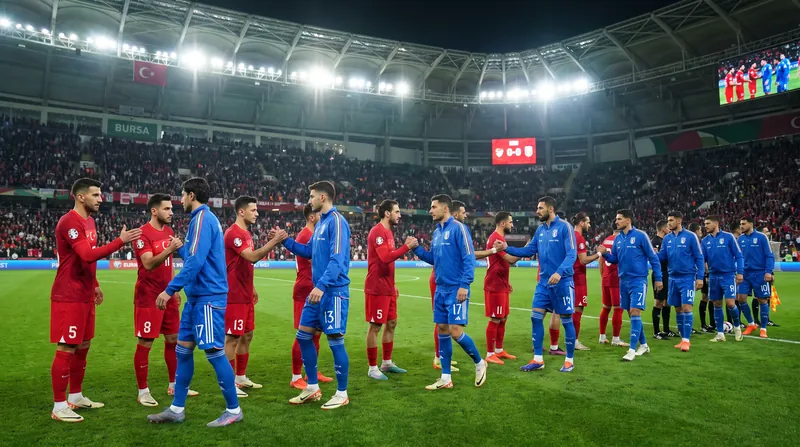
Can Turkey Finally Break Their Winless Curse Against Italy in Nations League Clash?
6 sources
Nations League
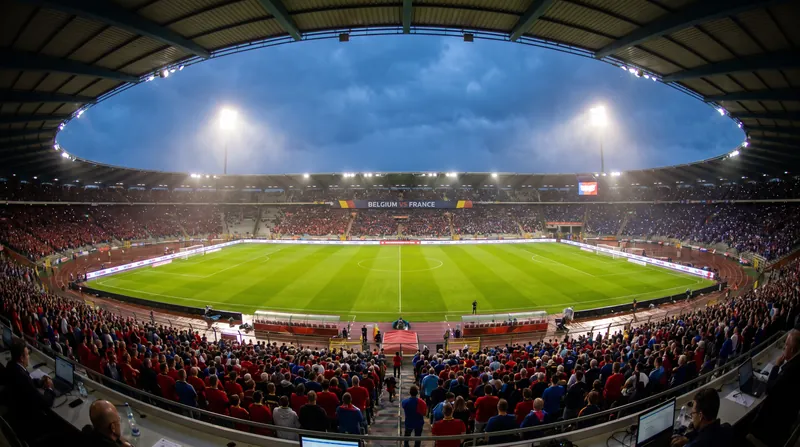
France and Belgium Face Early Nations League Test Without Mbappé and Courtois
5 sources
Group A4
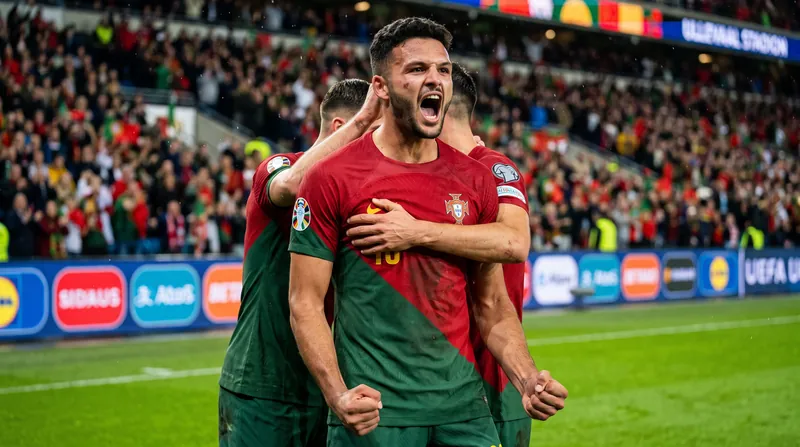
Ramos and Félix Strike as Portugal Snaps Norway's Home Streak in Oslo
2 sources
Comments
Every angle. Every day.
Get Sports stories with full source coverage and perspective breakdowns, free every day.