
Buying New Construction vs. Existing Homes in 2026: The New Math
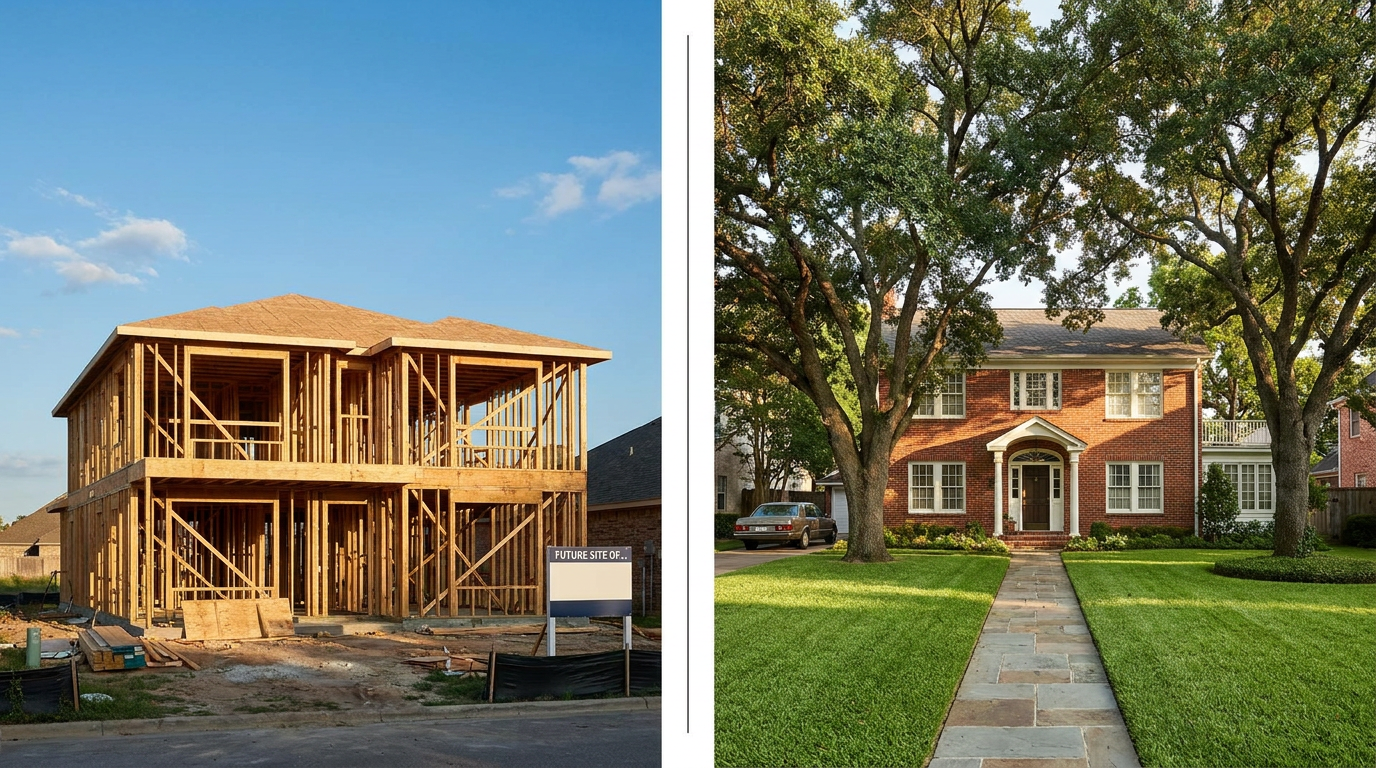
The historical price gap between new builds and existing homes has nearly vanished in 2026, forcing buyers to weigh builder incentives and energy efficiency against the location and speed of resale properties.
By Factlen Editorial Team
- New Construction Advocates
- Argue that modern energy efficiency, builder warranties, and mortgage rate buydowns make new builds the financially safer choice.
- Existing Home Proponents
- Emphasize the value of established neighborhoods, mature landscaping, faster closing timelines, and the ability to negotiate with individual sellers.
- Market Pragmatists
- Focus on the raw math, noting that the lock-in effect of pandemic-era mortgages has artificially inflated resale prices.
What's not represented
- · First-time homebuyers priced out of both markets
- · Local municipal planners managing suburban sprawl
Why this matters
For decades, buying a brand-new home meant paying a massive premium. Today, that rule is broken, meaning buyers who automatically filter out new construction might be missing their most affordable path to homeownership.
Key points
- The historical price premium for new construction has vanished, with median existing home prices slightly exceeding new builds in Q1 2026.
- A severe shortage of resale inventory, driven by homeowners locked into low pandemic-era mortgage rates, has artificially inflated existing home prices.
- Builders are countering high interest rates by offering aggressive incentives, including mortgage rate buydowns that can lower monthly payments.
- New construction offers long-term savings through warranties and high energy efficiency, but often requires compromising on lot size and location.
- Existing homes provide immediate move-in timelines and established neighborhoods, but carry the hidden financial risks of deferred maintenance.
For decades, a simple rule governed American real estate: if you wanted a brand-new home, you paid a hefty premium. But in 2026, that conventional wisdom has been turned upside down. The historical price gap between new construction and existing homes has nearly vanished, fundamentally altering the math for prospective buyers.[1][4]
In the first quarter of 2026, the median price for a newly built single-family home sat at $403,200, while the median price for an existing home was actually slightly higher at $404,600. This inversion—where someone else's lived-in space costs more than a never-occupied build—marks a profound shift in market dynamics that requires buyers to rethink their strategies.[1][6]
To understand this shift, buyers must look at the structural forces driving supply. Millions of existing homeowners secured mortgage rates below 4% during the pandemic and remain hesitant to sell and take on a modern 6.5% rate. This "lock-in effect" has created a severe shortage of resale inventory, artificially inflating the prices of older homes.[3][4]
Meanwhile, home builders have adapted to the affordability crisis by pivoting their strategies. To move inventory, builders are constructing slightly smaller floor plans and offering aggressive financial incentives that individual sellers simply cannot match.[2][4]

When comparing the two paths, the trade-offs fall into distinct categories of upfront costs, long-term maintenance, and lifestyle preferences. Here is the evidence-backed breakdown for buyers navigating the 2026 landscape.[6]
The most compelling argument for buying new construction lies in builder incentives and predictable early costs. According to the National Association of Home Builders, over 60% of builders are currently offering sales incentives, with mortgage rate buydowns being the most popular tool to attract buyers.[2]
These buydowns can temporarily or permanently reduce a buyer's effective interest rate by 1 to 2 percentage points, saving hundreds of dollars on the monthly payment. Additionally, new homes come with builder warranties covering major systems, virtually eliminating the risk of a catastrophic repair bill in the first few years of ownership.[2][3]
Energy efficiency is another major factor in favor of new builds. Modern construction standards have evolved rapidly. A new build typically scores around 100 or lower on the Home Energy Rating System (HERS) index, compared to an average of 120 for older homes. This translates to utility bills that can be 30% to 50% lower, providing a significant monthly saving.[5][6]

Energy efficiency is another major factor in favor of new builds.
However, the sticker price of a new build rarely tells the whole story. The base price quoted by builders typically excludes the premium finishes, landscaping, and lot upgrades showcased in the model home, meaning the final price can quickly escalate if buyers are not disciplined.[3][6]
Furthermore, new developments are often located further from urban centers, resulting in longer commutes. The lots themselves are generally smaller, and buyers must endure the noise and dust of living in an active construction zone until the community is completed. Timelines are also a risk; a new build can take 6 to 12 months, which does not work for buyers on a strict moving schedule.[3][4]
On the other side of the equation, resale properties offer something new construction cannot manufacture: immediate context. Existing homes are situated in established neighborhoods with mature trees, proven school districts, and walkable amenities that take decades to develop.[3][6]
The transaction process is also vastly different. Buying an existing home allows for a 30-to-45-day closing timeline. Buyers also have more leverage to negotiate the purchase price, request repair credits after an inspection, or adjust possession dates—flexibility that corporate builders rarely offer.[3][6]

The primary drawback of an older home is the hidden burden of deferred maintenance. While the upfront purchase price might seem competitive, the "true cost" of ownership includes aging systems that will inevitably fail.[4][6]
Replacing a 15-year-old HVAC system or a deteriorating roof can easily add $10,000 to $20,000 to the cost of the home within the first few years. Older homes also lack modern insulation and smart-home infrastructure, leading to higher ongoing operational costs.[3][5]
The decision ultimately hinges on a buyer's timeline and risk tolerance. New construction fits well when buyers have flexible move-in dates, prioritize predictable monthly costs, and need the financial leverage of a builder's mortgage buydown to afford the monthly payments.[2][6]
Conversely, new construction does not fit when buyers need to relocate immediately, desire a large lot with mature landscaping, or want to live in a historic, central neighborhood with unique architectural character.[4][6]

How we got here
Pre-2020
New construction typically carries a 10% to 15% price premium over existing homes.
2020-2022
Mortgage rates drop below 4%, locking millions of homeowners into highly favorable terms.
2023-2024
Interest rates rise, creating a lock-in effect that severely restricts the supply of existing homes for sale.
Q2 2024
The historical relationship flips for the first time, with existing home prices exceeding new home prices.
Q1 2026
The trend solidifies, with the median existing home costing $1,400 more than a new build nationwide.
Viewpoints in depth
New Construction Advocates
Focus on the long-term financial predictability and modern standards of newly built homes.
This camp argues that the true cost of homeownership extends far beyond the purchase price. By factoring in 30% to 50% savings on monthly utility bills and the elimination of major repair costs in the first five years due to warranties, new builds offer a safer financial profile. They also point out that builder-subsidized mortgage rates are the only reliable way for buyers to achieve a sub-5% interest rate in the 2026 market.
Existing Home Proponents
Value the immediate lifestyle benefits and established character of older neighborhoods.
Proponents of the resale market emphasize that real estate is fundamentally about location. Existing homes offer mature trees, proven school districts, and proximity to urban centers that new developments on the outskirts of town cannot match. Furthermore, they argue that older homes often feature superior craftsmanship and larger lot sizes, and that the ability to negotiate directly with a motivated human seller offers more flexibility than dealing with a corporate builder.
Market Pragmatists
Analyze the structural anomalies driving current pricing dynamics.
Economists and data analysts view the current parity between new and existing home prices as a historical anomaly driven by the lock-in effect. Because millions of homeowners refuse to abandon their pandemic-era 3% mortgages, the supply of resale homes is artificially constrained, driving up their prices. Meanwhile, builders are acting pragmatically by shrinking floor plans and buying down rates to keep inventory moving, creating a temporary window where new construction offers outsized value.
What we don't know
- How long builders will continue to offer aggressive mortgage rate buydowns if overall interest rates begin to fall naturally.
- Whether the lock-in effect will permanently alter the turnover rate of existing homes, or if homeowners will eventually accept higher rates and list their properties.
- How the long-term resale value of 2026's smaller-footprint new builds will compare to older, larger homes in the same regions.
Key terms
- Mortgage Rate Buydown
- A financing incentive where a builder pays a lump sum upfront to lower the buyer's interest rate for the first few years, or permanently.
- Deferred Maintenance
- Repairs or upgrades on an existing home that previous owners delayed, which the new buyer will eventually have to pay for.
- HERS Index
- The Home Energy Rating System, a standard measurement of a home's energy efficiency; lower scores indicate better performance.
- Lock-in Effect
- A market dynamic where homeowners refuse to sell because they do not want to give up the low mortgage rate they currently hold.
Frequently asked
Is it really cheaper to buy a new home right now?
In many markets, yes. The median price of a new home is slightly lower than an existing home, and builder incentives can further reduce monthly payments.
How long does it take to build a new home?
Typically 6 to 12 months, depending on the complexity of the design, labor availability, and weather conditions.
Are builder incentives negotiable?
While base prices are usually firm, buyers can often negotiate on the specific incentives offered, such as asking for more closing cost assistance or specific design upgrades.
Do new homes hold their value?
Yes, but they transition into existing homes the moment they are sold. Their long-term appreciation depends heavily on the surrounding neighborhood's development.
Sources
Source coverage
6 outlets
3 viewpoints surfaced






[1]U.S. Census BureauMarket Pragmatists
New Residential Sales Data Q1 2026
Read on U.S. Census Bureau →[2]National Association of Home BuildersNew Construction Advocates
Builder Incentives and Market Outlook 2026
Read on National Association of Home Builders →[3]Zillow ResearchExisting Home Proponents
Buyer Preferences: New Construction vs. Existing Homes
Read on Zillow Research →[4]Texas A&M Real Estate Research CenterMarket Pragmatists
New Construction Trends: The Pivot Toward Affordability
Read on Texas A&M Real Estate Research Center →[5]National Institute of Building SciencesNew Construction Advocates
Energy Performance and the HERS Index in Modern Construction
Read on National Institute of Building Sciences →[6]Factlen Editorial TeamMarket Pragmatists
Synthesis by Factlen editorial team
Read on Factlen Editorial Team →
Every angle. Every day.
Get real estate stories with full source coverage and perspective breakdowns delivered to your inbox.