
Big Food's Growth Engine Shifts: Why Asia and Latin America Are Now Outpacing North American Sales
As North American consumers pull back on packaged goods, multinational food giants are finding their strongest volume growth in emerging markets. A rising middle class and hyper-localized flavor innovations in Asia and Latin America are fundamentally rewiring the global food industry's priorities.

Share this story
In short
- North American packaged food volumes are stagnating due to inflation, dietary shifts, and GLP-1 drugs.
- Latin America and Asia are now the primary engines for global food industry volume growth.
- Companies are hyper-localizing recipes and flavors rather than just exporting American products.
The era of the American supermarket dictating the global food industry's fortunes is quietly drawing to a close. For decades, multinational food and beverage conglomerates relied on the United States and Western Europe as their primary engines for volume growth and product innovation. However, a stark divergence is now appearing on the balance sheets of the world's largest packaged food companies, signaling a historic geographic pivot in how the world eats.[1][5]
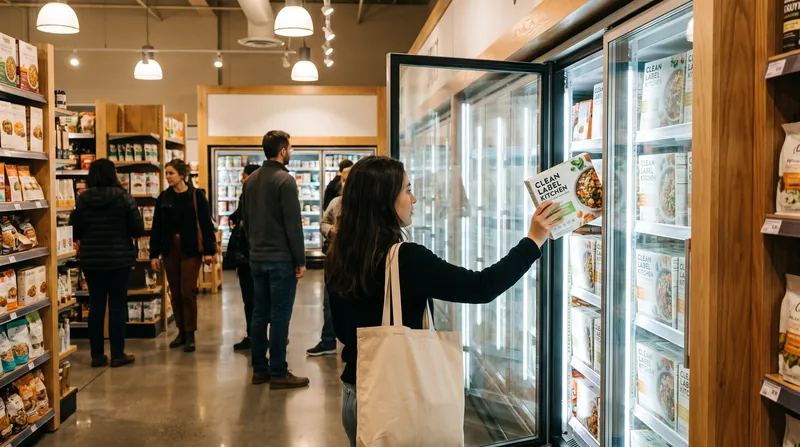
In North America, the volume of packaged food sold—the actual number of boxes, bags, and bottles moving off shelves—has stagnated or declined over the past several quarters. Industry analysts point to a confluence of factors: years of cumulative inflation fatigue pushing shoppers toward private labels, a structural demographic shift toward fresh perimeter-store eating, and the rising adoption of GLP-1 weight-loss medications that naturally suppress appetite for highly caloric snacks.[1][2]
Conversely, the narrative in emerging markets is one of explosive expansion. Latin America and the Asia-Pacific region are currently driving the lion's share of volume growth for global snack and beverage makers. This surge is underpinned by rapid urbanization, rising disposable incomes, and the addition of millions of consumers to the middle class each year, transforming dietary habits and increasing demand for convenience foods.[2][3]
Recent earnings reports from top-tier food multinationals illustrate this divide clearly. While North American divisions have frequently relied on price hikes to maintain revenue growth—often masking a drop in actual unit sales—divisions in Brazil, Mexico, India, and Southeast Asia are reporting robust, organic volume increases. In these regions, consumers are actively trading up from unpackaged, informal market goods to branded, packaged alternatives.[1][2]
To capture this growth, Big Food is fundamentally rewiring its approach to product development. The strategy has shifted from simply exporting American products to engaging in hyper-localization. R&D kitchens are no longer just tweaking the sweetness of a global formula; they are building entirely new recipes from the ground up to match regional palates, incorporating local spices, traditional flavor profiles, and culturally resonant ingredients.[4][5]
This localization extends deeply into the culinary architecture of the products. A potato chip sold in Mexico might feature complex, multi-layered chili and lime profiles developed specifically for that market, while a biscuit in India might be formulated with cardamom and designed specifically to withstand dipping in hot chai without disintegrating. These are not novelties; they are core portfolio drivers.[4]
Beyond flavor recipes, companies are overhauling their packaging strategies to meet the economic realities of emerging markets. The concept of the "magic price point"—a specific, affordable coin denomination that a consumer is willing to spend daily—dictates product size. To hit these targets while maintaining margins, brands are deploying smaller, single-serve sachets that allow lower-income consumers to access premium brands without a large upfront outlay.[2][4]
Supply chains are also being aggressively localized. Rather than manufacturing in the West and exporting globally, food giants are building massive production hubs directly within their fastest-growing markets. This strategy insulates them from global shipping chokepoints, reduces carbon footprints, and provides a natural hedge against the currency fluctuations that have historically plagued emerging market operations.[1][5]
However, this aggressive expansion is not without significant friction. Public health organizations are increasingly sounding the alarm over the rapid influx of ultra-processed foods into developing nations. Epidemiologists note that as these regions adopt Western-style convenience diets, they are simultaneously experiencing sharp spikes in diet-related non-communicable diseases, such as type 2 diabetes and cardiovascular issues, mirroring the health crises seen in North America.[5]
In response to these health concerns, several emerging markets are pioneering aggressive regulatory frameworks. Latin America, in particular, has become a global testing ground for strict front-of-pack warning labels. Countries like Chile, Mexico, and Colombia mandate stark, black stop-sign labels on products high in sugar, sodium, or saturated fat, forcing multinational companies to rapidly reformulate their recipes to avoid the stigma.[2]
Furthermore, global giants are facing fierce competition from agile, domestic food manufacturers. These local players often possess a deeper, intuitive understanding of regional tastes, operate with lower overhead costs, and can bring new recipes to market much faster than a multinational conglomerate. To compete, Big Food is frequently resorting to acquiring these successful local brands rather than trying to out-innovate them.[3][4]
The long-term implication of this geographic shift is a phenomenon known as "reverse innovation." As the center of gravity for R&D moves to Asia and Latin America, the innovative recipes, flavor combinations, and packaging formats developed for those markets are beginning to migrate back to the United States and Europe, driven by increasingly diverse domestic populations and a general consumer desire for bolder, global flavors.[4][5]
Ultimately, the R&D pipelines of the world's biggest food companies will increasingly prioritize the tastes of a consumer in Mumbai, Jakarta, or São Paulo over one in Chicago or London. The recipes that define the next decade of global food culture will be written in the global South and East, fundamentally reshaping what the world eats.[1][5]
Definitions
- Volume Growth
- An increase in the actual number of physical units (boxes, bags, bottles) sold, as opposed to revenue growth driven purely by raising prices.
- Localization
- The process of adapting a product's recipe, flavor profile, and packaging to meet the specific cultural and economic preferences of a local market.
- Magic Price Point
- A specific, highly affordable price target (often a single coin denomination) that dictates how a product must be formulated and packaged to ensure daily purchases by lower-income consumers.
- Reverse Innovation
- The trend where products, recipes, or technologies developed specifically for emerging markets are eventually introduced into established Western markets.
Questions & answers
Why are food sales volumes dropping in North America?
Volumes are declining due to a combination of inflation fatigue, a consumer shift toward fresh perimeter-store foods, and the rising use of GLP-1 weight-loss drugs that suppress appetite.
Are companies selling the exact same products overseas?
Rarely. Companies are heavily investing in 'localization,' creating entirely new recipes, flavor profiles, and packaging sizes tailored specifically to regional tastes and economic realities.
How are emerging markets regulating these new foods?
Many countries, particularly in Latin America, have implemented strict front-of-pack warning labels (like black stop signs) to alert consumers to high levels of sugar, sodium, and saturated fats.
Analysis by camp
Multinational Food Strategists
Argue that pivoting to emerging markets and hyper-localizing products is essential for long-term corporate survival amid Western stagnation.
Industry executives and market analysts view the pivot to Asia and Latin America not as an option, but as an existential necessity. With North American populations aging and becoming more health-conscious, the traditional avenues for volume growth have evaporated. Strategists argue that by investing heavily in local R&D and building regional supply chains, companies can capture the loyalty of the expanding global middle class while insulating themselves from Western economic volatility. They view localization as a sign of respect for regional culinary traditions rather than mere corporate expansion.
Public Health Advocates
Warn that the aggressive expansion of multinational food companies exports Western-style diets, fueling diet-related diseases in developing nations.
Global health organizations and epidemiologists observe this market shift with deep concern. They argue that the 'hyper-localization' of recipes often masks the underlying nutritional reality: the aggressive marketing of ultra-processed foods high in sugar, sodium, and unhealthy fats to populations historically unaccustomed to them. Advocates point to rising obesity and diabetes rates in Latin America and Southeast Asia as direct consequences of this corporate pivot, arguing that the food industry is simply shifting its negative externalities from the global North to the global South.
Global Economic Analysts
View the shift as a natural consequence of rising incomes and urbanization, marking a broader transfer of economic influence to the global South.
Economists and development analysts frame the changing food landscape as a lagging indicator of a much larger macroeconomic trend. The ability of consumers in India, Brazil, or Mexico to regularly purchase branded, packaged convenience foods is a hallmark of upward mobility and the transition from informal, agrarian economies to urbanized, dual-income households. From this perspective, the fact that Big Food must now cater its recipes to a consumer in Jakarta rather than Chicago is a testament to the shifting balance of global purchasing power.
- Multinational Food Strategists
- Argue that pivoting to emerging markets and hyper-localizing products is essential for long-term corporate survival amid Western stagnation.
- Public Health Advocates
- Warn that the aggressive expansion of multinational food companies exports Western-style diets, fueling diet-related diseases in developing nations.
- Global Economic Analysts
- View the shift as a natural consequence of rising incomes and urbanization, marking a broader transfer of economic influence to the global South.
Perspectives this story doesn't cover
- Local emerging-market food manufacturers competing against multinationals
- Smallholder farmers supplying the localized supply chains
Sources
Source coverage
5 outlets
3 viewpoints surfaced





- [1]ReutersMultinational Food Strategists
Food giants pivot to emerging markets as US consumer spending cools
Read on Reuters → - [2]BloombergMultinational Food Strategists
Latin America and Asia Drive Volume Growth for Global Snack Makers
Read on Bloomberg → - [3]World BankGlobal Economic Analysts
Consumer Spending and Middle-Class Expansion in Emerging Markets 2026
Read on World Bank → - [4]McKinsey & CompanyMultinational Food Strategists
The Future of Food: Localization Strategies in Global FMCG
Read on McKinsey & Company → - [5]Factlen Editorial TeamGlobal Economic Analysts
Synthesis by Factlen editorial team
Read on Factlen Editorial Team →
More in Food & Drink
See all →Food Allergies
FDA Reviews Mustard, Celery, and Buckwheat for Inclusion as Major Food Allergens
4 sources
Food Safety
How the Clover Hill Dairy Listeria Recall Works and What It Means for Soft Cheese Safety
4 sources

Regenerative Agriculture
USDA Finalizes 'Regenerative Feedstock Rule' to Unlock Biofuel Markets for Farmers Using Soil-Health Practices
4 sources

Organic Supply Chain
USDA's Landmark 'Strengthening Organic Enforcement' Rule Takes Effect to Combat Supply Chain Fraud
2 sources
Comments
Every angle. Every day.
Get Food & Drink stories with full source coverage and perspective breakdowns, free every day.