
Beyond the Gym: The Emerging Science of Creatine for Brain Health and Cognitive Focus
A growing body of clinical research is repositioning creatine monohydrate from a sports supplement to a powerful cognitive enhancer. Studies show it can rapidly regenerate cellular energy in the brain, combating sleep deprivation, mental fatigue, and age-related cognitive decline.
By Factlen Editorial Team
- Cognitive Researchers
- Focus on the measurable improvements in processing speed and memory during acute metabolic stress, such as sleep deprivation.
- Clinical Aging Specialists
- Emphasize creatine's potential to counteract the natural decline of mitochondrial efficiency in older adults, protecting against age-related cognitive impairment.
- High-Performance Advocates
- View creatine as a daily essential for maximizing baseline mental output, advocating for higher doses to push past the blood-brain barrier.
What's not represented
- · Pediatric Neurologists
- · Dietary Supplement Regulators
Why this matters
While creatine is widely known as a muscle-building supplement, emerging science reveals it is a potent tool for cognitive health. Understanding how it fuels the brain can help readers combat mental fatigue, recover from sleep deprivation, and protect against age-related cognitive decline.
Key points
- Creatine regenerates ATP, the primary energy molecule used by the brain.
- A single high dose can preserve cognitive function and memory during severe sleep deprivation.
- Older adults supplementing with creatine show improved memory and attention spans.
- Vegans, vegetarians, and women often see the most pronounced cognitive benefits due to lower baseline stores.
- Brain benefits often require higher doses (10-20g) to cross the blood-brain barrier.
For decades, creatine monohydrate has been relegated to the gym bags of bodybuilders and sprinters, celebrated almost exclusively for its ability to increase muscle mass and explosive power. But a dramatic scientific rebranding is underway.[1][2]
A surge of recent clinical research is repositioning the world's most popular sports supplement as a potent cognitive enhancer and neuroprotectant. Scientists are discovering that the same mechanisms that allow creatine to fuel a heavy deadlift also allow it to fuel intense cognitive output, memory retention, and mental clarity.[1][6]
To understand why a muscle supplement works in the mind, one must look at the brain's sheer metabolic demand. Despite accounting for just 2% of human body weight, the brain is an energy hog, consuming roughly 20% of the body's total energy reserves to keep neurons firing and synapses communicating.[6]
The cellular currency of this energy is a molecule called adenosine triphosphate (ATP). When brain cells work hard, they burn ATP, leaving behind a depleted molecule called ADP. Creatine steps into this cycle by donating a phosphate group to the depleted ADP, rapidly regenerating it back into usable ATP energy.[3][6]

Under normal, low-stress conditions, a healthy brain manages this energy cycle perfectly well on its own. But under severe metabolic stress—such as sleep deprivation, intense mental fatigue, or the natural aging process—the brain's energy demands quickly outstrip its natural supply.[6]
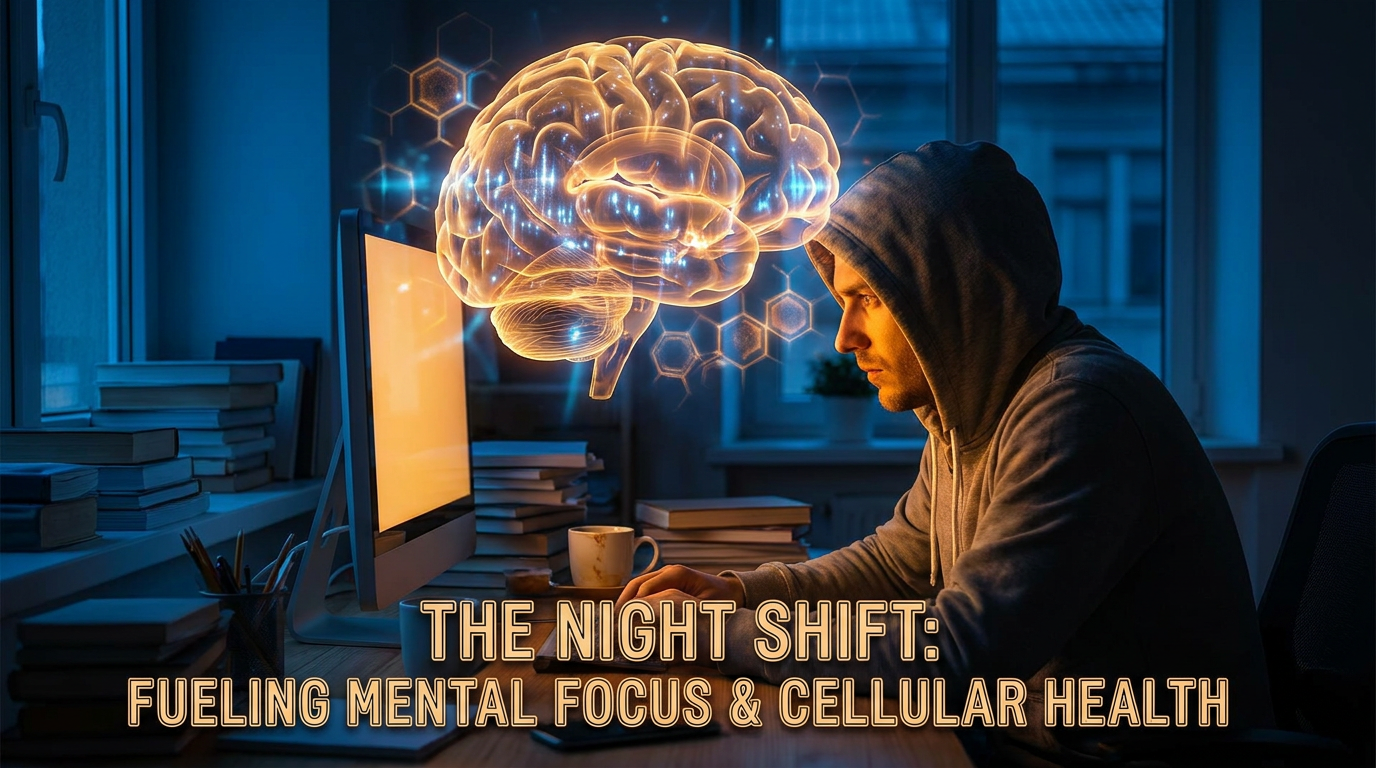
This metabolic bottleneck is where creatine supplementation shines, a dynamic vividly illustrated in recent sleep deprivation studies. A landmark trial published in Scientific Reports tested healthy adults who were kept awake for 21 consecutive hours.[5]
The researchers found that administering a single high dose of creatine prevented the typical drop in brain pH and phosphocreatine levels that usually accompanies exhaustion. Participants who took the supplement performed significantly better on memory, language, and processing speed tasks than the placebo group.[5]

The study's authors concluded that creatine has profound potential to sustain prolonged cognitive activity during sleep deprivation. This makes it a highly practical tool for shift workers, medical residents, first responders, or anyone facing acute exhaustion in high-stakes environments.[3][5]
The study's authors concluded that creatine has profound potential to sustain prolonged cognitive activity during sleep deprivation.
Beyond the acute stress of an all-nighter, the natural aging process presents a chronic metabolic challenge. As humans age, the brain's mitochondria—the microscopic powerhouses of the cell—gradually become less efficient at producing and utilizing energy.[2]
A comprehensive systematic review published in Nutrition Reviews analyzed multiple studies on older adults, concluding that creatine supplementation is positively associated with improved memory and attention in aging populations.[4]
Dr. Matthew Taylor, an associate professor at the University of Kansas Medical Center, notes that older brains inherently become "energy-starved." Supplementing with creatine may help prevent these metabolic changes before individuals develop severe cognitive issues, acting as a buffer against age-related decline.[2]
Interestingly, the cognitive benefits of creatine are not distributed equally across the population. Women, who naturally have lower baseline creatine stores in their muscles and brains compared to men, often experience much more pronounced benefits from supplementation.[1]
Similarly, vegans and vegetarians show dramatic cognitive improvements when supplementing. Because dietary creatine is found almost exclusively in red meat and seafood, plant-based eaters typically have lower baseline stores, making the introduction of a supplement highly impactful for their working memory and processing speed.[7]

The clinical applications of creatine are also expanding into the treatment of chronic fatigue and neuroprotection. Clinics specializing in Long COVID and myalgic encephalomyelitis (ME/CFS) are increasingly utilizing the supplement to combat debilitating "brain fog."[8]
By bypassing damaged mitochondria to rapidly regenerate ATP, creatine helps clear the mental haze and post-exertional malaise that characterize these complex post-viral syndromes, offering patients a tangible improvement in their daily quality of life.[8]
There is also preliminary evidence that creatine could cushion the blow of traumatic brain injuries (TBIs) and concussions. By reducing the severity of the cellular energy crisis that occurs immediately following a head impact, creatine may offer a degree of neuroprotection, though larger human trials are still underway.[2][7]

However, researchers caution that fueling the brain requires a different approach than fueling the biceps. The blood-brain barrier makes it difficult to significantly raise cerebral creatine levels. While 3 to 5 grams daily is enough to saturate skeletal muscle, brain benefits often require higher doses—sometimes 10 to 20 grams per day—or extended loading phases.[7]
How we got here
1990s
Creatine monohydrate becomes the most widely used and researched sports supplement for muscle growth and athletic performance.
2014
Early scientific reviews begin highlighting creatine's potential neuroprotective properties and its role in brain energy metabolism.
2024
A landmark trial in Scientific Reports demonstrates that high-dose creatine preserves cognitive function during 21 hours of sleep deprivation.
2025
A systematic review in Nutrition Reviews confirms positive associations between creatine supplementation and memory retention in older adults.
2026
Clinical interest surges in using creatine to treat the chronic brain fog associated with Long COVID and other post-viral fatigue syndromes.
Viewpoints in depth
Cognitive Researchers
Focus on the measurable improvements in processing speed and memory during acute metabolic stress, such as sleep deprivation.
Researchers studying acute cognitive performance view creatine as a powerful buffer against metabolic stress. By tracking brain pH and phosphocreatine levels during sleep deprivation, they have demonstrated that the brain physically runs out of fuel when kept awake. Creatine acts as an emergency energy reserve, allowing the brain to maintain processing speed and working memory even when exhausted. This camp emphasizes the utility of creatine for shift workers, military personnel, and medical professionals who must perform complex tasks under fatigue.
Clinical Aging Specialists
Emphasize creatine's potential to counteract the natural decline of mitochondrial efficiency in older adults, protecting against age-related cognitive impairment.
For specialists focused on longevity and aging, creatine is less about acute performance and more about chronic neuroprotection. As mitochondria degrade with age, the brain becomes increasingly 'energy-starved,' which contributes to memory loss and cognitive decline. This perspective views daily creatine supplementation as a low-risk, high-reward intervention to keep cellular energy levels topped off, potentially delaying the onset of age-related cognitive impairments and improving overall quality of life in older populations.
High-Performance Advocates
View creatine as a daily essential for maximizing baseline mental output, advocating for higher doses to push past the blood-brain barrier.
The high-performance and biohacking communities treat creatine as a foundational nootropic. Because the blood-brain barrier is highly selective, this camp advocates for aggressive dosing protocols—often 10 to 20 grams per day—to ensure the brain receives enough of the compound to make a difference. They argue that even healthy, well-rested individuals can benefit from a higher baseline of cerebral energy, leading to sharper focus, faster learning, and greater mental endurance during demanding intellectual work.
What we don't know
- Whether long-term creatine supplementation can definitively prevent or slow the progression of neurodegenerative diseases like Alzheimer's or Parkinson's.
- The exact optimal dosing protocol required to maximize brain saturation without causing gastrointestinal discomfort.
- How creatine interacts with other popular nootropics or cognitive-enhancing medications over extended periods.
Key terms
- Adenosine Triphosphate (ATP)
- The primary molecule that stores and transfers energy within cells, acting as the fuel for brain and muscle function.
- Mitochondria
- The structures within cells responsible for generating most of the chemical energy needed to power biochemical reactions.
- Blood-Brain Barrier
- A highly selective membrane that separates circulating blood from the brain, protecting it from toxins but also making it harder for some supplements to enter.
- Phosphocreatine
- A phosphorylated creatine molecule that serves as a rapidly mobilizable reserve of high-energy phosphates in skeletal muscle and the brain.
- Sarcopenia
- The age-related progressive loss of muscle mass and strength, which creatine supplementation can help counteract.
Frequently asked
Does creatine help with brain fog?
Yes, research suggests it can reduce mental fatigue and brain fog by rapidly replenishing cellular energy (ATP) in the brain, especially during periods of stress or sleep deprivation.
Do I need a higher dose for brain health than for muscles?
Often, yes. Because the blood-brain barrier is difficult to cross, studies showing cognitive benefits frequently use doses of 10 to 20 grams per day, compared to the 3 to 5 grams used for muscle maintenance.
Is creatine safe for older adults?
Yes. Decades of research show creatine is safe for healthy adults, and recent studies highlight its benefits for counteracting age-related muscle loss and cognitive decline.
Will creatine keep me awake if I take it at night?
Creatine is not a stimulant like caffeine. It provides cellular energy rather than nervous system stimulation, so it generally does not cause insomnia.
Sources
Source coverage
8 outlets
3 viewpoints surfaced








[1]Nutrition InsightClinical Aging Specialists
More than a sports supplement? Creatine's studied benefits extend to brain health
Read on Nutrition Insight →[2]TIMEClinical Aging Specialists
What Creatine Does to Your Brain
Read on TIME →[3]Outside MagazineHigh-Performance Advocates
Can Creatine Help You Think More Clearly and Stay Alert?
Read on Outside Magazine →[4]Nutrition ReviewsCognitive Researchers
Creatine and Cognition in Aging: A Systematic Review of Evidence in Older Adults
Read on Nutrition Reviews →[5]Scientific ReportsCognitive Researchers
Single dose creatine improves cognitive performance and induces changes in cerebral high energy phosphates during sleep deprivation
Read on Scientific Reports →[6]Psychology TodayCognitive Researchers
How Creatine Can Boost Brain Energy and Reduce Brain Fog
Read on Psychology Today →[7]Huberman LabHigh-Performance Advocates
Dr. Rhonda Patrick: Micronutrients for Health & Longevity
Read on Huberman Lab →[8]RTHMClinical Aging Specialists
Creatine for Long COVID and ME/CFS: Restoring Cellular Energy
Read on RTHM →

More in health
See all 5 stories →Metabolic Health
Muscle as an Organ of Longevity: The Science of Myokines and Metabolic Health
0 sources

Clinical Evidence
The Evidence for Exercise as a First-Line Mental Health Treatment
0 sources

Diabetes Research
FDA Approves First Disease-Modifying Therapy for Newly Diagnosed Stage 3 Type 1 Diabetes in Youth
0 sources
Every angle. Every day.
Get health stories with full source coverage and perspective breakdowns delivered to your inbox.