
Beyond Arabica: The Climate-Resilient Coffee Species Securing the Future of the Morning Cup
As rising temperatures and erratic rainfall threaten the delicate Arabica bean, researchers and farmers are turning to overlooked coffee species like Stenophylla, Excelsa, and Liberica. These resilient alternatives promise to safeguard global coffee production while introducing complex new flavor profiles to consumers.
By Factlen Editorial Team
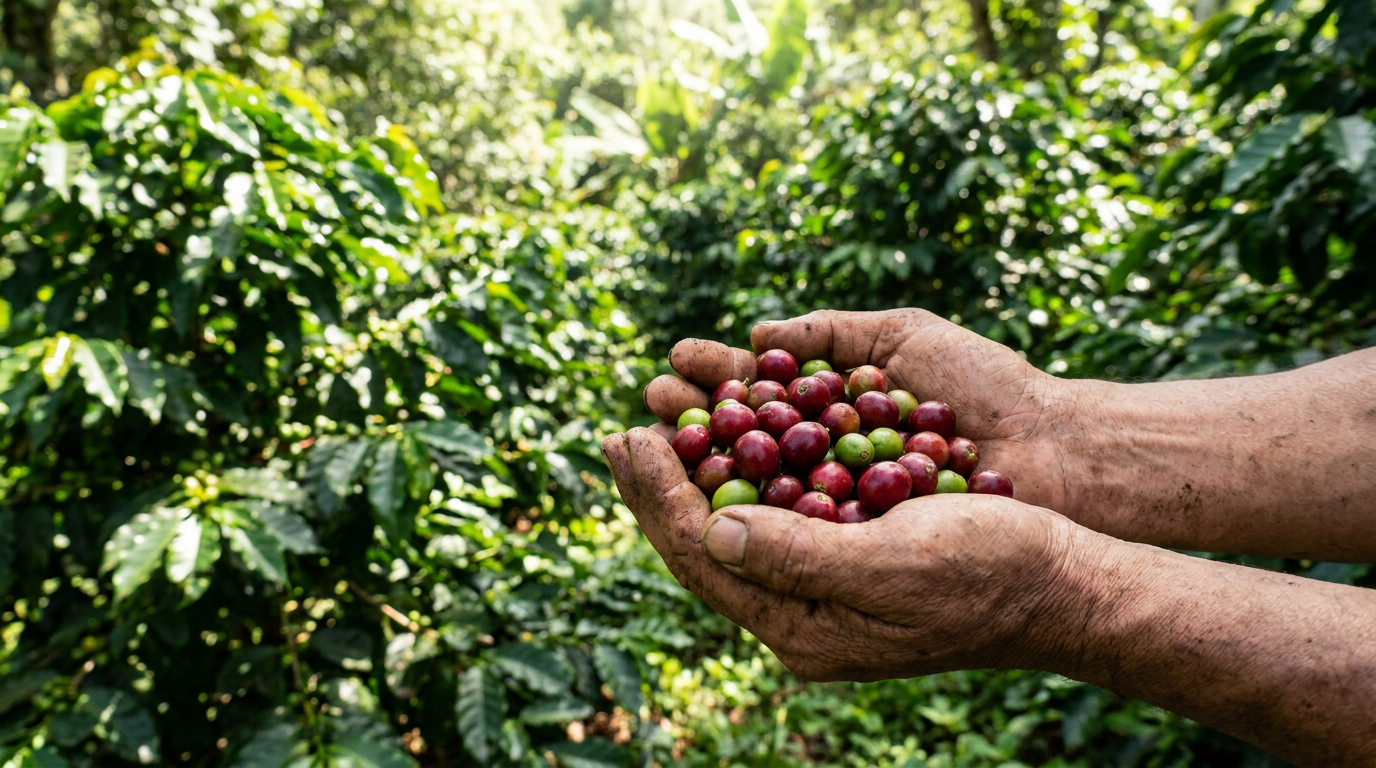
- Botanical Researchers
- Focuses on the genetic vulnerability of relying solely on Arabica and advocates for breeding climate-resilient hybrids from rediscovered wild species.
- Specialty Coffee Roasters
- Focuses on cup quality and the technical challenges of adapting roasting profiles to extract the best flavors from denser, alternative beans.
- Coffee Farmers & Agronomists
- Focuses on the economic viability, yield stability, and disease resistance required for farmers to safely transition away from traditional crops.
What's not represented
- · Commodity Market Traders
- · Large-Scale Commercial Coffee Brands
Why this matters
With climate change projected to render vast swaths of current coffee-growing land unusable by 2050, the global coffee supply is at severe risk. The successful commercialization of these resilient species ensures that coffee remains affordable and accessible, while introducing consumers to entirely new, complex flavor profiles.
Key points
- Climate change is rapidly shrinking the viable growing regions for Arabica coffee, which accounts for the majority of global production.
- Researchers have rediscovered Coffea stenophylla, a wild species that tolerates high heat while maintaining an Arabica-like flavor.
- Excelsa and Liberica species are gaining traction for their extreme resistance to drought and pests, offering unique, fruity flavor profiles.
- Scientists are developing interspecies hybrids, like 'Libex', to combine heat tolerance with disease resistance for commercial farming.
The morning cup of coffee is facing an existential threat. For decades, the global coffee industry has relied almost entirely on a single, highly sensitive species: Coffea arabica. Accounting for roughly 60% to 70% of worldwide production, Arabica is prized for its smooth, complex, and sweet flavor profile. However, this delicate plant evolved to thrive in a narrow ecological niche, requiring stable rainfall and cool, high-altitude temperatures ideally between 18°C and 21°C. As climate change accelerates, these optimal conditions are rapidly disappearing. Rising temperatures, erratic rainfall, and the proliferation of pests like the coffee berry borer are drastically reducing Arabica yields and degrading cup quality across major growing regions from Brazil to Ethiopia.[1][6]
The traditional fallback for the industry has been Coffea canephora, commonly known as Robusta. True to its name, Robusta is a hardier plant that can withstand warmer temperatures and lower altitudes while producing higher yields. Yet, it comes with a significant culinary trade-off. Robusta beans possess a strong, earthy, and notably bitter flavor profile, alongside a much higher caffeine content that can taste harsh to consumers accustomed to Arabica's refined sweetness. While Robusta is heavily utilized in instant coffee and espresso blends for its crema-enhancing properties, it is rarely celebrated in the specialty coffee sector. This dynamic has left the industry searching for a "holy grail" alternative: a coffee species that possesses the agricultural resilience of Robusta but delivers the exquisite flavor profile of Arabica.[2][5]
That search has led botanical researchers to look backward, rediscovering "forgotten" coffee species that were sidelined during the 20th century's push for standardized, high-yield Arabica crops. The most promising breakthrough occurred in 2018, when scientists from the Royal Botanic Gardens, Kew, alongside local researchers, rediscovered Coffea stenophylla growing wild in the forests of Sierra Leone. Not seen in the wild since 1954, Stenophylla has emerged as a botanical marvel. Field studies and genomic analyses reveal that the plant can tolerate temperatures significantly higher than Arabica, yet it produces a flavor profile that is virtually indistinguishable from high-quality Arabica beans.[1][7]
The rediscovery of Stenophylla provides a crucial piece of evidence that climate resilience and cup quality do not have to be mutually exclusive. In blind taste tests conducted by industry experts, Stenophylla scored highly for its complex acidity and sweetness, proving that heat-tolerant species can meet the exacting standards of the specialty market. However, the transition from a wild, rediscovered plant to a commercially viable crop involves significant uncertainty. Agronomists are currently conducting large-scale cultivation trials to determine if Stenophylla can produce yields high enough to be economically viable for smallholder farmers, who operate on razor-thin margins and cannot afford to gamble on unproven crops.[6][7]

While Stenophylla represents the future of Arabica-like flavor, another overlooked species is already making commercial inroads: Coffea liberica, and specifically its distinct variety, Excelsa (Coffea liberica var. dewevrei). Originally discovered in Central Africa in the early 1900s, Excelsa was historically planted merely as a boundary marker or shade tree on Indian and Southeast Asian plantations. Today, it is stepping into the spotlight. Excelsa trees are exceptionally robust, featuring deep root systems that provide high resistance to drought, pests, and the devastating coffee leaf rust disease. In Uganda, farmers who have cultivated Excelsa across hundreds of acres report that the species is consistently more productive and profitable than Robusta under warming conditions.[1][2]
Excelsa trees are exceptionally robust, featuring deep root systems that provide high resistance to drought, pests, and the devastating coffee leaf rust disease.
Excelsa's appeal extends beyond its agricultural hardiness; it offers a radically different sensory experience. Unlike the chocolate and nutty notes typical of Arabica, or the earthy bitterness of Robusta, Excelsa delivers a tart, fruity body with complex notes of dark berries, plum, and even subtle spices. It possesses a moderate acidity and lower caffeine content, making it an intriguing standalone brew or a valuable blending component to add depth and complexity. Specialty roasters are beginning to champion Excelsa for its unique profile, arguing that the future of coffee may not just be about mimicking Arabica, but rather expanding the consumer palate to appreciate entirely new dimensions of flavor.[3][4]
The broader Liberica family is also undergoing a scientific re-evaluation. A recent comprehensive study published in Nature Plants utilized genetic sequencing to demonstrate that what the industry previously lumped together as "Liberica" actually comprises three distinct species, each with unique climate adaptations. Standard Liberica thrives in hot, humid lowlands and exhibits high tolerance for extended dry seasons, while Excelsa is particularly adept at surviving in regions with lower overall rainfall. This genetic diversity is a goldmine for breeders. By understanding the specific environmental tolerances of these distinct species, scientists can tailor coffee cultivation to the specific climate challenges of different geographic regions, moving away from a one-size-fits-all agricultural model.[4][8]
Building on this genetic diversity, researchers are actively developing interspecies hybrids to stack desirable traits. A prominent example is the newly proposed "Libex" coffee (Coffea × libex), a hybrid between Liberica and Excelsa identified by Kew Gardens researchers. Early data suggests that Libex combines the superior heat and moisture tolerance of its parent plants with enhanced disease resistance. These improved hybrids can be brought into commercial production relatively quickly, offering a pragmatic, near-term solution for farmers whose Arabica crops are currently failing due to unpredictable weather patterns and increased pest pressure.[1][2]

Despite the clear agricultural imperatives, integrating these alternative species into the global supply chain presents substantial logistical hurdles, particularly at the roasting stage. Excelsa and Liberica beans are physically distinct from Arabica; they are often smaller, irregularly shaped, and possess a denser mucilage with fewer soluble solids. This structural difference means that traditional roasting profiles—honed over decades for Arabica—do not apply. Roasters must experiment with higher temperatures or longer roasting durations to properly extract the beans' complex flavors without introducing harsh, woody notes. The specialty coffee sector is currently in a phase of active experimentation, developing new best practices to unlock the full culinary potential of these denser beans.[3][4]
Furthermore, the economic infrastructure of the global coffee trade is heavily biased toward Arabica and Robusta. Commodity markets, pricing benchmarks, and quality grading systems are entirely calibrated around the two dominant species. For farmers to adopt Excelsa or Stenophylla at scale, there must be a guaranteed market and a transparent pricing mechanism that rewards them for cultivating climate-resilient crops. Currently, the lack of a standardized commodity market for these alternative beans means that farmers take on significant financial risk when planting them, relying primarily on direct-trade relationships with niche specialty roasters.[3][5]
To mitigate this risk, some agronomists are proposing transitional strategies. Rather than entirely replacing Arabica, farmers can use robust Excelsa or Liberica trees as grafting rootstock. By grafting delicate Arabica scions onto the vigorous, disease-resistant root systems of Excelsa, farmers can potentially maintain the Arabica flavor profile while benefiting from the alternative species' superior resilience to soil-borne pests and drought. This hybrid approach offers a bridge, allowing the industry to adapt to immediate climate pressures while the broader market slowly familiarizes itself with the distinct flavors of unblended Excelsa and Stenophylla.[3][8]

Ultimately, the survival of the morning cup of coffee depends on embracing biodiversity. The era of relying on a single, fragile species is drawing to a close, forced by the undeniable realities of a warming planet. The rediscovery of Stenophylla and the commercial elevation of Excelsa and Liberica represent a profound shift in agricultural strategy—moving from vulnerability to resilience. As researchers refine cultivation techniques and roasters master new flavor profiles, consumers can look forward to a future where their daily coffee is not only secure against climate change, but also richer and more diverse in taste than ever before.[1][2][6]
How we got here
Early 1900s
Excelsa coffee is discovered in Central Africa but is largely relegated to use as a boundary tree on commercial plantations.
1954
The last recorded sighting of wild Coffea stenophylla in West Africa before it is presumed lost to deforestation.
2018
Researchers rediscover wild Stenophylla plants in Sierra Leone, sparking renewed interest in its heat-tolerant properties.
2021
Studies confirm that Stenophylla can produce an Arabica-like flavor profile at significantly higher temperatures.
2025-2026
Genomic research reveals Liberica consists of three distinct species, and Kew Gardens proposes the new 'Libex' hybrid to combat climate stress.
Viewpoints in depth
Botanical Researchers
Focuses on the genetic vulnerability of relying solely on Arabica and Robusta.
Botanists and geneticists argue that the coffee industry's historical reliance on just two species has created a dangerous monoculture. They emphasize that rediscovering wild species like Stenophylla and mapping the genetic diversity of the broader Liberica family is the only sustainable way to breed climate-resilient hybrids. By tapping into this forgotten genetic goldmine, researchers believe they can engineer coffee plants capable of surviving 21st-century temperature extremes without sacrificing cup quality.
Specialty Coffee Roasters
Focuses on cup quality, consumer palate, and the technical challenges of processing new beans.
For specialty roasters, agricultural resilience is meaningless if the resulting coffee doesn't taste good. This camp highlights the significant technical hurdles of working with alternative species like Excelsa, which possess denser mucilage and lower solubility than Arabica. Roasters argue that the industry must invest heavily in developing entirely new roasting profiles and consumer education campaigns to build a market for the tart, fruity, and complex flavors these new beans produce.
Coffee Farmers & Agronomists
Focuses on economic viability, yield stability, and the financial risks of agricultural transition.
Farmers and agronomists view the crisis through an economic lens. While they acknowledge the threat to Arabica, they argue that smallholder farmers cannot transition to unproven species without guaranteed markets and transparent pricing structures. Because global commodity markets are currently calibrated exclusively for Arabica and Robusta, farmers taking a chance on Excelsa or Stenophylla assume massive financial risk. This camp advocates for transitional strategies, such as rootstock grafting, to protect livelihoods while the market adapts.
What we don't know
- Whether Stenophylla can consistently produce high enough yields to be economically viable for smallholder farmers on a global scale.
- How quickly the global commodity market and 'C price' benchmarks will adapt to include and fairly price alternative coffee species.
- Whether mainstream consumers will embrace the tart, fruity flavor profile of Excelsa over the traditional chocolate and nutty notes of Arabica.
Key terms
- Coffea arabica
- The dominant species of coffee globally, prized for its sweet, complex flavor but highly vulnerable to heat, pests, and climate change.
- Coffea canephora (Robusta)
- A hardy, high-yield coffee species with a bitter flavor and high caffeine content, often used in instant coffee and espresso blends.
- Mucilage
- The sticky, sugary layer of fruit that surrounds the coffee bean inside the cherry, which affects how the bean must be processed and roasted.
- Coffee Leaf Rust
- A devastating fungal disease that attacks the leaves of coffee plants, severely reducing yields and killing vulnerable Arabica trees.
- Scion and Rootstock Grafting
- An agricultural technique where the top part of one plant (the scion, like Arabica) is attached to the root system of another (the rootstock, like Excelsa) to combine their best traits.
Frequently asked
Will Arabica coffee go extinct?
While Arabica is not expected to go entirely extinct, climate change is drastically shrinking the land suitable for its cultivation. This will likely make pure Arabica much rarer and more expensive in the coming decades.
What does Excelsa coffee taste like?
Unlike the chocolate and nutty notes of Arabica, Excelsa has a tart, fruity profile with notes of dark berries, plum, and subtle spices, along with a lower caffeine content.
Why can't farmers just grow Robusta?
Robusta is already widely grown for its hardiness, but it has a strong, bitter, and earthy flavor that is less desirable for specialty coffee. The industry is seeking alternatives that combine Robusta's resilience with Arabica's sweeter taste.
What is Stenophylla coffee?
Coffea stenophylla is a wild coffee species rediscovered in Sierra Leone in 2018. It is highly sought after because it can tolerate much higher temperatures than Arabica while producing a nearly identical, high-quality flavor.
Sources
Source coverage
8 outlets
3 viewpoints surfaced








[1]MongabayBotanical Researchers
As climate change threatens Arabica, researchers turn to resilient coffee species
Read on Mongabay →[2]Impactful NinjaCoffee Farmers & Agronomists
Beyond Arabica: Climate-Resilient Coffee Species Are Rising
Read on Impactful Ninja →[3]Perfect Daily GrindSpecialty Coffee Roasters
Excelsa coffee: A comprehensive guide to the resilient bean
Read on Perfect Daily Grind →[4]Café Du MondeSpecialty Coffee Roasters
Exploring the Unique Flavour Profile of Excelsa Coffee
Read on Café Du Monde →[5]Anthropocene MagazineCoffee Farmers & Agronomists
Coffea robusta may be the better bet against climate change
Read on Anthropocene Magazine →[6]Wild KaffeeCoffee Farmers & Agronomists
Coffee and Climate Change – Coffea Stenophylla
Read on Wild Kaffee →[7]Kodagu FirstBotanical Researchers
Climate-resilient coffee species offer hope for growers
Read on Kodagu First →[8]Global Coffee ReportBotanical Researchers
Study finds Liberica coffee is three distinct species
Read on Global Coffee Report →
Every angle. Every day.
Get food drink stories with full source coverage and perspective breakdowns delivered to your inbox.